


- MRI uses a strong magnet that is generally described as always on, so metal is a bigger concern there than in CT.
- CT uses X-rays, and metal can cause streaks and glare in the images, especially near the area being scanned.
- Gold, silver and platinum are not magnetic, but guidance still notes they can conduct electricity and heat in an MRI.
- Plated pieces have a base metal you cannot see, so imaging teams generally treat them as metal.
- Piercings, permanent jewelry and stuck rings: tell the team ahead of time and do not force anything off.
If you have a scan booked, the jewelry question is usually the first practical one. This page is general information only, not medical advice, and your imaging team's instructions always come first. It sits alongside our notes on jewelry and airport security and what to take off at the gym, two other places where metal gets checked.
Do you have to take jewelry off for an MRI?
Yes, in almost every case: the usual instruction is to remove all jewelry and other metal before you enter the scan room. An MRI machine contains a very strong magnet, and safety screening forms commonly state that the magnet is always on, even when no one is being scanned. That is why the rule is so consistent from one imaging center to the next.
Two different risks are involved. The first is movement: magnetic metal can be pulled toward the machine. The second is heating: metal that conducts electricity can warm up while the scanner is running, which in rare cases can cause burns. Safety guidance for imaging staff notes that gold, silver and platinum are not ferromagnetic (not attracted by a magnet), but they can still conduct electricity, so they are not automatically treated as exempt.
Rules differ between facilities and even between scanners, and some teams may allow a plain item away from the body part being scanned. That decision belongs to the technologist or radiologist, not to you or to a jewelry guide. A good default is to arrive with nothing metal on and let them tell you if anything can stay.
Can you wear jewelry in a CT scan?
Usually you will be asked to take it off, especially anything near the area being scanned. A CT scan uses X-rays rather than a magnet, so there is no pulling force, but metal absorbs X-rays far more strongly than body tissue and can produce bright streaks that make the images harder to read.
Advice you will see online is mixed about pieces far from the scan area. Some facilities only ask you to remove metal in or near the region being imaged, while others ask for everything off. Since you often cannot know which applies until you ask, the simplest approach is to remove or leave behind your jewelry and check when you confirm the appointment. A ring may seem harmless for a head scan, but it is the team's call.
MRI vs CT: what changes for jewelry
| Question | MRI | CT scan |
|---|---|---|
| What does the machine use? | A strong magnet and radio waves | X-rays |
| Main concern with metal | Movement, heating and burns, blurred images | Streaks and glare that hide detail |
| Is a non magnetic metal exempt? | Not automatically, since it can still conduct and heat | Not automatically, since any dense metal affects X-rays |
| Typical instruction | Remove all jewelry and metal, often change into a gown | Remove jewelry, at least near the scan area |
| Who decides if something can stay | The imaging team | The imaging team |
Does it matter what the jewelry is made of?
It can, but you should not rely on it yourself, because a piece's label does not tell the team what is inside it. Our guide to telling if jewelry is real gold explains why markings and appearance can mislead, and our hallmarks guide shows what stamps do and do not prove.
Plating is the main reason for caution. A gold plated piece is a thin layer over another metal (see gold plated vs solid gold), and stainless steel is a different alloy again (see sterling silver vs stainless steel). Clasps, springs and posts can also be a different metal from the part you see. Because none of this is visible, imaging staff generally treat all jewelry as metal. We would do the same: none of our pieces are made or tested for imaging, and we cannot tell you any of them is suitable to wear in a scanner.
What about piercings, permanent jewelry and stuck rings?
Tell the team in advance rather than on the day, since these are the cases that need a plan. Guidance for imaging staff says metallic piercing jewelry should generally be removed, and that even short removal can let a piercing close, so a temporary non metal spacer is sometimes used and the original jewelry put back afterward. Ask your piercer or the imaging team how they handle this. Our notes on ear piercing types and flat back earrings cover the styles you may be wearing.
Permanent jewelry is a special case, since it is designed not to come off. Read what permanent jewelry is and how it works, then call the imaging team before your appointment to ask what they want done. Do not cut or force anything off yourself.
For a ring that will not budge, tell the team before the appointment and see how to remove a stuck ring for gentle methods. Stop if there is pain, swelling or color change, and ask a medical professional.
Before your scan: a short checklist
- Read your appointment instructions. Many centers list exactly what to leave at home.
- Leave jewelry at home or put it away at the door. A small pouch or case helps, as in our jewelry storage guide and storage ideas.
- List all metal on your body. That includes piercings, permanent jewelry, and anything implanted. Tell the team about all of it, even if you think it is minor.
- Dress simply. Comfortable clothing without metal parts is the usual advice, and you may be asked to change into a gown anyway.
- Ask about cosmetics. Some makeup can contain traces of metal, so ask whether to skip it.
- Call ahead with questions. If a piece cannot come off, say so before the day.
An honest note on what we do
AJLuxe sells new fashion jewelry: 925 sterling silver and 18K gold plated pieces (over 925 sterling silver or 316L stainless steel) with cubic zirconia stones, never diamond. We do not give medical advice, we do not test jewelry for imaging, and we do not repair, buy back or recycle old pieces. If you want simple pieces that are easy to take off for appointments and put back on after, our everyday jewelry and stud earrings are a good place to look. The CZ stud earrings in 925 sterling silver are $22.99, the dainty gold plated stacking rings are $37.99, and the dainty gold plated heart necklace is $25.99 (a few left). Plating wears gradually with daily use. US orders ship free and returns are free for 30 days. If your skin reacts to metal, see our hypoallergenic jewelry guide, and ask a doctor for health advice.
Traveling for a medical appointment? Our travel with jewelry tips cover packing, and the airport rules in the security guide above apply on the way.
More in this guide
Related reading: jewelry and airport security, jewelry and the gym what to take off, how to store jewelry, types of ear piercings and how to remove a stuck ring safe methods that actually work.
Frequently Asked Questions
Do I have to remove body jewelry for a CT scan?
Usually yes, at least anything near the area being scanned, and many centers ask for all of it. Tell the team about any piercing that cannot come out, and ask whether a spacer is an option.
Can you wear a wedding ring in an MRI?
Policies vary, and most centers ask you to remove it. Gold and platinum are not magnetic, but they can still conduct and heat, and rings near the scan area can distort images. Ask the team, and do not assume.
What happens if you move during an MRI?
The images can blur, and part of the scan may need to be repeated. Movement can disrupt the results, so staff will ask you to stay still, and you can tell them if you are uncomfortable.
What should I wear for an MRI of my back?
Comfortable clothing without metal parts such as zippers, snaps or underwires, or a gown provided by the center. Check your appointment instructions, since each center sets its own rules.
What not to do before an MRI?
Do not bring jewelry, hide metal from the team, or skip the screening questions. Do not assume a piece is fine because it is gold, silver or "hypoallergenic." Also avoid makeup that may contain metal unless the team says it is fine.
Is gold or silver jewelry okay in a scanner?
We cannot say any jewelry is safe for imaging. Gold and silver are not magnetic, but they can conduct electricity, and plated pieces hide another metal underneath, so the team decides.
Do tattoos or piercings stop me from having a scan?
Generally not, but tell the team about both. Some tattoos can warm during an MRI, and they can offer ways to manage that.
Can I wear jewelry for an X-ray?
X-ray, like CT, uses radiation, and metal can block or hide detail. Remove jewelry near the area being imaged, and follow the technologist's instructions.
This page is general information, not medical advice. Always follow your imaging team's instructions and ask a doctor about your own situation.
Written by AJLuxe Team. Last updated: October 2026
All third-party trademarks, brand names and product names are the property of their respective owners. AJLuxe is not affiliated with, endorsed by, sponsored by, or otherwise connected to any third-party brand referenced in this article. Brand names are used solely for accurate comparative reference, and material descriptions reflect each brand's own published product specifications at the time of writing.
You Might Also Like
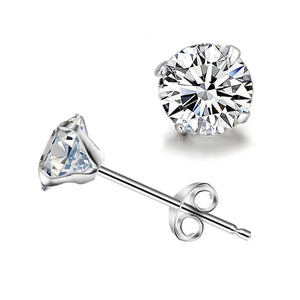


The piece they're describing → CZ Stud Earrings for Women — 925 Sterling Silver, Cubic Zirconia, Hypoallergenic
Personalize Yours


