


TL;DR: Most everyday jewelry, rings, small studs, thin necklaces, everyday bracelets, does not need to come off for TSA screening. TSA's own guidance lists jewelry as fine to wear through the checkpoint, and standard metal detectors respond to metal mass, so small pieces rarely trigger them. Millimeter-wave body scanners work differently: they flag any dense material sitting on the skin, metal or not, so a bulky cuff or a heavy statement necklace is more likely to need a second look than a delicate piece. If something is flagged, TSA resolves it with a rescan or a pat-down, not a big production. The simplest fix is traveling in jewelry you don't have to think about either way.
Do You Have to Take Off Jewelry for TSA?
No, not for most jewelry. TSA's own guidance lists jewelry as permitted in both carry-on bags and checked baggage, and specifically recommends keeping valuable items like jewelry with you at all times rather than putting them in checked luggage. In practice, that means the ring on your finger, the studs in your ears, and the thin chain around your neck can stay on through the walk-through metal detector or the body scanner at most checkpoints. There's no published TSA rule that names a size or weight cutoff for jewelry specifically, it comes down to whether a piece alarms the machine you walk through, which is a question of physics more than policy.
How a Metal Detector Actually Reacts to Jewelry
A standard walk-through metal detector responds to the total amount of metal on your body, not to jewelry as a category, so a thin chain or a pair of small studs usually doesn't carry enough metal mass to trigger it. Bulkier pieces add up fast: a wide cuff bracelet, a heavy layered chain, or several rings worn at once are far more likely to set off an alarm than any single delicate piece would. This is exactly why TSA's own guidance singles out "bulky" jewelry as the category worth removing before you step through, rather than jewelry in general.
Why Body Scanners Work Differently
The millimeter-wave scanner used at most checkpoints now isn't a metal detector at all. Per TSA's own description of Advanced Imaging Technology (AIT), it uses low-level radiofrequency energy, well below international safety limits, to screen for both metallic and non-metallic threats hidden under clothing, and it displays results as a generic outline of the body rather than a detailed image. What that means for jewelry: the scanner isn't looking for metal specifically, it's flagging anything dense enough to stand out on that outline. A heavy pendant, a thick cuff, or several stacked rings can register as an anomaly worth a second look even though nothing about them would trip a metal detector, simply because there's more material sitting on the skin.
What Happens If Something Gets Flagged
A flag isn't a big deal, it just means additional screening. Per TSA's own pat-down guidance, an officer will either rescan the area or perform a pat-down to resolve what the scanner saw, using the back of the hand over sensitive areas of the body, and always by an officer of the same sex. You can request private screening, with a companion present, at any point in that process. None of this requires taking jewelry off in public or handing it to anyone; it's a routine resolution step, not a search of your belongings.
What to Wear Through Security vs. What to Pack Away
The easiest way to move through a checkpoint without a second look is to keep what you're wearing simple and pack anything bulky or irreplaceable instead of wearing it.
- Fine to wear: everyday rings, small stud or huggie earrings, thin pendant necklaces, slim bracelets and bangles.
- Better packed in your carry-on (not checked): statement necklaces, wide cuffs, stacked rings you'd normally wear together, and anything you'd hate to lose track of in a bin during a busy security line.
- Never in checked luggage: anything genuinely valuable. TSA's own advice is to keep valuables with you, and checked bags are handled by more people, in more places, than anything that stays in your sight.
The Easiest Fix: Travel in Jewelry You Don't Have to Think About
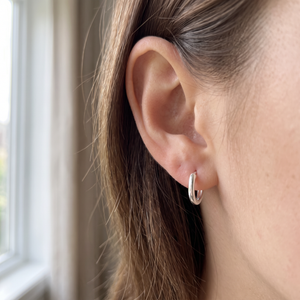
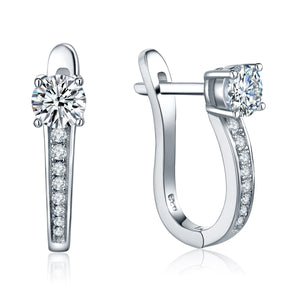
Fine jewelry earns extra caution precisely because it's harder to replace, which is exactly the kind of thing you don't want to be managing in a security line or worrying about in a hotel room later in the trip. Affordable, everyday pieces solve that problem by removing the stakes: a pair of hypoallergenic 925 sterling silver studs doesn't need a special case, an insurance rider, or a mental note to grab it off the bathroom counter before checkout. Our Minimalist Huggie Earrings ($34.99, 925 sterling silver, hypoallergenic) are a good example of the "wear it and don't worry about it" category: small enough to clear a metal detector without a thought, and inexpensive enough that losing track of one at security wouldn't ruin a trip. If you'd rather build a small everyday-travel set, our full everyday jewelry collection is built around the same idea, real sterling silver and 18K gold plating, priced so you can actually wear it without babying it.
Frequently Asked Questions
Do I have to take off my jewelry at airport security?
No, not for most everyday jewelry. TSA's own guidance lists jewelry as fine to wear through the checkpoint, and it only becomes a question if a specific piece is bulky enough to trigger the metal detector or dense enough to flag the body scanner.
What jewelry can you wear through airport security?
Everyday rings, small stud or huggie earrings, thin necklaces, and slim bracelets typically pass through both a metal detector and a body scanner without any issue. It's bulk, not metal content alone, that makes a piece more likely to need a second look.
What jewelry is most likely to set off a metal detector?
Anything with enough metal mass to register, wide cuff bracelets, thick layered chains, multiple stacked rings worn at once, is more likely to trigger a standard walk-through metal detector than a single delicate piece would be.
Should I wear or pack my expensive jewelry when flying?
Keep it with you either way, TSA specifically recommends against putting valuable jewelry in checked baggage. Whether you wear it or carry it in your bag is a matter of preference, but it should never leave your sight into the cargo hold.
Will body scanners flag jewelry that isn't metal?
Yes, potentially. Millimeter-wave body scanners screen for both metallic and non-metallic material and flag anything dense sitting on the skin as an anomaly for an officer to review, so a large non-metal pendant or bead necklace can occasionally get a second look for the same reason a metal one would.
What happens if I get a pat-down because of my jewelry?
An officer resolves the alarm using the back of the hand over sensitive areas of the body, always an officer of the same sex as you, and you can request private screening with a companion present at any point. It's a routine, brief step, not a search of your belongings.
All third-party trademarks, brand names and product names are the property of their respective owners. AJLuxe is not affiliated with, endorsed by, sponsored by, or otherwise connected to any third-party brand referenced in this article. Brand names are used solely for accurate comparative reference, and material descriptions reflect each brand's own published product specifications at the time of writing.
You Might Also Like

The piece they're describing → Silver Huggie Earrings for Women — 925 Sterling Silver, Hypoallergenic, Minimalist
Personalize Yours


