


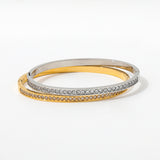
Permanent jewelry has gone from a niche trend to a mainstream offering at jewelry studios across the US. If you've seen it on social media, heard a friend mention getting a "welded bracelet," or spotted a promotion at your local jeweler, you probably have questions. What exactly is it? Does it hurt? How long does it last? Can you actually remove it?
This guide answers every question about permanent jewelry — what it is, how it works, how much it costs, who it's for, and what to know before you commit to a clasp-free piece.
What Is Permanent Jewelry?
Permanent jewelry is a piece of jewelry — typically a bracelet, anklet, necklace, or ring — that has no clasp or closure. Instead, the ends of the chain are connected directly on your wrist (or ankle, or finger) using a small spot welder called a pulse welder or flash welder.
The weld creates a tiny fused link that looks just like the rest of the chain. Once it's welded, the piece stays on indefinitely — through showers, swimming, sleeping, and workouts — unless you choose to cut it off.
It's called "permanent" because there's no clasp to accidentally open. But it's not actually permanent — a simple pair of scissors or wire cutters removes it instantly, with no damage to your skin.
How Does Permanent Jewelry Work? The Welding Process
Here's exactly what happens when you get permanent jewelry:
- You choose your chain and charm (if any) — Most studios offer several chain styles in gold, rose gold, or silver. Some add small charms or gemstones.
- The jeweler wraps the chain loosely around your wrist (or ankle, neck, or finger) to measure the right length. You want it comfortable — not so loose it slides, not so tight it pinches.
- The ends are held together by a small jump ring or a single link.
- The jeweler uses a pulse welder — a small handheld device with electrode tips — to zap the join point for a fraction of a second. This creates an instant metal bond.
- Done. The whole process takes 10–15 minutes including consultation, sizing, and welding. The weld itself takes less than 1 second.
The welding device uses electrical current to fuse the metal. It does not touch your skin. The spark is tiny, contained, and produces no heat you'd feel. Most people describe it as a quick flash of light and nothing else.
Does Permanent Jewelry Hurt?
No. The welding process is completely painless. The pulse welder doesn't touch your skin, and the weld itself is over in under a second. Most clients describe it as simply watching a small spark with their eyes, not feeling anything at all on their body.
There's no needles, no heat on your skin, no healing time. You walk in, sit for 10 minutes, and walk out wearing the piece.

What Metals Are Used for Permanent Jewelry?
| Metal | Durability | Hypoallergenic? | Cost Range | Best For |
|---|---|---|---|---|
| 14K Solid Gold | Excellent — lasts decades | Yes (nickel-free) | $80–$200+ | Long-term wear, sensitive skin |
| 18K Solid Gold | Very good — softer than 14K | Yes | $100–$300+ | Premium look, yellow gold fans |
| Sterling Silver (925) | Good — tarnishes over time | Usually yes | $50–$100 | Budget-friendly, classic silver look |
| Gold-Filled | Good — gold layer wears slowly | Usually yes | $60–$120 | Mid-range, gold look at lower cost |
Important: Avoid any permanent jewelry studio that uses gold-plated or vermeil for this application. Gold-plated layers (including 18K gold-plated) will wear through within months when worn permanently, exposing the base metal underneath. Solid gold and gold-filled are the appropriate choices for permanent wear.
Types of Permanent Jewelry
Permanent Bracelets
The most popular type. A thin chain is sized to your wrist and welded shut. Most permanent bracelets use delicate chains — box chain, cable chain, or paperclip chain — because thinner chains weld more cleanly. Typical price: $60–$150 for sterling silver or gold-filled, $100–$300+ for solid gold.
Permanent Anklets
Same concept as a bracelet but worn on the ankle. Slightly more popular in warmer climates and summer. The chain length is longer, so material costs are a bit higher.
Permanent Necklaces
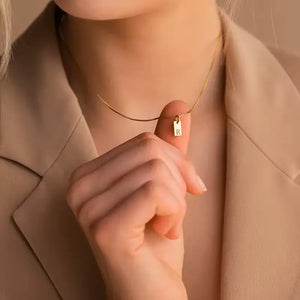
Less common but increasingly offered. The chain wraps around your neck and is welded at the back. You'll need to have good posture and be able to sit still while the jeweler accesses the back of your neck. Chain length is typically 14–16 inches.
Permanent Rings
A thin chain ring welded around your finger. Delicate and minimalist. Less durable than traditional rings because they're very fine gauge.
How Long Does Permanent Jewelry Last?
With proper materials, a permanent bracelet made from 14K solid gold or sterling silver should last years to decades. The most common reason permanent jewelry breaks isn't the weld — it's the chain itself getting caught and snapping.
If the chain breaks, most permanent jewelry studios will reweld it for free or a small fee. Keep the broken piece and bring it in.
Sterling silver permanent jewelry may develop a patina (tarnish) over time, especially if exposed frequently to chlorine, saltwater, or sweat. This is purely cosmetic and can be polished away.
Can You Remove Permanent Jewelry?
Yes. Despite the name "permanent," it's easily removed at any time with a pair of scissors or small wire cutters. Snip anywhere on the chain (not at the weld point — that's actually the strongest link) and the piece comes right off. It takes 5 seconds.
You can take permanent jewelry off for:
- Surgery or medical procedures requiring removal of all metal
- MRI scans (always remove all jewelry before MRIs)
- Airport security (most permanent jewelry passes through metal detectors without issue, but technically it should be removable)
- If you simply get tired of it
If you remove it carefully without cutting the chain, many studios will reweld it for a small fee so you can put it back on.
How Much Does Permanent Jewelry Cost?
Prices vary significantly by location, metal, and chain style:
| Type | Sterling Silver | Gold-Filled | 14K Solid Gold |
|---|---|---|---|
| Bracelet | $50–$90 | $65–$120 | $100–$250 |
| Anklet | $60–$100 | $75–$130 | $110–$270 |
| Necklace | $70–$120 | $90–$150 | $130–$350+ |
| Ring | $40–$75 | $55–$95 | $85–$200 |
Most studios charge a flat "welding fee" of $15–$30 included in the price, plus the cost of the chain per inch. Additional charms or gemstone add-ons increase the price.
Permanent Jewelry vs. Regular Jewelry: Which Is Right for You?
Permanent jewelry isn't for everyone. Here's how to decide:
Choose permanent jewelry if:
- You want a piece you'll never lose or forget to put on
- You like the ultra-dainty, no-clasp look
- You want a commemorative piece (friendship bracelet, anniversary, etc.)
- You're minimalist and want something that just stays
Stick with regular jewelry if:
- You switch up your jewelry frequently based on outfit
- You work in a field requiring jewelry removal (surgery, food service, sports)
- You're not sure you'll want it for more than a few months
- You prefer to wear different bracelets on the same wrist
Looking for a non-permanent alternative that still gives you an always-on feel? AJLuxe's sterling silver bracelets with secure lobster clasps are hypoallergenic, tarnish-resistant, and can be stacked for a similar effect.
Is Permanent Jewelry Safe?
Yes, when done properly. A few important safety points:
- No skin contact with the welder — Professional pulse welders have precise tips that touch only the metal. There is zero risk of burning if the jeweler is trained.
- Use implant-grade metal — 14K gold and sterling silver are safe for prolonged skin contact. Cheap base metals with nickel plating can cause contact dermatitis.
- Fit matters — A piece that's too tight can cause circulation issues. A good permanent jewelry artist ensures proper fit before welding.
- MRI safety — You must remove all jewelry before an MRI, which means cutting the piece. This is important — inform your medical team about permanent jewelry before any imaging or surgical procedure.
Frequently Asked Questions About Permanent Jewelry
What is permanent jewelry made of?
Quality permanent jewelry is made from 14K or 18K solid gold, sterling silver (925), or gold-filled metal. Reputable studios don't use gold-plated or vermeil for permanent wear because the thin plating wears through quickly. Implant-grade titanium is sometimes used for people with metal sensitivities.
Does permanent jewelry set off metal detectors at airports?
Most permanent bracelets and anklets are fine chain and pass through airport security without triggering metal detectors. However, this isn't guaranteed — detector sensitivity varies. If asked to remove it and you can't (or don't want to damage it), security can pat-down the area or use a handheld wand instead.
Can I shower with permanent jewelry?
Yes. That's one of the main advantages. 14K gold and sterling silver handle water fine. Avoid prolonged exposure to chlorine (pools, hot tubs) if your piece is sterling silver, as chlorine accelerates tarnishing. Gold is chlorine-resistant.
How do I know if my permanent jewelry is too tight?
Proper fit allows the chain to move slightly on your wrist but not slide over your knuckles. If it feels tight, leaves a mark, or causes any tingling or numbness, it's too tight. A good jeweler will check this before welding. If it feels wrong after welding, have it re-cut and properly sized immediately.
Can permanent jewelry break?
Yes — the chain can break if it catches on something or gets pulled hard. The weld point is actually the strongest link. If the chain breaks, save the pieces and take them to your original studio for rewelding, often free or for a small fee.
What's the difference between permanent jewelry and permanent bracelets?
They're the same concept. "Permanent bracelet" specifically refers to a bracelet with no clasp welded around the wrist. "Permanent jewelry" is the broader term covering any welded piece — bracelets, anklets, necklaces, or rings. The terms are often used interchangeably.
Can I get permanent jewelry with someone else at the same time?
Yes — this is actually one of the most popular uses. Friends, couples, or family members get matching permanent bracelets as a symbol of their bond. Some studios offer "friendship bracelet packages" where two people get welded together in the same session. You can even get matching charms or a shared charm between two pieces.
How long does it take to get permanent jewelry?
The entire appointment, including consultation, chain selection, sizing, and welding, takes about 15–30 minutes for one piece. Groups or multiple pieces take longer. The actual weld is under 1 second.
Can permanent jewelry be repaired if damaged?
Yes. If the chain kinks, a link breaks, or you want the piece re-sized, a permanent jewelry studio can cut and reweld. Keep track of the studio where you got the piece, as they'll know the metal type and chain gauge. Most repairs cost $10–$30.
Is permanent jewelry good for a gift?
It can be, but it's a commitment — the recipient has to want it permanently on their body. It's more commonly a shared experience (two people going together) than a surprise gift. If you're considering it as a gift, bring the person along to the appointment so they can choose the style, fit, and placement themselves.
Where can I get permanent jewelry done?
Permanent jewelry is offered at specialty permanent jewelry studios, many fine jewelry stores, some spa/beauty boutiques, and occasionally at pop-up events. Search "permanent jewelry near me" or look for studios specializing in "flash weld" or "welded bracelet" services. Pricing and quality vary significantly — always check reviews and ask to see examples of their welds before committing.
Not ready to commit to permanent? Shop AJLuxe's bracelet collection — 18K gold-plated sterling silver, hypoallergenic, and designed to be worn every day. Free US shipping on every order.
We’re launching engraved sentimental charm bracelets for the people you love — daughter, wife, mom, best friend & more. Join the waitlist for 15% off launch day + early access.
Reserve yours →Written by the AJLuxe team — specialists in personalized sterling silver jewelry. Last updated: June 2026.
All third-party trademarks, brand names and product names are the property of their respective owners. AJLuxe is not affiliated with, endorsed by, sponsored by, or otherwise connected to any third-party brand referenced in this article. Brand names are used solely for accurate comparative reference, and material descriptions reflect each brand's own published product specifications at the time of writing.
You Might Also Like
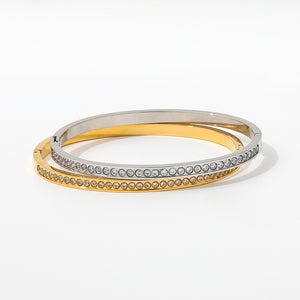
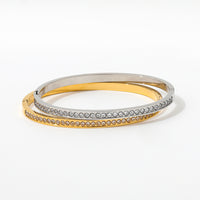
The piece they're describing → CZ Bangle Bracelet for Women, Gold or Silver Plated, CZ Stones
Personalize Yours


