


- Source: the black-lipped pearl oyster, farmed mainly in French Polynesia.
- Color: a true jet-black pearl is extremely rare. Charcoal, silver-grey and dark green with overtones are the normal range.
- Best-known overtone: peacock, a green-to-purple sheen that a pearl retailer calls the most sought-after Tahitian overtone.
- Beware: cheap black pearls are often dyed. Dye sits in only the outer nacre layers.
- Care: pearls are soft and acid-sensitive. Wipe after wearing and keep away from perfume.
Search for "black pearls" and you will find a mix of jewelry listings, social posts and shop pages, but few that say plainly what the term means. This page does. It covers where Tahitian pearls come from, what colors they really come in, how to tell a natural dark pearl from a dyed one and what to look for before you spend money. For the other pearl types, our guide to the types of pearls compares them side by side, and this page goes deeper on the one that comes in dark colors.
What Are Black Pearls and Tahitian Pearls?
Tahitian pearls are cultured pearls grown in the black-lipped pearl oyster, and "black pearls" is the everyday name for them. An encyclopedia entry we read says the oyster is cultivated mainly around the islands of French Polynesia, in the lagoons of the Tuamotu and Gambier island groups. A second encyclopedia entry on the oyster species says the "black-lip" name comes from the dark coloring along the inner edge of the shell.
Cultured means a person starts the process. A grafter places a small shell bead in the oyster along with a piece of donor tissue, and the encyclopedia entry says that tissue influences the color of the pearl. The oyster then needs about two years to mature before it can produce a pearl. A separate entry on pearls in general adds why they are scarce: each oyster can usually be seeded with only one pearl at a time.
What Colors Do Tahitian Pearls Come In?
Tahitian pearls come in shades from white through grey to black, with overtones of green, pink, blue, silver and yellow, and darker ones are the more valuable. That is the range the encyclopedia entry gives. A gem-lab pearl description we read lists the body colors as grey, black or brown, with possible blue, green, purple or pink overtones. A pearl retailer's color guide names body colors of charcoal, green-grey and silver-black, with overtones of peacock, green, aubergine, silver and, rarely, rose.
| Term | What it means |
|---|---|
| Body color | The main base color, such as charcoal or silver-grey |
| Overtone | A secondary translucent color that shows over the body color, such as green or rose |
| Peacock | A green-to-purple sheen, named by one retailer as the most sought-after Tahitian overtone |
| Aubergine | A deep purple overtone |
Overtones work the same way on every pearl type, which is a topic we cover in a separate guide to pearl colors.
Are Black Pearls Really Black?
Rarely. The encyclopedia entry says a true black Tahitian pearl is "extremely rare" and that most pearls sold as black are charcoal grey, silver or dark green. A reference entry on pearls adds that natural black pearls can look silver, silver-blue, gold, brown-black, green-black or black. So when a listing promises jet black at a low price, treat that as a reason to ask questions, not a bargain.
How Can You Tell Natural Black Pearls From Dyed Ones?
Ask the seller whether the color is natural and get the answer in writing, because dye changes only the surface. The pearls entry says inexpensive colored pearls are often dyed, usually with a fabric dye, and that the dye typically penetrates only the first one or two nacre layers. It also says valuable pearls are not dyed. A pearl retailer's guide makes the same split in plain terms: dye alters the body color artificially, while an overtone is a natural optical effect, so a pearl with a flat, even black and no shifting sheen deserves a second look.
- Look for an overtone. In natural light, tilt the pearl. A natural Tahitian shows a translucent sheen that shifts as you move it.
- Be wary of perfectly even color. Uniform jet black across a whole strand at a very low price is the usual warning sign.
- Ask about origin and treatment. A seller who knows the answers and puts them in writing is a good sign. We found no single home test that every source agrees on, so we do not offer one.
For general fake-versus-real checks, including the surface feel test, see how to tell real pearls from fake ones. It also helps to know that dyed freshwater pearls are the most likely lookalikes sold under the "black pearl" name, a point our types of pearls guide also makes.
Are Tahitian Pearls Worth Anything?
Yes, they are among the more valuable pearl types, and the encyclopedia entry on baroque pearls names Tahitian and South Sea pearls as the most valuable. The pearls entry says value is judged by luster, color, size, surface quality and shape, with luster considered the most important by jewelers, and that round is the rarest and most valuable shape. The encyclopedia entry on Tahitian pearls adds that darker ones are the most valuable. We did not find one consistent price range across the pages we read, so we do not quote one. Prices swing with size, shape, luster and how the strand is matched.
Shape matters more than many buyers expect. The same encyclopedia says most Tahitian harvests are over 40 percent baroque and semi-baroque, which is one reason off-round dark pearls are common and cost less. Baroque, meaning not perfectly round, is a shape grade we cover in its own guide.
How Do You Care for Black Pearls?
Treat them like any pearl: soft, organic and sensitive to chemicals. The pearls entry gives a hardness of 2.5 to 4.5 on the 10-point mineral hardness scale, which is soft compared with most gemstones, and says that because pearls are mostly calcium carbonate, even weak acids such as vinegar can damage them. Put pearls on last, after perfume and hairspray, wipe them with a soft cloth after wearing and store them away from harder jewelry. Our pearl care guide has the full routine and these jewelry storage ideas help with the storing part.
How to Wear Dark Pearls
Dark pearls read as bolder than classic white ones, so they work best where you want a quiet statement. They suit evening looks, which is why they come up in our guide to what jewelry to wear to a black-tie gala, and a single dark pearl on a simple chain can carry a plain neckline. If you are still deciding between white and dark, our pearl necklace meaning guide covers what each color traditionally signals, and our 30th anniversary gift ideas cover pearl as a traditional gift.
What AJLuxe Does and Does Not Sell
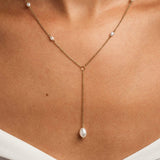
AJLuxe does not sell Tahitian or black pearls. The pearl pieces in our catalog are white. Our Freshwater Pearl Necklace uses a cultured freshwater pearl on a gold plated chain, and the Pearl Drop Earrings use a white pearl on gold plated sterling silver, which is plating and not solid gold. Browse the full pearl jewelry collection for what is in stock, and see our best pearl necklace guide if you are choosing a first piece.
More pearl guides
Frequently Asked Questions
What is so special about Tahitian pearls?
They grow in the black-lipped pearl oyster and come in naturally dark body colors with green, pink, blue or purple overtones, which most other pearl types do not show. They are also valued highly, with darker ones the most valuable.
Are black pearls real?
Yes, natural dark pearls from the black-lipped oyster are real, but many cheap black pearls are other pearls that have been dyed. Dye usually penetrates only the first one or two nacre layers.
Are black pearls rare?
True jet-black ones are described as extremely rare. Charcoal, silver-grey and dark green Tahitian pearls are the common range.
What is the rarest color of Tahitian pearl?
Sources do not agree on one answer. A pearl retailer calls peacock the most sought-after overtone and lists rose as a rare one, while an encyclopedia entry singles out true black as extremely rare.
How can you tell a real Tahitian pearl?
Look for a shifting overtone in natural light, ask the seller in writing about origin and treatment, and be cautious of perfectly even jet black at a low price. A seller who can document it matters more than any one home test.
Are Tahitian pearls worth anything?
Yes. They are named among the most valuable pearl types, with value driven by luster, color, size, surface and shape. We did not find a consistent price range, so check each pearl against those factors.
Does AJLuxe sell black or Tahitian pearls?
No. Our pearl jewelry uses white pearls, and the plating on our pieces is gold over sterling silver, not solid gold. See the pearl jewelry collection for current pieces.
Can you wear black pearls every day?
You can, but pearls are soft and chemical-sensitive, so wipe them after wearing, put them on last and store them separately.
Sources
An encyclopedia entry on Tahitian pearls, an encyclopedia entry on the black-lip pearl oyster, an encyclopedia entry on baroque pearls, an encyclopedia entry on pearls (composition, hardness, dyeing, grading, acid sensitivity), a gem-laboratory pearl description page and a pearl retailer's guide to overtones and colors, all read 2026-10-08. We did not find a sourced size or price range, so we give none. Our advice on getting treatment details in writing is practical guidance rather than a sourced rule.
Written by AJLuxe Team. Last updated: October 2026
All third-party trademarks, brand names and product names are the property of their respective owners. AJLuxe is not affiliated with, endorsed by, sponsored by, or otherwise connected to any third-party brand referenced in this article. Brand names are used solely for accurate comparative reference, and material descriptions reflect each brand's own published product specifications at the time of writing.
You Might Also Like
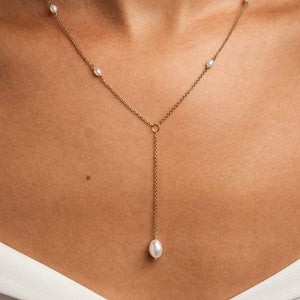
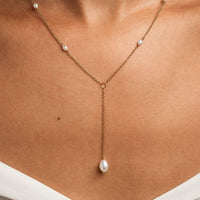
The piece they're describing → Freshwater Pearl Necklace for Women — 14K Gold Plated Chain, Natural Pearl Pendant
Personalize Yours


