



- Solid sterling silver, gold and platinum: a treated polishing cloth is the right tool for light tarnish and dullness.
- Plated jewelry: skip the treated inner layer. Use the unmedicated outer layer or a plain soft cloth, and only for fingerprints and dust.
- Pearls, opals, turquoise, emeralds and treated stones: keep the cloth off them. Polish only the metal.
- Heavy tarnish: a cloth only does so much, so use a tarnish method instead.
- Test first: try any new cloth on a small, hidden spot.
A polishing cloth is the quickest piece of jewelry care there is: no water, no bowl, no drying time. It is also the one most often used on the wrong jewelry. This page covers how the cloth works, which metals it suits, what to do with plated pieces, and how to use one. For the wider routine, see our jewelry care tips, and for water-based cleaning see how to clean jewelry at home.
How Does a Jewelry Polishing Cloth Work?
A polishing cloth works by gentle abrasion, by a chemical compound, or by both, applied through a treated inner layer. A gem retailer's care encyclopedia describes the typical build as two layers: an inner pad treated with rouge, tripoli, jeweller's red or a chemical compound, and an outer layer for wiping away residue. Rouge is iron oxide and tripoli is a fine siliceous abrasive. The same page says some silver-specific cloths chemically reduce silver sulphide instead of scrubbing it off.
That matters because tarnish is a surface layer on the metal. A general reference on tarnish describes it as a thin reaction layer that forms when a metal meets a compound such as sulfur, and says silver needs hydrogen sulfide to tarnish. Light tarnish can come off with a gentle polishing compound, while heavy tarnish needs stronger mechanical methods. A cloth sits at the gentle end of that range.
Which Metals Can You Use a Polishing Cloth On?
Solid gold, sterling silver and platinum respond well; plated metals do not. The care encyclopedia above says gold, silver and platinum all respond well, that sterling silver tarnishes most and so sees the most regular use, and that karat gold dulled by skin contact, cosmetics or chlorinated water can regain close to its original lustre. It adds that platinum dulls more slowly but can still be polished for surface scuffs.
| Jewelry | Treated polishing cloth? | What to do |
|---|---|---|
| Solid sterling silver | Yes | Silver cloth, light pressure, fresh cloth area |
| Solid gold, platinum | Yes | Gold cloth or a general jewelry cloth |
| Gold plated, vermeil, rhodium plated | No | Unmedicated outer layer or a plain soft cloth, dust and fingerprints only |
| Pearls, opals, turquoise, emerald, treated or oiled stones | Keep off the stone | Polish only the metal between stones |
| Mirror, satin or intentionally darkened (patina) finishes | Use with care | Vigorous polishing can flatten the finish |
The table follows the care encyclopedia and a jewelry-supply how-to for plated jewelry. Where a piece is an heirloom or you are unsure what it is made from, ask a jeweler before you polish.
Can You Use a Polishing Cloth on Gold Plated Jewelry?
No, not the treated kind. Gold plating is a very thin layer, and the abrasive in a polishing cloth can rub it away. The care encyclopedia says plated pieces, including vermeil, gold plate and rhodium plate, should be cleaned only with the unmedicated outer layer or a dedicated plated-finish cloth. A jewelry-supply how-to for plated jewelry gives a similar warning against polishing cloths that contain rouge, and recommends a gently damp cloth, then a dry towel, for gold plated pieces.
How thin is thin? An encyclopedia entry on gold plating describes industry tiers by thickness: gold flash or wash under 0.5 micron, gold plated at 0.5 micron or more, and heavy gold plate or vermeil at 2.5 microns or more. AJLuxe product pages do not publish a micron figure, so we do not quote one for our pieces. What we can say is that every plated piece has a finite layer that friction removes first at the high points. Our explainer on how gold plating actually works and our guide to how long gold plated jewelry lasts cover the rest, and how to clean gold plated jewelry gives the safe routine.
How to Use a Jewelry Polishing Cloth Step by Step
Use a dry cloth, light pressure and a clean part of the cloth each time. Washing is optional for the cloth but never for the jewelry: dirt trapped in the cloth is what scratches.
- Check the material first. Solid metal only. If you cannot tell whether a piece is plated, treat it as plated.
- Hold the piece over the cloth, not over a hard surface, so a slipped ring lands softly.
- Rub in short, even strokes along the metal. Do not press hard into engraving or filigree, where the abrasive can pack in.
- Move to a clean area of the cloth as it darkens. A grey or black mark on the cloth is lifted tarnish and is expected on silver.
- Buff with the outer layer to remove residue, then store the piece dry, sealed in a bag with an anti-tarnish strip if it is silver.
Silver Cloth, Gold Cloth or Plain Microfiber?
A silver cloth targets tarnish, a gold cloth targets dullness on karat gold, and a plain microfiber cloth only removes oil and fingerprints. Which one suits depends on the metal rather than on the price. A plain, soft, lint-free microfiber cloth is the safe daily choice for any jewelry, including plated pieces, since it carries no abrasive at all. Keep one in your jewelry box for the wipe-down after each wear, and keep the treated cloth for solid silver and gold. Using one cloth for everything is how silver abrasive ends up on a plated chain.
What a Polishing Cloth Cannot Do
A polishing cloth will not fix heavy tarnish, deep scratches, worn plating or a cloudy gemstone. Heavy tarnish usually needs a different approach, covered in our silver tarnish removal guide and how to clean tarnished jewelry. Worn plating cannot be polished back, since polishing removes material rather than adding it. Grime in the setting behind a stone is better handled with a soft brush and mild soap, which is the method in can you clean jewelry with dish soap. Prevention also beats polishing: see how to prevent jewelry tarnish and jewelry storage ideas.
What This Means for AJLuxe Jewelry
Most AJLuxe pieces are 925 sterling silver with 18K gold plating, so the treated silver cloth is not the right tool for them. The Initial Tag Necklace product page describes 18K gold over a 925 sterling silver chain, and for that kind of finish we suggest a soft, dry, non-abrasive cloth after each wear. We do not sell polishing cloths, so we are not nudging you toward one: if you buy a cloth, buy one whose label says it is safe for your metal. If you are shopping for plated pieces and want them to last, browse our necklaces and earrings, and remember that personalized pieces are final sale.
Frequently Asked Questions
What is the best polishing cloth for jewelry?
The best cloth is the one matched to your metal: a silver cloth for solid sterling, a gold cloth for karat gold, and a plain soft microfiber cloth for plated pieces. No single cloth is best for every piece.
What do professional jewelers use to clean jewelry?
Jewelers use workshop equipment and compounds that this guide does not cover, so we cannot speak for them. For home care, the sources we read point to a soft, clean cloth for surface shine and gentle washing for dirt, and they say to ask a jeweler about valuable or delicate pieces.
Can you use a polishing cloth on gold?
Yes on solid karat gold, where light polishing can restore lustre dulled by skin contact, cosmetics or chlorinated water. No on gold plated jewelry, where the abrasive can wear through the thin coating.
Are jewelry polishing cloths safe?
They are safe on the right metals when used dry and gently, and unsafe on plated finishes, pearls, opals and other soft or treated stones. Always test a new cloth on a small hidden spot first.
Can a polishing cloth remove tarnish from sterling silver?
Yes, a silver cloth can remove light tarnish by gentle abrasion or chemical action. Heavy tarnish needs a stronger method, and our tarnish guides cover the options.
How do you clean a jewelry polishing cloth?
The sources we read did not give a cleaning method, and many cloths are meant to stay dry, so follow the label on yours. As our own judgment, once the cloth is dark all over and no longer shines metal, it is spent and should be replaced.
Can I use a polishing cloth on cubic zirconia or diamonds?
Use it on the metal, not the stone. A stone does not need an abrasive cloth, and a soft brush with mild soap cleans the setting behind it far better.
What is the difference between a jewelry cloth and a microfiber cloth?
A jewelry polishing cloth is treated with an abrasive or compound, while a plain microfiber cloth is untreated. That makes microfiber the safer daily wipe and the treated cloth the specialist tool.
Sources
A gem retailer's care encyclopedia entry on polish cloths (cloth build, metals, plated and soft stone cautions), a jewelry-supply how-to on caring for plated jewelry (rouge cloths, damp cloth method), a general online encyclopedia entry on tarnish (causes, light and heavy removal) and one on gold plating (thickness tiers), all read on 2026-10-08. Product details come from ajluxe.com product pages.
Written by AJLuxe Team. Last updated: October 2026
All third-party trademarks, brand names and product names are the property of their respective owners. AJLuxe is not affiliated with, endorsed by, sponsored by, or otherwise connected to any third-party brand referenced in this article. Brand names are used solely for accurate comparative reference, and material descriptions reflect each brand's own published product specifications at the time of writing.
You Might Also Like
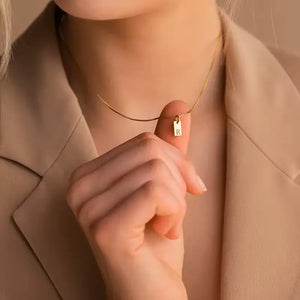

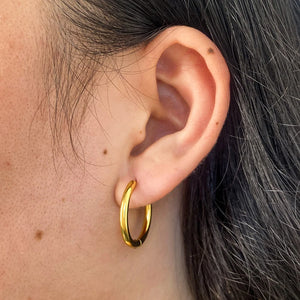
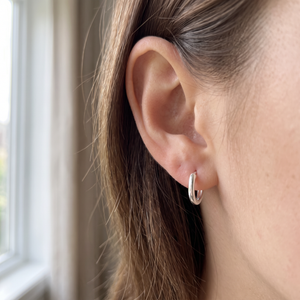

The piece they're describing → Initial Tag Necklace — 18K Gold Plated, Personalized
Personalize Yours


