


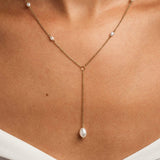
- Body color is the base hue. Overtone is the secondary tint you see when you tilt the pearl.
- Common body colors: white and cream are the most familiar. Black, grey and silver are also fairly common. Golden and dark shades cost more.
- Common overtones: pink (rose), green, purple and blue.
- Dyed pearls: dye changes the body color artificially. Overtone is a natural optical effect.
- Choosing: there is no single best color. One retailer's skin tone advice is below, labeled as advice.
If you have ever stood at a jewelry counter trying to describe why one white pearl looks pink and another looks silver, the word you were missing is overtone. This page explains pearl color in plain terms: how body color and overtone differ, which colors each pearl type can show, what is rare, how dyeing fits in and how to pick a shade for your own coloring. For what each color traditionally means as a gift, our pearl necklace meaning guide covers the symbolism, so this page sticks to the look.
Body Color vs Overtone: What Is the Difference?
Body color is a pearl's main base hue, and an overtone is a secondary translucent color that shows over it. A gem-lab pearl description we read says the body color is "often modified by additional colors called overtones" and lists pink (also called rose), green, purple and blue as typical ones. A pearl retailer's guide adds that overtone is a natural optical effect of light passing through the nacre layers, not a coating. Some pearls also show orient, an iridescent play of color that the lab page names as a separate phenomenon.
To see an overtone, hold the pearl in natural light and tilt it gently. The retailer's guide describes it as a translucent sheen that shifts slightly as you move the pearl. Under flat indoor light it can almost disappear.
Which Colors Does Each Pearl Type Come In?
| Pearl type | Typical body colors | Typical overtones |
|---|---|---|
| Akoya | White or cream | White, rose, ivory |
| South Sea | White to silver or golden | Silver, ivory, cream; champagne and gold on golden pearls |
| Tahitian | Charcoal, green-grey, silver-black | Peacock, green, aubergine, silver, and rarely rose |
| Freshwater | White, pink, peach, lavender | Pink, peach, lavender, cream |
The table combines the lab page and the retailer's guide, and the two do not use identical wording. The lab page, for example, lists Tahitian body colors as grey, black or brown, while the retailer lists charcoal, green-grey and silver-black. Treat the table as typical, not exhaustive. Our types of pearls guide explains where each type comes from, and freshwater vs saltwater pearls shows why freshwater has the widest palette.
What Are the Most Common Pearl Colors?
White and cream are the most familiar pearl colors, with black, grey and silver also fairly common. That is the lab page's summary, which adds that the palette extends to every hue. A second retailer's guide says freshwater pearls are available in many colors, most commonly cream, white, purple and pink, and that Akoya pearls are usually white with various overtones.
What Is the Rarest Color of Pearl?
Sources point to different answers, and none gives a ranked list. One retailer calls deep golden overtones, especially on South Sea pearls, rare and highly valuable, and calls peacock the most sought-after Tahitian overtone. An encyclopedia entry says a true black Tahitian pearl is extremely rare. Another retailer's color guide does not rank colors by rarity at all. The honest summary is that rarity depends on the type, the depth of color and how evenly it matches across a set. The retailer also notes that some buyers pay more for a color they simply like, even when it is not rare.
Why Do Some Pearls Look Flat or Milky?
Thin nacre tends to look milky with little overtone, while thicker nacre gives a richer, more vivid play of color. A retailer's color guide says exactly that. It is one reason two pearls of the same type and body color can look very different, and it is why luster matters as much as shade. Our pearl necklace buying guide covers luster and other quality points.
Are Pearl Colors Natural or Dyed?
Many are natural, and some are dyed. A pearls reference entry says inexpensive colored pearls are often dyed, usually with a fabric dye that penetrates only the first one or two nacre layers, and that valuable pearls are not dyed. A pearl retailer's guide puts it as a rule of thumb: dye artificially changes the body color, while overtone is natural and adds value. A bright pink, blue or purple pearl at a very low price is the usual dyed candidate. Another retailer notes that cultured freshwater pearls may be bleached or dyed after harvest, so ask. For the full checklist, see how to tell real pearls from fake ones.
Which Pearl Color Suits Your Skin Tone?
The closest thing to a rule is one retailer's advice, which we pass on as a starting point and not a standard. It suggests that cooler skin tones look good in silver or rose overtones on Akoya and South Sea pearls, in lavender or pink on freshwater pearls and in peacock or silver on Tahitian pearls. Warmer skin tones, it says, suit cream or ivory, peach or gold, and green or champagne. It adds that on neutral skin most overtones work, so mood and outfit can decide, and that rose is the most traditional Akoya choice.
Our own tip is practical: try the pearl against your face in natural light before you buy, since screens exaggerate overtones. For broader color matching beyond pearls, see our skin tone jewelry guide, and for coordinating pearl with other stones, our jewel tones jewelry guide.
Which Pearl Color Is Best?
None is objectively best, because it comes down to the look you want. White or cream is the classic and the easiest to pair with a gold or silver chain, as in our pearl necklace for wedding guide. Pink and lavender read as softer. Dark or golden pearls make a stronger statement, though they cost more and are harder to find.
Pearl Colors at AJLuxe
The pearls in our catalog are white. The Freshwater Pearl Necklace uses a cultured freshwater pearl on a gold plated chain, and the Pearl Drop Earrings use a white pearl on gold plated sterling silver, which is plating, not solid gold. We do not currently list pink, golden or black pearls. See the pearl jewelry collection for current pieces, and our best pearl necklace guide for help choosing.
More pearl guides
Frequently Asked Questions
What is the rarest color of pearl?
Sources disagree and none ranks colors. One calls deep golden South Sea pearls rare and highly valuable, and an encyclopedia entry calls true black Tahitian pearls extremely rare.
What kind of color is pearl?
Pearls are not one color. The lab page says white and cream are the most familiar, with black, grey, silver and nearly every other hue also possible, often with an overtone on top.
What is the difference between body color and overtone?
Body color is the pearl's main base hue, and an overtone is a secondary translucent tint over it, such as rose, green, purple or blue. Overtone shifts as you tilt the pearl.
Which pearl color is best?
There is no single best color. White and cream are classic, while pink, lavender, golden and dark pearls make different statements, so choose by the look and skin tone you like.
Are colored pearls dyed?
Some are, especially inexpensive bright ones. Dye usually penetrates only the first one or two nacre layers, and an overtone, unlike dye, is a natural effect of the nacre.
What are the most common types of pearls?
The four best known are freshwater, Akoya, South Sea and Tahitian. Our types of pearls guide compares them.
Which pearl color suits warm skin?
One retailer suggests cream or ivory, peach or gold, and green or champagne for warm skin. It is advice, not a rule, so test the pearl in natural light.
What color are the pearls AJLuxe sells?
White. We do not list pink, golden or black pearls at the moment.
Sources
A gem-laboratory pearl description page (body color, overtone, orient, common colors by type), two pearl retailer color guides (overtone definitions and lists by type, rarity statements, nacre thickness, skin tone advice, dyed pearls), an encyclopedia entry on pearls (dyeing) and an encyclopedia entry on baroque pearls (post-harvest treatment of freshwater pearls), all read 2026-10-08. The color tips about trying pearls against your face and screens exaggerating overtones are our own practical advice.
Written by AJLuxe Team. Last updated: October 2026
All third-party trademarks, brand names and product names are the property of their respective owners. AJLuxe is not affiliated with, endorsed by, sponsored by, or otherwise connected to any third-party brand referenced in this article. Brand names are used solely for accurate comparative reference, and material descriptions reflect each brand's own published product specifications at the time of writing.
You Might Also Like
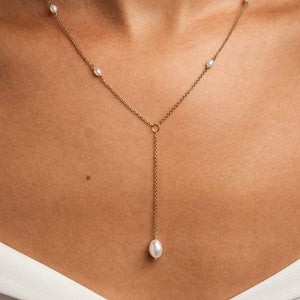
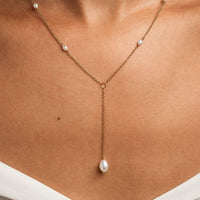
The piece they're describing → Freshwater Pearl Necklace for Women — 14K Gold Plated Chain, Natural Pearl Pendant
Personalize Yours


