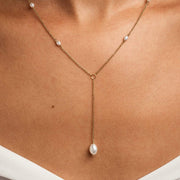
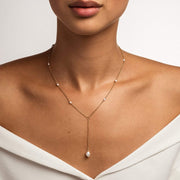
Pearl jewelry carries more history than almost any other gemstone category — and pearl is not technically a gemstone at all. It is an organic material produced by living mollusks, which makes it the …
Pearl jewelry carries more history than almost any other gemstone category — and pearl is not technically a gemstone at all. It is an organic material produced by living mollusks, which makes it the oldest used decorative material in human history alongside bone and shell. Archaeological records show pearl jewelry in ancient Egypt, Persia, and China dating back more than four thousand years. Roman women of wealth wore pearls as status symbols so conspicuously that Julius Caesar attempted to pass laws limiting pearl jewelry to women of specific social standing. The cultured pearl industry, developed by Mikimoto Kōkichi in Japan beginning in the late 1800s, democratized what had been among the rarest luxury materials on earth and transformed pearls from royal treasures into broadly accessible fine jewelry.
The fundamental distinction that confuses most pearl buyers: cultured pearls are real pearls. A cultured pearl and a natural pearl are the same material — layers of nacre (aragonite crystals in an organic protein matrix) built up by a mollusk around an irritant. The difference is that in a natural pearl, the irritant arrived accidentally; in a cultured pearl, a technician inserted a small nucleus (usually a shell bead or piece of mantle tissue) to initiate nacre production. The mollusk does the same biological work in both cases. The nacre is identical. Both are genuine pearls. Natural pearls are simply rarer because they occur without human initiation — perhaps one in ten thousand oysters produces a pearl naturally, and those pearls are typically imperfect in shape and size. Cultured pearls allow consistent production of high-quality round or near-round pearls in predictable colors and sizes.
The June birthstone designation gives pearl an additional layer of meaning for anyone born in the sixth month of the year. June actually has two modern birthstones — pearl and alexandrite (the rare color-change chrysoberyl) — but pearl has been the traditional June birthstone for centuries, long predating the modern birthstone list. Pearl's symbolic associations align naturally with June's position as a wedding month: purity, clarity, new beginnings, emotional wisdom. These traditional meanings have real cultural resonance that makes pearl pendants particularly apt for June birthdays, bridal jewelry, and anniversary gifts at milestones (the 30th anniversary is the pearl anniversary in the traditional gift list).
Contemporary pearl styling has moved decisively away from the traditional multi-strand choker that defined pearl jewelry through most of the 20th century. Modern jewelry design uses pearls as pendants on minimalist sterling silver chains, as single drops in simple earring settings, as accent elements alongside gemstones and metal shapes, and as focal points in sculptural settings that give the organic material a modern architectural context. The result is that pearl jewelry in 2025 reads as current and elegant rather than traditional and conservative — the material's inherent luster and organic warmth work as well in modern minimalist settings as they did in the elaborate pearl parures of the Victorian era.
| Pearl Type | Luster / Color Range | Typical Size | Price Range | Rarity |
|---|---|---|---|---|
| Natural Pearl | Very high luster; white, cream, grey, black | 3–10mm (irregular) | $500–$50,000+ per pearl | Extremely rare — almost never seen in modern market |
| Cultured Akoya | Very high luster; classic white with pink-rose overtone | 5–11mm (round) | $50–$2,000 per pearl | Moderate — Japanese and Chinese production |
| Freshwater | Moderate to high luster; white, pink, lavender, peach | 4–16mm (variable shape) | $5–$200 per pearl | Common — China is world's largest producer |
| South Sea | Satiny luster; white, silver, golden | 9–20mm (large) | $200–$10,000+ per pearl | Rare — Australia, Indonesia, Philippines |
| Tahitian | High luster; black, grey, peacock, green | 8–18mm | $100–$5,000 per pearl | Moderately rare — French Polynesia only |
| Mother-of-Pearl | Iridescent shell interior; white, cream, multi-color | Flat — used as inlay and disc shapes | $5–$100 per piece | Common — widely available shell material |
| Faux / Shell Pearl | High artificial luster; white | Any size (manufactured) | Under $5 per piece | Not a pearl — glass or plastic coated with pearlescent finish |
The distinction between cultured and natural pearls is misunderstood by most consumers, and the misunderstanding usually works against buyers. "Natural" pearl does not mean a better or purer pearl — it means one that formed without human initiation. The nacre quality, luster, and composition of a natural pearl and a cultured pearl are identical because the same biological process produces both. What differs is rarity and price: natural saltwater pearls are extraordinarily rare and command prices that reflect that rarity rather than any inherent quality advantage.
Virtually every pearl sold in fine jewelry today is cultured, including those sold at high price points by prestige brands. The cultured pearl industry produces pearls that are consistently superior in roundness, size consistency, and surface cleanliness compared to the highly variable natural pearls that occur without human management. If you encounter a piece described as "natural pearl" at a reasonable retail price, ask for documentation — genuine natural saltwater pearls at any quality level are priced in hundreds to thousands of dollars per pearl, not per strand or piece. Freshwater cultured pearls, the most widely available type, are genuine pearls in every sense that matters.
Freshwater pearls are cultured in freshwater mussels primarily in China, where decades of aquaculture development have produced a remarkable range of pearl qualities and styles. Unlike Akoya pearls (saltwater, nucleated with a shell bead), most freshwater pearls are tissue-nucleated — a small piece of mantle tissue is implanted rather than a shell bead, which means the resulting pearl is composed almost entirely of nacre with a very thin center nucleus. This makes freshwater pearls among the most nacre-rich pearls available, with relatively thick layers compared to their size.
The range of freshwater pearls available today is impressive: classic round white pearls that are nearly indistinguishable from Akoya at certain quality levels; oval, drop, baroque, and keshi shapes with organic irregular beauty; natural color ranges from white and cream through pink, lavender, and peach; and recently developed Edison pearls that achieve sizes previously available only in South Sea pearls at a fraction of the price. For pendant jewelry in the accessible fine jewelry category — which describes AJLuxe's pearl pieces — freshwater cultured pearls offer excellent nacre quality, attractive luster, and a range of shapes and colors that makes them the most versatile pearl type in current jewelry production.
June is one of three months with multiple birthstones — pearl, alexandrite, and moonstone are all associated with June in various gemological traditions. Pearl is the most traditional of these designations, appearing on the original birthstone lists compiled in the early 20th century and in jewelry traditions going back centuries before that. For June birthdays, a pearl pendant is among the most historically grounded and symbolically rich birthstone options available.
Pearl's symbolic associations are particularly rich for gift-giving: purity and clarity (the pearl as a symbol of pristine quality emerging from an unlikely source — an oyster); wisdom acquired through experience (the layering of nacre over time as a metaphor for wisdom built through challenges); and new beginnings (June's position at the start of summer, and the pearl's traditional association with brides and weddings). For a June birthday gift, a milestone anniversary, or a bridal party gift, pearl jewelry carries layers of meaning that complement the occasion rather than merely matching a calendar designation.
Pearl requires more attentive care than gemstone jewelry because it is an organic material with a relatively low hardness (Mohs 2.5–4.5) and sensitivity to chemicals. The fundamental rule is "last on, first off": put pearl jewelry on last, after applying perfume, hairspray, and skincare (which all contain compounds that damage nacre surface over time), and remove it first when you come home. This single habit prevents the majority of pearl damage that occurs from incidental chemical contact.
After wearing, wipe pearl jewelry with a soft damp cloth to remove skin oils and perspiration, which are mildly acidic and accelerate surface degradation over time. Store pearls in a soft pouch or cloth-lined box, separated from harder gemstones and metal jewelry that can scratch the soft nacre surface. Do not store pearls in airtight plastic bags — pearl is an organic material that needs some humidity circulation to prevent the nacre from drying and cracking. Do not clean with ultrasonic cleaners, steam, or harsh chemicals. A simple periodic hand-cleaning with lukewarm water and mild soap, followed by thorough drying and air-drying flat before storage, is all pearl jewelry requires for decades of lasting beauty.
The contemporary pearl aesthetic is not the pearl strand of your grandmother's generation — it is a single baroque freshwater pearl pendant on a thin 16-inch sterling silver chain; it is small pearl stud earrings with an offset setting; it is a pearl drop earring with an asymmetric companion piece. Modern pearl jewelry design leans into the organic irregularity of the material rather than fighting it with perfect uniformity. A slightly baroque or irregular pearl in a minimal sterling setting reads as modern, considered, and effortlessly sophisticated.
For outfit pairing, pearl jewelry is notably versatile: it reads equally well against a crisp white button-down shirt, a cashmere sweater, a silk blouse, or a structured blazer. The luster of pearl responds to fabric texture in an appealing way — it seems to glow more against matte fabrics like jersey and cotton, and takes on a warmer appearance against silk and satin. The one styling context where pearl benefits from thoughtful placement is very casual wear (athleisure, graphic tees, heavily distressed denim) — in those contexts, a delicate pearl pendant can read as an intentional contrast element rather than a miss, but the styling needs to be deliberate. Against smart casual and above, pearl is self-evidently appropriate and reliably elegant.
Yes, completely. A cultured pearl is produced by the same biological process as a natural pearl — a mollusk deposits nacre layers around a nucleus over a period of months to years. The nacre is chemically and physically identical whether the nucleus was placed by a technician or arrived naturally. "Cultured" describes the farming method, not the authenticity of the pearl material itself. Virtually every pearl sold in the commercial market today, including at high price points, is cultured. Natural pearls are a collector's market rarity commanding prices that reflect their scarcity, not any inherent quality advantage over high-grade cultured pearls.
Pearl carries one of the richest symbolic traditions in jewelry history. Primary associations include: purity and clarity (the pristine luster emerging from an organic process); wisdom earned through experience (the layered nacre as metaphor for wisdom built through difficulty over time); new beginnings (traditional bridal jewelry, June's summer opening, wedding anniversaries); and emotional calm (pearl's soft glow and organic warmth are associated with emotional clarity in multiple cultural traditions). These layered meanings make pearl jewelry appropriate for a wide range of occasions — birthdays, weddings, anniversaries, graduations, and meaningful life transitions.
Yes, with appropriate care habits. Pearl is softer than most gemstones (Mohs 2.5–4.5), which means it requires a bit more attentiveness than, say, a sapphire or diamond. The key daily-wear habits: put pearl on last (after perfume and hairspray), remove first when you come home, wipe with a soft damp cloth after wearing, and store in a soft pouch away from harder materials. With these habits, pearl jewelry is genuinely wearable daily. The pieces that do not survive daily wear are those that were regularly exposed to perfume, cleaning products, chlorinated water, and stored in direct contact with harder jewelry — all preventable with simple habits.
The essentials: wear last (after all personal care products), remove first. Wipe with a soft damp cloth after each wear to remove oils and perspiration. Store in a soft fabric pouch or lined box, separate from harder jewelry. Do not use ultrasonic cleaners, steam, or harsh chemicals. Do not store in airtight plastic — pearl needs mild humidity circulation to prevent nacre drying. Do not submerge in pools or ocean water. For periodic cleaning, use lukewarm water with a tiny drop of mild soap, gentle handling, thorough rinse, and flat air-drying before storage. These habits maintain pearl luster for decades.
Generally yes — pearl itself is an organic material with a long history of contact with human skin without adverse reactions. The potential sensitivity point in pearl jewelry is not the pearl but the metal setting: a pearl pendant on a nickel-containing chain can trigger nickel reactions at the neck contact point. AJLuxe pearl pieces use 925 sterling silver settings and chains, which contain no nickel, making them appropriate for nickel-sensitive wearers. Pearl is also hypoallergenic as a contact material — there is no well-documented pearl contact allergy in the clinical literature.
Both are official June birthstones, but pearl is the traditional June birthstone with a centuries-long history predating the modern birthstone list. Alexandrite was added to the June birthstone list in 1952 when the Jewelry Industry Council of America updated the official list — primarily because alexandrite is a gemstone (chromium-bearing chrysoberyl) and adds a traditionally precious-stone option for June alongside the organic pearl. For June birthday gifts, pearl is the more historically grounded and widely recognized choice; alexandrite is the rarer, more exotic option for buyers seeking something unusual. Moonstone is also occasionally cited as a June stone in older traditions.
The tooth test is a practical first check: genuine pearls (natural or cultured) feel slightly gritty when lightly touched against tooth enamel because nacre crystals create a microscopically rough surface. Fake pearls (glass or plastic with pearlescent coating) feel smooth against teeth. Real pearls are also heavier than glass imitations of the same size and slightly warm rather than cool to the touch. The surface of real pearls has subtle irregularities under close inspection (even very fine cultured pearls are not perfectly uniform). Imitation pearls look too perfect at close range. When purchasing fine pearl jewelry, buy from reputable sellers who can document the pearl source.
Yes — pearl comes in a wide natural color range. Akoya pearls are the classic white to cream with a pink-rose overtone. Freshwater pearls occur naturally in white, pink, lavender, peach, and gold tones. Tahitian pearls from French Polynesia occur in the dark range: black, grey, dark green, and the prized "peacock" overtone (green-purple iridescence on a dark body). South Sea pearls range from white to silver to warm golden (the golden South Sea pearls from the Philippines are among the most prized). Natural color pearls have not been dyed — the color is produced by the specific mollusk species and the mineral content of the water in which they were cultured.
Purity, wisdom and new beginnings most traditionally — pearls are one of the few gems formed inside a living creature, which is part of why they carry that meaning. See pearl necklace meaning for the full tradition.
Yes — both pieces use natural freshwater pearl, not a faux or plastic imitation.
1 of these 2 styles is in stock now. We hold our own inventory rather than dropshipping, so anything listed as available is on our shelves and ready to ship.
Orders placed before 12pm EST ship the same day; everything else ships the next business day. Delivery inside the USA takes 3–5 days from dispatch, and shipping is free with no minimum order.
Yes, completely. Cultured pearls are produced by the same biological process as natural pearls — nacre deposited by a mollusk. The nacre is chemically identical whether the nucleus arrived naturally or was placed by a technician. Virtually every pearl sold commercially today is cultured.
Yes, with proper care habits: put pearl on last after perfume and hairspray, remove first when home, wipe with soft damp cloth after wearing, store in soft pouch away from harder jewelry. With these habits, pearl jewelry is genuinely wearable daily for decades.
Both are official June birthstones. Pearl is the traditional June birthstone with a centuries-long history. Alexandrite was added in 1952. For June birthday gifts, pearl is the more historically grounded and widely recognized choice; alexandrite is the rarer, more exotic option.
Yes. Akoya pearls are classic white to cream with pink-rose overtone. Freshwater pearls occur in white, pink, lavender, and peach. Tahitian pearls range from black to peacock green-purple. South Sea pearls span white to golden. Natural color pearls have not been dyed — color comes from the mollusk species and water mineral content.
Purity, wisdom and new beginnings — pearls are formed inside a living creature rather than mined, which sets the tradition apart from other gemstones. See pearl necklace meaning for the full history.
Both pieces here use natural freshwater pearl, checked against each product's own listing — not a plastic or glass imitation.
1 of 2 in stock — 62 reviews sit at a 4.39 average across the collection.
Anything unworn can be returned within 30 days, and shipping is free in the USA both ways with no minimum order.
The guides shoppers open most before choosing this piece.