


- They're the same thing. "Sterling silver" and "925 silver" name the identical 92.5%-silver alloy — just two labels for one standard.
- The 925 stamp means 92.5% pure silver + 7.5% copper (or another hardening metal).
- What's actually different: not sterling vs 925, but sterling/925 vs other silver types — fine silver (999), Argentium, and silver-plated pieces, all covered in the comparison table below.
- Resale value: sterling silver carries real melt value; silver-plated jewelry has almost none. See the resale section for numbers.
- What to look for: buy jewelry stamped 925, .925, or Sterling — that stamp is your only real guarantee.
If you've shopped for a silver necklace and wondered whether "sterling silver" and "925 silver" are two different products, they're not. The terms are interchangeable — every jeweler, hallmarking office, and trade body uses them to mean the same 92.5% silver alloy. The real question worth asking isn't sterling vs 925. It's how that alloy stacks up against fine silver, Argentium, and silver-plated pieces, and what that means for your wallet, your skin, and how long the piece will last.
Sterling Silver and 925 Silver Are the Same Alloy
Sterling silver has been defined for centuries as an alloy containing 92.5% pure silver and 7.5% other metals — most commonly copper, sometimes zinc or germanium. The number "925" is simply the metric expression of that same standard: 92.5 out of 1,000 parts pure silver.
Both terms describe the exact same composition:
- 92.5% silver — gives the piece its shine, color, and hypoallergenic base
- 7.5% copper (typically) — adds hardness and durability that pure silver lacks
Different markets favor different terminology. In the US and UK, "sterling silver" is the everyday term. In Europe and international trade, "925" shows up more because it's a numeric standard that doesn't need translation. You'll often see both together — "925 sterling silver" — which is just the two labels stacked for clarity, not two different grades.
Sterling Silver vs Fine Silver vs Argentium vs Plated: The Comparison That Actually Matters
Since sterling and 925 aren't actually different, the comparison worth making is between sterling/925 silver and the other silver types you'll see on product listings. Here's how they stack up on the things that affect how a piece wears, tarnishes, and holds its value.
| Silver Type | Purity | Tarnish Resistance | Durability | Typical Price Tier | Best Use |
|---|---|---|---|---|---|
| Fine silver (999) | 99.9% | Best — very little copper to react | Low — bends, dents, scratches easily | Higher (more silver by weight) | Investment bars/coins, some stud earrings |
| Sterling / 925 silver | 92.5% | Moderate — tarnishes over weeks to months | Good — wearable daily | Mid | All jewelry: necklaces, rings, bracelets, earrings |
| Argentium silver | 93.5% or 96% | Very good — germanium additive slows tarnish sharply | Very good | Mid-to-premium | Modern fine jewelry, low-maintenance pieces |
| Silver-plated | Thin surface layer only (base metal core) | Poor — plating wears through | Low — base metal shows through over time | Lowest | Fashion jewelry, short-term wear |
The 92.5% composition is the balance point where silver is soft enough to shape into detailed jewelry but hard enough to survive daily wear without bending out of shape. That's why it's remained the jewelry standard for over 800 years — the ratio genuinely works. Argentium is the newer option worth knowing: it swaps some copper for germanium, which slows the tarnishing reaction significantly, though it costs more and is less widely available than standard 925.
What Is Sterling Silver Actually Worth? Resale and Melt Value Explained
This is the part most silver guides skip, and it's the clearest way to see why the sterling-vs-plated distinction matters more than sterling-vs-999.
Because sterling silver is 92.5% real silver by weight, it carries genuine melt value — the price a refiner would pay for the raw metal, based on the day's silver spot price. A typical sterling silver necklace weighs 3–10 grams, so the silver content alone is worth a few dollars at current spot prices; the rest of the retail price covers design, labor, and brand. That's not a lot per piece, but it's real, and it means sterling silver jewelry can always be resold, traded in, or scrapped for something.
Silver-plated jewelry has almost no resale value. The silver layer is measured in microns, not grams — there's nothing meaningful to melt down. A refiner or pawn shop will typically decline it outright or offer next to nothing, because the base metal underneath (usually brass or copper) isn't precious.
- Selling to a refiner or dealer: expect roughly 85–95% of melt value for solid sterling pieces.
- Pawn shops: typically offer around 50% of resale value, since they need margin to resell.
- Antique or designer sterling: can be worth more than melt value to collectors — a maker's mark or period design adds value beyond the raw silver.
The practical takeaway: sterling/925 silver is never "worthless" even at the end of its life with you. Silver-plated jewelry is disposable by comparison — once the plating wears through, it's done.
How to Tell Real 925 Silver from Fakes
Counterfeit or mislabeled silver is common in fashion jewelry. Here's how to check what you have.
1. Look for the 925 stamp. Real sterling silver is stamped 925, .925, or "Sterling" — typically inside a ring band, on the back of a pendant, or on a clasp. A magnifying glass helps. No stamp at all usually means silver-plated or silver-colored base metal. Note that a stamp alone isn't proof — some counterfeit pieces are stamped 925 falsely, which is why combining tests matters. For a full breakdown of every stamp variation and what each one means, see our complete guide to the 925 hallmark.
2. The magnet test. Silver isn't magnetic. Hold a strong magnet near the piece — if it's attracted, there's significant iron or steel content and it isn't silver. This test isn't foolproof (some non-silver metals aren't magnetic either), but it catches obvious fakes fast.
3. The white cloth test. Rub the piece firmly with a clean white cloth. Real sterling silver leaves a faint black mark from silver oxide, the compound that forms as silver starts to tarnish. Fake or plated silver typically doesn't leave this mark.
4. The acid test. Jewelers use nitric acid or a silver testing solution. A drop produces a color reaction: red-cream means sterling silver, dark green means base metal, no reaction means fine silver. This is the most reliable test, and jewelers will run it for $5–$10.
Common Silver Scams and Mislabeling to Watch For
Beyond outright fakes, a few mislabeling tricks show up often enough to know about before you buy:
- "925 Italy" on lightweight plated pieces. Genuine Italian sterling silver is stamped 925 Italy and feels substantial in the hand. Very light pieces carrying this stamp are sometimes plated rather than solid — weight is a useful red flag.
- EPNS or EP marks sold as "silver." These stand for electroplated nickel silver or electroplate — a thin silver layer over base metal, not sterling. Listings that bury this abbreviation in fine print are technically accurate but easy to misread.
- "Tibetan silver" or "silver tone." These phrases describe the color, not the metal. Neither guarantees any actual silver content — treat them as costume jewelry unless a 925 stamp is also present.
- Prices too low to be real. If a seller claims "solid 925 silver" for a substantial piece under $10, the math doesn't work — legitimate sterling at that price would mean selling below material cost.
The fastest way to sidestep all of this: buy from sellers who state the metal composition clearly on the product page, and verify the stamp yourself when the piece arrives.
Recycled and Ethically Sourced Sterling Silver
Newly mined silver comes with real environmental costs — most of the world's silver supply is actually a byproduct of mining other metals, and the process involves erosion, water use, and chemical runoff. Recycled sterling silver sidesteps most of that: silver reclaimed from old jewelry, silverware, and industrial scrap is melted down, purified, and re-alloyed to the same 92.5% standard. Chemically, it's identical to newly mined sterling silver — there's no quality difference, only a lower environmental footprint.
If sourcing matters to you, look for brands that state their silver is recycled or work with RJC-certified (Responsible Jewellery Council) manufacturers, which commit to independently audited labor and environmental standards. This is a genuinely underexplored angle in most silver buying guides, but it's an easy thing to ask about before you buy — a straight answer is a good sign.
Does 925 Silver Tarnish?
Yes, and that's completely normal. Tarnishing happens when the copper in the 925 alloy reacts with sulfur compounds in air, sweat, perfume, and humidity, forming a dark patina (silver sulfide) on the surface.
Tarnish doesn't mean the silver is low quality or fake — it means it's real sterling silver. Pure silver tarnishes more slowly since it has less copper to react, but 925 silver still tarnishes, usually within weeks to months of regular wear depending on your environment and body chemistry.
Tarnish wipes off easily with a polishing cloth, mild soap and water, or a baking soda paste, and it doesn't permanently damage the metal. For full prevention habits, at-home cleaning methods, and how long sterling silver really lasts, see our dedicated sterling silver tarnish guide.

What Does the 925 Stamp Look Like?
The 925 stamp appears in a few forms — all indicate the same standard:
- 925 — most common international marking
- .925 — alternative decimal format
- Sterling — the word mark, more common on older and American-made pieces
- Ster — abbreviated form, used on smaller pieces where full marking doesn't fit
- SS — less common abbreviation, seen on some older pieces
On a necklace or bracelet, the stamp is usually on the clasp or spring ring. On rings, it's inside the band. On earrings, it's on the post or backing. On pendants, it's on the reverse, often near the bail. Country-specific variations (S925, 925 Italy, UK hallmark systems) and their exact meanings are covered in full detail in the 925 stamp guide — worth reading if you want to identify exactly where a piece was made.
Browse AJLuxe's 925 sterling silver jewelry collection — every piece stamped 925, hypoallergenic, with free US shipping. If you want a simple, everyday piece to start with, the 925 sterling silver hoop earrings are solid sterling silver with no plating to wear through.
Which Silver Type Should You Actually Buy?
Matching the type to how you'll wear it saves money and disappointment:
- Daily-wear necklaces, rings, bracelets: sterling/925 silver. It's the only type built for constant contact with skin, water, and friction.
- Occasional-wear statement earrings: fine silver (999) is an option if you want maximum brightness and don't mind extra care, but 925 is still the safer default.
- Low-maintenance pieces you don't want to polish often: Argentium, if you can find it and don't mind paying more.
- Costume or trend pieces you'll wear briefly: silver-plated is fine, as long as you know it won't last or hold value.
- Avoid entirely: unmarked "silver-tone" jewelry with no stamp and no stated composition — you have no way to know what you're actually buying.
For most people shopping for everyday jewelry, the answer is simple: look for the 925 stamp, and don't overthink the "sterling vs 925" question, because there isn't one.
Related reading: 925 Silver vs 999 Silver: Which Is Better for Jewelry?
Related reading: Sterling silver initial necklace guide.
Related reading: Can you wear sterling silver in the shower.
Related reading: Is 925 silver real silver.
Related reading: Is 925 sterling silver good quality.
Related reading: Resin vs enamel jewelry.
Related reading: Demi fine vs fine jewelry.
Frequently Asked Questions
Is sterling silver the same as 925 silver?
Yes, completely. Sterling silver and 925 silver are two names for the same alloy: 92.5% pure silver and 7.5% copper, typically. The number 925 is the metric stamp used internationally; "sterling" is the traditional name used mainly in English-speaking markets. Jewelry marked 925 and jewelry marked "sterling" are identical in composition.
Is 925 silver real silver?
Yes. 925 silver contains 92.5% genuine silver, the standard for fine silver jewelry worldwide. It's real silver by every accepted definition. The only silver purer than 925 is fine silver (999), which is 99.9% silver but too soft for most jewelry use.
What does the 925 hallmark mean on jewelry?
The 925 hallmark is a quality guarantee that the piece contains at least 92.5% pure silver. It's stamped, engraved, or laser-marked by the manufacturer as certification of composition. In many countries, this marking is legally required for jewelry sold as silver.
Does 925 silver turn skin green?
Real 925 silver doesn't turn skin green — that reaction comes from copper-heavy base metals like brass reacting with sweat. While 925 silver contains 7.5% copper, the silver content is high enough that the green reaction doesn't happen under normal wear. If a piece stamped 925 is turning skin green, it's likely mislabeled or plated over base metal.
Is 925 silver hypoallergenic?
For most people, yes. 925 sterling silver is safe for sensitive skin, and the 7.5% copper alloy doesn't trigger nickel reactions, the most common metal allergy. People with severe silver sensitivity (rare) may still react. If you have a known metal allergy, test with a small piece on the wrist before wearing daily.
What's the difference between 925 silver and 999 silver?
925 silver is 92.5% pure silver alloyed with copper for durability — the jewelry standard. 999 silver is 99.9% pure silver (fine silver), softer and brighter but too malleable for rings and bracelets that need to hold their shape. Most fine jewelry uses 925; 999 is mainly for investment bullion and some stud earrings.
Is 925 silver better than silver-plated jewelry?
Yes, significantly. Silver-plated jewelry has a thin silver layer over a base metal, usually brass or copper. Once the plating wears through, the base metal shows and can cause skin reactions. 925 silver is solid silver all the way through — it polishes back to like-new condition repeatedly and never reveals a different metal underneath. It also holds real resale value, unlike plated pieces.
How do I know if my silver is real 925?
Look for the 925, .925, or "Sterling" stamp — inside the band for rings, on the clasp for necklaces and bracelets, on the post for earrings. No stamp, or a stamp reading EPNS, EP, or similar electroplated designations, means the piece is plated. A jeweler can also run an acid test for a definitive answer.
What is Argentium silver, and is it better than regular sterling?
Argentium is a modern sterling alloy (93.5% or 96% silver) that replaces some of the copper with germanium. That swap slows tarnishing noticeably compared to standard 925, and it costs more as a result. It's still fundamentally sterling silver — just a tarnish-resistant variant, not a different purity tier for everyday buying decisions.
Is 925 sterling silver worth anything if I sell it?
Yes. Because it's 92.5% real silver by weight, sterling silver has genuine melt value based on the day's silver spot price, and refiners or dealers typically pay 85–95% of that melt value. Pawn shops usually pay less, around 50% of resale value. Silver-plated jewelry, by contrast, has essentially no resale value since there's no meaningful silver content to reclaim.
Can 925 silver be worn in water?
Brief contact, like washing hands, is fine. Extended exposure — showers, swimming, hot tubs — speeds up tarnishing because humidity, chlorine, and dissolved minerals react with the copper in the alloy. Remove sterling silver before swimming and showering to maximize its lifespan.
925 Silver: The Only Number Worth Knowing
Sterling silver and 925 silver are the same thing, always — that part of the question has one answer. The comparison that actually affects your buying decision is sterling/925 against fine silver, Argentium, and plated silver, and on that front 925 wins for most everyday jewelry: durable enough for daily wear, hypoallergenic for most people, and it holds real resale value that plated jewelry simply doesn't.
The 925 stamp is your protection either way. Any piece sold as "silver" without that marking is either plated or mislabeled — buy stamped, and you avoid the piece turning a different color a month in.
Shop AJLuxe's full sterling silver jewelry collection — every piece stamped 925, hypoallergenic, with free US shipping. Start with the 925 sterling silver hoop earrings for a simple, solid everyday piece with no plating to wear through.
Last updated: July 2026. Written by the AJLuxe team — specialists in personalized sterling silver jewelry.
For a deeper look at every stamp variation and country-specific hallmark rules, see our complete guide to what the 925 stamp means on jewelry.
Related: Sterling Silver vs Gold Plated: Which to Choose
All third-party trademarks, brand names and product names are the property of their respective owners. AJLuxe is not affiliated with, endorsed by, sponsored by, or otherwise connected to any third-party brand referenced in this article. Brand names are used solely for accurate comparative reference, and material descriptions reflect each brand's own published product specifications at the time of writing.
You Might Also Like
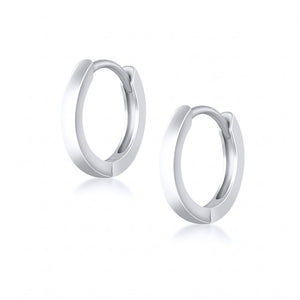
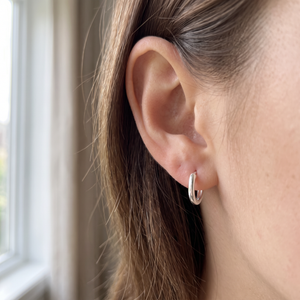
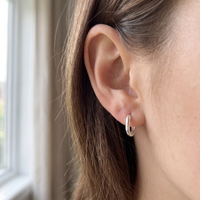
The piece they're describing → Silver Huggie Earrings for Women — 925 Sterling Silver, Hypoallergenic, Minimalist
Personalize Yours


