


📖 More Jewelry Hallmark Guides
📖 More Jewelry Hallmark Guides
TL;DR
925 = sterling silver. It means the metal is 92.5% pure silver — the international standard for silver jewelry. A 925 stamp is a quality mark, not a warning. For a full breakdown of every jewelry stamp type, see our jewelry hallmarks guide. If a gold-colored piece says 925, it's gold-plated sterling silver: real silver underneath, gold coating on top.
You found a stamp that says "925" on a ring, necklace, bracelet, or pair of earrings. Maybe it's on a gold-colored piece and you're confused — shouldn't gold say something about gold? Here's the answer: 925 identifies the base metal as sterling silver. It means the piece contains 92.5% pure silver by weight.
This guide covers exactly what 925 means, how it compares to other silver marks, why gold-colored jewelry often carries a 925 stamp, and how to verify you have the real thing.
What Does 925 Mean on Jewelry?
The 925 stamp is a millesimal fineness mark — a system that expresses metal purity as parts per 1,000. A stamp of 925 means 925 parts out of 1,000 are pure silver, which equals 92.5% silver by weight. The remaining 7.5% is typically copper, added to strengthen the metal.
This alloy is known as sterling silver — the universal standard for silver jewelry. You'll see 925 marked on pieces made worldwide, though some countries and eras use slightly different notation:
| Stamp | What It Means | Used Where |
|---|---|---|
| 925 | Sterling silver — 92.5% pure | International standard (most common) |
| Sterling | Sterling silver — same as 925 | USA, UK (text version) |
| Ster | Sterling silver — abbreviated form | Older American pieces |
| SS | Sometimes used for sterling silver | Varies — less common |
| 925 Italy | Sterling silver, manufactured in Italy | Italian-made pieces imported to the US |
All of these stamps indicate sterling silver at 92.5% purity. The number 925 is simply the most universally recognized form today.
925 vs Other Silver Purity Marks
Sterling silver at 92.5% is not the only silver purity. Here's how it compares to every common silver mark:
| Stamp | Silver Purity | Name | Common Use |
|---|---|---|---|
| 999 | 99.9% | Fine silver | Silver bullion, some traditional jewelry |
| 925 | 92.5% | Sterling silver | Standard for jewelry worldwide |
| 900 | 90.0% | Coin silver | Antique American silverware |
| 835 | 83.5% | German silver standard | Antique European pieces |
| 800 | 80.0% | European silver | Antique continental European jewelry |
For modern jewelry, 925 is by far the most common. Fine silver (999) is too soft for everyday pieces — it bends and scratches easily. The addition of copper in sterling silver makes it significantly harder while keeping it beautifully bright.
Why Does Gold-Colored Jewelry Say 925?
This is the most common source of confusion. If a ring looks gold but says 925, it means the ring is gold-plated sterling silver. The 925 mark identifies what the piece is made of underneath — the base metal is 925 sterling silver, and the visible gold surface is a coating.
This is a good thing, not a problem. A sterling silver base is far superior to the brass, copper, or zinc alloy bases used in costume jewelry. Sterling silver is hypoallergenic, holds its shape, and takes plating well.
When you see both a gold purity stamp and 925 together — such as 18K 925 or 750/925 — it means:
- 925 = the base metal is sterling silver
- 18K / 750 = the plating layer is 18-karat gold
This is how AJLuxe jewelry is made: 925 sterling silver base, coated with genuine 18K gold plating. The 925 stamp is a quality signal, confirming the base is real sterling silver rather than mystery metal.
Curious how that gold-plated finish compares to solid gold? See white gold vs yellow gold for how the two solid-gold colors are actually made.
Is 925 Silver Real Silver?
Yes — 925 sterling silver is real silver. It is 92.5% pure silver by weight, with copper added for durability. When someone says "real silver jewelry," they almost always mean 925 sterling silver. It is the industry standard, used by every reputable jewelry maker from independent artisans to major fine jewelry brands.
Fake silver exists — metals like nickel silver, German silver, or alpaca silver contain no silver at all despite their names. These will never be stamped 925 because they contain zero silver. A genuine 925 stamp indicates real silver content.
Is 925 Silver Hypoallergenic?
Yes — 925 sterling silver is nickel-free and hypoallergenic for the vast majority of wearers. The alloy uses silver and copper as its two components. Copper sensitivity is rare (less than 0.1% of people), and silver itself is not a common allergen. Sterling silver is one of the safest jewelry metals for sensitive skin.
Note: some very cheap pieces labeled "sterling" may contain trace nickel. Genuine 925 from a reputable maker does not. If you have severe metal sensitivities, look for pieces explicitly labeled "nickel-free 925 sterling silver."
Does 925 Silver Tarnish?
Yes — sterling silver tarnishes. Tarnish is a natural surface reaction: silver combines with sulfur compounds in the air and skin oils to form silver sulfide, a grey-black layer on the surface. It's completely harmless and easily reversed.
Where Is the 925 Stamp Located?
The placement varies by jewelry type:
- Rings: inside the band, stamped in small text
- Necklaces and bracelets: on the clasp or on a small tag near the clasp
- Earrings: on the post, butterfly back, or ear wire
- Pendants: on the bail (the loop the chain threads through)
On very small pieces or thick plated pieces, the stamp can be difficult to find without magnification. A jeweler's loupe (10×) will reveal stamps that are invisible to the naked eye. If you genuinely cannot find a stamp on a piece claiming to be silver, treat it with skepticism.
How to Verify a 925 Stamp Is Genuine
Counterfeit stamps exist. Here's how to verify:
- Look at the stamp itself: genuine strikes are clean, deep, and consistent. Fake stamps are often shallow, uneven, or smeared.
- Acid test: a jeweler applies silver-testing acid to a scratch from the piece. Genuine sterling silver doesn't dissolve or change color at 925 strength.
- XRF (X-ray fluorescence) test: non-destructive, reads exact metal composition. A jeweler can run this in under a minute.
- The magnet test: silver is not magnetic. If a piece labeled 925 is attracted to a magnet, it's not sterling silver.
If a piece is priced like costume jewelry but claims to be 925 silver, verify before assuming it's genuine.
What Is 925 Italy on Jewelry?
925 Italy means the piece is sterling silver (92.5% pure) manufactured in Italy. The "Italy" designation is a country-of-origin mark required by US Customs for imported jewelry. Italian-made sterling silver is generally well-regarded for quality and craftsmanship. The silver purity is identical to any other 925 piece — the Italy mark tells you where it was made, not that it's a different or better type of silver.
Final Thoughts
The 925 stamp is a mark of quality, not confusion. It tells you the piece is made with genuine sterling silver — the international standard for silver jewelry and the best base available for gold plated pieces. Finding 925 on a gold-colored piece means you have gold plating over a quality sterling silver base: hypoallergenic, durable, and worth buying.
The pieces to be cautious about are those with no stamp at all, or vague stamps like "GP" with no metal number. Those are the ones where you don't know what you're getting.
All AJLuxe jewelry is stamped 925 — 18K gold plated over 925 sterling silver, nickel-free at every layer. Browse our gold plated necklaces, earrings, and stackable rings.
Written by the AJLuxe team, specialists in 18K gold plated sterling silver jewelry. Last updated: May 2026.
Wondering about other hallmarks on your jewelry? We have dedicated guides for what 585 means (14K gold), what 750 means (18K gold), what 375 means (9K gold), and what HGE means on gold-plated pieces.
Explore more: Complete Gold Jewelry Guide
For how 925 sterling silver compares to gold plating, stainless steel, titanium, and every other metal in a piece of jewelry, see our complete jewelry materials guide.
How to Verify Your 925 Stamp Is Genuine
A 925 stamp alone doesn't guarantee authenticity — stamps can be forged, and cheap alloys are sometimes marked 925 to mislead buyers. Here's how to check what you're actually wearing:
- Look for a maker's mark next to the 925. In the US, the FTC requires a registered trademark or manufacturer's mark alongside any purity stamp. A lone "925" with no accompanying logo, initials, or hallmark is a common sign of an uncertified or counterfeit piece. Reputable brands stamp both — for example, AJLuxe pieces carry the 925 mark plus the brand's hallmark.
- Try the magnet test. Sterling silver is not magnetic. If a "925" piece clings to a strong magnet, it's a base-metal fake with a fraudulent stamp.
- Check for green or black skin discoloration. Genuine sterling silver won't turn skin green. Greenish residue usually points to a brass or copper core with only a thin silver wash — not true 92.5% sterling.
- Look at the stamp quality itself. Genuine hallmarks are crisp, evenly stamped, and consistently placed (usually inside a ring band, on a clasp, or on an earring post). Blurry, uneven, or oddly positioned stamps can indicate an aftermarket fake stamp added to boost resale value.
- Use the ice cube test as a rough check. Silver conducts heat exceptionally well — an ice cube placed on genuine sterling silver melts noticeably faster than on stainless steel or silver-plated base metal. It's not conclusive alone, but useful alongside the other checks.
- When in doubt, get a professional test. A jeweler can run an acid test or use an electronic silver tester for a definitive purity reading in under a minute — worth it for high-value pieces or secondhand purchases.
None of these tests requires damaging the piece, and running two or three together (maker's mark + magnet + skin check) is enough to catch the vast majority of mislabeled or fake "925" jewelry before you buy.
Related reading: 925 Sterling Silver Price Per Gram (2026): How It's Calculated.
All third-party trademarks, brand names and product names are the property of their respective owners. AJLuxe is not affiliated with, endorsed by, sponsored by, or otherwise connected to any third-party brand referenced in this article. Brand names are used solely for accurate comparative reference, and material descriptions reflect each brand's own published product specifications at the time of writing.
You Might Also Like

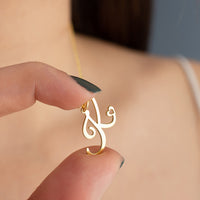
The piece they're describing → Heart Initial Necklace for Women — 18K Gold Plated, Personalized Letter + Heart Pendant
Personalize Yours


