


- 925 = 925 parts per 1,000 silver = 92.5% = sterling silver. Italy = country of origin.
- 925 Italy and plain 925 are the same purity. Italy tells you the origin, not extra silver.
- It is silver, not gold. A gold colored piece stamped 925 Italy is usually silver with a gold layer.
- 825, 325, 926 and 923 are not standard sterling marks. Often a worn or misread 925, so test it.
- 800 beside Italy means 80% silver, lower than sterling.
What does 925 Italy mean on a necklace, chain or ring?
It means the piece is stamped as 92.5% silver (sterling) and marked as coming from Italy. The 925 is a purity mark: 925 parts per 1,000 are silver, and the remaining 7.5% is usually copper, added because pure silver is too soft for jewelry. "Italy" is a country word, which is why searches like "italy 925", "925 italy stamp" and "what does italy 925 mean" all lead to the same answer. For the number alone, see what 925 means on jewelry.
925 Italy vs 925 vs S925 vs 800: comparison table
Only the number says anything about silver content. Words and letters around it say where or by whom.
| Stamp | Silver content | What it tells you |
|---|---|---|
| 925 Italy, Italy 925 | 92.5% (sterling) | Sterling purity, Italian origin |
| 925 | 92.5% (sterling) | Sterling purity, origin not stated |
| S925, Ster, Sterling | 92.5% (sterling) | Same purity, written differently |
| 800, 800 Italy | 80% | Lower silver content than sterling; common on older European silver |
| 999 | 99.9% (fine silver) | Nearly pure, soft; see 925 vs 999 silver |
| SP, EP, silver plated | A thin silver layer over another metal | Not sterling at all |
"Sterling" and "925" are the same standard; our sterling silver vs 925 silver guide covers that. Whether Italian silver is "better" is a matter of craft, not purity: a 925 piece made elsewhere holds the same 92.5% silver.
What do 825 Italy, 325 Italy, 926 Italy and 923 Italy mean?
None of them is a standard sterling mark, and we found no source that confirms 825 or 325 as an official Italian silver grade. The honest reading is that the stamp is either not what it looks like or is not sterling. Here is how to think about each, hedged because stamps are tiny and sources are limited:
| You see | Most likely explanation | What to do |
|---|---|---|
| 825 Italy, Italy 825 | A jewelry reference describes an 825 stamp as 82.5% metal content, which would be below sterling. Not a grade we could confirm for Italian silver. It may also be a worn 925. | Look at the stamp under a magnifier, then have it tested |
| 325 Italy, Italy 325 | The first digit may be a worn or shallow 9 read as a 3. A 325 stamp is not a standard silver grade | Compare with other marks on the piece; test it |
| 926 or 923 Italy | Almost certainly 925 with a blurred last digit | Read it again under bright light with a magnifier |
| 800 Italy | 80% silver, an older European grade lower than sterling | Treat as real silver of lower purity; test if you plan to sell |
Collector references list 925, 835 and 800 as the silver grades Italian makers have used, with 835 now rare. These are secondary sources, not an official hallmarking text, so use them as a guide only. If the number is unclear, the answer is a test, not a guess.
Is 925 Italy real silver?
A genuine 925 Italy piece is real sterling silver, but the stamp alone does not guarantee that. Anyone can stamp a number onto a base metal, and a country word makes a piece look more trustworthy without proving anything. Treat the stamp as a clue and check the piece:
- Read the stamp. It should be crisp and even, not blobby or painted on.
- Check the wear points. A different color showing at edges, clasps or the inside of a ring, or a surface that is flaking, suggests plating over another metal.
- Watch how it tarnishes. Real sterling darkens to grey or black and polishes back; green or blue marks on the skin point to copper rich base metal under a coating. See does sterling silver tarnish.
- Try a magnet, knowing its limit. Silver is not magnetic, so a strong pull is a bad sign, but many non silver metals are not magnetic either, so passing proves little. Details in will a magnet stick to sterling silver.
- Get a jeweler's electronic test if the piece is valuable. It reads the metal without damage.
The full list of silver tests, ranked, is in how to tell if silver is real, and is 925 silver real silver explains what the stamp can and cannot prove.
Is 925 Italy gold or silver? (925 Italy es oro o plata)
925 Italy is silver, not gold; gold is marked with numbers like 375, 585 or 750. A gold colored chain stamped 925 Italy is almost always sterling silver with a gold colored layer on top, so "925 Italy gold chain" usually means gold plated silver, not solid gold. In Spanish: plata italiana 925 is Italian made sterling silver.
If you have a gold colored piece and want to know what it is, check for a second gold mark and the wear points. Our guides on what 750 means and whether gold plated jewelry is real gold explain the difference.
Why does the word Italy appear on silver jewelry?
It is a country of origin mark. In the US, imported goods generally have to carry the English name of their country of origin so the buyer can see it, and a metal stamp is one permanent way to do that. That is why so many chains read "925 Italy" next to the purity number. Origin marking says where the item came from, and a stamp on its own does not prove that claim.
Alongside it you may see a maker's mark. Collector references describe Italian maker marks as a number plus two letters for the province, sometimes with a star. This identifies the manufacturer and is a good sign, but you usually need a reference book or a jeweler to decode it.
How do plated look alikes copy the 925 Italy stamp?
Some silver plated or base metal pieces carry a 925 or Italy stamp that the metal does not earn. The signs are consistent: coating that peels or wears through at edges, skin that turns green or dark, a very light weight for the size, and a price far below the silver content. Real sterling is dense and polishes back from tarnish. If you are unsure, compare with a piece you know is sterling, or have it tested; do not rely on the stamp.
Is 925 Italy silver worth money?
Its melt value depends on the silver inside: weight in grams x 0.925 x today's silver price per gram, less the buyer's margin. A 20 gram sterling chain holds 18.5 g of silver. Silver moves daily, so we show no price per gram; our 925 sterling silver price per gram guide gives the formula. Craftsmanship can add collector value on top for heavier or older pieces. This is general information, not financial advice.
An honest note on our range
We do not sell Italian made silver, and our listings do not claim an Italian origin; what we state is the material. Our sterling pieces are 925 sterling silver, some finished with rhodium plating or 18K gold plating, and many use cubic zirconia stones (never diamonds). Plating wears gradually with use. In stock now:
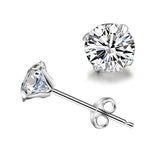
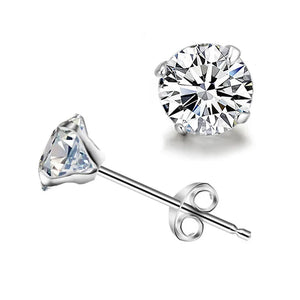
- CZ Stud Earrings ($22.99): 925 sterling silver posts, prong set cubic zirconia, rhodium plated.
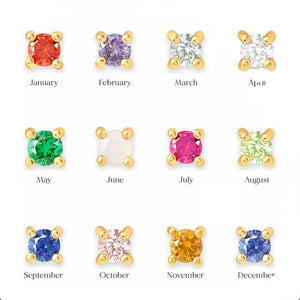
- Birthstone Stud Earrings (from $27.99): 925 sterling silver base with 18K gold plating and mini CZ stones.
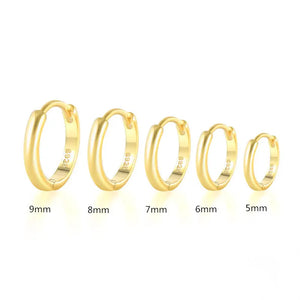
- Gold Huggie Earrings ($34.99): 925 sterling silver base with 18K gold plating.
Browse stud earrings and the best sterling silver necklaces, or read whether 925 sterling silver is good quality and the jewelry hallmarks guide for other marks. For skin concerns, see is sterling silver hypoallergenic (general information, ask a doctor). US orders ship free and returns are free.
Frequently Asked Questions
What does 925 Italy mean on jewelry?
It means the piece is stamped as 92.5% sterling silver and marked as made in or imported from Italy. The 925 is the purity; Italy is the origin.
Is 925 Italy real silver?
If genuine, yes, it is real sterling silver, but a stamp can be faked or added to plated metal. Check the wear points, the tarnish color and the weight, and use a jeweler's test for anything valuable.
What does 825 Italy mean?
825 is not a standard sterling mark, and we could not confirm it as an official Italian silver grade. It may be a worn 925 or a lower silver content of about 82.5%, so read the stamp under a magnifier and have the piece tested.
Is 925 Italy gold or silver?
925 Italy is silver. Gold uses marks such as 585 or 750, and a gold colored piece with 925 Italy is usually sterling silver with a gold colored layer.
What does Italy 925 mean on a chain?
Italy 925 on a chain means it is sterling silver from Italy; the order of the words does not matter. Look for the stamp on the clasp or its small tag.
Is 925 Italy silver better than regular 925?
Not in purity, because both are 92.5% silver. Italy tells you the origin, and some buyers value Italian craftsmanship, but the silver content is the same.
Why does my 925 Italy ring or chain turn black or green?
Black or grey is normal tarnish on real sterling and polishes off. Green marks on skin or a peeling surface suggest a plated base metal under the stamp.
Is 925 Italy silver worth money?
It is worth its silver content at the day's price, less a buyer's margin: weight in grams x 0.925 x the price per gram. Heavier or older pieces may be worth more as collectibles.
All third-party trademarks, brand names and product names are the property of their respective owners. AJLuxe is not affiliated with, endorsed by, sponsored by, or otherwise connected to any third-party brand referenced in this article. Brand names are used solely for accurate comparative reference, and material descriptions reflect each brand's own published product specifications at the time of writing.
You Might Also Like
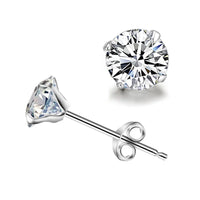
The piece they're describing → CZ Stud Earrings for Women — 925 Sterling Silver, Cubic Zirconia, Hypoallergenic
Personalize Yours


