


What does 925 mean on silver jewelry?
The 925 stamp means the piece is at least 92.5% pure silver. Pure silver is too soft to hold its shape in everyday jewelry, so it is alloyed with a small amount of another metal, most often copper, which gives sterling its strength while keeping the bright silver color.
For more on the stamp itself and the other marks you might see, read our guide to what 925 means on jewelry.
Is "sterling silver" a legally meaningful term in the US?
Yes. Under federal jewelry marking rules, the words "sterling silver," "sterling" and "solid silver" can only be used for an item that meets the 925 purity standard, with a small allowance for manufacturing tolerance and solder. A seller who stamps or advertises something as sterling when it is not is breaking those rules, not just being vague.
A related rule says that when a quality mark such as 925 is applied to jewelry, the maker or seller's registered trademark is supposed to appear next to it. The point is accountability: a false purity mark can be traced back to whoever applied it. Many people never notice that second mark, and plenty of low-cost pieces skip it.
Does anyone test silver jewelry before it is sold in the US?
No. In the US, these rules are enforced after the fact, if someone is caught, rather than by testing each piece before sale. Some other countries work differently: the UK, for example, requires independent testing and hallmarking of silver above a set weight before it can be sold as silver.
That difference matters for how much weight to give a stamp. A US seller's 925 mark is a self-declared claim backed by law, not a claim verified by a neutral third party before it reaches you.
Can a 925 stamp be faked?
Yes. Because nothing checks the stamp before shipping, a fake mark can be pressed into a base-metal piece in seconds, and counterfeit stamps do circulate on low-cost jewelry sold through anonymous listings. The practical rule is that the stamp is a starting point, and the reliability of the seller behind it matters just as much.
How can you check whether silver is real at home?
You can run a few simple checks, but none of them is definitive on its own, and a jeweler's test is the only reliable answer.
- Look for the stamp. A 925 or "sterling" mark, usually near the clasp or on a tag, is the first sign. It is not proof by itself.
- Try a magnet. Silver is not magnetic, so a strong magnet that clearly grabs the piece suggests the base metal is something else. A piece that does not stick is not automatically silver, because many non-magnetic metals exist.
- Check the tarnish. Real sterling slowly darkens with air and moisture, and polishing with a soft cloth restores it. Flaking, or a yellow or green base showing through, points to plating over another metal.
- Ask the seller. A trustworthy seller will state the base metal, the plating, and the stamp location in the listing.
- Use a jeweler. A jeweler can test the metal properly without damaging it.
Be careful with home acid test kits: they can mark or damage a piece, and they are best left to professionals.
Is silver plated jewelry the same as 925 silver?
No. Silver-plated jewelry has only a thin layer of silver over a base metal such as brass, while 925 sterling is silver throughout. The two can look similar when new, but plating wears through with time.
A 925 piece can also carry a gold plating on top, which is common in affordable gold-look jewelry: the core is still sterling silver, and the gold layer is a thin finish. To see how this compares with other white-metal options, read white gold vs silver and rhodium-plated vs sterling silver.
Does 925 silver cause skin reactions?
Usually not, but no jewelry material is guaranteed safe for every person. Sterling contains a small share of another metal, and alloys vary by maker, so people with known metal sensitivities should check the material details of a specific piece and test it cautiously.
How AJLuxe describes its silver pieces
Many AJLuxe pieces are made from 925 sterling silver, some with an 18K gold plating on top, and the base metal is named on each product page. Not every AJLuxe style is sterling: some are made on other bases such as 316L stainless steel, so read the listing before you buy. Our sterling pieces are self-declared 925, the same way most direct-to-consumer jewelry in the US is, and they are not independently assayed. You can browse the sterling silver jewelry collection, and we ship within the US only.
Not sure which you have? See silver plated vs sterling silver.
Frequently asked questions
Is 925 silver real silver?
Yes. 925 means the metal is 92.5% pure silver, which is the standard for sterling silver. The remaining 7.5% is usually copper to make it durable.
Is "925" a legally meaningful claim in the US?
Yes. Federal jewelry marking rules limit terms like "sterling silver" and "solid silver" to items that meet the 925 standard, with a small tolerance for solder.
Does the US test silver jewelry before it is sold as 925?
No. The US relies on the seller's own declaration, enforced only after the fact. Some other countries, including the UK, require independent testing and hallmarking before silver above a set weight can be sold.
Can a 925 stamp be faked?
Yes. Nothing checks the stamp before an item ships, so fake stamps do appear on base-metal pieces. Treat the stamp as a starting point and consider how trustworthy the seller is.
What else is required besides the 925 stamp?
Federal marking rules say that a quality mark such as 925 should be accompanied by the maker or seller's registered trademark, so a false mark can be traced to the party who applied it.
Is real silver magnetic?
No. Silver is not magnetic, so a piece that a strong magnet clearly grabs is likely not silver. A piece that does not stick is not necessarily silver, so use the magnet test only as one clue.
Is AJLuxe's 925 sterling silver independently tested?
No. Like most direct-to-consumer jewelry sold in the US, our sterling pieces are self-declared 925 and not independently assayed. We name the base metal on each product page.
Final thoughts
925 silver is real silver, and the term is regulated in the US. The honest caveat is that the stamp is only as reliable as the seller behind it, so buy from sellers who name the base metal and plating clearly. For a closer look at a related question, see our guide to how to tell if silver is real.
Written by the AJLuxe team. Last updated: October 2026.
All third-party trademarks, brand names and product names are the property of their respective owners. AJLuxe is not affiliated with, endorsed by, sponsored by, or otherwise connected to any third-party brand referenced in this article. Brand names are used solely for accurate comparative reference, and material descriptions reflect each brand's own published product specifications at the time of writing.
You Might Also Like
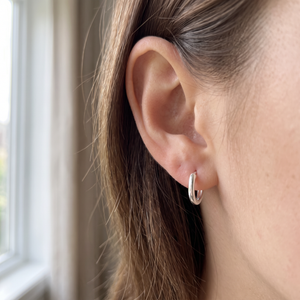
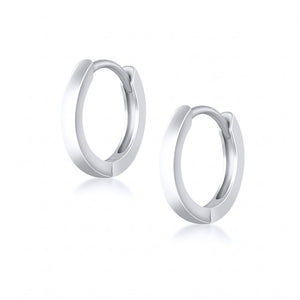
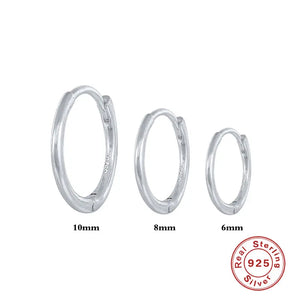

The piece they're describing → Silver Huggie Earrings for Women — 925 Sterling Silver, Hypoallergenic, Minimalist
Personalize Yours


