


Every clasp on a piece of jewelry is a small machine. Spring-loaded levers, magnets, bent wire, sliding bars: each design solves the same two competing problems differently, staying closed under the pull of a necklace's weight, while still opening on command with one hand, often behind your own neck where you can't see what you're doing. Which clasp a piece uses says a lot about how it's meant to be worn, and, just as importantly, who can open and close it without a fight.
- Spring ring clasp: a small round tube with an internal coiled spring; you pull a tiny lever to retract it. Compact and traditional, but the fiddliest to operate one-handed.
- Lobster clasp: a spring-loaded trigger inside a claw-shaped body. More secure and durable than a spring ring, and the most common clasp on modern jewelry, but still needs pinch-grip strength and fine motor control.
- Toggle clasp: a bar that slides through a ring and sits sideways to lock. No spring or small lever, so it's far easier to manage with limited hand strength or dexterity, though less secure on lightweight pieces.
- Magnetic clasp: two magnetized ends that snap together. The easiest of all to close with reduced dexterity, but not the most secure option for a piece you don't want to risk losing.
- Box clasp: a tongue that slides into a box housing and locks with tension or a small catch. Common on bracelets and higher-end pieces, secure but generally a two-handed operation.
Spring Ring Clasp: How It Works
A spring ring clasp works by compressing a coiled spring inside a small round metal tube. Pulling the tiny external lever retracts a section of the ring, opening a gap you hook the other end of the chain through; release the lever and the spring pushes that section back into place, closing the loop. It's a genuinely old design, still common on delicate necklaces and pearl strands because the mechanism is small enough to disappear against a thin chain.
The tradeoff is entirely in the operating experience. The lever is tiny by design, which is exactly why it's the hardest clasp on this list to manage one-handed: it takes a pinch grip, real fingertip strength, and enough dexterity to hold a tiny ring open with a thumbnail while threading a jump ring through the gap, all usually done reaching behind your own neck.
Lobster Clasp: How It Works
A lobster clasp gets its name from its claw-like shape. Inside the metal body, a small coiled spring pushes a hinged lever, called the trigger, closed against the body's opening. Pressing the trigger back against that spring pulls it away from the body, opening a gap; releasing the trigger lets the spring snap it shut again around whatever you've hooked into it, typically a jump ring or another clasp's ring end.
Structurally, a lobster clasp's body isn't a hollow tube like a spring ring's, it's a solid shaped housing, which is why lobster clasps generally read as sturdier and hold up to more regular opening and closing before the mechanism wears out. The trigger is also larger and easier to find by feel than a spring ring's lever, which is part of why lobster clasps have become the standard on most modern necklaces and bracelets. They still require a working pinch grip and enough fine motor control to press the trigger and align the opening at the same time, so they're not the easiest option for someone with limited hand strength, just easier than a spring ring.

Toggle Clasp: How It Works
A toggle clasp trades springs for geometry. One end of the piece has a bar, usually a straight or slightly curved rod; the other end has a ring sized just wide enough for that bar to pass through lengthwise. You slide the bar through the ring, then let it rotate to rest sideways across the opening, where the ring's own diameter is too narrow for the bar to slip back through end-on. The piece's own weight generally keeps the bar sitting sideways rather than drifting back into alignment.
Because there's no spring to compress and no small lever to pinch, a toggle clasp is dramatically easier to operate with reduced hand strength or dexterity than either a spring ring or a lobster clasp. You're sliding one larger piece through another, a motion that doesn't require fine fingertip control the way triggering a spring does. The tradeoff is security on very lightweight pieces: a toggle relies on the bar staying rotated sideways, and on a thin, low-weight chain that can occasionally shift under specific movement in a way a locking lobster clasp won't. It's a better fit for heavier, statement-weight pieces where the design's own gravity works in its favor.
Magnetic Clasp: How It Works
A magnetic clasp is the simplest mechanism of the group: two ends, each containing a magnet, are drawn together and held by magnetic attraction rather than any moving part. There's no spring, lever, or bar to align, you bring the two ends close and they pull themselves into place.
That simplicity is exactly why magnetic clasps are generally considered the easiest of all clasp types to manage with arthritis or limited dexterity: closing one takes no pinch grip and no fine motor precision at all. The honest tradeoff is security. Magnetic clasps can be pulled apart under enough direct tension, and depending on magnet strength, some are easier to separate accidentally than a mechanical lock. They're a strong choice for daily-wear pieces you're not worried about losing in a crowd, and a weaker choice for a piece you'd be devastated to have come undone unnoticed.
Box Clasp: How It Works
A box clasp uses a flattened metal tongue that slides into a rectangular housing, where a small internal spring-loaded tab or the tongue's own tension catches and holds it in place. Opening it means pressing that tab, or squeezing the sides of the box, while pulling the tongue back out. Box clasps show up often on bracelets and on higher-end chain pieces because the flat housing can be finished decoratively, doubling as a visible design element rather than a hidden mechanism.
Operationally, a box clasp is usually a two-handed task: one hand holds the box steady while the other aligns and presses the tongue in, which makes it awkward for necklaces worn solo but perfectly manageable for bracelets, where both hands are naturally available anyway.

Which Clasp Is Easiest for Arthritis or Limited Dexterity
Ranked from easiest to most difficult to operate one-handed or with reduced grip strength: magnetic clasps require the least fine motor control since you're relying on the magnets to find their own alignment; toggle clasps come next, since sliding a bar through a ring doesn't demand pinch strength; lobster clasps are workable but require a functioning pinch grip and enough control to press the trigger and thread it in one motion; spring ring clasps are the hardest, since the lever is smallest and the motion asks for the most fingertip precision, often behind your neck where you can't watch what you're doing. Box clasps sit closer to the lobster-clasp end of the spectrum, manageable but requiring two functioning hands.
If a clasp is genuinely difficult to manage, it's worth knowing that isn't a flaw in you, it's a mismatch between the mechanism and the task. Choosing a piece by its clasp type, not just its style, is a legitimate way to make jewelry easier to wear daily.
Frequently Asked Questions
How does a lobster clasp work?
A lobster clasp uses an internal spring that pushes a hinged trigger closed against the clasp's shaped body. Pressing the trigger compresses the spring and opens a gap to hook a jump ring through; releasing it lets the spring snap the trigger shut, locking the loop closed.
What's the difference between a spring ring and a lobster clasp?
A spring ring clasp is a round tube with an internal spring and a tiny external lever you pinch to open it. A lobster clasp has a solid, claw-shaped body with a larger trigger instead of a small lever. Lobster clasps are generally sturdier and easier to operate than spring rings, though both use a spring mechanism.
Toggle clasp vs lobster clasp: which is more secure?
A lobster clasp is generally more secure, since its spring-loaded trigger locks shut and resists pulling open under tension. A toggle clasp relies on the bar staying rotated sideways across the ring, which works well on heavier pieces but can be less secure on very lightweight, thin chains.
Which clasp is easiest to use with arthritis?
Magnetic clasps are generally the easiest, since they require no pinch grip or fine motor control, just bringing the two magnetized ends close together. Toggle clasps are a close second, since sliding a bar through a ring doesn't require the fingertip precision a spring-loaded lever or trigger does.
Can you open a jewelry clasp with one hand?
It depends on the clasp. Magnetic and toggle clasps are the most realistic to manage one-handed, since neither needs a second hand to hold a housing steady. Lobster and spring ring clasps can be done one-handed with practice but require more fine motor control. Box clasps are usually easiest with two hands.
Why do most necklaces use lobster clasps instead of spring rings?
Lobster clasps have become the standard because their solid housing generally holds up to more repeated opening and closing than a spring ring's hollow tube, and their larger trigger is easier to locate and operate by feel than a spring ring's small lever.
Final Thoughts
A clasp isn't just a fastener, it's a small piece of engineering with real tradeoffs between security, durability, and how easy it is for a specific pair of hands to operate. There's no single "best" clasp, a lobster clasp's extra security is worth the fine motor control it asks for on a piece you wear constantly, while a toggle or magnetic clasp's ease of use might matter more for daily comfort or for anyone managing reduced grip strength. Knowing how each mechanism actually works makes it a lot easier to pick jewelry that you'll actually enjoy putting on.
For the full range of clasp styles beyond these five, see our types of necklace clasps guide, and if a clasp has already failed on you, see what to do when a necklace clasp breaks.
Looking for a piece with an easy, reliable clasp?
Our Heart Initial Necklace uses a secure lobster clasp sized for everyday, one-handed wear.
Shop the Heart Initial NecklaceShop This Guide
- Heart Initial Necklace: secure lobster clasp
- Necklaces Collection: the full necklace line
Sources: general jewelry-making and clasp-mechanism reference material; accessibility guidance on clasp ease-of-use compiled from jewelry-industry consumer resources.
Written by AJLuxe Team. Last updated: September 2026
All third-party trademarks, brand names and product names are the property of their respective owners. AJLuxe is not affiliated with, endorsed by, sponsored by, or otherwise connected to any third-party brand referenced in this article. Brand names are used solely for accurate comparative reference, and material descriptions reflect each brand's own published product specifications at the time of writing.
You Might Also Like

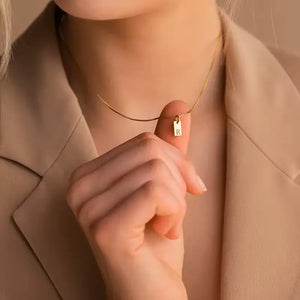
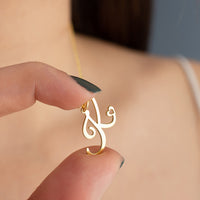
The piece they're describing → Heart Initial Necklace for Women — 18K Gold Plated, Personalized Letter + Heart Pendant
Personalize Yours


