



When you're shopping for gold jewelry, the karat number isn't just a stamp — it tells you exactly how much pure gold is in the piece. The 10k vs 14k vs 18k gold debate comes down to three things: purity, durability, and price. Understanding how each karat performs in real life helps you choose a piece you'll wear for decades, not just a season. Here's everything you need to know to make a smart decision.
What Is 10K Gold?
10K gold contains 41.7% pure gold mixed with 58.3% other metals — usually copper, silver, zinc, and nickel. The "10K" stamp (or "10KT" or "417") tells you there are 10 parts gold out of 24 total parts. Because it has more alloy metal than gold, 10K is the hardest and most scratch-resistant option among the three.
The high alloy content gives 10K gold a slightly paler yellow color compared to higher karat options. It's the most affordable gold by weight, which makes it popular for everyday rings, children's jewelry, and pieces that take heavy daily wear. In the United States, 10K is the minimum purity that can legally be sold as "gold jewelry."
Hardness sits around 2.5–3 on the Mohs scale for the finished alloy, though the specific mix of metals affects the exact hardness. 10K gold resists denting and bending better than 14K or 18K — a real advantage if you work with your hands.
What Is 14K and 18K Gold?
14K gold contains 58.3% pure gold (14 parts out of 24). It's stamped "585" in European markets or "14KT" in the US. This karat hits the sweet spot between durability and purity — strong enough for daily wear but rich enough in gold content to display a warm yellow color. It's the most popular karat for engagement rings and fine jewelry in the US.
18K gold contains 75% pure gold (18 parts out of 24), stamped "750" or "18KT." The higher gold content gives it the richest, deepest yellow color of the three. It's softer than 10K or 14K, which means it can scratch more easily — but it's also the most hypoallergenic option since it contains less alloy metal. People with nickel sensitivities or sensitive skin often find 18K the most comfortable to wear.
According to the Gemological Institute of America (GIA), gold purity standards vary by country — what's sold as "gold" in Italy or the UK must meet a higher purity floor than in the US, which is why you'll often see 18K gold in European fine jewelry.
10K Gold vs 14K Gold vs 18K Gold: Key Differences
| Property | 10K Gold | 14K Gold | 18K Gold |
|---|---|---|---|
| Purity | 41.7% gold | 58.3% gold | 75% gold |
| Hallmark (US) | 10KT / 417 | 14KT / 585 | 18KT / 750 |
| Durability | Most durable | Excellent | Good |
| Scratch resistance | Best (more alloy) | Very good | Good |
| Color | Slightly paler yellow | Classic warm yellow | Richest deep yellow |
| Price per gram (approx.) | Lowest (~$26–$30) | Mid (~$36–$42) | Highest (~$52–$60) |
| Best for | Active lifestyle, budget-conscious buyers | Engagement rings, everyday fine jewelry | Fine jewelry, sensitive skin |
| Hypoallergenic rating | Lower (more alloy) | Good | Best (least alloy) |
| Tarnish resistance | May tarnish faster | Excellent | Excellent |
The biggest practical difference between 10K and 18K gold is durability versus purity. 10K's extra alloy metal makes it denser and tougher — it'll take a beating from daily wear without showing wear as quickly. But that same alloy content makes it more likely to cause skin reactions in people sensitive to nickel or copper.
14K sits in the middle in every measurable way: purity, price, durability, and hypoallergenic properties. That's why it's consistently the top-selling gold karat in the US for fine jewelry. It's the karat you'll find on most solitaire engagement rings, wedding bands, and everyday necklaces in jewelry stores.
18K's 75% gold content makes it noticeably richer in color and significantly more skin-friendly — but you'll pay a premium and accept slightly more susceptibility to scratches. For pieces that stay in a jewelry box and come out for special occasions, that tradeoff makes complete sense.
When to Choose 10K Gold
- If you work with your hands. Mechanics, nurses, athletes, and anyone who wears rings during physical work will appreciate 10K's extra hardness. It resists dents and scratches that would show on softer gold.
- If you're buying jewelry for kids or teens. Children's jewelry gets knocked around. 10K holds up to playground wear without stretching or warping.
- If budget is the priority. 10K lets you get a larger or more elaborate piece for the same money. A thick 10K chain costs significantly less than the same weight in 14K.
- If you don't have skin sensitivities. If nickel doesn't bother you, the alloy content in 10K is a non-issue — and the durability benefits are real.
When to Choose 14K or 18K Gold
- 14K for engagement rings and everyday fine jewelry. The durability-to-purity ratio is ideal. Prong settings in 14K hold stones securely without bending, and the piece looks rich without costing as much as 18K.
- 18K if you have sensitive skin. Less alloy means fewer potential irritants. If you've noticed redness or itching from metal jewelry before, 18K significantly reduces that risk.
- 18K for heirloom-quality pieces you rarely wear. Earrings, pendants, and brooches that don't take daily impact are perfect candidates for 18K — you get maximum color and purity without worrying about scratches from constant use.
- 14K or 18K for rose gold or white gold looks. Higher karat alloys in rose gold and white gold tend to have better color consistency. 14K rose gold has a beautiful warm blush; 18K white gold stays whiter longer than 10K white gold, which can look slightly gray.
Price Comparison: 10K Gold vs 14K Gold vs 18K Gold
Gold prices fluctuate daily based on the spot price of gold. But the relationship between karats stays consistent: 18K always costs roughly 40% more per gram than 10K, with 14K landing about halfway between them.
| Karat | Gold content | Approx. price per gram (Jun 2026) | A 5g chain costs approx. |
|---|---|---|---|
| 10K | 41.7% | $26–$30 | $130–$150 |
| 14K | 58.3% | $36–$42 | $180–$210 |
| 18K | 75% | $52–$60 | $260–$300 |
These are material cost estimates — retail markup, craftsmanship, and brand add significantly to the final price tag. Designer 14K pieces often cost more than generic 18K jewelry. What you're paying for with higher karats is primarily the gold content itself, not automatically better craftsmanship.
One practical note: if you plan to resell or pass the piece down, higher karat gold holds its intrinsic value better because the scrap gold price is proportional to gold content. A 10K piece will always fetch less at a gold buyer than an 18K piece of the same weight.
Care and Durability
All three karats clean the same way: warm water, a few drops of dish soap, and a soft-bristle toothbrush. Rinse thoroughly and pat dry with a soft cloth. Avoid harsh chemicals — chlorine bleach and acetone (nail polish remover) can damage the alloy metals in all gold jewelry, not just lower karat pieces.
10K gold is the most forgiving to wear daily but can develop a slightly duller surface over time as the alloy metals oxidize. A quick polishing cloth restores the shine. Store it away from sterling silver pieces, which can leave marks.
14K gold has excellent tarnish resistance because the gold content is high enough to keep the surface stable. Most 14K pieces look nearly the same after 20 years of daily wear as they did when new, with only minor scratches that professional polishing removes.
18K gold doesn't tarnish at all — the high gold content keeps the surface inert. But it scratches more easily than 10K or 14K. Store 18K pieces separately in a soft pouch or lined box to prevent surface scratches from contact with other jewelry. Have high-wear 18K pieces like rings professionally polished every few years to restore their original surface.
All gold jewelry should come off before swimming in chlorinated pools, using cleaning products, or doing heavy gym work. Sweat itself won't damage gold, but the combination of sweat, friction, and impact accelerates surface wear on all karat levels.
10K gold is 41.7% pure gold and is the most durable and affordable option, making it ideal for active wear and budget-conscious buyers. 14K gold is 58.3% pure gold — the most popular karat in the US for engagement rings and everyday jewelry because it balances durability and gold content. 18K gold is 75% pure gold, the richest in color and most hypoallergenic of the three, but costs roughly 40% more per gram than 10K and scratches more easily. The main differentiator: choose 10K for maximum durability, 14K for the best all-round value, and 18K for sensitive skin or special-occasion fine jewelry.
Comparing rose gold specifically? See our dedicated 14K vs 18K rose gold guide.
To see honest 18K gold plating in practice, browse AJLuxe's gold-plated jewelry collection.
Frequently Asked Questions
Is 14K or 18K gold better for an engagement ring?
14K gold is usually the better choice for an engagement ring because it's more durable than 18K and holds prong settings more securely. Engagement rings take daily wear, and 14K's extra alloy hardness means it resists scratching and bending better. 18K is beautiful but softens faster under the friction of daily wear on a finger, which can cause prongs to loosen over time. Most fine jewelers default to 14K for rings worn every day.
Does 10K gold tarnish?
10K gold can tarnish slightly over time because its higher alloy content — particularly copper — oxidizes with air and moisture. The tarnish appears as a slight dullness or darkening, not the green patina you'd see with brass. Regular cleaning with warm soapy water and polishing with a soft cloth keeps 10K looking bright. Storing it in an airtight pouch when not in use slows tarnish significantly.
Is 10K gold real gold?
Yes, 10K gold is real gold — it contains 41.7% pure gold by weight. In the United States, 10K is the legal minimum gold purity that can be marketed as "gold jewelry." It carries the same type of hallmark (10KT or 417) as higher karat pieces. The remaining 58.3% is other metals like silver, copper, and zinc, which is why 10K is harder and less expensive than 14K or 18K.
Which gold karat is best for sensitive skin?
18K gold is the best karat for sensitive skin because it contains the least alloy metal — 75% pure gold leaves only 25% for potentially irritating metals like nickel. Nickel is the most common contact allergen in jewelry, and lower karat gold has more of it. If 18K is out of budget, look for 14K gold pieces labeled "nickel-free" — many manufacturers deliberately omit nickel from 14K alloys for the US market.
Can you tell the difference between 10K, 14K, and 18K gold by looking at them?
Side by side, there's a subtle but noticeable color difference. 18K gold has the deepest, warmest yellow hue. 14K looks very close to 18K but very slightly less saturated. 10K gold appears noticeably paler — some people describe it as "champagne" rather than deep yellow. Yellow gold differences are easier to spot in natural light. White gold and rose gold variations across karats are even harder to distinguish by eye alone.
Which gold karat holds its value best?
18K gold holds the highest intrinsic scrap value because it contains the most gold by weight. If you sold a 10g 18K chain to a gold buyer, you'd get paid for 7.5g of pure gold; the same weight 10K chain yields only 4.17g of pure gold. For investment or resale purposes, 18K (and higher) always commands more per piece. That said, designer pieces and condition matter more than karat when reselling jewelry at retail rather than scrap prices.
Is 18K gold worth the extra cost?
18K gold is worth it if you have sensitive skin, prefer the richest gold color, or are buying a special-occasion piece you won't wear daily. For everyday rings and bracelets that take constant contact, the extra cost of 18K isn't justified by the durability — you'd actually be better served by 14K's toughness. Where 18K consistently wins: earrings, pendants, and fine jewelry pieces that stay protected in a jewelry box between wears.
What does the 585 or 750 stamp on gold jewelry mean?
The "585" stamp means 14K gold — it indicates the piece is 58.5% pure gold (rounded from 58.3%). The "750" stamp means 18K gold — 75% pure gold. These numeric hallmarks are the European standard used across the EU and many other countries. The "417" stamp means 10K (41.7% gold). You'll see these stamps on pieces imported from Europe, alongside or instead of the letter-based "14KT" or "18KT" marks common in the US.
Does gold karat affect how long jewelry lasts?
Yes — higher karat gold is softer and wears down faster in high-friction situations. A 10K ring worn daily will show fewer scratches after five years than an 18K ring worn the same way because the harder alloy resists surface abrasion better. However, all three karats last decades with proper care — we're talking about the difference between needing a professional polish every 5 years versus every 10 years, not between lasting one year versus ten.
Can 10K gold be resized?
Yes, 10K gold rings can be resized by a jeweler, and in some ways the higher alloy content makes 10K slightly easier to work with than pure gold because it's harder and holds its shape during the process. Most jewelers can resize 10K, 14K, and 18K gold rings up or down by 1–2 sizes without issues. Heavily designed rings with stones around the band may be harder to resize regardless of karat.
Is 10K gold good for everyday wear?
10K gold is actually excellent for everyday wear from a durability standpoint — it's harder and more scratch-resistant than 14K or 18K. The only caveats are color (slightly paler yellow) and potential skin sensitivity if the alloy contains nickel. For anyone who does physical work, has an active lifestyle, or simply wants jewelry that'll take daily knocks without showing wear, 10K is a smart, underrated choice.
What is the most popular gold karat in the United States?
14K gold is the most popular karat in the United States, accounting for the majority of gold jewelry sold in the country. It's the standard karat for engagement rings, wedding bands, and fine jewelry chains in US jewelry stores. The combination of price, durability, and gold content makes it the practical default choice for American consumers. 18K is more common in European and luxury markets; 10K is popular for fashion jewelry and children's pieces.
Shop at AJLuxe
Looking for quality gold-look jewelry? Our 18K Gold PVD Plated Double Row Snake Chain Necklace delivers the rich gold aesthetic with the durability of PVD coating — hypoallergenic, gift-ready, and backed by a 30-day return policy. Explore our full gold necklace collection for more styles in every look.
Final Thoughts
Choosing between 10K vs 14K vs 18K gold doesn't have to be complicated. Think about how you'll wear the piece, whether you have skin sensitivities, and what you're comfortable spending. If you wear jewelry hard every day — rings during gym sessions, bracelets while doing dishes — 10K or 14K will serve you far better than 18K. If you want the richest color and you're buying a necklace or earrings that won't see heavy contact, 18K is a beautiful investment.
For most people, 14K gold is the right answer most of the time. It's what the jewelry industry landed on as the default for good reason: enough gold content for warmth and value, enough alloy for real-world toughness. Whatever karat you choose, buy from a reputable seller who stamps their pieces correctly — a proper hallmark is your guarantee of what you're actually getting. You can also explore related guides on how to store and care for fine jewelry and our best sterling silver necklaces guide for more buying help.
All third-party trademarks, brand names and product names are the property of their respective owners. AJLuxe is not affiliated with, endorsed by, sponsored by, or otherwise connected to any third-party brand referenced in this article. Brand names are used solely for accurate comparative reference, and material descriptions reflect each brand's own published product specifications at the time of writing.
You Might Also Like
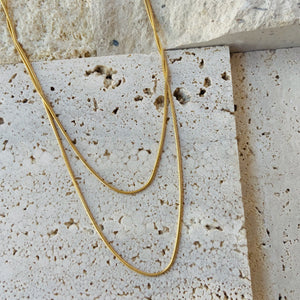



The piece they're describing → Layered Choker Necklace for Women — 18K Gold Plated
Personalize Yours


