


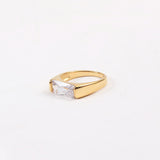
Quick answer: The fastest reliable home tests for real gold are the magnet test (gold isn't magnetic, but this only rules out some fakes), the float test (real gold sinks fast in water), and checking for a karat hallmark stamp like 750, 585, or 417. No single home test is 100% conclusive on its own — acid testing or a professional XRF scan at a jeweler is the only way to confirm purity with certainty. Gold-plated jewelry will often pass magnet and float tests since it's built on a real metal base, which is a normal, honest feature of plated pieces, not a sign of a fake.
TL;DR
- The magnet test only rules out strongly magnetic fakes — most fake gold uses brass or copper, which aren't magnetic either, so this test alone proves very little.
- The float/water density test is the most reliable free test: pure gold is dense enough to sink fast and sit flat on the bottom of a glass.
- Hallmark stamps (750 = 18K, 585 = 14K, 417 = 10K, 925 = sterling silver) tell you what the maker claims — but a stamp alone doesn't prove authenticity.
- The vinegar test and ceramic scratch test can help, but both can damage jewelry and give ambiguous results on plated pieces.
- Home tests have real error rates. A jeweler's acid test or XRF scan is the only way to get a definitive answer.
- Gold-plated jewelry is not fake gold — it's a thin layer of real gold over a base metal, and it will behave differently than solid gold on some of these tests. That's expected, not a red flag.
Shopping for gold-plated pieces? Know exactly what you're getting with our 18K Gold Plated Ring — Tarnish-Resistant CZ Statement Ring, clearly labeled as plated so there's never any guesswork.
You just inherited a ring, bought a "gold" bracelet at a flea market, or found a chain in a drawer with no paperwork — and now you want to know if it's real gold before you do anything else. The good news: you can run several genuinely useful tests at home with things you already own, like a magnet, a glass of water, and white vinegar. The catch is that every single one of these tests has a real error rate, and none of them can tell you the exact karat with certainty the way a jeweler's acid test or XRF scanner can.
What Home Gold Testing Can (and Can't) Tell You
Home tests are screening tools, not lab results. They're built to catch obvious fakes — gold-colored costume jewelry, cheap brass, or gold-tone stainless steel — not to distinguish 14K from 18K or to catch a well-made counterfeit. Think of them the way you'd think of a smoke detector: useful for catching an obvious problem, but not a substitute for a professional inspection when something's genuinely at stake.
If you're deciding whether to keep, sell, or insure a piece worth real money, a home test can tell you "this is worth getting checked" or "this is almost certainly not gold." It can't replace an appraisal.
The Magnet Test (And Why It's Less Reliable Than People Think)
Pure gold is not magnetic. Hold a strong magnet near the piece — if it snaps or pulls toward the magnet, it's not solid gold. That part is true and useful.
Here's the part most articles skip: the reverse isn't true. A piece that doesn't react to a magnet isn't automatically real gold. Most counterfeit gold is made from brass, copper, or gold-tone stainless steel — none of which are magnetic either. So the magnet test can rule out iron- or nickel-heavy fakes, but it lets brass and copper fakes pass right through. Treat a "no reaction" result as inconclusive, not as confirmation.
The Float Test: The Most Useful Free Test You Have
Fill a glass with water and drop the piece in. Pure gold has a density of 19.3 g/cm³ — dramatically heavier than almost anything used to fake it. Real gold sinks fast and settles flat on the bottom. Fake gold, being made from lighter base metals, tends to sink slowly, float, or hover partway down.
This is the test we'd recommend first if you only have time for one, because density is a physical property that's hard to fake cheaply. It won't tell you the karat, and it won't work on hollow pieces (trapped air changes the buoyancy), but for a solid, simple item it's the most informative five-second test you can run with zero risk of damaging the piece.
The Vinegar Test: What It Actually Shows
Put a few drops of white vinegar directly on the metal. Real gold won't react — no color change, no fizzing. If the metal darkens, changes color, or shows a chemical reaction within about 15 minutes, it's likely not solid gold.
The catch: vinegar is a mild acid, and mild acids don't reliably react with every base metal used in counterfeits either. A well-made gold-tone alloy can pass a vinegar test and still not be gold. It's a fine confirming test to run alongside the float test, but treat a "no reaction" as one data point, not proof.
The Ceramic Scratch Test
Drag the metal across a piece of unglazed ceramic (the back of a bathroom tile works). Real gold leaves a gold-colored streak. A black or dark gray streak means the base metal isn't gold. This test works reasonably well, but it does leave a small mark on the tile and can scratch the piece itself — skip it on anything with sentimental or resale value, and never use it on plated jewelry, since it can scrape through the plating layer.

Reading the Hallmark Stamp (750, 585, 417, and More)
Check the inside of a ring band or the clasp of a chain for a small stamped number. These are purity marks, and they follow an international parts-per-thousand system:
| Stamp | Karat | Purity |
|---|---|---|
| 999 or 24K | 24K | 99.9% pure gold |
| 750 or 18K | 18K | 75% pure gold |
| 585 or 14K | 14K | 58.5% pure gold |
| 417 or 10K | 10K | 41.7% pure gold |
| GP or GEP | — | Gold Plated / Gold Electroplated — not solid gold |
| 925 | — | Sterling silver, not gold at all |
A stamp is the manufacturer's claim, not independent proof — counterfeiters can and do fake stamps. Use it as one piece of evidence alongside the float and magnet tests, not as a standalone verdict. European and international pieces tend to use the numeric stamps (750, 585, 417); American pieces more often use karat letters (18K, 14K, 10K), according to GIA's gem education resources.
Is Gold-Plated Jewelry "Real Gold"? (Yes — Here's the Honest Answer)
This is where a lot of home testing gets confusing, so let's be direct about it: gold-plated jewelry contains real gold. It's a thin layer — typically 0.5 to 2.5 microns, roughly 1/1000th the thickness of a human hair — of genuine gold electroplated over a base metal like brass, copper, or sterling silver. That outer layer is authentic gold. The piece underneath just isn't solid gold all the way through.
That distinction matters for testing because plated jewelry can behave differently than solid gold on some of these tests. A plated piece over a brass or copper base won't react to a magnet (same as solid gold), and it may pass a quick vinegar test if the plating layer is intact. It's not trying to trick you — it's simply built differently, and a well-labeled plated piece will say so on the tag, the listing, or a small "GP" stamp. We build our own gold-plated pieces, like the 18K Gold Plated Ring, in genuine 18K gold plating rather than the thin flash plating some cheaper listings use — but it's still plated, not solid, and we say so clearly.
If a home test result feels ambiguous, ask the seller directly whether the piece is solid gold, gold-filled, or gold-plated. Honest sellers will tell you. If you can't get a clear answer and the price seems too good for solid gold, that's the real warning sign — not the test result itself.
Other Signs of Fake Gold to Watch For
- Discoloration after light wear — a green or black tint appearing on skin within days usually means the piece is base metal, not gold or even properly gold-plated.
- No stamp at all — legitimate gold jewelry sold in the US is almost always stamped somewhere. A complete absence of any marking is a caution flag, though very old or handmade pieces are sometimes an exception.
- Price far below spot value — gold's melt value alone sets a price floor. If a "solid gold" piece is priced well under what its weight in scrap gold would fetch, be skeptical.
- Uneven color or wear patterns — solid gold wears evenly. Flaking, patchy color, or a different metal showing through at edges points to plating that's worn through, not solid gold underneath.
When to Get Professional Testing Instead
Take a piece to a jeweler or pawn shop with an XRF (X-ray fluorescence) scanner if real money is on the line — an inheritance, an insurance claim, or a resale. XRF testing is non-destructive, reads the exact karat and alloy composition in seconds, and typically costs $10–$30 per item, far less than most people expect. The traditional acid test is also reliable but scrapes a small mark into the metal to test it, so it's better suited to scrap gold than sentimental pieces. According to Jewelers of America's education resources, professional testing is the only way to get a certified purity reading that holds up for insurance or resale purposes.
Frequently Asked Questions
What are three reliable ways to test if gold is real at home?
The three most useful home tests are the float test (real gold sinks fast and sits flat in water), the magnet test (real gold never reacts to a magnet, though this only rules out some fakes), and checking for a karat hallmark stamp like 750, 585, or 417. Combining all three gives you a far more reliable read than any single test alone.
How can I check if gold is real instantly, without any tools?
The fastest no-tools check is looking for a hallmark stamp inside a ring band or on a clasp. A visible karat mark (750, 585, 417, 18K, 14K, 10K) is a strong first signal, though it should be confirmed with a float or magnet test since stamps can be faked.
Does the toothpaste test work for testing gold?
The toothpaste test is a popular myth with no real scientific basis — rubbing plain white toothpaste on gold and checking for a color change doesn't reliably indicate purity. Toothpaste can mildly clean tarnish off base metals, which people sometimes mistake for a "reaction," but it isn't a valid authenticity test. Skip it in favor of the float or magnet test.
What is the vinegar test for gold, and how do you do it?
Place a few drops of white vinegar directly on the metal and watch for 10–15 minutes. Real gold shows no reaction — no color change, no fizzing or darkening. A visible reaction suggests the piece is a base metal like brass or copper rather than solid gold, though a well-plated piece can sometimes pass this test too.
Does a magnet test actually prove gold is real?
A magnet test can disprove gold — if the piece is strongly attracted to a magnet, it's not solid gold — but it can't prove gold is real on its own. Most counterfeit gold is made from brass or copper, neither of which is magnetic, so plenty of fakes pass a magnet test with no reaction at all.
What are the most common signs of fake gold?
The clearest signs are skin discoloration (green or black marks) after light wear, missing or inconsistent hallmark stamps, uneven wear or flaking that reveals a different metal underneath, and a price that's implausibly low for gold's current melt value. Any one of these alone isn't definitive, but two or more together are a strong red flag.
Is gold-plated jewelry considered "real gold"?
Yes, in the sense that the outer layer is genuine gold — typically 0.5 to 2.5 microns thick — electroplated over a base metal like brass, copper, or sterling silver. It's not solid gold all the way through, but it isn't fake or fraudulent either, as long as it's honestly labeled as plated rather than sold as solid.
What does the 750 or 585 stamp mean on a piece of jewelry?
These are international purity stamps using a parts-per-thousand system. A 750 stamp means 18 karat gold (75% pure), and a 585 stamp means 14 karat gold (58.5% pure). A 417 stamp means 10 karat (41.7% pure). European and international jewelry tends to use these numeric stamps, while American-made pieces more often use karat letters like 18K or 14K instead.
How much does professional gold testing cost?
A jeweler's XRF (X-ray fluorescence) scan typically costs $10–$30 per item and gives a precise, non-destructive karat and alloy reading within seconds. This is the standard professional method and is worth the small cost whenever real money — resale, insurance, or inheritance value — is on the line.
Can gold-plated jewelry pass a magnet or float test?
Yes, often. If a gold-plated piece is built over a non-magnetic base metal like brass, copper, or sterling silver, it will pass the magnet test the same way solid gold does. It may also sink in the float test depending on the base metal's density. This is expected behavior for honestly labeled plated jewelry, not a sign of deception.
What's the difference between an acid test and an XRF test for gold?
An acid test involves scraping a small mark into the metal and applying acid to observe the reaction, which is reliable but leaves a minor mark on the piece. An XRF scan uses X-ray fluorescence to read the exact metal composition without touching or damaging the item at all, making it the preferred method for sentimental or resale-value pieces.
Final Thoughts
No home test gives you a guaranteed answer on its own — but running the float test, magnet test, and a hallmark check together gets you a genuinely reliable read for free, in about two minutes. If the piece has real money riding on it, a $10–$30 professional XRF scan is worth every cent for certainty. And if you're shopping for something new, honest labeling solves the whole problem before it starts: a clearly marked gold-plated piece isn't trying to pass as solid gold, and knowing the difference upfront means no home testing required.
Looking for jewelry that's upfront about exactly what it is? Our 18K Gold Plated Ring — Tarnish-Resistant CZ Statement Ring is plated over a durable base and labeled clearly, so you always know what you're wearing.
Shop This Guide
18K Gold Plated Ring — Tarnish-Resistant CZ Statement Ring →
Related: How to Tell Real vs Fake Pearls and How to Tell Quality Jewelry From Cheap
All third-party trademarks, brand names and product names are the property of their respective owners. AJLuxe is not affiliated with, endorsed by, sponsored by, or otherwise connected to any third-party brand referenced in this article. Brand names are used solely for accurate comparative reference, and material descriptions reflect each brand's own published product specifications at the time of writing.
You Might Also Like
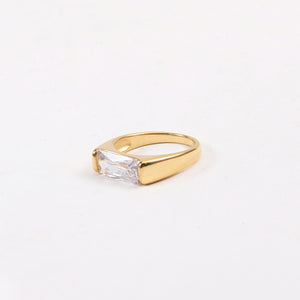

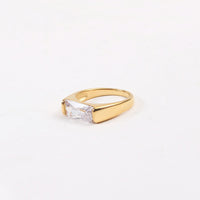
The piece they're describing → 18K Gold Plated Statement Ring — Tarnish-Resistant CZ
Personalize Yours


