


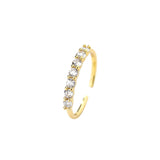
- Best for a small gap. One independent advice site we read frames adjusters as a fix for a minor reduction, between a partial size and one full size. Bigger gaps are a job for a jeweler.
- Silicone is the easy start, metal is sturdier. Silicone options are cheap, removable and easy to fit; metal guards last longer but can be uncomfortable and may scratch, per the same source.
- AJLuxe does not sell ring size adjusters and does not offer ring resizing. What we do sell is adjustable open-shank rings, which is the way to avoid the problem at the start.
- Measure first. If the ring is more than about a size too big, an insert will feel like a workaround and a resize or a different ring is the better answer.
A loose ring is annoying in a very specific way: it spins so the stone ends up on the underside, and it can slide off when your hands are wet or cold. A ring size adjuster is the cheapest way to deal with that, and also the most confusing to shop for, because the same product is sold as a ring guard, a ring spacer, an invisible ring size adjuster, a ring tightener and a ring sizer. This guide sorts out what each type is, how to choose one, how to fit it, and when to stop improvising and see a jeweler. If your question is the broader "my ring is too big, now what," our guide to fixing a ring that is too big covers the free and cheap fixes first, and this page goes deeper on the adjuster products themselves.
What Does a Ring Size Adjuster Actually Do?
A ring size adjuster reduces the empty space inside the ring by adding a thin layer or a bump on the underside of the band, which keeps the ring from rotating and from sliding over your knuckle. It does not change the metal of the ring, so the ring is unchanged and the insert can be taken out later. That is the main reason people reach for one: it is reversible, and you can try it for a few dollars before paying for any permanent change. It also helps with rings that are risky to resize. The advice site we read says adjusters work best for temporary needs, and for rings that are risky to resize such as eternity bands and pave-heavy designs.
Types of Ring Size Adjusters, Guards and Spacers
There are about eight common types, and the differences are mostly in how visible they are, how comfortable they feel and how long they last. One independent advice guide lists eight: metal ring guards (a horseshoe or clip-on shape), comfort or butterfly springs, sizing beads, heat-shrink or wrap-around tubing, silicone coil wraps, self-adhesive sizing pads, silicone clip-on adjusters and invisible adhesives. We have not tested these ourselves, so the table below gives the plain mechanics plus what that source said where it said something.
| Type | How it works | Good to know |
|---|---|---|
| Silicone coil or spiral wrap (often sold as an invisible ring size adjuster) | A soft clear coil that you wind around the bottom of the band so it sits against your finger. | Silicone options are described as cost-effective and removable, and easier to fit yourself, but less durable than metal. |
| Silicone clip-on | A small clear clip that snaps onto the back of the band. | The advice guide named silicone clip-ons as the best overall value for most people. |
| Metal ring guard (horseshoe or clip-on) | A formed metal piece that attaches inside the bottom of the band. | Durable, but can be uncomfortable and may scratch the ring; the source says some need a jeweler to fit. |
| Comfort or butterfly spring | A small spring that sits in the back of the band and flexes with your finger. | Listed by the advice guide as its own type; check how it sits against the finger before relying on it. |
| Sizing beads | A bead or bump on the underside of the band, so the ring has something to rest on. | Listed by the advice guide as its own type; it gives the ring something to rest on so it spins less. |
| Heat-shrink or wrap-around tubing | Thin tubing fitted around part of the shank. | Listed by the advice guide as its own type. |
| Self-adhesive sizing pad | A thin sticky pad on the inside of the band. | Listed by the advice guide as its own type; best treated as a short-term fix. |
| Adhesive adjuster | A clear gel or glue layer on the inside of the band. | Listed by the advice guide as its own type; a removable type is the easier one to try first. |
Do not worry about the exact name on the packet. Sellers use ring guard, ring spacer, ring tightener, ring sizer and ring size adjuster for overlapping products, and the useful question is how it attaches (coil, clip, bead, pad) and whether it is made of silicone or metal. A plastic or silicone adjuster is the easiest for most people to try first.
What Is a Ring Guard for Loose Rings, and Is a Spacer Different?
A ring guard for a loose ring is a clip or wrap that fills the gap behind the band, and a ring spacer does the same job from a different shape, so for buying purposes they are the same family of products. If the product listing says guard, spacer or adjuster, read the description for how it fits instead of the name. One how-to we read advises choosing a guard that matches the width of your ring, which is a good rule: a guard made for a thin band will look wrong behind a wide one, and the reverse may not fit at all. Metal guards for loose rings tend to be bought from a jeweler or a jewelry supply shop; silicone sets are sold in craft and general stores, usually in multi-packs, which is useful because you can test sizes.
How to Choose the Right Ring Size Adjuster
Choose by three things: how loose the ring is, how wide the band is, and how long you need the fix to last. Work through these in order.
- How loose is it? If the ring only spins or slides over the knuckle when your hands are cold, a thin silicone coil or clip is often enough. If it falls off when you lift your hand, you are likely more than a partial size away and an insert will not feel secure. Our ring size guide shows how to measure the ring you own against a chart.
- How wide is the band? Match the guard to the band. A wide band needs a wide guard or a coil with enough turns. Thin stacking bands can be hard to fit; a very thin ring may do better with a small clip than a coil.
- How long will you wear it? For a daily ring you will wear for years, the advice site we read leans toward professional resizing when it is possible. For a temporary fix, a ring you inherited, or a pave or eternity ring that is risky to resize, an adjuster is a sensible choice.
- Skin comfort. Silicone is soft against the finger. Metal guards can be less comfortable. If a material bothers your skin, remove it.
- Looks. Clear silicone is the least visible. A metal guard may show from the palm side.
How to Put On a Ring Size Adjuster
Fit it to the ring while the ring is off, then test the ring on your finger, and adjust until it stays upright without pinching. The steps are the same for most coil and clip types.
- Know your size and the ring size. Measure your finger, then check the ring against a chart. Our ring size calculator and ring size conversion chart help with this and with converting between systems. Fingers can change size, so measure in the evening at room temperature rather than when cold.
- Pick the right type and size. Match the width of the band, as above. Start with the smallest amount of material that stops the spinning.
- Attach it to the bottom of the band. For a coil, start at the back of the band (the part under the finger), wind a small number of turns and trim any excess if the pack allows. For a clip, snap it onto the back.
- Try it on before you rely on it. The ring should slide over the knuckle with slight resistance, sit upright and not spin freely. If it is too tight to get over the knuckle, remove a turn or use a thinner one.
- Check it again after a day. Silicone can shift and clips can loosen. Replace one that has stretched or yellowed.
Take the ring off for heavy hand work, and remove the insert if it traps moisture against your skin.
Ring Size Adjuster or Jeweler Resize?
A jeweler resize is the better long-term answer for a ring you will wear daily, and an adjuster is the better short-term answer for everything else. The two are not rivals; they solve different time spans. A resize changes the ring permanently, costs more, and has limits. One ring-guard guide we read says to go to a professional for permanent resizing, complex designs, and materials that cannot be resized by traditional methods, naming tungsten and ceramic. If a ring has stones set all the way around, an adjuster may be the lower-risk option. For pricing, see our ring resizing cost guide, which compares costs by metal and also explains which rings cannot be resized.
Fits that change with the day are worth knowing about too. Finger size is not constant: it can be a little different morning to evening and in warm or cold weather, which is why a ring that fits at lunch may be loose in a cold car. That is the only point we will make about it here; it is a reason to measure at a steady time of day, not a medical statement.
What AJLuxe Sells (and What We Do Not)
AJLuxe does not sell ring size adjusters, ring guards or ring spacers, and we do not offer ring resizing. We are saying that plainly so you do not go looking for them on our shop. What we do have is a line of adjustable rings, which is a different answer to the same problem: the band is an open shank that closes gently to your finger, so you are not locked to a single size. The product pages for the pieces below list them as adjustable, and we have not tested how far each one opens or closes.
| Piece | Price | Fit | What the product page lists |
|---|---|---|---|
| Round CZ Stacking Ring | $37.99 | Listed as adjustable | 925 sterling silver, in gold (18K plated) or silver; cubic zirconia, a simulated stone and not a diamond |
| Stacking Rings Set (3 rings) | $89.99 | All three rings listed as adjustable, no ring size needed | 925 sterling silver with 18K gold plating (gold option), cubic zirconia on two of the three |
These are stackable bands, and they suit a thin, simple look; they are not an answer if you want a fixed ring in an exact size. The adjustable rings collection has the full range, and our guide to adjustable rings explains how they work and how to open and close one without bending it badly. If you like thin bands in a stack, our stackable ring combinations guide helps you plan one. For any ring, check the size on the listing before ordering. Returns, where they apply, are 30 days, unworn and in original packaging, with the customer paying the return label.
If a Ring Adjuster Is Not Working
If an adjuster slips, you either need a different type or a different fix. Try one step up in thickness or a clip in place of a coil; if the ring still moves, you are probably past the gap that an insert can manage. At that point consider a jeweler resize, or a ring in the right size. Our ring too big guide lists the other cheap options before you spend money on resizing.
Frequently Asked Questions
What is the best ring size adjuster for loose rings?
The best adjuster is the one that fits your band width and the size of the gap, and for most people a clear silicone clip-on or coil is the easiest start. One independent advice guide we read called silicone clip-on adjusters the best overall value and suggested buying a few options, since most cost only a few dollars. If the ring is a pave or eternity style, an adjuster is often safer than resizing.
How can I make a loose ring fit better?
Add something to the inside of the band, or change the ring. A silicone coil, clip, sizing bead or adhesive pad takes up the gap temporarily, and a jeweler resize or an adjustable ring is the permanent route. Our guide to fixing a ring that is too big lists the free and cheap options first.
How do I keep my ring from falling off my finger?
Take up the extra space on the inside of the band, so the ring cannot slide over your knuckle. A ring guard or silicone adjuster does that, and you should check the fit by shaking your hand gently over a soft surface before wearing it out. If the ring still slips, it is too big for an insert.
What is the difference between a ring guard, a ring spacer and a ring size adjuster?
Mostly the name. Sellers use all three for products that take up space inside a loose band, and the practical difference is in how they attach, such as a coil, a clip, a bead or an adhesive pad. Choose by the attachment type and the band width, not by the label.
Can you make a ring bigger or smaller?
Usually yes at a jeweler, with limits. A jeweler can resize many metal rings up or down, but rings with stones all the way round and certain materials such as tungsten and ceramic cannot be resized by traditional methods, per a guide we read. AJLuxe does not resize rings, so for our rings the practical option is to choose an adjustable style or a size that fits, or use a temporary insert.
Where can I buy a ring guard?
Ring guards and silicone adjuster sets are sold by jewelry supply shops, craft stores and large general marketplaces, and a local jeweler can fit a metal one. AJLuxe does not sell them. Check that the guard matches your band width.
Can my phone measure my ring size?
Some phone tools claim to estimate ring size, but we have not verified any of them. A simple paper strip around your finger, or an existing ring measured against a chart, is more reliable. See our ring size calculator and ring size guide for both methods.
Sources
Adjuster types, silicone versus metal trade-offs and the advice that adjusters suit temporary needs and risky-to-resize rings come from an independent jewelry advice site’s comparison of ring size adjuster types. Notes on matching the guard to the band width and on when to see a jeweler (permanent resizing, complex designs, materials such as tungsten and ceramic) come from a ring-fitting how-to page. Both were read on 5 October 2026 and are described here by type, not by name. Product details come from ajluxe.com product pages and our return terms.
Written by AJLuxe Team. Last updated: October 2026
All third-party trademarks, brand names and product names are the property of their respective owners. AJLuxe is not affiliated with, endorsed by, sponsored by, or otherwise connected to any third-party brand referenced in this article. Brand names are used solely for accurate comparative reference, and material descriptions reflect each brand's own published product specifications at the time of writing.
You Might Also Like
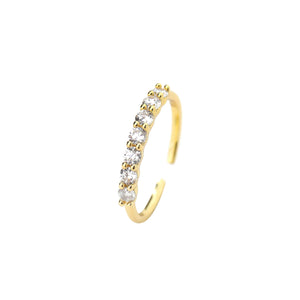
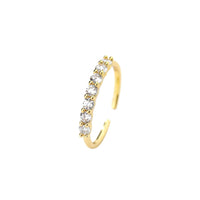
The piece they're describing → Round CZ Stacking Ring for Women — 925 Sterling Silver, 18K Gold Plated, Adjustable
Personalize Yours


