



- 417 = 417 parts per 1,000 gold = 41.7% = 10K (10 of 24 parts is 41.67%, rounded up to 417).
- It is real gold alloyed with a lot of other metal, so it is tough and lighter in color than 14K or 18K.
- Letters beside the number (such as a maker's initials) identify the maker. GP, GF or HGE would mean plated or filled instead.
- Its worth is set by weight and the gold market, and 10K is worth less per gram than 14K or 18K.
- A stamp is a claim, not proof. A jeweler's electronic test is the reliable check.
What does 417 mean on jewelry?
417 means 417 parts in 1,000 are pure gold, so the metal is 41.7% gold and the other 58.3% is alloy such as copper, silver or zinc. That is 10K gold: 10 parts gold out of 24, which is 41.67% and is rounded up to 417 in the thousandths system. If you searched "417 gold", "what is 417 gold", "417 in gold" or "gold 417", this is the whole answer. The 417 number simply shows how much of the metal is gold.
What does 417 Italy mean on gold?
"417 Italy" means 10K gold made in or imported from Italy. The 417 is the purity and the country word is the origin, so "italy 417", "417 italy gold" and "gold italy 417" all describe the same thing. The country name does not raise or lower the gold content, and it is not a guarantee by itself. Many chains, bracelets and rings carry this pair of marks.
Letters or a short code beside the number, for example a few initials after the 417, are normally a maker's mark: the manufacturer who made and stamped the piece. You usually need a jeweler or a reference to decode them. They show who made it, not what it is worth.
417 vs 585 vs 750: how do the common gold stamps compare?
417 is the lowest of the three, with less gold, a lighter color and the toughest feel. The short table:
| Stamp | Karat | Gold | Color | Durability |
|---|---|---|---|---|
| 417 | 10K | 41.7% | Light yellow | Very hard, resists scratches |
| 585 | 14K | 58.5% | Warm yellow | Hard |
| 750 | 18K | 75.0% | Rich yellow | Softer |
For the step up, see what 585 means (14K) and what 750 means (18K). Outside the US you may meet 375 (9K) too. The gold purity numbers guide lists every number, and 10K vs 14K gold helps you choose between the two most common US karats.
Is 417 gold real gold?
Yes, a genuine 417 mark means real solid 10K gold, not plated and not gold filled. The catch is that a stamp is a claim, and a stamp on its own does not prove a piece is what it says. Look at the other marks: a plated or filled stamp (GP, GEP, GF, HGE) beside the 417 would change the answer. Read HGE and 18KGP to see how those marks work, and gold plated vs solid gold for the practical difference.
Is 417 gold good quality?
417 is good quality for durability, and lower quality for gold content. Because more than half the metal is alloy, 10K scratches and bends less than 14K or 18K, which suits rings and bracelets that take daily knocks. The trade offs are a paler yellow, less gold value, and a greater chance of dulling over time, since the alloy metals can react with moisture and sweat. For wearers with sensitive skin, the alloy metals matter more at 10K than at higher karats; if you notice irritation, stop wearing it and ask a doctor (general information, not medical advice).
Does 417 gold tarnish? Gold itself does not, but the copper and silver in the alloy can darken slightly, and a cleaning with mild soap and a soft cloth usually fixes it.
What is 417 gold worth, and how much is it per gram?
417 gold is worth its gold content times the current gold price, minus whatever margin a buyer needs, and the price moves every day. We will not print a per gram number that will be out of date, so use this method instead:
- Weigh the piece in grams. A kitchen scale that reads to 0.1 g is fine for a rough idea.
- Multiply by 0.417. A 10 g chain holds about 4.2 g of pure gold (10 x 0.417 = 4.17).
- Check a live gold price and then collect two or three quotes. Expect offers below the raw metal value.
For comparison, the same weight of 14K holds more gold, since 585 is 58.5% instead of 41.7%. This is general information, not financial advice.
How do I check a 417 stamp at home?
You can find the stamp and run a few basic checks at home, but only a jeweler's test can confirm purity.
- Find the stamp with a magnifier. It lives on a flat inner surface: inside a ring band, on the clasp or its tag, on an earring post, or inside a bangle. The strike should be clean and even. Look at this hallmarks guide for other marks that sit near it.
- Check the wear points. If a different color shows through on edges or the inside of a ring, the piece may be plated.
- Try a magnet. Gold is not magnetic, so a strong pull is a bad sign. Limit: many fakes are non magnetic, so passing proves little.
- Skip the vinegar and acid tricks. They are unreliable and can mark the piece.
- Ask a jeweler for an electronic test. It reads the actual metal without damage. More options in how to tell if jewelry is real gold.
What if the stamp is missing, worn or unclear?
A missing or worn stamp does not make a piece fake, and a visible stamp does not make it real. Old pieces lose stamps through wear, polishing and resizing, and some small items never carried one. Have a jeweler or a reputable gold buyer test it. Do not decide from color alone: 10K can look light yellow, and plated items can look the same.
Is 10K or 14K better for everyday wear?
10K is better if you want maximum scratch resistance and a lower price, and 14K is better if you want a warmer color and more gold value. For a ring you wear daily and never want to resize, 10K is a sensible practical choice. For a gift that should feel more precious, 14K is the usual pick.
An honest note on our range
AJLuxe does not sell solid gold, so none of our pieces are stamped 417, 585 or 750. Our jewelry is gold plated over 925 sterling silver or stainless steel, which gives a gold look at a lower price, and plating wears gradually with use. If that suits you, two in stock options:
- Baguette Birthstone Charm Necklace: 18K gold plated with a cubic zirconia stone in twelve month colors ($27.99).
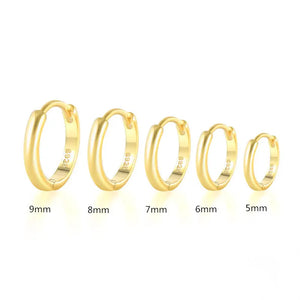
- Minimalist Gold Huggie Earrings: 18K gold plating over 925 sterling silver ($34.99).
Browse the whole gold plated jewelry collection. US orders ship free and returns are free for 30 days.
Frequently Asked Questions
What does 417 mean on gold?
It means the metal is 41.7% pure gold, which is 10K. The rest is other metals that make it stronger.
What does 417 Italy mean?
It means 10K gold made in or imported from Italy. The number is the purity and the country is only the origin.
Is 417 gold real?
Yes, a genuine 417 stamp means real solid 10K gold. Because a stamp alone is not proof, confirm valuable pieces with a jeweler's test.
Is 417 gold worth anything?
Yes, it has value based on its weight and the current gold price, but less per gram than 14K or 18K. Multiply the weight by 0.417 for the pure gold content.
What is the difference between 417 and 585?
417 is 10K (41.7% gold) and 585 is 14K (58.5% gold). 14K is warmer in color and holds more gold, while 10K is harder.
Does 417 gold tarnish?
Gold does not tarnish, but the alloy metals in 10K can dull or darken the surface over time. A gentle clean usually restores it.
Is 417 gold safe for sensitive skin?
It depends on the alloy, and some people react to metals such as copper or nickel found in certain alloys. This is general information, so ask a doctor if you see irritation.
What if my gold has no 417 stamp?
Have it tested by a jeweler. Genuine gold can be unstamped or worn smooth, so a missing mark settles nothing.
All third-party trademarks, brand names and product names are the property of their respective owners. AJLuxe is not affiliated with, endorsed by, sponsored by, or otherwise connected to any third-party brand referenced in this article. Brand names are used solely for accurate comparative reference, and material descriptions reflect each brand's own published product specifications at the time of writing.
You Might Also Like

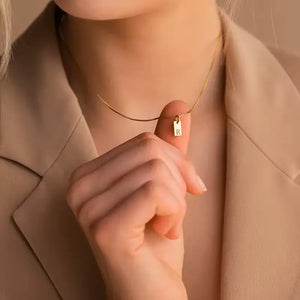

The piece they're describing → Birthstone Charm Necklace for Women — Baguette CZ Pendant, 18K Gold Plated
Personalize Yours


