


📖 More Jewelry Hallmark Guides
TL;DR
585 = 14-karat gold. It means the metal is 58.5% pure gold — the most popular gold purity in the United States. If a ring or necklace says 585, you have real solid gold jewelry. 585 and 14K are two ways to say the exact same thing.
You found a stamp that reads "585" on a piece of gold jewelry and you're not sure what it means. Here's the direct answer: 585 is the international hallmark for 14-karat gold. It tells you the metal contains 585 parts per 1,000 pure gold — 58.5% by weight.
In the United States, 58.5% gold is called 14-karat gold (14K). The two marks are legally and chemically identical — 585 and 14K describe exactly the same alloy. The difference is only which stamping system the manufacturer used.
What Does 585 Mean on Jewelry?
The 585 stamp is a millesimal fineness mark — a system that expresses metal purity as parts per 1,000. A stamp of 585 means 585 of every 1,000 parts are pure gold. The remaining 41.5% is alloying metals (typically copper, silver, zinc, and palladium depending on the color of gold).
Here's how the two naming systems compare for the same piece:
| Stamp | System | Used In | Gold Purity |
|---|---|---|---|
| 585 | Millesimal fineness | Europe, Russia, Japan, international | 58.5% |
| 14K / 14CT | Karat | USA, Canada, UK | 58.5% |
| 585 Italy | Millesimal + origin | Italian pieces imported to the US | 58.5% |
A piece stamped 585 bought in Germany and a piece stamped 14K bought at a US jeweler are the same gold purity. Same alloy, same value, same durability — different label.
585 vs Other Gold Purity Stamps
Here's how 585 compares to every other common gold hallmark:
| Stamp | Karat | Gold Purity | Color & Hardness |
|---|---|---|---|
| 999 | 24K | 99.9% | Deep yellow, very soft — used in bullion, not daily-wear jewelry |
| 916 | 22K | 91.6% | Rich yellow, soft — popular in Indian and Middle Eastern jewelry |
| 750 | 18K | 75.0% | Bright yellow, moderately hard — European fine jewelry standard |
| 585 | 14K | 58.5% | Slightly lighter yellow, hard — US most popular, excellent for rings |
| 417 | 10K | 41.7% | Pale yellow, hardest — minimum karat sold as gold in the US |
| 375 | 9K | 37.5% | Pale yellow, hard — common in UK and Australia |
585 gold hits the most popular sweet spot: enough gold for real value, warm color, and a history of fine jewelry use, with enough alloy content to be hard and scratch-resistant for everyday wear. A diamond engagement ring in 585 will outlast one in 750 for daily wear because the harder alloy resists surface scratches.
Why Does the Same Purity Have Two Different Stamps?
The United States uses the karat system, inherited from British standards. The karat system divides gold into 24 parts: 14 out of 24 parts of gold = 14K. Europe, Russia, Japan, and most of the world use the millesimal fineness system, which expresses purity as parts per 1,000. Both are legally recognized and mean exactly the same thing.
You see 585 most often on:
- Pieces manufactured in Europe (Germany, Italy, France, Switzerland)
- Russian gold jewelry (Soviet and post-Soviet pieces commonly use 585)
- Japanese gold pieces
- International watch cases
You see 14K most often on American-made pieces and at US jewelry stores. Both marks are acceptable for sale in the United States — the FTC recognizes both systems.
Is 585 Gold Real Gold?
Yes — 585 is genuine solid gold. It contains 58.5% pure gold by weight. It is not gold-plated, not gold-filled, and not imitation gold. A 585-stamped ring is real gold throughout — you could melt it and recover the gold content.
Be aware that "gold-plated" pieces sometimes have a 585 stamp on the plating layer when over a base metal or sterling silver. In that case, the 585 refers to the plating's gold purity, not that the whole piece is solid gold. If you see both 585 and 925 together (or 585 and a base metal mark), the piece is gold-plated, not solid 585 gold.
Where Does the 585 Stamp Appear?
The location varies by piece type:
- Rings: inside the shank (band), usually near the sizing area
- Necklaces: on the clasp, or on a small tag attached near the clasp
- Bracelets: on the clasp or end link
- Earrings: on the post, butterfly back, or ear wire
European pieces may also carry additional marks alongside 585: a maker's punch (identifying the manufacturer), an assay office mark (verifying the purity independently), and sometimes a date letter showing when the piece was hallmarked.
How to Verify 585 Is Genuine
For any high-value piece, verification is worth doing:
- Acid test: 14K testing acid is applied to a small scratch from the piece. Genuine 585 gold won't dissolve or change color at 14K acid strength.
- XRF test: X-ray fluorescence gives an exact reading of gold content in under a minute, non-destructively. Any professional jeweler can run this.
- Weight test: gold is dense (19.3 g/cm³ for pure gold; 585 is about 13–14 g/cm³ depending on alloy). Pieces that feel very light for their size warrant scrutiny.
- Price check: genuine 585 gold has significant material value. A 5-gram 585 necklace has roughly $150+ in gold content alone at current prices. If the price is $20, it's not solid gold.
Is 585 Gold Worth Buying?
585 / 14K gold is excellent value for fine jewelry. It offers real gold content and intrinsic value, a warm gold color that doesn't fade (it's solid gold through and through, not plated), and durability that makes it suitable for rings, bracelets, and pieces worn daily.
If you're comparing 585 to 750 (18K): 750 is purer, richer in color, and slightly more expensive per gram. For necklaces and earrings — pieces that see less physical stress — 750 is a beautiful choice. For rings and bracelets that take daily wear and occasional impacts, 585's harder alloy composition actually performs better in the long run.
Related reading: Best 14K Gold Huggie Earrings: A Buyer's Guide (2026).
Related reading: Gold purity numbers guide.
Frequently Asked Questions
What does 585 mean on jewelry?
585 is the millesimal fineness mark for 14-karat gold — it means the metal is 58.5% pure gold by weight, with the rest made up of alloy metals (copper, silver, zinc, or palladium depending on the color). 585 and 14K describe exactly the same alloy; they're just two different labeling systems for identical gold purity.
Is 585 the same as 14K gold?
Yes — 585 and 14K are legally and chemically identical. The United States uses the karat system (14 out of 24 parts gold = 14K); Europe, Russia, and Japan use the millesimal fineness system (585 parts per 1,000 = 58.5%). A piece stamped 585 in Germany and a piece stamped 14K at a US jeweler are the same gold purity, same alloy, same value.
Is 585 gold real gold?
Yes — 585 is genuine solid gold, 58.5% pure gold by weight, not gold-plated, gold-filled, or imitation. A 585-stamped ring is real gold throughout and can be melted to recover the gold content. The exception: if you see both 585 and 925 (or 585 and a base-metal mark) together on the same piece, that indicates gold-plated sterling silver, where 585 describes only the plating layer's purity, not the whole piece.
What's the difference between 585 and 750 gold?
585 is 14-karat gold (58.5% pure gold); 750 is 18-karat gold (75% pure gold). 750/18K is purer, has a richer color, and costs more per gram. 585/14K is harder and more scratch-resistant, making it the better choice for rings and bracelets that see daily wear and impact, while 750 suits necklaces and earrings that see less physical stress.
What is the difference between 925 and 585 gold?
They're different metals, not different purities of the same metal: 925 means sterling silver (92.5% pure silver), while 585 means 14-karat gold (58.5% pure gold). Seeing both stamps on the same piece — 925 and 585 together — means the piece is gold-plated or gold-vermeil sterling silver, not solid gold.
Where does the 585 stamp appear on jewelry?
The location depends on the piece: inside the shank (band) on rings, usually near the sizing area; on the clasp or a small tag near the clasp on necklaces; on the clasp or end link on bracelets; and on the post, butterfly back, or ear wire on earrings. European pieces may also carry a maker's punch and an assay office mark alongside the 585 stamp.
How do you verify a 585 stamp is genuine?
A jeweler can run an acid test (14K testing acid applied to a small scratch — genuine 585 gold won't dissolve or change color) or an XRF test (X-ray fluorescence gives an exact, non-destructive purity reading in under a minute). A rough at-home check is weight: pure gold is dense (19.3 g/cm³), and 585 gold runs about 13-14 g/cm³ depending on alloy — a piece that feels very light for its size warrants a professional test.
Is 585 gold worth buying?
Yes — 585/14K gold is excellent value for fine jewelry: real gold content with intrinsic value, a warm color that doesn't fade since it's solid gold throughout (not plated), and enough hardness for rings, bracelets, and other daily-wear pieces. It's the most popular gold purity in the United States for exactly this balance of value and durability.
Final Thoughts
The 585 stamp is one of the most straightforward hallmarks in jewelry — it's simply the European way of saying 14-karat gold. If you see 585 on a ring, necklace, bracelet, or any piece of jewelry, you're looking at genuine solid gold containing 58.5% pure gold by weight. It's real, it has intrinsic value, and it's built to last.
The main thing to remember is that 585 and 14K are legally and chemically identical. The different stamp doesn't mean the piece is inferior or foreign in any problematic sense — it just reflects which hallmarking system the manufacturer used. European, Russian, and many Asian pieces use 585; American pieces typically say 14K. Same gold, different label.
When you're buying, look for the 585 stamp in a location appropriate to the jewelry type — inside the shank of a ring, on the clasp of a necklace or bracelet, or on the post of an earring. If the piece has multiple components, check each one. And if you're ever unsure about authenticity, any qualified jeweler can test the piece in minutes using acid or XRF analysis.
Understanding hallmarks like 585, 750, and 925 puts you in control as a buyer. You'll never overpay for plated jewelry thinking it's solid gold, and you'll recognize real value when you see it stamped clearly into the metal.
Written by Vaishakhi Ajmera, founder of AJLuxe. Last updated: July 2026.
585 Gold vs. Gold-Plated Jewelry: Which Should You Buy?
Once you know 585 means solid 14K gold, the next question is usually practical: is solid 585 gold worth the price jump over gold-plated jewelry, or is plated the smarter buy? The answer depends on what you're actually optimizing for.
| Factor | 585 / 14K Solid Gold | Gold-Plated (e.g., 18K gold over 925 silver) |
|---|---|---|
| Price | $300–$1,000+ for a typical ring | $25–$80 |
| Gold layer | Gold all the way through | Thin gold layer (microns) over a base metal |
| Wears through over time? | No — color is permanent | Eventually, with heavy daily wear (years, not months, if cared for) |
| Resale/melt value | Real intrinsic gold value | Minimal — value is in craftsmanship, not metal |
| Best for | Heirlooms, engagement rings, daily-wear investment pieces | Trend pieces, gifting, building a varied jewelry collection affordably |
Here's the trade-off in plain terms: 585 solid gold never needs replating and holds real resale value, but it costs 5–10x more for the same design. Gold-plated sterling silver — especially with a thicker 18K plating and a hypoallergenic 925 silver base — gives you the same look and gold tone at a fraction of the cost, and modern plating (2–3 microns or thicker) can last years with basic care (avoiding harsh chemicals, swimming pool chlorine, and abrasive cleaning).
A useful rule of thumb: if you want one piece to keep forever and pass down, 585/14K solid gold is worth the premium. If you want to wear different styles often, layer pieces, or gift jewelry without a four-figure price tag, gold-plated sterling silver delivers the same visual impact for everyday rotation. Neither is "better" — they solve different problems, and knowing the 585 stamp helps you tell which one you're actually holding before you pay for it.
All third-party trademarks, brand names and product names are the property of their respective owners. AJLuxe is not affiliated with, endorsed by, sponsored by, or otherwise connected to any third-party brand referenced in this article. Brand names are used solely for accurate comparative reference, and material descriptions reflect each brand's own published product specifications at the time of writing.
You Might Also Like

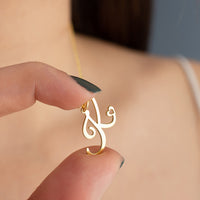
The piece they're describing → Heart Initial Necklace for Women — 18K Gold Plated, Personalized Letter + Heart Pendant
Personalize Yours


