


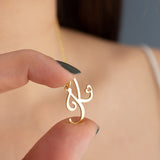
- Chain: the main strand, made of links.
- Clasp: the catch that joins the two ends (lobster claw, spring ring, box, barrel, toggle).
- Jump ring: a small wire ring connecting a pendant or charm to the chain.
- Bail: the loop at the top of a pendant.
- Extender: extra chain at the clasp end for adjustable length.
- Weak points: the clasp, the jump ring and the bail, in roughly that order.
Knowing the parts of a necklace helps you in three ways: you can describe a problem to a jeweler, you can order the right replacement, and you can judge a necklace before buying it. This guide covers the parts of a necklace, the parts of a chain, how each part tends to fail, and how to tell which part you are looking at. It is about the parts. For chain styles such as cable, curb or snake, see our guide to types of necklace chains. We read jeweler glossaries, a retailer guide to clasps and a public online encyclopedia, and we flag where terms differ.
What Are the Parts of a Necklace?
| Part | What it does | Notes |
|---|---|---|
| Chain, cord or band | The main strand that wraps around the neck | An encyclopedia entry describes it as the band, chain or cord |
| Links | The loops that join together to form a chain | Round, square, oval or other shapes |
| Clasp | Joins the two ends into one closed loop | Types listed below |
| Jump ring | A small oval or round wire ring that links a pendant or charm to a chain | Can be open or soldered closed |
| Bail | The connector at the top of a pendant | Slides onto the chain or hangs from a jump ring |
| Pendant | A hanging ornament, worn mostly on a necklace | A locket is a hinged case pendant |
| Extender | Extra chain at the clasp end that lengthens the necklace | Sometimes called an extension chain |
| End caps and crimps | Finish the ends of a cord or beaded strand | Mostly on cord and beaded styles |
What Are the Parts of a Chain?
A chain is built from links, and each link is a loop that connects to the next. That is the whole structure. What changes between chain styles is the shape of the link and how links interlock, which is why a cable chain and a box chain look so different. Two practical measurements matter. Length runs from clasp end to clasp end, which our chain necklace length guide explains, and thickness is the width of the links, covered in the chain thickness guide. Links are where a chain breaks if it is pulled or snagged, and very thin links are the most delicate.
What Are the Main Types of Necklace Clasp?
| Clasp | How it works |
|---|---|
| Lobster claw | A hinged hook that snaps onto a ring at the other end, among the more secure types |
| Spring ring | A ring with a small tension tab that opens a gap for a hook to loop through |
| Barrel | Two halves that screw together |
| Box (tongue and groove) | A box with a notch and a metal spring that slips in and locks |
| Hidden box | Sits under the last link of the chain so the clasp is concealed |
| Toggle | A bar passes through a circle to lock; one of the easier types to use |
Our full ranking is in 10 types of necklace clasps ranked by security, and the engineering behind jewelry clasps explains the mechanics. Clasps in the sources are described as an adjustable catch, bent plate or hook, so you may see slightly different wording depending on the maker.
What Is the Difference Between a Jump Ring and a Bail?
A jump ring is a separate small ring that connects things, while a bail is the loop built into a pendant. A pendant can hang from its bail directly on the chain, or from a jump ring that links the bail to the chain. Charms usually hang from jump rings, and pendants from bails. Both can look similar on a product photo. Read about jump rings, their sizes and how to open and close one, and see charms and pendants for the pendant side.
What Is a Necklace Extender?
An extender is a short length of extra chain attached at the clasp end, usually with its own small links, so that you can fasten the necklace at more than one length. It gives you an adjustable fit without cutting a chain. The listing for our heart initial necklace describes an adjustable length of 16 to 18 inches, for example. Our necklace extender guide covers types and how to use one, and how to temporarily shorten a necklace covers the opposite problem.
How Do Necklace Parts Fail?
These are practical observations, not figures from a study. The clasp wears first, because it opens and closes every time you put the necklace on, and a small spring or tension tab can lose grip over time. The jump ring comes next: a ring that is not fully closed can pull open under the weight of a pendant, and a pendant can slip off. The bail can bend if a heavy pendant is tugged. Chain links fail when a thin chain is pulled or tangled. A broken part is usually fixable by replacing that part, which is why knowing the names helps.
- Clasp will not close or open: see what to do when a necklace clasp breaks.
- Chain link broken: see how to fix a broken necklace chain, and when to see a jeweler.
- Chain knotted: see how to untangle a necklace chain.
What AJLuxe Sells
Our heart initial necklace is a personalized heart pendant on a 316L stainless steel base with 18K gold plating, with the chain adjustable from 16 to 18 inches. Because it is personalized, it is final sale. We do not sell loose clasps, jump rings or chain repair parts, so for a fix you will need a jeweler or a supply shop. Browse the necklaces collection for the full range.
More in this guide
This page is part of our jewelry parts glossary. Related reading: the parts of a ring, the parts of an earring, and necklace rash.
Frequently Asked Questions
What is the chain part of a necklace called?
The main strand is the chain, and each loop in it is a link. On cord or leather styles it is the cord. The whole strand is sometimes called the band.
What is the closure on a necklace called?
It is the clasp. Common types are lobster claw, spring ring, barrel, box and toggle.
What is the loop on a pendant called?
The bail. It lets the pendant hang from a chain, either directly or through a jump ring.
What is a jump ring on a necklace?
A small round or oval wire ring that connects a pendant or charm to a chain or links parts together.
What is the extra chain at the end of a necklace called?
An extender, also called an extension chain. It lets you fasten the necklace at a longer length.
What are the components of a necklace?
A chain or cord made of links, a clasp, usually a pendant with a bail, and sometimes a jump ring, an extender, and end caps on cord styles.
What part of a necklace breaks most often?
In our experience of how necklaces are worn, the clasp and the jump ring or bail fail most often, because they open, close and carry weight. The chain itself usually breaks at a thin link.
Sources
A jeweler glossary of necklace terms and clasp types, a second jeweler glossary (bail, jump ring, findings), a jewelry supply retailer listing for extender chains, and a public online encyclopedia entry on necklaces, all read on 2026-10-09. Where they differ we say so. Our product details come from our own listing.
Written by AJLuxe Team. Last updated: October 2026
All third-party trademarks, brand names and product names are the property of their respective owners. AJLuxe is not affiliated with, endorsed by, sponsored by, or otherwise connected to any third-party brand referenced in this article. Brand names are used solely for accurate comparative reference, and material descriptions reflect each brand's own published product specifications at the time of writing.
You Might Also Like
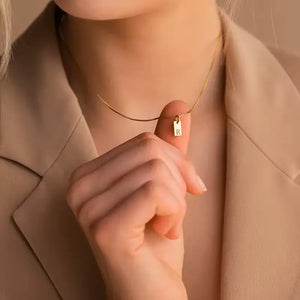
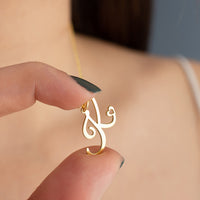
The piece they're describing → Heart Initial Necklace for Women — 18K Gold Plated, Personalized Letter + Heart Pendant
Personalize Yours


