


TL;DR: Pink tourmaline sits in a sweet spot — harder and more durable than rose quartz, opal, or amethyst, far more affordable than ruby, pink sapphire, or pink diamond, and almost always sold as-is without the heavy treatments that hide in pink topaz or cheap "pink diamond." This guide compares it head-to-head against 11 stones so you can pick the right one for color, budget, and everyday wear. The short version: choose pink tourmaline when you want a rich pink that survives daily life without a luxury price tag.
Shopping for a pink gemstone gets confusing fast. Rose quartz, morganite, pink sapphire, rubellite, pink spinel, pink topaz — they all look similar in a photo, but they behave nothing alike on your finger or in your wallet. Pink tourmaline is one of the most balanced choices in that lineup, and this hub pulls together every side-by-side comparison we've written so you can find your answer in one place.
Below you'll find an at-a-glance table of all 11 stones, then quick guidance grouped by what actually drives the decision: color, durability, value, and the treatment traps that catch first-time buyers. Each row links to the full comparison if you want the deep dive.
What's in this guide
- All 11 comparisons at a glance
- Compare by color: the pink (and purple) lineup
- Durability: which pink stones survive daily wear
- Best value: where your money goes furthest
- Treatment & lab-grown traps to watch
- Quick decision guide
- Every comparison, explained
- FAQ
All 11 comparisons at a glance
Hardness is measured on the Mohs scale (10 = diamond). Prices are rough mid-quality per-carat ranges and shift with size, color, and origin.
| Compared to… | Hardness (Mohs) | Typical price/ct | The one thing that sets it apart | Full comparison |
|---|---|---|---|---|
| Pink sapphire | 9 | $300–$2,000+ | Far harder & pricier; the daily-wear luxury option | Read |
| Ruby | 9 | $1,000–$15,000+ | Red corundum; rubellite is the affordable stand-in | Read |
| Pink diamond | 10 | $10,000–$100,000+ | Investment stone, not the same category | Read |
| Pink spinel | 8 | $200–$1,500 | Almost never treated; hard with no cleavage | Read |
| Pink topaz | 8 | $50–$400 | Hard but cleaves & chips; usually treated | Read |
| Morganite | 7.5–8 | $30–$300 | Soft peachy-pink; the romantic neutral | Read |
| Rubellite | 7–7.5 | $150–$1,000+ | The intense red-pink member of the tourmaline family | Read |
| Watermelon tourmaline | 7–7.5 | $100–$800 | Same mineral; durability is a tie, color zoning differs | Read |
| Amethyst | 7 | $10–$50 | The value champion; purple, but can fade in sun | Read |
| Rose quartz | 7 | $5–$30 | Soft milky pink; budget crystal look | Read |
| Opal | 5.5–6.5 | $20–$500+ | Fragile & water-sensitive; play-of-color trade-off | Read |
Pink tourmaline itself sits at Mohs 7–7.5 with a typical price of roughly $50–$600 per carat — harder than half this list and a fraction of the cost of the corundum and diamond options.

Compare by color: the pink (and purple) lineup
Color is usually the first thing buyers react to, so start here. If you want a true, saturated pink, pink tourmaline, rubellite, and pink sapphire deliver the deepest tones — rubellite leans red, sapphire can run hot-pink to magenta. For a soft, romantic blush, morganite and rose quartz are gentler and more pastel. Want something that isn't pink at all? Amethyst swaps the whole conversation to purple, and opal trades single-color for shifting play-of-color flashes.
Pink tourmaline's advantage is range. It runs from pale baby pink to vivid raspberry, so you can match almost any shade you have in mind without jumping to a pricier stone. If you love the look of a ruby but not the bill, rubellite tourmaline is the closest affordable cousin.
Durability: which pink stones survive daily wear
For a ring you'll wear every day, hardness and toughness matter more than color. Here's the honest ranking, hardest and toughest first:
- Pink diamond (10), pink sapphire & ruby (9) — effectively bulletproof for daily wear. The catch is price.
- Pink spinel (8) — hard and has no cleavage plane, so it resists chipping. An underrated daily-wear winner.
- Pink topaz (8) — high hardness number, but it has perfect cleavage and can split or chip on a sharp knock. Don't let the "8" fool you.
- Pink tourmaline, rubellite & watermelon tourmaline (7–7.5) — durable enough for everyday rings, earrings, and pendants with normal care.
- Amethyst & rose quartz (7) — fine for pendants and earrings; a daily ring will eventually show wear.
- Opal (5.5–6.5) — the fragile one. It holds 3–21% water, can craze (develop fine cracks), and dislikes knocks and chemicals. Best saved for earrings and pendants.
Takeaway: pink tourmaline lands comfortably in the "wear it daily with a little care" tier, which is exactly why it's so popular for rings.
Best value: where your money goes furthest
If budget leads the decision, the order flips. Amethyst and rose quartz are the cheapest by a wide margin — you can fill a pendant with gorgeous purple amethyst for the price of a coffee run. Morganite and pink topaz sit in the affordable-but-prettier middle. Pink tourmaline costs more than those but buys you better color saturation and a recognizable gemstone name. Pink sapphire, ruby, and pink diamond are the luxury tier, where you pay for hardness, rarity, and prestige.
The smart-money pick for most buyers is pink tourmaline or pink spinel: real gemstones, strong color, daily-wear durability, and prices that don't require financing.
Treatment & lab-grown traps to watch
This is where comparisons earn their keep. Several "pink" stones hide treatments or synthetics that affect value:
- Pink topaz — most pink topaz on the market is treated colorless topaz. Ask whether the color is natural.
- Amethyst — lab-grown synthetic amethyst is common and visually identical. It's a fine product, but it should be disclosed and priced accordingly. Natural amethyst can also fade in prolonged sunlight.
- "Pink diamond" — cheap stones sold under this name are usually treated or lab-grown. A genuinely natural pink diamond costs five to six figures per carat.
- Ruby — glass-filled and composite rubies are widespread at low price points.
- Opal — doublets and triplets (thin opal slices backed and capped) and lab opal are sold alongside solid natural opal.
Pink tourmaline, pink spinel, and watermelon tourmaline are refreshingly honest by comparison — they're typically sold untreated, so what you see is what you get. That trustworthiness is a real part of pink tourmaline's value.
Quick decision guide
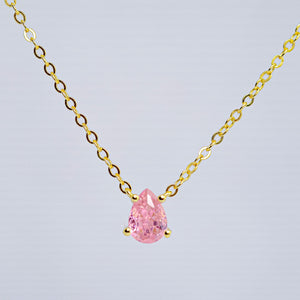
- Want the best all-rounder? Pink tourmaline — color, durability, and price in balance. AJLuxe's pink tourmaline teardrop pendant necklace is a $34.99 example in 925 sterling silver.
- Want maximum durability on a budget? Pink spinel.
- Cheapest pretty stone? Amethyst or rose quartz.
- Luxury heirloom / engagement ring? Pink sapphire or pink diamond.
- Closest affordable "ruby" look? Rubellite tourmaline.
- One-of-a-kind look? Watermelon tourmaline or opal.
Every comparison, explained
Affordable everyday pink vs the harder, pricier daily-wear luxury stone.
Why "pink ruby" is a myth and rubellite is the budget stand-in.
Affordable gem vs rare investment stone — not the same category.
Two honest, rarely-treated stones — spinel wins on hardness.
The treatment trap and why hardness isn't the same as toughness.
Vivid pink vs soft peachy blush — saturation vs romance.
Same family — where pink ends and rubellite begins.
Same mineral, so durability ties — it's all about the color zoning.
Pink vs purple, plus the value champion's fade-and-synthetic catch.
Gem-grade pink vs the soft, milky budget crystal.
Durability reversal — tourmaline wins, opal trades sturdiness for fire.
Want the background on the stone itself first? Start with our pink tourmaline meaning & properties guide or the broader tourmaline gemstone guide.
Related reading: 6 Best Stretchy Cords for Bracelets (2026), Compared.
Frequently asked questions
What is pink tourmaline most often compared to?
Rose quartz and morganite for the soft-pink look, and pink sapphire or ruby for the high-end version. The most useful comparison depends on your goal: rose quartz and amethyst for budget, pink spinel for durability, and pink sapphire for a luxury daily-wear stone.
Is pink tourmaline a good everyday stone?
Yes. At Mohs 7–7.5 it's durable enough for daily rings, earrings, and pendants with normal care. It's harder than amethyst, rose quartz, and opal, and unlike pink topaz it has no troublesome cleavage plane that chips easily.
Which pink stone is the cheapest?
Rose quartz and amethyst are the most affordable by a wide margin, often under $50 per carat. Pink tourmaline costs more but buys richer, more saturated color and a recognized gemstone name.
Which pink stone is the most durable?
Pink diamond, pink sapphire, and ruby top the hardness scale (Mohs 9–10). Among affordable options, pink spinel (Mohs 8, no cleavage) is the toughest daily-wear choice, with pink tourmaline close behind.
Is pink tourmaline usually treated?
Most pink tourmaline is sold untreated, which is part of its appeal. By contrast, pink topaz is often color-treated, and lab-grown synthetic amethyst is common — always ask for disclosure with those stones.
Pink tourmaline or rubellite — what's the difference?
They're the same mineral family (elbaite tourmaline). Rubellite is the trade name for the most intense, ruby-like red-pink material. All rubellite is tourmaline, but only the deepest, most saturated stones earn the rubellite name.
Can I use pink tourmaline instead of a ruby?
For the look, rubellite tourmaline is the closest affordable substitute — it delivers a similar red-pink without ruby's price. It's softer than ruby (Mohs 7–7.5 vs 9), so it needs a little more care in a daily ring.
Which comparison should I read first?
Pick by what's driving your choice: read the rose quartz or amethyst comparison if budget leads, the pink sapphire or pink spinel comparison if durability leads, and the morganite comparison if you're deciding between vivid and soft pink.
The bottom line
Pink tourmaline earns its popularity by being the balanced choice — richer color than the budget crystals, tougher than opal or amethyst, far cheaper than the corundum and diamond options, and honest about treatment. Use the comparisons above to match a stone to what matters most for you, then explore the collection when you're ready.
Ready to shop? Browse our pink tourmaline jewelry collection, or keep reading the full pink tourmaline guide.
Written by Vaishakhi Ajmera — founder and jewelry specialist at AJLuxe. Last updated: June 2026.
All third-party trademarks, brand names and product names are the property of their respective owners. AJLuxe is not affiliated with, endorsed by, sponsored by, or otherwise connected to any third-party brand referenced in this article. Brand names are used solely for accurate comparative reference, and material descriptions reflect each brand's own published product specifications at the time of writing.
You Might Also Like


The piece they're describing → Pink Tourmaline Infinity Necklace for Women — 925 Sterling Silver, Pink CZ Pave
Personalize Yours


