Pink tourmaline is October's primary modern birthstone — a rose-pink to vivid magenta gemstone that belongs to the complex boron silicate mineral group found across three continents. Unlike some birt…
Pink tourmaline is October's primary modern birthstone — a rose-pink to vivid magenta gemstone that belongs to the complex boron silicate mineral group found across three continents. Unlike some birthstones that exist primarily in historical context, pink tourmaline is actively mined, commercially available at reasonable price points, and genuinely beautiful as a jewelry stone. The color range that falls under "pink tourmaline" spans from the palest blush (barely-there rose) through medium candy pink all the way to the deep magenta tones called rubellite — one of the most saturated and prized varieties in the tourmaline family.
Geologically, tourmaline is one of the most compositionally complex gemstones on earth — its chemical formula contains so many elements that minor variations produce wildly different colors, which is why tourmaline exists in virtually every hue including the rare neon-blue Paraíba variety worth thousands of dollars per carat. The pink coloration specifically comes from manganese content within the crystal structure. Major sources include Brazil (the world's largest producer), Afghanistan's Panjshir Valley, California's San Diego County (which produced exceptional pink tourmalines in the early 20th century and continues to today), and Madagascar. This geographic diversity means the stone is available in a range of grades and price points rather than being concentrated in a single mine that controls supply.
With a Mohs hardness of 7 to 7.5, pink tourmaline sits in the solid daily-wear zone. Anything above 7 on the Mohs scale resists everyday scratching from common environmental materials — dust, fabric, most surfaces — which means a tourmaline pendant or ring can be worn daily without concern about surface damage during normal activities. The stone has no cleavage planes (unlike topaz, which can split along internal crystal planes under sharp impact), which adds to its toughness in real-world wear. For a birthstone pendant intended for October birthdays, this durability means the piece can genuinely be worn daily rather than reserved for occasions.
Energetically, pink tourmaline has a long association with the heart chakra — the energy center governing love, compassion, and emotional healing in multiple healing traditions. Crystal practitioners recommend it for work related to emotional wounds, relationship healing, and self-compassion. Whether or not you engage with crystal energy practices, this symbolic association reinforces the stone's identity as a love stone that sits comfortably alongside the symbolism of other pink gems used in romantic and affectionate gifting contexts. Pink tourmaline works equally well as a birthstone gift and as a love-themed jewelry piece.
| Stone | Color | Hardness (Mohs) | Price/Carat | Primary Meaning | Rarity |
|---|---|---|---|---|---|
| Pink Tourmaline | Blush to deep magenta | 7–7.5 | $50–$600 | Love, compassion, heart chakra | Moderate — widely available |
| Morganite | Peach-pink to rose | 7.5–8 | $100–$800 | Divine love, compassion | Moderate |
| Rose Quartz | Pale milky pink | 7 | $1–$20 | Unconditional love, healing | Very common |
| Pink Sapphire | Baby pink to hot pink | 9 | $200–$2,000+ | Wisdom, royalty, strength | Uncommon |
| Rubellite | Deep raspberry to magenta | 7–7.5 | $150–$1,200 | Love, passion (same mineral as tourmaline) | Uncommon — top-grade saturated tourmaline |
| Pink Topaz | Light pink (often treated) | 8 | $50–$400 | Love, hope (but note: most is treated colorless topaz) | Moderate — but natural pink topaz is rare |
October is one of only two months with two official birthstones — June (pearl and alexandrite) being the other. October's traditional birthstone is opal, a hydrated amorphous silica gem known for its play-of-color phenomenon. October's modern birthstone, designated by the American Gem Society in the 20th century, is tourmaline in its pink variety. The two stones could not be more different: opal is delicate (Mohs 5.5–6.5, fragile in dry conditions, can craze with temperature changes), while tourmaline is durable and daily-wear safe. This practical difference is part of why pink tourmaline has become the dominant choice for October birthstone jewelry intended for regular wear.
When giving an October birthday gift, the choice between opal and pink tourmaline is partly aesthetic and partly practical. Opal is stunning for its iridescent color play but requires careful handling and storage. Pink tourmaline is equally beautiful in its clear pink color and requires no special care beyond the basics. For a pendant intended for daily wear — the most common form of birthstone jewelry — pink tourmaline is the more practical recommendation, and the more vibrant color usually photographs more dramatically in pendant form.
One of the things that makes pink tourmaline more interesting than most pink gemstones is the breadth of its color range. At the lightest end, pink tourmaline can be almost transparent with the faintest rosy tint — delicate and feminine in a way that suits minimalist jewelry aesthetics. In the mid-range, the stone takes on a clear candy-pink saturation that is bright, cheerful, and immediately recognizable as tourmaline. At the saturated end, the stone transitions into what gemologists call rubellite — a deep raspberry or vivid magenta color that is intensely saturated and commands a significant price premium over lighter pink specimens.
For pendant jewelry intended as gifts, the mid-range pink (clear, medium saturation, good transparency) offers the best combination of visual impact and price accessibility. Stones in this range photograph clearly, show beautifully against sterling silver and gold settings, and are immediately recognizable as a quality gemstone without the premium price of top-grade rubellite. Lighter stones suit wearers who prefer pastel aesthetics; deeper rubellite stones suit those who want maximum visual impact and are willing to invest accordingly.
Rubellite is not a separate mineral — it is a grade designation for tourmaline that achieves a specific threshold of red-pink saturation that most pink tourmalines do not reach. To qualify as rubellite by the gemological definition, the stone must maintain its saturated red-pink color under both daylight and incandescent light without shifting toward an orange or brown secondary hue. Stones that shift away from pure pink under artificial light are classified as pink tourmaline; those that hold their red-pink saturation in all lighting conditions qualify as rubellite. The distinction is meaningful because rubellite commands prices three to five times higher than comparable-sized standard pink tourmaline for the same reason that top-grade rubies command premiums over light-pink sapphires.
For gifting purposes, understanding this distinction helps manage expectations. A pendant labeled "rubellite" should be deeply saturated and consistent in color across lighting conditions; a pendant labeled "pink tourmaline" will be lighter or less saturated — but still genuinely beautiful and a legitimate October birthstone. Neither is a misrepresentation; they are simply different grades of the same mineral.
Pink tourmaline's Mohs hardness of 7–7.5 places it in the reliable daily-wear category. For context: the Mohs scale measures scratch resistance, with common household dust (mostly quartz) sitting at around 7. A gemstone rated 7 or above can be worn in most environments without accumulating visible surface scratches from normal exposure. Tourmaline's additional advantage is the absence of cleavage — it does not have internal crystal planes where a sharp impact would cause splitting, unlike topaz (which has perfect cleavage) or tanzanite (which is both soft and prone to cleavage). For a pendant, which rarely experiences the kind of direct impact that would stress even a cleavage-prone stone, the durability profile is excellent for everyday wear.
Basic care extends the life of any pink tourmaline piece: clean occasionally with mild soap and warm water using a soft brush, dry thoroughly, store in a cloth pouch or box to prevent surface contact with harder gemstones that could scratch the tourmaline. Avoid ultrasonic cleaners, which can stress the inclusions present in most natural tourmalines. With this minimal maintenance routine, a pink tourmaline pendant will look excellent for decades.
Pink tourmaline occupies an interesting dual identity in jewelry culture. As an October birthstone, it is the obvious choice for October birthday gifts and is often gifted without reference to its metaphysical associations. As a love stone — pink, heart-chakra connected, energetically associated with compassion and emotional healing — it is equally appropriate for Valentine's Day, anniversaries, or any occasion where the theme is love and affection. This versatility makes it one of the more useful gemstones in a jewelry collection: it serves both the personal (birthday, personal growth) and the relational (romantic gift, anniversary) contexts without adjustment.
The practical consequence of this dual identity is that a pink tourmaline pendant is an appropriate gift across a wider range of occasions than a traditional birthstone pendant. An aquamarine pendant, for example, is primarily a March birthday gift. A pink tourmaline pendant works for October birthdays, Valentine's Day, anniversaries, and self-gifting with equal ease. If you are looking for a gemstone pendant that is not occasion-specific but remains meaningfully chosen, pink tourmaline is one of the best options in the pink stone category.
Yes. Pink tourmaline is the modern October birthstone, designated alongside the traditional birthstone opal. The American Gem Society and most major gemological organizations recognize tourmaline as October's gemstone. Pink tourmaline is a more practical daily-wear choice than opal due to its higher hardness (7–7.5 vs opal's 5.5–6.5) and greater durability. For October birthday jewelry intended for regular wear, pink tourmaline is the recommended choice by most jewelers and gemologists.
Rubellite is a grade designation for tourmaline that reaches a specific saturation of red-pink color and maintains that saturation under both daylight and artificial light. Standard pink tourmaline is lighter or less saturated, or shifts in color under different lighting conditions. Both are the same mineral (elbaite tourmaline); rubellite simply meets a higher color standard. Rubellite commands prices three to five times higher than comparable pink tourmaline for this reason. For pendant gifting, standard pink tourmaline offers excellent visual impact at accessible prices; rubellite is for collectors and high-value investments.
Yes. With a Mohs hardness of 7–7.5 and no cleavage planes, pink tourmaline is among the more durable gemstones for daily wear. It handles the scratches, contact, and incidental impacts of everyday life better than softer stones like opal (5.5–6.5), pearl (2.5–4.5), or moonstone (6–6.5). For a pendant, which rarely experiences direct sharp impacts, the durability profile is excellent. Basic care — occasional cleaning with mild soap and water, storage in a soft pouch — keeps a pink tourmaline piece looking excellent for decades of daily wear.
Clean with warm water and mild liquid soap, using a soft toothbrush to reach the setting. Rinse thoroughly and dry with a soft cloth. Store in a fabric pouch or jewelry box to prevent contact with harder gemstones that could scratch the surface. Avoid ultrasonic cleaners, which can stress natural inclusions in tourmaline. Avoid prolonged exposure to direct sunlight over time, as some tourmalines can very gradually lighten with cumulative UV exposure. Remove before swimming in chlorinated pools — the chemicals will not harm the stone but may affect silver settings over time.
Pink tourmaline is associated with the heart chakra in crystal healing traditions, connecting it to love, compassion, emotional healing, and the opening of the heart to both giving and receiving affection. It is also used symbolically for self-love practices — wearing tourmaline as a reminder to extend the same compassion inward that one naturally extends to others. As an October birthstone, it carries the general birthstone significance of personal identity and connection to one's birth month and season. The combination makes it one of the more semantically rich pink gemstones available.
Pink tourmaline in standard grades is widely commercially available — it is mined in Brazil, Afghanistan, California, and Madagascar, with sufficient global supply to keep prices at moderate levels ($50–$600 per carat depending on quality). Top-grade rubellite with deep saturation and no color shift is significantly rarer and commands premium prices. Paraíba tourmaline (neon blue-green from copper content) is among the rarest and most expensive gemstones on earth. Within the pink range specifically, standard pink tourmaline is accessible; investment-grade rubellite is a genuine collector stone.
Pink sapphire is the most durable pink gemstone (Mohs 9, no cleavage), followed by pink spinel (Mohs 8, no cleavage), then morganite (7.5–8), then pink tourmaline (7–7.5). All of these are daily-wear safe for pendant jewelry. Pink topaz rates at 8 on the Mohs scale but has perfect cleavage, making it more vulnerable to splitting from sharp impact than its hardness suggests. Rose quartz (Mohs 7) is durable but often included with internal fractures. For a pendant specifically — where impact risk is low — pink tourmaline's 7–7.5 hardness is more than adequate for confident daily wear.
Pink tourmaline and rose quartz look superficially similar (both pink) but differ significantly in transparency, clarity, and price. Rose quartz is almost always translucent rather than transparent — it has a milky, diffused appearance caused by microscopic inclusions of rutile or other minerals. Pink tourmaline in good quality is transparent with visible depth and clarity. Rose quartz is also much less expensive ($1–20/carat) due to its abundance. Pink tourmaline is the better choice for fine jewelry settings where transparent clarity shows off the gem's depth; rose quartz is better suited to cabochon cuts, beads, and decorative objects where the milky diffusion is part of the aesthetic.
Pink tourmaline is associated with compassion, emotional healing and self-love in gemstone tradition, and is also October's secondary birthstone alongside opal. See pink tourmaline meaning for the full history.
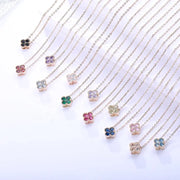
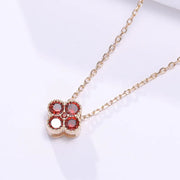
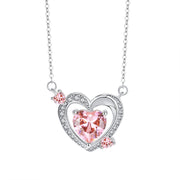
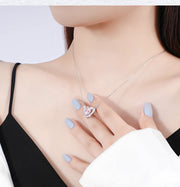
No, and we'd rather say so than let the collection name imply otherwise — only 2 of the 10 pieces here (the Pink Tourmaline Infinity Necklace and Pink Tourmaline Pendant Necklace) are set with the genuine gemstone. The rest are pink-toned cubic zirconia pieces grouped here by color.
Check the product title and description — pieces set with genuine pink tourmaline say so explicitly. Anything titled around "pink heart" or "pink CZ" uses cubic zirconia, not the mineral.
In crystal healing traditions, pink tourmaline is associated with emotional balance and self-compassion — a belief system, not a scientific claim. See pink tourmaline meaning for the fuller picture.
Yes. We hold our own inventory rather than dropshipping, so anything listed as available is on our shelves and ready to ship.
Orders placed before 12pm EST ship the same day; everything else ships the next business day. Delivery inside the USA takes 3–5 days from dispatch, and shipping is free with no minimum order.
Yes. Pink tourmaline is the modern October birthstone designated alongside the traditional opal. It is a more practical daily-wear choice than opal due to higher hardness (7–7.5 vs 5.5–6.5) and greater durability.
Rubellite is a grade designation for tourmaline that achieves deep red-pink saturation and maintains that color under all lighting conditions. Standard pink tourmaline is lighter or shifts in different light. Both are the same mineral; rubellite commands 3–5× higher prices.
Yes. With Mohs hardness 7–7.5 and no cleavage planes, pink tourmaline is among the more durable daily-wear gemstones. It handles everyday wear better than softer stones like opal, pearl, or moonstone. Basic care keeps it looking excellent for decades.
Pink tourmaline is tied to compassion and emotional healing in gemstone tradition, and sits alongside opal as October's secondary birthstone. See pink tourmaline meaning for the full history.
Two necklaces here are set with genuine pink tourmaline; the other eight pieces use pink-toned cubic zirconia and are grouped here by color, not the mineral itself. Each product page states which is which — see best pink tourmaline necklaces for the genuine-stone picks specifically.
All in stock — 528 reviews sit at a 4.66 average across the collection.
Genuine gemstone pieces should avoid direct contact with perfume and chlorine, which can dull the stone over time. Anything unworn can be returned within 30 days, and shipping is free in the USA both ways with no minimum order.
The guides shoppers open most before choosing this piece.