


- Hardness: tourmaline 7 to 7.5, rose quartz 7
- Color: tourmaline is vivid and see-through, rose quartz is milky and soft
- Price: rose quartz costs a small fraction of gem-quality pink tourmaline
- Meaning: tourmaline for protective, active love energy, rose quartz for calm, unconditional love
- Best for jewelry: tourmaline holds facets, rose quartz suits cabochons and beads
Pink tourmaline and rose quartz are two of the most popular pink gemstones in jewelry, and they are confused all the time. Both are pink and both are called "love stones," but they are different minerals with different hardness, price, color depth and symbolism. If you are choosing between them for a necklace, a ring or a crystal practice, this guide shows how to tell them apart and which one fits. For other comparisons, see rubellite vs pink tourmaline and morganite vs rose quartz.
Pink tourmaline vs rose quartz at a glance
The table below compares the two stones side by side. Hardness is on the standard 1 to 10 gemstone hardness scale.

| Feature | Pink tourmaline | Rose quartz |
|---|---|---|
| Color range | Pale pink to deep magenta or red | Pale to medium pink, milky |
| Hardness | 7 to 7.5 | 7 |
| Transparency | Transparent to translucent | Translucent to opaque |
| Price | Moderate to high for gem quality | Low, very abundant |
| Primary sources | Brazil, Afghanistan, Mozambique | Brazil, Madagascar, South Africa |
| Main meaning | Protection, transformation, love vitality | Unconditional love, self-love, calm |
| Best jewelry use | Faceted rings, pendants, earrings | Cabochon pendants, beads |
| Daily wear | Very good | Good; avoid harsh chemicals and strong sun |
How can you tell pink tourmaline from rose quartz?
Hold the stone up to the light: if you can see through it and the pink is vivid, it is likely tourmaline, and if it stays hazy and opaque, it is likely rose quartz. Color and clarity are where the two differ most.
Pink tourmaline is typically transparent to translucent, like a piece of colored glass, and ranges from pale pastel pink to deep magenta. Its shade can shift slightly as you turn it, a property called pleochroism. Rose quartz is milky because of microscopic inclusions, rarely becomes truly transparent, and rarely forms visible crystals, so you mostly see it as tumbled stones, cabochons, beads and carved spheres. Tourmaline crystals often show fine lengthwise lines, which is a clue to the mineral family.
Which is more durable for jewelry?
Pink tourmaline is slightly more durable for daily wear, mainly in rings and bracelets. At 7 to 7.5 it resists scratching a little better than rose quartz at 7, and it lacks cleavage in most directions, so it does not split easily on impact.
Rose quartz is also a solid 7, so normal wear will not scratch it easily, but it has more inclusions and can be brittle in thin cuts. Protective bezel settings suit it better than prongs, especially in rings. It can also fade with prolonged direct sunlight and heat, which tourmaline largely avoids. For pendants and earrings, both perform well.
How do their meanings differ?
Pink tourmaline is associated with active, protective love and emotional courage, while rose quartz is associated with calm, unconditional love and self-compassion. Both are linked to the heart in crystal traditions, but practitioners treat them as distinct tools.
Tourmaline is described as a stone of transformation that opens the heart and also protects it, often chosen when working through fear of vulnerability or grief. Rose quartz is the classic receptive, nurturing stone, often used in meditation, sleep and recovery after heartbreak. Neither is scientifically proven to heal, but symbolic use of gemstones has deep roots across cultures. Read more in our guides to pink tourmaline meaning and rose quartz meaning.
Which is more expensive?
Pink tourmaline is far more expensive than rose quartz. Rose quartz is one of the most common minerals in the world, mined in large quantities, so even good pieces stay affordable. Eye-clean, deeply saturated pink tourmaline is genuinely scarce, and the finest red-pink variety, known as rubellite, is priced at the top end.
What this means for jewelry: a genuine pink tourmaline necklace will cost noticeably more than a rose quartz equivalent, and that premium buys rarity, vivid color and better durability. If budget decides, rose quartz delivers beauty at a much lower price. Prices vary widely between sellers, so compare stones of similar size and quality.
Which is better for each type of jewelry?
Tourmaline is better for faceted pieces and rings, and rose quartz is better for cabochons and beads.
- Faceted pendants and earrings: Tourmaline wins. Its transparency lets a skilled cutter bring out brilliance, while faceted rose quartz looks pretty but flat.
- Cabochon pendants: Rose quartz is at home here, with a smooth, domed, romantic look.
- Rings: Tourmaline is the safer daily-wear choice. Rose quartz rings work in bezel settings with more careful handling.
- Beaded bracelets and necklaces: Rose quartz dominates because large beads are affordable.
Can you wear pink tourmaline and rose quartz together?
Yes, they pair well. There is no real hardness mismatch, since both sit around 7, so neither will scratch the other in a layered necklace stack.
Visually, a vivid, glassy tourmaline pendant against soft, milky rose quartz beads creates a pleasing contrast. In crystal traditions the pairing is described as opening the heart and then guarding it. Just avoid storing either against harder gems such as sapphire or diamond, which could scratch them.
Pink stone jewelry at AJLuxe
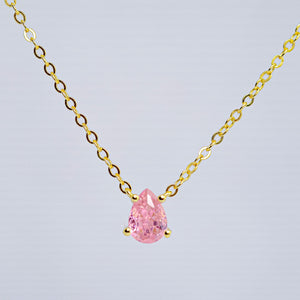
AJLuxe does not sell genuine pink tourmaline or genuine rose quartz jewelry. Our Pink Tourmaline Infinity Necklace is set with pink cubic zirconia pave, a simulated stone chosen to match the color, in 925 sterling silver. If you want a real gemstone, shop from a seller who states the stone type and any treatments clearly. You can browse our necklace collection or pendant necklaces, and we ship within the US only.
Frequently asked questions
What is the main difference between pink tourmaline and rose quartz?
They are different minerals. Tourmaline is a complex boron silicate with vivid, transparent color and a hardness of 7 to 7.5. Rose quartz is silicon dioxide, in the same family as clear quartz, with a milky soft pink color and a hardness of 7. Tourmaline is far rarer and significantly more expensive.
Which is harder, pink tourmaline or rose quartz?
Pink tourmaline is slightly harder, at 7 to 7.5 compared with 7. Both are durable enough for daily wear, but tourmaline has a small edge in scratch resistance.
Is pink tourmaline more expensive than rose quartz?
Yes, by a wide margin. Rose quartz is abundant and inexpensive, while gem-quality pink tourmaline commands a premium for its rarity, color and clarity.
Can you wear pink tourmaline and rose quartz together?
Yes. Their hardness is similar, and tourmaline's vibrant pink contrasts nicely with rose quartz's soft, milky tone. Layering a tourmaline pendant with rose quartz beads is a popular combination.
Which stone is better for love and relationships?
They work differently in crystal traditions. Rose quartz is the classic stone for unconditional love, self-love and emotional healing, calming and receptive. Pink tourmaline is more active, associated with emotional courage and love vitality.
How do I tell pink tourmaline and rose quartz apart visually?
Tourmaline is usually transparent to translucent with saturated pink, while rose quartz is milky and hazy. Tourmaline crystals often have fine lengthwise lines, while rose quartz rarely forms visible crystals.
Is pink tourmaline the same as rubellite?
Not exactly. Rubellite is the strongly saturated pink-to-red variety of tourmaline. All rubellites are tourmaline, but not every pink tourmaline qualifies as rubellite. See rubellite vs pink tourmaline for the full comparison.
Which is better for a necklace, pink tourmaline or rose quartz?
Pink tourmaline is better for a faceted pendant because it holds facets and sparkles. Rose quartz works better as a cabochon or tumbled stone for a soft, romantic look at a lower price. If you have decided on tourmaline, our best pink tourmaline necklace guide covers grades, settings and what to check before buying.
Does rose quartz fade in sunlight?
It can. Rose quartz may lose color with prolonged direct sunlight and heat, while pink tourmaline is generally more color-stable under normal conditions. Store rose quartz out of strong light.
Which is rarer, pink tourmaline or rose quartz?
Pink tourmaline is much rarer. Rose quartz is one of the most common minerals and is mined in large quantities, while eye-clean, deeply saturated pink tourmaline is scarce.
The bottom line
Pink tourmaline and rose quartz are not competing, they are just different. Tourmaline is rarer, more vibrant and slightly more durable, and it is the choice when you want a real gemstone that earns a second look. Rose quartz is soft, affordable and rich in symbolism, and it is the choice when you want gentle beauty at a lower price. If you cannot decide, wear both.
Related comparisons: pink tourmaline vs morganite, pink tourmaline vs every gemstone, morganite meaning and rose quartz vs pink opal.
Written by the AJLuxe team. Last updated: October 2026.
All third-party trademarks, brand names and product names are the property of their respective owners. AJLuxe is not affiliated with, endorsed by, sponsored by, or otherwise connected to any third-party brand referenced in this article. Brand names are used solely for accurate comparative reference, and material descriptions reflect each brand's own published product specifications at the time of writing.
You Might Also Like


The piece they're describing → Pink Tourmaline Infinity Necklace for Women — 925 Sterling Silver, Pink CZ Pave
Personalize Yours


