


TL;DR: Ruby is the red, Mohs-9 precious stone — harder, rarer, and far more expensive ($300–$3,000/ct commercial, $10,000+/ct for fine unheated Burmese). Pink tourmaline gives you warm pink color at $100–$600 per carat with good toughness but lower hardness (Mohs 7–7.5). A key catch: many cheap "rubies" are heated or lead-glass filled, while pink tourmaline is usually natural. If you love ruby's red-pink glow but not the price, rubellite (red pink tourmaline) is the smart stand-in. Choose ruby for a heirloom-grade daily ring; choose pink tourmaline for beautiful pink color on a real-world budget.
People often line up pink tourmaline and ruby as if they're two versions of the same stone. They're not. One is a soft, warm pink silicate that's easy on the wallet. The other is the red king of gemstones — second only to diamond in hardness and among the priciest gems per carat. They overlap in the red-pink zone, which is exactly where shoppers get confused. Here's how they really compare, where the "pink ruby" label goes wrong, and which stone fits your piece and budget.
Table of Contents
- What Are Pink Tourmaline and Ruby?
- Color: How They Look Side by Side
- Treatment & Composite Rubies (Ruby's Big Trap)
- Durability: Why Ruby Wins for Everyday Wear
- Price Comparison
- Which Stone Works Best for Which Jewelry?
- Care and Maintenance
- Birthstone and Anniversary Meaning
- How to Tell Them Apart
- Frequently Asked Questions
- Final Thoughts
What Are Pink Tourmaline and Ruby?
Ruby is the red variety of corundum, the same mineral as sapphire. Its red color comes from trace chromium, and it rates Mohs 9 — harder than every natural gem except diamond. Here's the part most people miss: corundum is only called ruby when it's red. The pink version of the exact same mineral is named pink sapphire, not "pink ruby." So a true ruby is always red to purplish-red, never a soft pastel pink.
Pink tourmaline is the pink variety of tourmaline, a complex boron silicate. Its color comes from trace manganese, and it rates Mohs 7–7.5. It's a different mineral entirely — not corundum — and it forms in long, striated crystals. Its red-pink, most ruby-like grade is called rubellite, which is the version shoppers most often compare to ruby.
The short version: ruby is a red, ultra-hard, high-value precious stone. Pink tourmaline is a softer, warmer, far more affordable pink. They meet in the red-pink range, but they're built differently.
| Feature | Pink Tourmaline | Ruby |
|---|---|---|
| Mineral type | Boron silicate (tourmaline) | Aluminum oxide (corundum) |
| Color cause | Manganese | Chromium |
| Color range | Blush to hot pink, raspberry | Red to purplish-red (never pastel pink) |
| Mohs hardness | 7–7.5 | 9 |
| Cleavage | None (good toughness) | None (excellent toughness) |
| Usually treated? | Usually natural; some heated | Most heated; cheap stones often glass-filled |
| Brilliance | Moderate; pleochroic | High; strong red glow |
| Availability | Widely available | Common commercial; fine quality rare |
| Primary sources | Brazil, Mozambique, Nigeria, Madagascar | Myanmar (Burma), Mozambique, Thailand, Madagascar |
| Price range | $100–$600/ct | $300–$3,000/ct; $10,000+/ct (fine Burmese) |
| Birthstone | October | July |

Color: How They Look Side by Side
Ruby reads boldly red. Top stones glow a vivid, slightly purplish red the trade calls "pigeon's blood," and chromium gives ruby a faint natural fluorescence that makes the red look lit from within. Even commercial ruby leans clearly red, not pink. If a stone looks pastel pink, gem labs will almost always grade it pink sapphire rather than ruby.
Pink tourmaline shows warm, varied pinks — blush, peachy-rose, and raspberry, often with red or orange undertones. Its most ruby-adjacent grade, rubellite, pushes into a rich red-pink that can look close to a lighter ruby at a glance. Because tourmaline is strongly pleochroic, the shade shifts a little as you tilt the stone.
If you want a true, saturated red, only ruby delivers it. If you want warm pink — or a red-pink that echoes ruby's look for far less — pink tourmaline and rubellite are the answer.
Treatment & Composite Rubies (Ruby's Big Trap)
This is where ruby buyers get burned, and where pink tourmaline quietly wins on honesty. The vast majority of rubies on the market are heat-treated to improve color — that's standard and accepted. The real trap is composite, or lead-glass-filled, ruby. These are low-grade, heavily fractured corundum flooded with molten lead glass to look solid and red. They sell cheap, but they're fragile, can be damaged by everyday chemicals and even hot water, and hold almost no resale value.
According to the Gemological Institute of America, glass-filled rubies require special care and are worth a fraction of natural ruby. Many shoppers buy a "bargain ruby" without knowing it's a composite stone.
Pink tourmaline is usually sold with natural color, though some is heated. It is rarely fracture-filled the way cheap ruby is. Why this matters for you:
- Trust: With pink tourmaline, you're almost always getting a solid natural stone, not a glass-and-corundum composite.
- Durability: A natural pink tourmaline outlasts a glass-filled ruby, which can crack or cloud with normal wear.
- Value: Composite rubies don't hold value. If you want ruby, insist on a natural (heated-only) stone with a lab report — and expect to pay accordingly.
The takeaway: a real, untreated-to-heated ruby is a fantastic stone, but the cheap end of the ruby market is full of composites. Pink tourmaline sidesteps that problem.
Durability: Why Ruby Wins for Everyday Wear
For a stone you wear daily, ruby has the clear edge. At Mohs 9, ruby is the hardest colored gem after diamond — it shrugs off scratches that would dull most stones, and it has no cleavage, so it resists chipping too. That combination is exactly why ruby has been an engagement-ring and heirloom stone for centuries.
Pink tourmaline rates Mohs 7–7.5 with no cleavage. It's tough against impact, but it picks up fine surface scratches faster than ruby and can be heat-sensitive. For necklaces, earrings, and occasional-wear rings that's perfectly fine. For a ring worn every single day, ruby is simply more bulletproof — as long as it's a natural stone, not a glass-filled composite.
The takeaway: ruby is the more durable everyday stone by a wide margin. Pink tourmaline holds up well in protective settings and lower-impact pieces, and it costs a fraction as much.
Price Comparison
This is the biggest practical gap between the two. Ruby is one of the most expensive gemstones on earth; pink tourmaline is one of the most accessible colored stones. The price difference can be enormous.
| Stone | Typical price per carat | Notes |
|---|---|---|
| Natural pink tourmaline | $100–$600/ct | Widely available; rises with saturation and size |
| Fine rubellite (red pink tourmaline) | $300–$1,500/ct | The most ruby-like, valuable tourmaline grade |
| Commercial ruby (heated) | $300–$3,000/ct | Color and clarity vary widely |
| Fine unheated Burmese ruby | $10,000–$30,000+/ct | Pigeon's blood color can exceed diamond per carat |
The honest read: a fine 1-carat ruby can cost what a large, gorgeous pink tourmaline collection costs. If your heart is set on a true red precious stone for a milestone piece, ruby earns its price. If you love the warm pink-to-red look but want real size and value, pink tourmaline — especially rubellite — gives you far more stone for the money.
Which Stone Works Best for Which Jewelry?
Match the stone to how the piece gets worn — and to your budget.
- Everyday rings: Natural ruby is the more durable pick thanks to Mohs 9. Pink tourmaline works well in a protective bezel or for lighter daily wear.
- Necklaces and pendants: Either is beautiful and safe from impact. Pink tourmaline necklaces give you warm color at a friendly price.
- Earrings: Both shine. Earrings take almost no knocks, so tourmaline's lower hardness is a non-issue.
- Heirloom / milestone pieces: Fine natural ruby is a classic store of value and a July birthday or 40th-anniversary stone. Pink tourmaline gives you a bigger, bolder look for far less.
Care and Maintenance
Clean a natural ruby with warm water, mild soap, and a soft brush; ultrasonic and steam cleaners are usually safe for untreated or heated ruby but never for glass-filled composites. Clean pink tourmaline with warm soapy water only — skip ultrasonic and steam, since tourmaline can be heat-sensitive and may have inclusions. Store each stone separately so harder gems don't scratch softer ones, and take rings off before the gym, gardening, or housework. If you own a glass-filled ruby, keep it away from heat, acids, and even hot dishwater.
Birthstone and Anniversary Meaning
Ruby is the July birthstone and the gem for the 15th and 40th wedding anniversaries. For centuries it has symbolized passion, love, courage, and vitality — the "stone of kings." Its bold red makes it a powerful romantic and milestone gift.
Pink tourmaline is an October birthstone and the traditional gift for the 8th anniversary. It's long been tied to the heart — compassion, emotional healing, and gentle love. For a July birthday or a major anniversary, ruby fits; for an October birthday or a softer, heart-centered gift, pink tourmaline is the natural choice.
How to Tell Them Apart
At the red-pink boundary they can look similar, but a few signs help:
- Color: True ruby is clearly red to purplish-red. If the stone is soft pastel pink, it's almost certainly pink sapphire or pink tourmaline, not ruby.
- Color behavior: Tilt the stone. Pink tourmaline shifts shade noticeably (strong pleochroism). Ruby shows a steadier red and may glow under UV thanks to chromium fluorescence.
- Hardness clues: Ruby resists scratches that would mark tourmaline, though you should never scratch-test a finished gem.
- Certainty: Only a gemologist can confirm it. A refractometer separates them fast — tourmaline is doubly refractive, ruby is singly refractive — and a lab report flags glass filling in suspect rubies.
If a "ruby" is priced like inexpensive tourmaline, treat it as a composite stone until a lab report proves otherwise. Natural ruby rarely sells at bargain prices.
Keep exploring pink & red gemstones
Frequently Asked Questions
Is pink tourmaline a type of ruby? No. Ruby is red corundum (aluminum oxide), while pink tourmaline is a boron silicate — two completely different minerals. They only overlap in the red-pink color range. Ruby is also much harder (Mohs 9 vs 7–7.5) and far more expensive.
Is there such a thing as pink ruby? Not really. When corundum is red it's called ruby; when it's pink it's graded as pink sapphire. So "pink ruby" is a loose marketing term, and a soft pink stone sold as ruby is usually pink sapphire — or pink tourmaline. Always ask for the exact gem identification.
Is ruby more valuable than pink tourmaline? Yes, usually by a wide margin. Commercial ruby runs $300–$3,000 per carat and fine unheated Burmese ruby can exceed $10,000–$30,000, versus $100–$600 for pink tourmaline. Ruby is rarer in fine quality, harder, and carries centuries of prestige.
Can pink tourmaline replace ruby? For the look, often yes — especially rubellite, the red-pink grade of tourmaline that echoes ruby's glow for a fraction of the price. It won't match ruby's Mohs 9 hardness or red saturation, but for necklaces, earrings, and budget-friendly rings it's a beautiful, honest stand-in.
Why are some rubies so cheap? Many bargain rubies are lead-glass-filled composites — low-grade corundum flooded with glass to look solid and red. They're fragile, sensitive to heat and chemicals, and hold little value. A genuinely cheap "ruby" is almost always a composite, so always ask about treatment and request a lab report.
Which is harder, ruby or pink tourmaline? Ruby, clearly. Ruby rates Mohs 9, second only to diamond among natural gems, while pink tourmaline rates 7–7.5. Both lack cleavage, so neither chips easily, but ruby resists scratches far better and is the stronger everyday-wear stone.
Which is better for an engagement ring? Natural ruby, if your budget allows — its Mohs 9 hardness makes it one of the most durable colored stones for daily wear. Pink tourmaline can work in a protective setting and costs far less, but it scratches more easily. Avoid glass-filled ruby for an engagement ring; it isn't durable enough.
Which pink or red stone is best for sensitive skin? Neither stone causes skin reactions. Sensitivity comes from the metal setting, not the gem. At AJLuxe we use 925 sterling silver with 18k gold plating, which suits most sensitive skin. If you have a nickel allergy, check the metal specification before buying.
Are pink tourmaline and ruby the same birthstone? No. Ruby is the July birthstone, and pink tourmaline is an October birthstone alongside opal. They mark birthdays in different months and carry different anniversary meanings — ruby for the 40th, pink tourmaline for the 8th.
Which should I buy? For a true red precious stone with maximum hardness and heirloom prestige, buy a natural ruby and budget accordingly. For warm pink-to-red color, real size, and honest value, buy pink tourmaline — rubellite if you want the most ruby-like look. Match the stone to your budget and how the piece will be worn.
Final Thoughts
Here's the simple version: ruby is the red, Mohs-9, high-value precious stone — the most durable and prestigious of the two, but expensive, and risky at the cheap end where glass-filled composites hide. Pink tourmaline gives you warm pink-to-red color, good toughness, and honest natural stones at a fraction of ruby's price.
If you want a true red heirloom and you can invest in a natural stone, ruby is worth it. If you love the pink-to-red look but want real size and value — or you simply prefer a softer pink — pink tourmaline and rubellite are the smart, beautiful pick.
Browse our pink tourmaline jewelry and read the full pink tourmaline meaning guide to find the piece that suits you.
Written by Vaishakhi Ajmera — founder and jewelry specialist at AJLuxe. Last updated: July 2026.
Related Comparisons
- Pink Tourmaline vs Every Gemstone — the complete comparison guide
- Rubellite vs Pink Tourmaline: What's the Difference?
- Pink Tourmaline vs Pink Sapphire: Which Gemstone Should You Choose?
- Pink Tourmaline vs Pink Spinel: Color, Price & Which to Choose
- Pink Tourmaline vs Opal: Color, Price & Which to Choose
- Pink Tourmaline vs Watermelon Tourmaline: Color, Rarity & Which to Choose
- Pink Tourmaline vs Pink Diamond: Price, Rarity & Which to Choose
- Pink Tourmaline vs Amethyst: Color, Price & Which to Choose
All third-party trademarks, brand names and product names are the property of their respective owners. AJLuxe is not affiliated with, endorsed by, sponsored by, or otherwise connected to any third-party brand referenced in this article. Brand names are used solely for accurate comparative reference, and material descriptions reflect each brand's own published product specifications at the time of writing.
You Might Also Like

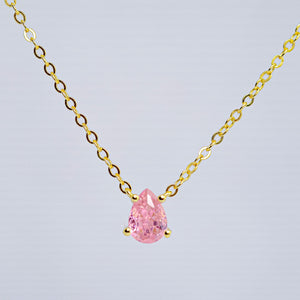
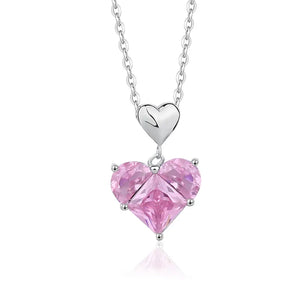
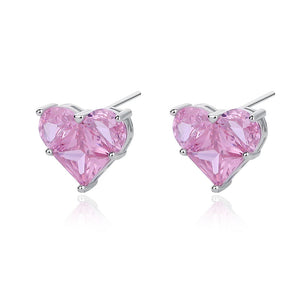

The piece they're describing → Pink Tourmaline Infinity Necklace for Women — 925 Sterling Silver, Pink CZ Pave
Personalize Yours


