


- Price: Natural alexandrite runs $500–$15,000+ per carat; lab-created costs $10–$50 per carat
- Color change: Lab alexandrite often shows a stronger green-to-red shift than lower-grade natural stones — that's not a typo
- What you're buying: Most "lab alexandrite" is synthetic corundum (aluminum oxide) — optically similar but chemically different from natural chrysoberyl
- Investment: Natural top-grade alexandrite holds value; lab-created has near-zero resale
- For jewelry: Lab wins on value; natural wins on rarity and long-term worth
Lab alexandrite often shows a stronger color change than the natural stone — and that's not a mistake. It's one of several counter-intuitive facts about this gemstone that most buyers never hear. Whether you're shopping for a June birthstone gift, an engagement ring, or just curious about the price gap, this guide covers everything you need to know before you buy.
Quick Comparison: Natural vs Lab-Created Alexandrite
| Feature | Natural Alexandrite | Lab-Created Alexandrite |
|---|---|---|
| Mineral family | Chrysoberyl (BeAl₂O₄) | Often synthetic corundum (Al₂O₃) or flux-grown chrysoberyl |
| Color change | Green/teal → brownish-red (varies by grade) | Green → vivid red (often more dramatic) |
| Mohs hardness | 8.5 | 8.5 (corundum) or 8.5 (chrysoberyl) |
| Price per carat | $500–$15,000+ (gem quality) | $10–$50 |
| Primary sources | Russia, Brazil, Sri Lanka, Tanzania | Laboratory (flame fusion, flux, hydrothermal) |
| GIA certification | Yes — available | Generally not certified |
| Investment value | High (Russian origin, strong change) | Near zero |
| Inclusions | Natural fingerprint-like silk inclusions | Usually eye-clean, few inclusions |
| June birthstone | Yes | Yes (accepted substitute) |

What Is Natural Alexandrite?
Alexandrite is a variety of chrysoberyl — a beryllium aluminum oxide mineral with the chemical formula BeAl₂O₄. What makes it extraordinary is a trace amount of chromium that replaces some of the aluminum atoms. Chromium absorbs light in a narrow band that sits right between the red and green wavelengths, which is why the stone reads as green in daylight (which is blue-heavy) and shifts toward red under incandescent light (which is red-heavy). This dual-personality effect is called the alexandrite effect, and it only happens in a handful of gemstones.
Natural alexandrite is genuinely rare. Fine-quality specimens come from Russia's Ural Mountains, where the stone was first discovered around 1830. Other significant deposits exist in Brazil, Sri Lanka, and Tanzania, but Russian-origin stones with strong color change are still considered the benchmark. Most professional gemologists will go their entire careers without handling a top-grade natural alexandrite — that's how scarce they are.
Alexandrite is also one of three June birthstones, alongside pearl and moonstone. If you want to learn more about the full meaning and lore behind it, read our alexandrite meaning guide.
What Is Lab-Created Alexandrite? (Read This Before You Buy)
Here's what most articles won't tell you: the vast majority of "lab-created alexandrite" sold online is not alexandrite at all in a strict chemical sense. It's synthetic corundum — aluminum oxide (Al₂O₃) — doped with vanadium to produce a color-change effect. Corundum is the same mineral family as sapphire and ruby. It produces a convincing optical shift from purple-green to reddish-purple, but it is chemically and structurally different from chrysoberyl.
True lab-grown chrysoberyl alexandrite does exist — grown via flux or hydrothermal methods — but it's far less common on the consumer market and typically costs more than the synthetic corundum version. When a retailer lists "lab alexandrite" for $15–$30 a stone without specifying the growth method, it's almost certainly synthetic corundum.
Does that make it worthless? No. Both types are durable, optically attractive, and show a real color-change effect. But if you're buying expecting chrysoberyl chemistry, you need to ask the right questions. A reputable seller will specify: is this synthetic corundum, flux-grown chrysoberyl, or hydrothermal chrysoberyl?
The FTC requires that lab-created gemstones be clearly disclosed as synthetic. Synthetic corundum sold as alexandrite should technically be labeled as "color-change synthetic corundum" — though compliance is inconsistent across the industry.
Color Change: Natural vs Lab Alexandrite
This is where expectations often collide with reality. High-quality Russian alexandrite shows a dramatic shift from rich forest green to deep red — sometimes described as "emerald by day, ruby by night." But that description fits maybe the top 5% of natural alexandrite on the market.
Most commercial natural alexandrite shows a more modest change: teal or olive green shifting to brownish-red or grayish-purple. The color change is real but subtle. Only stones with strong saturation in both colors command premium prices.
Lab-created alexandrite — both the synthetic corundum variety and flux-grown chrysoberyl — is often engineered to show a more vivid shift. Because the growth conditions are controlled, the chromium or vanadium concentration can be calibrated for maximum visual contrast. The result is frequently a brighter, more saturated green-to-red swing than you'd see in mid-grade natural stones.
This doesn't mean lab alexandrite is always more impressive. A top-grade Russian natural stone with strong color change will outperform any lab-grown version. But a $30 lab stone will typically outperform a $200 natural stone from a less desirable deposit. Price doesn't tell the whole story.
Why Is Natural Alexandrite So Expensive?
Three factors drive the price premium:
Rarity of the chromium substitution. Chrysoberyl is not uncommon — colorless or yellow chrysoberyl can be found in many locations. But the specific geological conditions that allow chromium to substitute for aluminum while simultaneously limiting iron (which would suppress the color change) are extremely rare. Most chrysoberyl deposits produce no alexandrite at all.
Crystal size limits yield. Natural alexandrite crystals tend to be small. A 1-carat finished stone may come from a crystal that weighs 3–5 carats rough, with most material lost in cutting. Stones above 2 carats with strong color change are genuinely exceptional and priced accordingly.
Origin matters to collectors. Russian alexandrite from the original Ural Mountain deposits carries a significant premium over Brazilian or Sri Lankan material, even when the stones look similar. Provenance is documented and priced into the stone, like a vintage wine from a specific region.
Lab alexandrite sidesteps all of this. The growth process takes weeks, requires no mining, produces crystals to specification, and has no geographic scarcity. That's why the price is $10–$50 per carat rather than $500–$15,000.
Is Lab Alexandrite Worth It?
For jewelry wear: yes, absolutely. A lab-created alexandrite set in sterling silver or gold-plated silver gives you the same optical color-change effect, identical Mohs hardness (8.5 — harder than most gemstones), and everyday durability at a fraction of the cost of natural. You're not sacrificing anything visible to the naked eye.
For investment: no. Lab-created gemstones of any kind hold essentially zero resale value. The market for secondhand lab alexandrite barely exists. If you paid $500 for a lab stone ring, don't expect to recover $50 of that in a resale scenario. Lab gemstones depreciate immediately and entirely.
The calculus is simple: buy lab alexandrite when you want the look and wear experience. Buy natural alexandrite only if you understand the investment angle and are purchasing gem-quality, certified material from a reputable source.
Natural Alexandrite as an Investment
Not all natural alexandrite holds value. Commercial-grade natural stones — the ones showing modest color change or grayish tones — don't have strong collector demand. Investment-grade alexandrite is a narrow category:
- Russian origin, ideally with documentation
- Strong color change: vivid green to strong red (not teal to brownish)
- Eye-clean to very slightly included
- Preferably GIA or AGL (American Gemological Laboratories) certified
- 1 carat or larger (smaller stones exist but are less sought-after by collectors)
Stones meeting all these criteria have sold for $10,000–$50,000+ per carat at auction. The GIA provides detailed grading guidance for alexandrite and can issue laboratory reports on natural stones.
If you're considering natural alexandrite as an investment, treat it like fine art: buy the best quality you can afford, get a certificate, and plan for a long holding period. This is not a short-term trade.
June Birthstone: Does Lab Alexandrite Count?
Yes — both natural and lab-created alexandrite qualify as June birthstone choices. The American Gem Society and most gemological authorities recognize alexandrite as one of three June birthstones (alongside pearl and moonstone), and lab-created stones are accepted for birthstone purposes regardless of origin.
If you're shopping for a June birthday gift and want the alexandrite color-change effect without a high price point, lab-created alexandrite is a completely valid choice. The recipient gets the same visual phenomenon that makes alexandrite one of the most talked-about gemstones in existence. Read our complete June birthstone guide for a deeper look at all three June stones.
How to Tell Natural from Lab Alexandrite
With the naked eye, it's difficult — sometimes impossible. But there are several reliable signals:
Price. If a stone is priced under $100 per carat and described as "alexandrite," it's lab-created or synthetic corundum. Gem-quality natural alexandrite does not exist at those prices. Full stop.
Inclusions. Natural alexandrite typically has fingerprint-like silk inclusions — fine needle-like rutile crystals arranged in patterns. Under 10× magnification they're usually visible. Lab-created stones (especially synthetic corundum) are often nearly loupe-clean, with curved growth lines or gas bubbles under magnification rather than mineral inclusions.
Color shift quality. A very vivid, saturated green-to-red shift in a stone priced under $500 is almost certainly lab-created. Natural stones with that quality of shift command four-figure prices per carat.
GIA or AGL certificate. Ask for one. A legitimate natural alexandrite of any value should have a laboratory report. Lab-created stones typically won't have GIA certification — the GIA grades them but distinguishes them clearly as synthetic in any report.
Seller disclosure. A trustworthy retailer will specify whether a stone is natural, lab-grown chrysoberyl, or synthetic corundum. If they won't answer that question directly, shop elsewhere.
Find Alexandrite Jewelry at AJLuxe
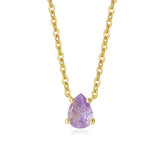
Alexandrite's color-change magic works in any metal — but it looks exceptional set in 925 sterling silver with 18K gold plating. AJLuxe carries alexandrite birthstone necklaces that are hypoallergenic, gift-ready, and built for everyday wear.
Browse alexandrite necklaces →
Related Comparisons
- Pink Tourmaline vs Rose Quartz: Color, Price & Which to Choose
- Pink Tourmaline vs Morganite: Color, Hardness, Price & Which to Choose
- Natural vs Lab-Created Pink Sapphire: Price, Quality & Which to Buy
Frequently Asked Questions
- What is the difference between natural and lab-created alexandrite?
- Natural alexandrite is a rare chrysoberyl gemstone formed in the earth, while lab-created alexandrite is grown in a controlled environment — often as synthetic corundum rather than true chrysoberyl. Both show a color-change effect, but they differ in rarity, price, chemical composition, and investment value.
- Is lab-created alexandrite real alexandrite?
- It depends on how "real" is defined. Lab-grown chrysoberyl shares the same chemistry as natural alexandrite. However, most budget lab alexandrite sold online is synthetic corundum — a different mineral that mimics the color-change effect but is not chemically chrysoberyl.
- Why is natural alexandrite so expensive?
- Natural alexandrite is rare because the geological conditions required for chromium to substitute into chrysoberyl with a strong color change are extremely uncommon. Prices range from $500 to $15,000+ per carat for gem-quality stones.
- Does lab alexandrite change color like natural alexandrite?
- Yes — lab alexandrite shows a real color-change effect. Lab-grown versions often show a more vivid shift than mid-grade natural stones, because growth conditions can be engineered to maximize color contrast.
- Is lab alexandrite the same as synthetic corundum?
- Often, yes. Most affordable "lab alexandrite" is synthetic corundum doped with vanadium. True lab-grown chrysoberyl also exists but is less common and more expensive. Ask sellers which type you're buying.
- Which is better for an engagement ring — natural or lab alexandrite?
- Both are durable at Mohs 8.5. Lab alexandrite delivers the color-change effect at a fraction of the cost. Natural alexandrite is better if rarity and long-term value matter — but only investment-grade material justifies the premium.
- Can you tell the difference between natural and lab alexandrite with the naked eye?
- Usually not. Price is the most reliable indicator — genuine natural alexandrite doesn't exist under $100/carat at gem quality. Under magnification, natural stones show fingerprint-like inclusions while lab stones are typically cleaner.
- Does lab alexandrite hold its value?
- No. Lab-created gemstones have near-zero resale value. Natural alexandrite — specifically investment-grade, GIA-certified material with strong color change — can hold or appreciate in value.
- Is alexandrite a June birthstone?
- Yes. Alexandrite is one of three June birthstones, alongside pearl and moonstone. Both natural and lab-created alexandrite are accepted as June birthstone choices.
- What is the best color change for alexandrite?
- The best alexandrite shows a complete shift from rich forest green in daylight to strong red under incandescent light. Russian alexandrite from the Ural Mountains remains the benchmark for top color-change quality.
- Where does natural alexandrite come from?
- Natural alexandrite was first discovered in Russia's Ural Mountains around 1830. Other significant deposits exist in Brazil, Sri Lanka, Tanzania, India, and Madagascar. Russian-origin stones command the highest collector prices.
- Is alexandrite rarer than diamond?
- Top-quality natural alexandrite is significantly rarer than comparable-quality diamond. Gem-quality alexandrite is among the rarest gemstones in the world; diamond prices are largely controlled by supply management rather than pure scarcity.
The Bottom Line
The choice between natural and lab-created alexandrite comes down to what you're buying it for. If you want the color-change magic for a piece of jewelry you'll actually wear — whether it's a necklace, ring, or birthstone gift — lab alexandrite gives you that experience for $10–$50 per carat. The visual effect is real, the hardness is excellent, and no one walking past you will know the difference.
If you're drawn to alexandrite because of its rarity, geological story, or potential as an investment, natural is the path — but only if you're buying certified, investment-grade material from a source you trust. Mid-grade natural alexandrite at $300/carat doesn't offer the investment upside of top-grade stones and doesn't outperform lab alexandrite visually. Know exactly what you're paying for before you spend.
Either way, alexandrite remains one of the most fascinating gemstones in existence. The color change isn't an optical trick or a coating — it's physics, locked into the crystal structure of the stone. That's true whether the stone grew over 200 million years in a Russian mountain range or in a laboratory over six weeks.
Written by the AJLuxe team — specialists in personalized sterling silver and gemstone jewelry. Last updated: June 2026.
See also: Alexandrite vs Emerald: Full Comparison
Related: Moissanite vs Diamond Necklace Guide
All third-party trademarks, brand names and product names are the property of their respective owners. AJLuxe is not affiliated with, endorsed by, sponsored by, or otherwise connected to any third-party brand referenced in this article. Brand names are used solely for accurate comparative reference, and material descriptions reflect each brand's own published product specifications at the time of writing.
You Might Also Like
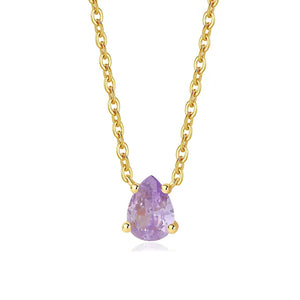
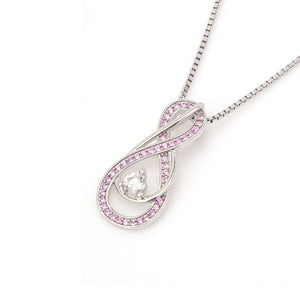
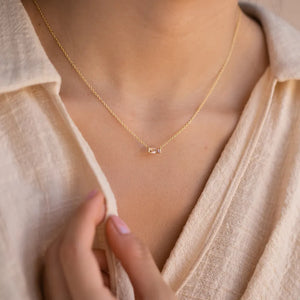

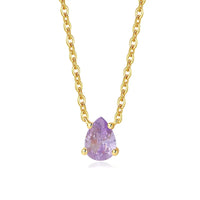
The piece they're describing → Alexandrite Teardrop Pendant Necklace for Women — 925 Sterling Silver, Gold Plated
Personalize Yours


