


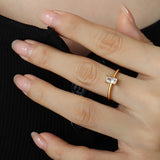
Rings communicate. The choice of which finger to wear a ring on — whether intentional or instinctive — carries meaning that most people read subconsciously. Across cultures and centuries, certain finger placements have accumulated consistent associations with specific personal qualities, relationship statuses, and intentions.
This guide covers the traditional meaning of each finger on both hands, explains how to use ring placement intentionally, and answers the most commonly asked questions about which finger to choose for different ring types.
Thumb Ring Meaning
Wearing a ring on the thumb is the most distinctive finger choice — thumbs are visually dominant and separate from the four fingers. Throughout history, thumb rings have consistently signaled:
- Strength and self-confidence: The thumb represents willpower and assertion in palmistry tradition. Wearing a ring there emphasizes those qualities.
- Independence and individuality: The thumb stands apart from the fingers — wearing a ring there reads as someone who doesn't follow conventional placement rules. It's a choice that says "I make my own decisions."
- Friendship: In some ancient traditions, giving a ring to be worn on the thumb was a symbol of friendship or alliance — distinct from the romantic ring finger.
- Wealth and status: Historically, wide gold thumb rings were status symbols worn by wealthy men. The association with affluence persists.
Modern wear context: Today, thumb rings are worn across genders as bold fashion statements. They tend to be chunkier styles — thin bands can feel disproportionate on the thumb's width. A wide gold-tone band, a stacked set, or a bold gemstone ring works well on the thumb.
Index Finger Ring Meaning
The index finger — also called the pointer finger — is the finger of authority and direction. It's the finger we extend to point, instruct, or indicate. A ring here amplifies those associations:
- Leadership and ambition: In signet ring tradition, royalty and heads of state wore rings on the index finger to seal documents and indicate authority. The index finger was historically the "ring finger" of power — before the romantic ring finger convention solidified.
- Direction and intention: Wearing a ring on your pointing finger makes a visual declaration. It draws the eye to your gestures and emphasizes the authority of your hands.
- Jupiter association: In astrological palmistry, the index finger is "Jupiter's finger" — representing expansion, ambition, leadership, and confidence.
Cultural note: In some Jewish wedding traditions, the wedding ring is placed on the index finger of the right hand — the most prominent and active finger — during the ceremony. Some couples keep it there; others move it after.
Modern wear context: Index finger rings work especially well with cocktail rings, statement gemstone rings, and rings you want noticed. Bold choices work well here. It's also one of the most practical fingers for rings worn only occasionally. For a deeper breakdown, read our full index finger ring meaning guide.
Middle Finger Ring Meaning
The middle finger is the longest, most prominent finger. It sits at the center of the hand, creating balance. It's also the most "neutral" finger for ring wearing — largely free of the romantic and cultural associations that come with the ring and index fingers.
- Balance and responsibility: The middle finger represents the self, personal identity, and the balance point of the hand. In palmistry, it's Saturn's finger — associated with discipline, structure, and personal responsibility.
- No statement about relationship status: Because the middle finger carries no strong romantic association (unlike the ring finger), wearing a ring there makes no implicit statement about being in a relationship. This makes it a popular choice for those who want to wear rings without signaling availability or commitment.
- Bold expression: The physical prominence of the middle finger means rings worn there are particularly visible. Bold designs and statement pieces work well.
Modern wear context: The middle finger is the most versatile finger for stacking — it can anchor a multi-ring set without the weight of the meaning that comes with ring or index finger placement. Many ring stackers build their set around the middle finger. See our stackable ring combinations guide.
Ring Finger Meaning — Left vs. Right
The fourth finger — adjacent to the pinky — carries the strongest traditional associations of any finger, specifically around love and commitment. But left and right hand carry different meanings.
Left Ring Finger
In Western cultures (US, UK, Canada, Australia, most of Western Europe), the left ring finger is the definitive relationship status signal:
- Engagement ring: A solitaire or diamond ring on the left ring finger signals engagement to be married.
- Wedding band: After marriage, the wedding band joins the engagement ring on the left ring finger.
- Promise ring: Some couples place a promise ring on the left ring finger as a pre-engagement commitment pledge. This can cause confusion in public; many prefer the right hand for this reason. See: What Does a Promise Ring Mean?
- Promise Ring: Which Finger Does It Go On?
The "vena amoris" (vein of love) — the old belief that a vein runs directly from this finger to the heart — is medically inaccurate, but romantically resilient. The left ring finger's association with love in Western culture is over a thousand years old.
Right Ring Finger
The right ring finger has different (and more varied) associations:
- Non-marital commitment: Worn as a promise ring, a self-commitment ring, or simply a love of that finger without a relationship statement.
- Cultural differences: In many countries — Germany, Norway, Russia, Greece, Spain, India, and most Orthodox Christian and Eastern European cultures — the wedding ring is worn on the RIGHT ring finger, not the left.
- "Right-hand ring": In the US and UK, jewelry marketed as a "right-hand ring" (a term popularized by De Beers in 2003) is positioned as a self-purchase for successful women — a ring that says "I bought this for myself." This has shifted the right ring finger toward self-expression rather than commitment signaling.
Pinky Ring Meaning
The pinky — the smallest finger — carries surprisingly rich ring-wearing tradition:
- Mercury / communication / intelligence: In palmistry, the pinky is Mercury's finger, associated with communication, intelligence, and intuition. Wearing a ring here emphasizes those qualities.
- Professional and family signet rings: Signet rings (with family crests or professional symbols) have traditionally been worn on the pinky — specifically to be turned inward when not in use, or to be available for wax sealing. Historically associated with upper-class and professional identity.
- Mafia and mob culture: Popular culture has associated pinky rings with organized crime figures (a historical association with Italian, Irish, and Jewish American crime families in the 20th century). Modern pinky ring wearers are almost never making this association intentionally.
- Confidence and charisma: Modern pinky rings are widely worn as a statement of personality — associated with someone who projects confidence, individuality, and social fluency.
- Same-sex relationship signaling: Historically, a pinky ring was one signal used within LGBTQ+ communities to identify orientation before wider social acceptance. This association has largely faded in contemporary culture.
Modern wear context: Pinky rings work best as single, intentional statement pieces — a simple band, a signet-style ring, or a small gemstone. Stacking multiple pinky rings is unusual given the finger's small size.
Left Hand vs. Right Hand — Does It Matter?
Beyond the ring finger convention, the left vs. right distinction applies more broadly:
| Finger | Left Hand | Right Hand |
|---|---|---|
| Thumb | Personal strength, self-assertion | Active will, outward strength |
| Index | Inner authority, personal ambition | Outward leadership, active direction (historical signet tradition) |
| Middle | Self and identity, personal balance | Active expression, practical neutral placement |
| Ring | Romantic commitment, engagement, marriage (Western) | Self-gift, promise ring, non-marital commitment, OR wedding band (many European cultures) |
| Pinky | Intelligence, intuition, personal identity signal | Professional/signet tradition, active communication, outward confidence |
The practical reality: For most daily wear situations, the difference between left and right hand is only meaningful for the ring finger. For all other fingers, wear rings wherever they look best and feel comfortable.
How to Choose Which Finger to Wear Your Ring On
The "right" finger depends on what you want the ring to do:
- To signal relationship status: Left ring finger (Western convention) or right ring finger (European tradition).
- To make a bold statement: Index or thumb.
- To wear multiple rings without heavy meaning: Middle finger as anchor, build out from there.
- To signal personality and confidence: Pinky.
- To wear a ring comfortably as jewelry rather than symbol: Any finger where it fits and looks proportionate. The most beautiful ring placement is simply the one that looks most intentional.
For stacking guidance — how to layer rings across multiple fingers, which combinations work, and how to mix metals: Stackable Ring Combinations Guide.
For index finger symbolism specifically — left vs. right hand, Jupiter meaning, Jewish wedding tradition, and best ring styles: Index Finger Ring Meaning Guide.
For promise ring finger placement specifically — where to wear it and what it signals: What Does a Promise Ring Mean?
Related reading: What does wearing a bracelet mean.
Frequently Asked Questions
What does a ring on the right ring finger mean?
In Western culture (US, UK, Canada), the right ring finger typically signals a non-marital commitment — a promise ring, a self-purchase ring, or simply personal preference for that finger. In many European countries (Germany, Norway, Russia, Greece, India, and others), the right ring finger is where wedding rings are traditionally worn. Context — cultural background, relationship status, and what ring it is — matters more than the finger itself.
What does a ring on the index finger mean?
Historically, the index finger was the "leadership finger" — where authority figures wore signet rings to seal documents and demonstrate power. Today, an index finger ring signals confidence, a bold fashion sense, or simply a preference for that placement. It carries no strong romantic or relationship connotations.
What does a ring on the middle finger mean?
The middle finger carries the fewest traditional ring-wearing associations of any finger — it's largely free of romantic or status signaling. This makes it a neutral, versatile choice: wear rings there for aesthetic reasons without implying anything about relationship status. The middle finger is particularly popular as the anchor finger in ring stacking sets.
What does a thumb ring mean?
A thumb ring signals independence, self-confidence, and willingness to make unconventional choices. Because the thumb stands apart physically from the other fingers, rings worn there emphasize individuality. Historically associated with strength and wealth. Today worn as a bold fashion statement across genders.
What does a pinky ring mean?
A pinky ring traditionally signals confidence, intelligence, and personality — associated with Mercury's qualities of communication and charisma. Historically connected to signet rings and family crests. Also associated (historically) with certain professional and social groups, though these associations are largely obsolete in contemporary culture. Today worn as an expressive fashion choice.
Which finger should I wear a promise ring on?
There's no required finger for a promise ring — no convention exists the way one does for engagement rings. Common choices: left ring finger (most romantic, but may confuse others about engagement status), right ring finger (clear distinction from engagement), or middle finger (neutral). Whatever feels right to the couple is the right choice. See our full guide: What Does a Promise Ring Mean?
Can you wear rings on multiple fingers?
Yes — ring stacking across multiple fingers is a mainstream jewelry trend and has been for years. There are no rules about which fingers can be combined. The most common multi-finger combinations: middle + ring finger together, index + middle, or a single statement ring on one hand paired with a stack on the other. See our stackable ring combinations guide for specific inspiration.
Does the same ring mean different things on different fingers?
Yes, the same physical ring carries different implied meanings depending on placement. A simple gold band on the left ring finger implies romantic commitment; on the right thumb, it reads as a fashion statement; on the pinky, it signals personality and confidence. The ring doesn't change — the finger changes the message.
Wear Your Rings With Intention
Ring placement is one of the few jewelry decisions that carries social meaning beyond aesthetics. Knowing what each finger traditionally signals lets you wear rings more intentionally — choosing placement that reinforces the message you want to send, or deliberately subverting conventions for personal style.
The most important consideration isn't tradition — it's fit and proportion. A ring that's the right width for your finger, sits comfortably, and complements your other jewelry will always look more intentional than a ring in the "symbolically correct" position that doesn't work aesthetically.
Browse our full ring collection — dainty bands, gemstone rings, stackable sets, and more, all in 18K gold-plated 925 sterling silver.
Written by the AJLuxe team. Last updated: May 2026.
Complete Ring Meaning Guides
Every finger tells a different story. Explore our full cluster of ring meaning guides:
- Thumb Ring Meaning — what it signals on the left vs. right hand
- Index Finger Ring Meaning — leadership, ambition, and self-direction
- Middle Finger Ring Meaning — balance, confidence, and self-expression
- Ring Finger Meaning — the vena amoris tradition and left vs. right hand differences
- Pinky Ring Meaning — status, affiliation, and personal style
- Promise Ring Meaning — what it symbolizes and when to give one
- Eternity Ring Meaning — full vs. half eternity and when to give it
- Purity Ring Meaning — the history, which finger, and how it differs from a promise ring
- Midi Rings: Style, Meaning & Stacking Guide — sizing, stacking rules, and which metals hold up best
Browse our full sterling silver ring collection to find a piece worth wearing with intention. For ring shopping inspiration, see our best stacking rings for women 2026 guide.
All third-party trademarks, brand names and product names are the property of their respective owners. AJLuxe is not affiliated with, endorsed by, sponsored by, or otherwise connected to any third-party brand referenced in this article. Brand names are used solely for accurate comparative reference, and material descriptions reflect each brand's own published product specifications at the time of writing.
You Might Also Like
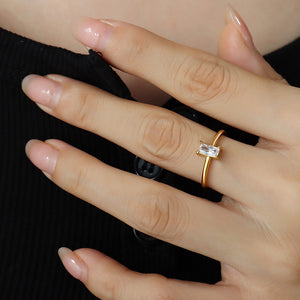

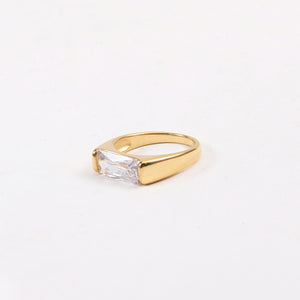
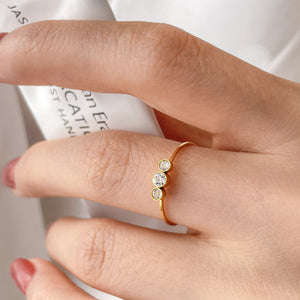
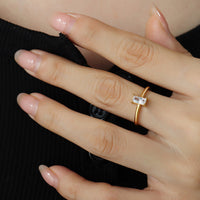
The piece they're describing → Square CZ Wedding Ring for Women — 18K Gold Plated, Princess Cut Cubic Zirconia
Personalize Yours


