


Midi rings — thin rings worn above the first knuckle instead of at the base of the finger — are one of the easiest ways to add a stacked, layered look without committing to a full ring wardrobe. They're also one of the most confusing pieces to size, which is why "do midi rings fall off" and "what size midi ring do I need" are two of the most-searched questions about them.
This guide covers what midi rings actually are, how they differ from knuckle rings, how to size and wear them so they don't slip, how to stack and style them by occasion, and which metals hold up best for everyday wear.
What Are Midi Rings?
A midi ring is a narrow-band ring designed to sit above the first knuckle — on the middle segment of the finger — rather than at the base where a standard ring sits. Because the bone is narrower there, midi rings run noticeably smaller than regular ring sizes, usually in the US 1–5 range.
The style traces back to portraiture and jewelry from earlier centuries, where rings worn higher on the finger signaled status or were simply how multiple rings were worn at once when hands were smaller or rings were family heirlooms resized to fit. The modern revival started circulating through bohemian and festival fashion in the early 2010s and has stayed in steady rotation ever since, popularized by Rihanna, Miley Cyrus, and Heidi Klum, among others.
Midi Ring vs. Knuckle Ring: Is There a Difference?
No — "midi ring" and "knuckle ring" describe the same piece of jewelry. Some brands also call them tea rings or memory rings, but the design is identical: a slim band sized to sit above the first knuckle. "Midi" is the more common term in the US; "knuckle ring" shows up more in UK searches and on independent marketplaces listings. If you see either term, you're looking at the same style. If you've also seen "knuckle ring" confused with the brass-knuckle weapon, our knuckle ring guide clears up that mix-up and covers the legal question directly.
How to Size and Wear Midi Rings (So They Don't Fall Off)
Sizing is where most people get midi rings wrong — and it's the single biggest reason a midi ring ends up sliding off or feeling loose. The fix is simple once you know the rule.
The Sizing Rule: 2 to 4 Sizes Smaller
Midi rings should be 2 to 4 sizes smaller than your normal ring size for that hand. If your standard ring size is 7, your midi size will typically land between 3 and 4. If your standard size is 8 or 9, expect a midi size closer to 4 or 5. There's no universal formula because finger taper varies by person — the only fully accurate method is measuring the specific knuckle segment where you plan to wear the ring.
| Standard Ring Size | Typical Midi Size | Best Worn On |
|---|---|---|
| 5–6 | 2–3 | Pinky, ring finger |
| 7–8 | 3–4 | Index, middle, ring finger |
| 9–10 | 4–5 | Index, middle finger |
Treat this table as a starting point, not a guarantee — always confirm with an at-home measurement if you can. Wrap a strip of paper or string around the knuckle segment where the ring will sit, mark where it overlaps, measure the length in millimeters, and compare it to a standard ring size chart. Measure at the end of the day when fingers are at their largest (heat and activity cause swelling), and size up slightly if you're between two sizes — a ring that's too tight is harder to deal with than one that needs a light squeeze to stay put.
Will Midi Rings Fall Off?
A correctly sized midi ring — snug but not tight — stays in place through normal wear. They do come off more easily than standard rings in a few specific situations: if the ring runs even slightly too large for that knuckle segment, during high-movement activities like the gym or washing dishes, or on adjustable open-band styles that haven't been pinched down to the right width. Adjustable midi rings are actually the safer bet for most people, since you can tighten the gap yourself instead of guessing your exact size from a chart.
Styling and Stacking Guide

Midi rings are built for layering, but there's a difference between an intentional stack and a cluttered hand. A few rules keep it looking pulled-together rather than random.
Start With One or Two
If you're new to midi rings, start with a single ring on one finger — index or middle work best since they're the most visible when your hand is relaxed. Once that feels natural, add a second on an adjacent finger before building a full multi-finger stack.
Mix Textures, Not Just Metals
A hammered band next to a smooth polished band reads as intentional. Five identical thin bands in a row reads as a multipack. Combine at least one textured, twisted, or detailed piece (a chevron, a thin pavé band, a bow or cross motif) with simple smooth bands to create visual contrast.
How Many Fingers Should You Stack?
Limiting your stack to two or three fingers per hand keeps the look from becoming busy. A common approach: one midi ring as a focal point (a textured or gemstone piece), one or two simple bands flanking it on the same or an adjacent finger, and the rest of the hand left bare or wearing a single standard ring. Stacking on every finger of one hand tends to read as cluttered rather than layered.
Wearing Midi Rings With an Engagement Ring
This is one of the most common real-world questions and one most guides skip entirely. If you wear a diamond engagement ring, keep midi rings on other fingers rather than stacking them directly against it — a busy mixed-metal midi stack next to a solitaire diamond can visually compete with it rather than complement it. A single thin pavé or polished midi band on an adjacent finger frames the engagement ring without pulling focus; save bolder textured or colored midi pieces for fingers further away from it.
Framing a Statement Ring
If you own one bold cocktail or statement ring, midi rings can build a frame around it instead of fighting for attention. Wear the statement ring at the base of the finger as usual, then add one or two slim midi bands above the knuckle on the same finger, plus a single simple band on the next finger over. This draws the eye to the statement piece while still giving the hand a layered look.
When and Where to Wear Midi Rings
Midi rings flex across more occasions than most guides give them credit for — the trick is adjusting metal, texture, and stack size to the setting.
- Everyday/casual: One or two simple sterling silver or gold-plated bands, minimal stacking, durable enough for daily wear including light hand-washing.
- Work/office: Stick to a single metal tone and no more than two rings total, both on the same hand. A thin polished band reads as professional; a five-ring boho stack reads as off-brand for most office settings.
- Festival/boho: This is where midi rings were made to shine — mix metals freely, stack three or more per hand, combine with turquoise, gemstone, or beaded styles.
- Date night/evening: Pair a statement midi with one or two simple bands and a delicate bracelet for a coordinated, intentional look without overdoing it.
- Gifting: Adjustable midi rings are the easiest gift option since you don't need to know the recipient's exact size — they can fine-tune the fit themselves.
Which Metal Should You Choose?

Midi rings see more friction and contact than standard rings — they brush against other rings in a stack, knock against surfaces more often, and sit on a part of the finger that bends constantly. Material choice matters more here than on a single statement ring.
| Material | Everyday durability | Tarnish resistance | Best for |
|---|---|---|---|
| 925 Sterling Silver | High | Good (avoid chlorine/lotion contact) | Daily wear, sensitive skin |
| 18K Gold-Plated 925 Silver | Medium-high | Good with proper care | Warm-tone stacks, gifting |
| Gold Vermeil | Medium-high | Good | Heavier gold tone, more plating depth |
| Thin Plain Brass/Fashion Metal | Low | Poor — tarnishes, can discolor skin | Occasional wear only |
If you've read claims online that midi rings are mostly made of copper — that's true of some ultra-budget fashion brands, but it's not the standard, and it's worth avoiding. Copper-heavy alloys are the most likely culprit behind green-tinged fingers and fast tarnishing. Nickel-free 925 sterling silver and properly plated 18K gold over sterling silver hold their finish far longer and won't react with skin the way base-metal alloys do.
Nickel-free 925 sterling silver and 18K gold-plated sterling silver are the two safest defaults if you're not sure what you're buying — both resist tarnish well with basic care and won't typically irritate sensitive skin the way nickel-heavy fashion alloys can.
Caring for Midi Rings
Because midi stacks involve multiple thin bands in close contact, they need slightly more care than a single ring to stay looking good.
- Remove before chores: Take midi rings off before washing dishes, applying lotion or perfume, swimming, or showering — repeated water and chemical exposure is the fastest way to dull plating.
- Clean gently: Soak in warm water with a drop of mild dish soap for 15–20 minutes, loosen any buildup with a soft toothbrush, rinse, and pat dry with a lint-free cloth.
- Store separately: Keep midi rings in a divided tray or individual pouches rather than tossed loose together — thin bands scratch each other and tangle in a pile.
- Avoid harsh chemicals: Chlorine, bleach, and abrasive cleaners strip plating fast and can pit sterling silver over time.
Buying Guide: What to Look For
Before adding midi rings to your cart, check for these four things:
- Material transparency: Look for clearly stated 925 sterling silver or 18K gold-plated 925 silver — listings that don't specify base metal are more likely to be low-grade alloys.
- Nickel-free labeling: Important if you have sensitive skin or have reacted to fashion jewelry before.
- Adjustable vs. fixed sizing: Adjustable bands are the lower-risk choice if you're unsure of your exact midi size or buying as a gift.
- Set vs. single purchase: A pre-curated stacking set (mixed widths and textures, same metal tone) is usually better value and easier to style than buying single rings one at a time.
Ready to start your stack?
Our Dainty Gold-Plated Stacking Rings are designed for exactly this — slim, mixable bands in 18K gold-plated 925 sterling silver that work as midi rings or standard stacks.
Shop Stacking Rings →Related reading: Ear stacking guide.
What Are Stacking Rings? Midi Stacks vs. Base-of-Finger Stacks
Stacking rings are any slim, low-profile rings meant to be worn several at a time rather than alone — and the category splits into two distinct styles with different placement and rules: midi/knuckle stacks worn above the first joint (covered in detail above), and traditional stacking bands worn the normal way, at the base of the finger. Most people searching "stacking rings" mean the base-of-finger kind, which is the older and far more common of the two (2026).
Base-of-finger stacking uses your regular ring size — no knuckle measuring required — and typically centers on one anchor piece with slimmer bands built around it, rather than the multi-finger, mixed-height approach midi stacking uses.
Common Base-of-Finger Stacking Combinations
- Engagement + wedding band: the most traditional stack — a center stone or signet-style ring paired with one plain or textured band that sits flush against it.
- Eternity or anniversary stack: a thin pavé or gemstone band added to an existing ring stack to mark a milestone, chosen to sit flat against the rings already in place rather than compete with them.
- Birthstone stacking rings: multiple slim bands, each set with a different family member's birthstone, worn together on one finger as a personalized set.
- Promise or friendship stacks: two or three simple bands worn together as a set rather than one statement piece — popular as a lower-cost alternative to a single larger ring.
| Stacking Style | Placement | Sizing | Typical Use |
|---|---|---|---|
| Midi / knuckle stack | Above the first knuckle | 2–4 sizes smaller than normal (see sizing guide above) | Layered, boho-editorial look; 2–3 rings across multiple fingers |
| Base-of-finger stack | Normal ring position | Your regular ring size | Engagement/wedding sets, birthstone stacks, everyday layered bands on one finger |
The styling principles carry over between both — mix at least one textured or detailed piece with simple bands, and keep a stack to a focal piece plus one or two supporting bands rather than five identical rings (see the styling section above for the full breakdown). The difference is where the rings sit and what size you order, not how you compose the look.
Midi Rings FAQ
What finger do you wear midi rings on?
Any finger works, but the index and middle fingers show off a midi ring best when your hand is relaxed. There's no fixed rule — the ring finger and pinky are common too, especially in multi-finger stacks.
What size midi ring do I need?
Most people need a midi ring 2 to 4 sizes smaller than their standard ring size. A US size 7 finger typically takes a midi in size 3 to 4. Measure the specific knuckle segment for the most accurate fit, and size up slightly if you're between sizes.
Do midi rings fall off easily?
A properly sized midi ring stays snug through normal wear. They're more likely to slip during high-movement activities, handwashing, or if the size runs even slightly large — adjustable styles are the safest option if you're unsure of your exact size.
Can midi rings be worn every day?
Yes. Midi rings are lightweight and comfortable enough for daily wear. Choose nickel-free sterling silver or properly plated 18K gold for a piece that holds up to everyday contact and resists tarnish.
What's the difference between a midi ring and a knuckle ring?
None — they're two names for the same style. "Midi ring" is more common in the US; "knuckle ring" is used more in the UK. Some brands also call them tea rings or memory rings.
Are midi rings supposed to be tight?
They should fit snugly but not painfully tight. A midi ring that requires force to remove is too small; one that spins freely or slides past the knuckle on its own is too large.
Can you wear midi rings with an engagement ring?
Yes, but keep them on separate fingers rather than stacking directly against a diamond engagement ring — a busy mixed-metal midi stack can visually compete with a solitaire. A single thin band on an adjacent finger frames it instead of competing with it.
How many midi rings should I wear at once?
Two to three per hand keeps the look intentional rather than cluttered. One focal piece (textured or gemstone) plus one or two simple bands is a reliable starting combination.
Can midi rings be worn as regular rings?
Generally no — because they're sized for the narrower knuckle segment, a true midi ring will be too small to fit over most people's base knuckle to reach the bottom of the finger. Some wider, more flexible adjustable styles can work both ways, but purpose-made midi rings are sized specifically for above-the-knuckle wear.
Final Thoughts
Midi rings are a low-commitment way to add a layered, editorial look to your hands — but the entire style lives or dies on sizing. Get the fit right (2 to 4 sizes down from your normal size, snug but not tight) and a midi stack looks effortless and stays put through a full day of wear. Get the size wrong and even the best-styled stack will feel unfinished, sliding around and drawing attention for the wrong reason.
Start small — one or two rings on the index or middle finger, mixed textures rather than five identical bands — and build from there as you get a feel for what proportions work on your hand.
Browse our full stacking rings collection — slim bands, adjustable styles, and mixed-texture sets in 18K gold-plated 925 sterling silver, ready to build your stack from $19.
Curious what a ring means depending on where you wear it? See our full ring on each finger meaning guide for the symbolism behind thumb, index, middle, ring, and pinky placement.
Written by the AJLuxe team. Last updated: June 2026.
All third-party trademarks, brand names and product names are the property of their respective owners. AJLuxe is not affiliated with, endorsed by, sponsored by, or otherwise connected to any third-party brand referenced in this article. Brand names are used solely for accurate comparative reference, and material descriptions reflect each brand's own published product specifications at the time of writing.
You Might Also Like

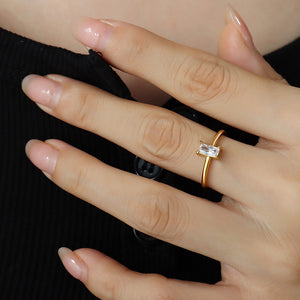
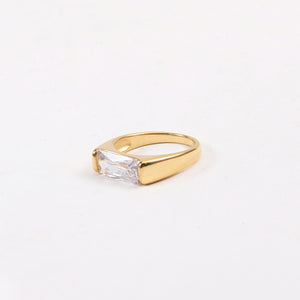
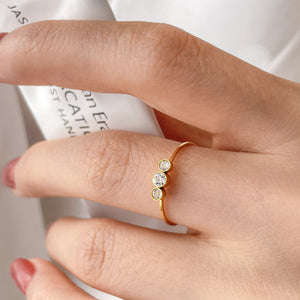

The piece they're describing → Dainty Stacking Rings for Women — 18K Gold Plated, Thin Band Set, Minimalist
Personalize Yours


