


There are 16 main types of rings for women — from engagement and wedding bands to cocktail, stacking, and midi rings. Commitment rings carry symbolic meaning. Fashion rings add personality. Stacking rings let you mix and match daily. This guide covers every style, what it means, which finger to wear it on, and when to wear it. If you have arthritis, skip to the arthritis section — we cover the exact styles that work best.
Whether you're shopping for yourself or buying a gift, understanding the different types of rings for women makes every decision easier. There are rings built for lifelong commitment, rings designed to turn heads at a dinner party, and slim everyday bands you forget you're wearing until someone asks where you got them. This guide covers all 16 ring styles — what each one looks like, what it means, and exactly when to wear it.
All 16 Types of Rings for Women at a Glance
Use this table as your quick reference. It covers every major ring style, its purpose, the best occasion, a typical design description, and a fashion price range.
| Ring Type | Purpose / Meaning | Best Occasion | Typical Style | Price Range (Fashion) |
|---|---|---|---|---|
| Engagement Ring | Proposal, commitment to marry | Proposal moment | Center stone, prong or bezel set | $30–$120 |
| Wedding Band | Marriage, lifelong union | Wedding ceremony | Plain or pavé band, 2–6mm wide | $20–$80 |
| Eternity Band | Endless love, milestone anniversary | Anniversary, push present | Stones all the way around | $35–$110 |
| Promise Ring | Pre-engagement vow or personal pledge | Valentine's Day, dating milestone | Simple band or small stone | $18–$65 |
| Anniversary Ring | Celebrates years together | 1st, 5th, 10th anniversary | Half eternity or three-stone | $30–$100 |
| Claddagh Ring | Irish love, loyalty, friendship | Irish heritage, gift from a loved one | Heart, hands, crown motif | $22–$70 |
| Cocktail Ring | Bold fashion statement | Formal events, nights out | Oversized center stone or cluster | $28–$95 |
| Signet Ring | Identity, heritage, initials | Everyday, professional | Flat oval or round face, engraved | $25–$85 |
| Stacking Ring | Layering, personal expression | Everyday, casual to dressy | Slim band 1–3mm, often set with stones | $15–$55 each |
| Birthstone Ring | Personal meaning, birth month | Birthday, Mother's Day | Single colored stone, oval or round | $22–$75 |
| Initial Ring | Personalization, identity | Gift, self-purchase | Letter stamped or wire-formed | $18–$60 |
| Statement Ring | Bold fashion, conversation piece | Events, editorial looks | Sculptural, oversized, architectural | $25–$90 |
| Thumb Ring | Strength, willpower, independence | Everyday, casual | Wide band or adjustable open ring | $18–$65 |
| Pinky Ring | Self-expression, status, style | Everyday, professional | Slim band or small signet | $15–$55 |
| Midi Ring | Trend-forward, knuckle accent | Casual, festival, fashion | Worn above the knuckle, slim or open | $12–$45 |
| Band Ring | Versatile everyday wear | Any occasion | Plain, textured, or engraved band | $15–$60 |
Commitment and Symbolic Rings
These are the rings that carry real weight. They mark moments, seal promises, and carry meaning every time you glance down at your hand.
Engagement Ring
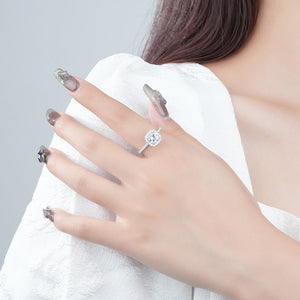
An engagement ring is given at the time of a marriage proposal. It traditionally features a center stone — most often a round or oval diamond or diamond simulant — set on a gold or silver band. The four most common settings are prong, bezel, pavé, and halo. Prong settings show the most stone; bezel settings protect the stone best during daily wear. The solitaire silhouette — one stone, plain shank — has been the top-selling style for over a century.
Engagement rings are worn on the left ring finger in most Western countries. The tradition traces back to the Roman belief in a vein running directly from that finger to the heart, called the vena amoris. Today it's cultural convention more than anatomy, but the tradition holds firm.
Wedding Band
A wedding band is exchanged during the ceremony itself. It's usually simpler than an engagement ring — a plain 2–6mm band in yellow gold, white gold, rose gold, or silver. Some women choose a matching band that curves around their engagement ring; others prefer a flat band they can wear alone. The wedding band sits closest to the heart, meaning it goes on the finger first, underneath the engagement ring.
If you want something between plain and decorated, a pavé wedding band adds a row of small stones along the top half without competing with an engagement ring. A plain polished band in 925 sterling silver or gold vermeil is an excellent affordable option that looks identical to fine jewelry in daily photos.
Eternity Band
An eternity band features stones set all the way around the band — no gap. The continuous circle symbolizes endless, unbroken love. It's a common anniversary gift, especially for the 1st or 5th year. It also works as a push present or a self-purchase milestone gift.
Full eternity bands can't be resized because stones run all the way around. If you're buying as a gift and aren't 100% sure of the size, choose a half-eternity band instead — stones only on the top half — which can be resized at any jeweler.
Promise Ring
A promise ring signals a vow — to a partner, to yourself, or to a belief. For couples, it typically comes before an engagement ring and means "I'm committed to you and to a future together." It's smaller and simpler by convention. Common designs include a thin band with a single small stone, a simple twisted band, or a heart motif. It's worn on the left ring finger before engagement, then moved to the right hand after a proposal.
Promise rings are also given as purity rings, sobriety rings, or friendship rings depending on the context. Read our full guide on promise ring meaning if you want to understand exactly what message you're sending before you give one.
Claddagh Ring
The Claddagh ring originated in Galway, Ireland in the 17th century. It shows two hands holding a crowned heart. The hands represent friendship, the heart represents love, and the crown represents loyalty. How you wear it communicates your relationship status: crown facing out on the right hand means you're open to love; crown facing in on the right hand means your heart is taken; on the left ring finger means you're engaged or married.
It's a meaningful gift for anyone with Irish heritage, but it's worn broadly as a symbol of connection. Sterling silver Claddagh rings are the most traditional choice.
Anniversary Ring
An anniversary ring marks years spent together. The most common milestone years for gifting one are 1, 5, 10, 25, and 50. The three-stone ring — symbolizing past, present, and future — is the classic anniversary design. Half-eternity bands with channel-set stones are also a popular choice. Anniversary rings are worn on the right ring finger to keep the left hand reserved for the engagement and wedding set.
Fashion and Statement Rings
Fashion rings don't need a meaning or a milestone. They exist to complete a look, express personality, and make the outfit. These are the rings you buy for yourself.
Cocktail Ring
The cocktail ring emerged in the 1920s during Prohibition-era parties. It's defined by an oversized center stone — real, simulated, or resin — set in a bold, decorative mount. The stone is typically 10mm or larger. Cocktail rings are worn on the right hand, middle or ring finger, and they're not designed for daily wear. They're a conversation piece for evenings out, weddings, galas, or any time you want your hands to do the talking.
Signet Ring
A signet ring has a flat face — oval, round, or rectangular — made for engraving. Historically used to stamp wax seals on documents, today it carries a monogram, initial, family crest, or decorative motif. It's one of the most versatile ring styles because it reads as both understated and intentional. Wear it on the pinky for a traditional look, or on the index finger for a modern take. A slim 8–10mm oval signet in gold vermeil pairs with almost any outfit.
Birthstone Ring
A birthstone ring features the gemstone associated with your birth month. January is garnet (deep red), April is diamond or white topaz, July is ruby, September is sapphire, and December is blue topaz or turquoise — to name a few. According to the Gemological Institute of America (GIA), the modern birthstone list was standardized in 1912 by the American National Retail Jewelers Association. Birthstone rings are one of the most common Mother's Day and birthday gifts because they feel personal without requiring precise size knowledge — and many styles come adjustable.
Initial Ring
An initial ring displays a single letter — your own, a loved one's, or your last name initial. The letter is either stamped flat into the band, formed from wire in a script silhouette, or engraved on a signet face. Initial rings are an affordable personalization option that looks intentional without the price tag of full custom engraving. They work well as gifts because they feel thoughtful and specific.
Statement Ring
A statement ring is defined by scale and drama. It's architectural, sculptural, or oversized. Think wide cuff-style bands, rings with geometric cutouts, rings with multiple stones in asymmetric arrangements, or organic shapes that look more like wearable art than jewelry. You wear one statement ring per hand — maximum. Let it be the focus.
Band Ring
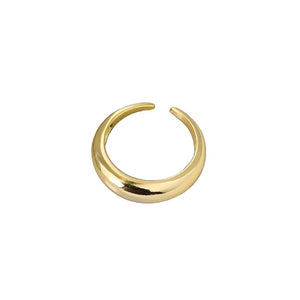
A plain band ring is the most versatile piece in any collection. It has no stone, no engraving, no decoration. Its power is in its simplicity and stackability. A 2mm flat band in gold or silver disappears into an outfit and pulls everything together. Wide textured bands — hammered, brushed, or twisted — add texture without adding bulk to the look.
Here's how the main fashion ring styles compare for daily decision-making:
| Style | Typical Size | Best Finger | When to Wear | Bold or Subtle |
|---|---|---|---|---|
| Cocktail Ring | 12–25mm stone face | Right middle or ring | Evenings, events, formal | Bold |
| Signet Ring | 8–14mm face | Pinky or index | Everyday, professional | Subtle to medium |
| Birthstone Ring | 6–10mm stone | Any finger | Everyday to dressy | Subtle |
| Statement Ring | Varies — often 20mm+ | Index or middle | Events, editorial looks | Bold |
| Band Ring | 2–6mm wide | Any finger | Any occasion | Subtle |
Stacking and Layering Rings
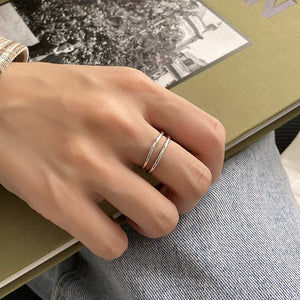
Stacking rings are designed to be worn in multiples on the same finger or spread across several fingers. They're slim — usually 1–3mm wide — so they don't crowd together. Mixing metals, textures, and stone accents is the whole point.
Stacking Ring
A stacking ring is any slim band built to be layered. Sets of 3–5 come in coordinating metals or contrasting textures. Common combinations include a plain gold band, a twisted silver band, and a thin pavé band with small clear stones. Browse the full selection at AJLuxe stacking rings. For curated combinations and ideas, read our guide on For the mechanics of a stack itself — what order to put rings on, how to balance widths, and how to keep mixed metals from scratching each other — see our how to stack rings guide.
Midi Ring
A midi ring is worn above the knuckle — between the first and second joint of the finger. It needs to be a half to full size smaller than your regular ring size to stay in place. Midi rings look best on the index and middle fingers where there's more room to display them. Keep them slim (1–2mm) so they don't cut off circulation. Open-band midi rings are a smart choice because they adjust easily.
Thumb Ring
Thumb rings are wider and bolder than standard rings because the thumb is larger. A 4–8mm band reads as proportional on the thumb, whereas the same width would look oversized on a pinky. In many cultures, thumb rings symbolize willpower, strength, or independence. They're also worn purely as a fashion accent. Adjustable open-band thumb rings are the most practical because thumb size varies significantly between people.
Pinky Ring
The pinky ring is historically tied to professional identity and social status — lawyers, architects, and engineers have worn them as guild symbols. Today it's a style choice more than a status signal. A slim 2–3mm band or a small signet face works best on the pinky. Going wider than 5mm can make a pinky ring look mismatched in scale. For what each ring finger position means, read our detailed guide on ring on each finger meaning.
Here are four rules for stacking rings that always work:
- Anchor with one metal. Choose either gold or silver as your base and treat the other as an accent. All-gold stacks look rich and intentional. Mixed stacks work when you keep a 2:1 ratio — two gold, one silver, or vice versa.
- Vary texture, not scale. Use one plain band, one twisted or hammered band, and one stone-set band. Keep all three the same width (1.5–2mm). Mixing widths gets messy fast.
- Leave one finger bare. If you're stacking on your index and middle fingers, keep your ring finger clear. An all-fingers stack looks chaotic rather than curated unless you're building a deliberate editorial look.
- Match your midi ring metal to your base stack. If your stack is gold, your midi ring should be gold. Mixing metals between your knuckle and base creates visual noise without a payoff.
Which Ring Type to Wear for Every Occasion
The right ring at the right time matters. Here's a practical guide for the most common situations.
| Occasion | Best Ring Type | Metal Recommendation | Style Notes |
|---|---|---|---|
| Everyday wear | Thin band or stacking set | Gold vermeil or 925 silver | 2–3mm width, no prongs to snag |
| Work / office | Signet ring or slim band | Gold or silver | Understated, no oversized stones |
| Date night | Birthstone ring or slim cocktail | Gold vermeil | One elevated piece on the right hand |
| Wedding guest | Stacking set or anniversary ring | Gold | Avoid all-white or all-diamond looks |
| Formal event | Cocktail ring or statement ring | Gold | One bold ring, keep other jewelry minimal |
| Gift for her | Birthstone or initial ring | Gold vermeil or silver | Choose adjustable if size is unknown |
| Gift for mom | Multi-stone birthstone or eternity band | Gold | Use each child's birthstone in a row |
The 4 Rings Every Woman Should Own
You don't need 20 rings to have a complete collection. You need four — one for each core situation in your life.
1. A Thin Everyday Band
This is your default ring. It's 2–3mm wide, flat or lightly textured, in gold vermeil or 925 sterling silver. It goes on in the morning and comes off at night. It looks polished with a blazer and casual with jeans. A plain 2mm gold band on the ring finger or middle finger of either hand is the most universally flattering choice. Budget: $20–$45.
2. A Statement Cocktail Ring
Every wardrobe needs a ring that makes people ask "where did you get that?" A cocktail ring with a 12–18mm colored stone — emerald green, deep amethyst, clear crystal — gives you an instant dressing-up tool. Wear it on the right middle finger so it doesn't compete with a wedding or engagement ring. Budget: $35–$80.
3. A Stacking Set of 2–3 Rings
A curated stacking set gives you more options than any single ring. Three rings — one plain, one twisted, one stone-set — all in the same metal at 1.5–2mm each, let you wear one, two, or all three depending on the occasion. They're the most versatile rings you'll own. Buy them as a set so the metals and widths are already matched. Budget: $40–$90 for the set.
4. A Birthstone or Initial Ring
This ring is personal. It's the one that means something specific to you. Your birthstone, your initial, a loved one's initial — something that isn't interchangeable. It signals identity. It's also the easiest gift answer when someone asks what you want: "My birthstone is amethyst." Budget: $22–$65.
Rings and Arthritis: Which Styles Work Best
Arthritis affects millions of women, and most ring guides ignore it entirely. Swollen joints, fluctuating finger size, and reduced grip strength are real constraints. The wrong ring style makes the problem worse — and the right one disappears into your routine.
The best ring style for arthritis is an adjustable open-band ring (see do adjustable rings fit all sizes). These rings have a gap in the shank that allows the ring to expand slightly as you slide it over the knuckle, then contract to fit the base of the finger. Look for open-band rings in 1.5–2mm widths for the most comfortable fit. Avoid rings with stones or settings on the inner shank — any raised element on the inside will press uncomfortably against swollen joints. Smooth, plain-shank designs in 925 sterling silver or gold vermeil are the best materials because they're lightweight and don't add pressure.
Wide bands — anything over 6mm — distribute pressure across a larger area of the finger. This sounds comfortable in theory, but on a swollen knuckle, a wide band becomes a tight tube that won't slide off without difficulty. For arthritis, keep widths at 4mm or under. Midi rings worn above the knuckle are an excellent alternative because they sit on the narrower section of the finger and are much easier to remove. Thumb rings also work well because the thumb joint is often less affected than the finger joints and the thumb's wider size means most bands fit without pressure.
What to avoid: fixed-size rings with no stretch or give, rings with prong settings that catch on clothing when you remove them, rings under 1mm wide that cut into swollen tissue, and any ring that requires a twisting motion to remove. If you're buying as a gift for someone with arthritis, always choose adjustable, and choose slim.
Ring Metals Compared: Which Is Right for You
The metal determines durability, allergenic risk, care requirements, and how long the ring keeps its finish. Here's how the five most common fashion ring metals compare.
| Metal | Durability | Hypoallergenic | Best For | Price Tier |
|---|---|---|---|---|
| 18K Gold Plated 925 Silver | Moderate — plating wears over 1–2 years | Yes (silver base is safe) | Occasional wear, gifts, fashion rings | Budget ($15–$60) |
| Gold Vermeil | Good — 2.5 micron+ plating on sterling | Yes | Daily wear, sensitive skin | Mid ($25–$90) |
| Gold Filled | Very good — 5% gold layer by weight | Yes | Heavy daily wear, long-term use | Mid ($40–$120) |
| Solid 14K Gold | Excellent — lasts decades | Yes (14K is 58.5% pure) | Heirloom pieces, engagement, wedding | Premium ($200–$2,000+) |
| Stainless Steel | Excellent — scratch and tarnish resistant | Usually yes (316L grade) | Active wear, water exposure | Budget ($10–$45) |
Gold vermeil on 925 sterling silver is the best value for daily wear. It meets the legal threshold for gold thickness (2.5 microns minimum), uses a safe base metal, and looks identical to solid gold in photos and in person.
Related reading: Dainty heart necklace gift guide.
Related reading: Best Granddaughter Necklace Ideas (2026): A Gift Guide for Every Occasion.
Graduation Rings for Women: Class Ring vs. Modern Alternatives
A graduation ring for women marks finishing high school or college, and today it usually means a modern signet, birthstone, or stacking ring chosen as a personal keepsake rather than a traditional heavy class ring ordered through the school. Traditional class rings pair the school name, crest, and graduation year with a large birthstone-colored center stone in a bulky gold-tone mount — a design meant to be worn once and kept in a box, not layered into an everyday outfit. Most women now skip that route entirely and choose a piece they'll actually keep wearing after the ceremony.
If you're buying a graduation ring as a gift, three modern styles do the job better than a traditional class ring:
- A birthstone ring in the graduate's birth month — personal without needing a size guess if you choose an adjustable band, and it keeps meaning without a school crest that only makes sense for four years.
- A signet ring engraved with an initial — reads as "grown-up jewelry" the graduate can wear into a first job or grad school, unlike a class ring that visually announces which decade you graduated.
- A slim stacking band — the lowest-commitment option, easy to layer with rings the graduate already owns rather than starting a separate "graduation drawer."
Wear a graduation ring the same way you'd wear any milestone ring: right hand, ring or middle finger, keeping the left ring finger reserved for engagement or wedding rings. Skip anything with a large raised stone or a wide mount if the ring is meant for daily wear afterward — the whole appeal of a modern graduation ring over a traditional class ring is that it doesn't have to retire the day after the ceremony.
| Style | What It Signals | Wears Well Past Graduation? | Price Range (Fashion) |
|---|---|---|---|
| Traditional Class Ring | School pride, specific graduation year | Rarely — bulky, dated fast | $150–$500+ (school-ordered) |
| Birthstone Ring | Personal milestone, not school-specific | Yes | $22–$75 |
| Signet Ring (Initial) | Identity, "adult" jewelry | Yes | $25–$85 |
| Slim Stacking Band | Low-key, layers with existing rings | Yes | $15–$55 each |
AJLuxe's birthstone, signet, and stacking rings are all 925 sterling silver with 18K gold plating (2026), hypoallergenic, and priced $24.99–$79.99 — a graduation gift that reads as considered rather than ceremonial, and that keeps earning wear long after the diploma is framed.
Frequently Asked Questions
What are the different types of rings for women?
There are 16 main types: engagement rings, wedding bands, eternity bands, promise rings, anniversary rings, Claddagh rings, cocktail rings, signet rings, stacking rings, birthstone rings, initial rings, statement rings, thumb rings, pinky rings, midi rings, and band rings. Each serves a different purpose — from marking a milestone to adding a daily style accent.
What are the 4 rings a woman should have?
The four essential rings are: a thin everyday band for daily wear, a statement cocktail ring for occasions, a stacking set of 2–3 slim rings for versatility, and a birthstone or initial ring for personal meaning. These four cover every situation from the office to a formal event.
What are the four types of rings?
The four broad categories are commitment rings (engagement, wedding, promise, Claddagh), symbolic milestone rings (eternity, anniversary), fashion rings (cocktail, signet, birthstone, initial, statement, band), and stacking or placement rings (midi, thumb, pinky, stacking). Most rings fall clearly into one of these four groups.
Can you wear rings with arthritis?
Yes. Adjustable open-band rings are the most comfortable choice for arthritis because they flex over swollen knuckles. Keep widths at 4mm or under. Midi rings and thumb rings are also good options because they sit on less-affected joints. Avoid wide bands, rings with interior settings, and any ring that requires a twisting motion to remove.
What is the most popular ring style for women?
The round solitaire engagement ring is the most popular ring style worldwide. Among fashion and everyday rings, thin stacking bands in gold vermeil are the top sellers. Oval birthstone rings have grown significantly in popularity since 2022 and consistently rank among the best-selling fashion ring shapes.
What type of ring is best for everyday wear?
A slim 2–4mm band in gold vermeil or 925 sterling silver is the best everyday ring. It sits flat under gloves, doesn't snag on fabric or hair, and holds its finish through daily activity. Stacking rings in this width are also ideal daily choices. Avoid prong settings and oversized stones for rings you plan to wear continuously.
What's the difference between a promise ring and an engagement ring?
A promise ring signals commitment or a personal vow — it doesn't mean you're engaged. It's typically simpler and smaller than an engagement ring, and it doesn't carry a formal proposal. An engagement ring is a formal symbol of an intent to marry, usually given with a proposal, and traditionally features a center stone. Promise rings are typically worn on the right hand after engagement; engagement rings go on the left ring finger.
What is the most classic ring style?
The plain gold band is the most classic ring style across cultures and centuries. For engagement rings specifically, the round solitaire diamond on a plain gold shank has been the most popular bridal style for over 100 years. Both styles are defined by their simplicity — no trend can make them look dated.
How many rings should a woman wear at once?
One to three rings per hand looks intentional and balanced for most settings. If you stack two or three rings on one finger, keep adjacent fingers clear or use a single slim band. Wearing more than five rings total works for bold editorial looks but can read as cluttered in professional or formal contexts. Your rings should look chosen, not accumulated.
What does wearing a ring on different fingers mean?
The left ring finger is reserved for engagement and wedding rings in most Western cultures. The right ring finger signals independence or self-commitment in many traditions. The pinky finger has historically indicated professional status or guild membership. The index finger is a bold, confidence-forward placement with its own history of authority and direction. The middle finger carries no specific meaning, making it a practical choice for statement pieces. For a full breakdown by finger and hand, read our guide on ring on each finger meaning, or go deeper on index finger ring meaning.
Final Thoughts: Find Your Ring Style
There are 16 types of rings for women, but you don't need all of them. Start with the four essentials — an everyday band, a cocktail ring, a stacking set, and a personal birthstone or initial ring. From there, let your wardrobe and your milestones guide what comes next.
The right ring is the one you actually wear. A $30 gold vermeil stacking band you put on every morning gives you more value than a $200 statement ring that stays in a box. Fit matters too — if you're unsure of your size, check our ring size guide before ordering. For what each ring means and how to buy the right one as a gift, see our ring meanings & buying guide.
Ready to build your collection? Browse AJLuxe rings — every style from slim everyday bands to bold cocktail rings, all in gold vermeil and 925 sterling silver — at AJLuxe All Rings.
Written by the AJLuxe Team — specialists in sterling silver and gold-plated jewelry. Last updated: July 2026.
All third-party trademarks, brand names and product names are the property of their respective owners. AJLuxe is not affiliated with, endorsed by, sponsored by, or otherwise connected to any third-party brand referenced in this article. Brand names are used solely for accurate comparative reference, and material descriptions reflect each brand's own published product specifications at the time of writing.
You Might Also Like


The piece they're describing → Dainty Stacking Rings for Women — 18K Gold Plated, Thin Band Set, Minimalist
Personalize Yours


