


- Buy 10x. It is the long-standing magnification for inspecting jewelry and reading hallmarks, and the one used for grading diamond clarity.
- Prefer a triplet. Three lenses are meant to cut distortion and false color flashes that a single lens can add.
- Technique matters more than price. Brace your hand on your cheek, hold the loupe near your eye and move the jewelry to focus.
- Higher is not better. Above 10x the field of view and depth of field shrink until the image stops being useful.
- Use it on your own jewelry to check stamps, prongs, plating wear and clasps.
"Loupe" is pronounced like "loop", and most people searching for a jewelry loop are looking for exactly this tool. If you have ever tried to read a tiny stamp inside a ring band and given up, a loupe is the fix. This guide covers which magnification to buy, how to hold and use one, and what to look at when you do. If you want to know what the stamps you find actually mean, read our jewelry hallmarks guide alongside this one.
What Is a Loupe and How Is It Different From a Magnifying Glass?
A loupe is a small magnification device without a handle, designed to be held or worn close to the eye, with its lenses inside an opaque cylinder or cone. A general reference describes it as a simple, small device for seeing small details more closely, and says loupes generally have higher magnification than a magnifying glass. That is the practical difference: a magnifying glass is held at arm's length and gives a modest enlargement, while a loupe sits near your eye and gives a much stronger one.
The same reference lists three families of lens. Simple lenses suit low magnification because their optical aberration is high. Compound lenses are used for higher magnification and control that aberration. Prismatic loupes combine several lenses and prisms. For jewelry you will mostly meet compound designs sold as doublets and triplets.
What Magnification Should a Jewelry Loupe Be?
10x is the right magnification for almost everyone. The reference above says a 10x loupe is good for inspecting jewelry and hallmarks, and notes that a leading gem-grading authority uses 10x as its standard for grading diamond clarity. A jewelry retailer's how-to says the same: the 10x loupe, which magnifies ten times, is the one diamond experts use for official grading.
More power is not an upgrade. The reference explains that higher magnification shrinks the field of view, and that above 10x the depth of field and field of view become too small to be instructive. The retailer's guide adds that more powerful loupes show tiny details that would rarely, if ever, be visible to the naked eye. In practice, a 10x triplet shows you what matters about a piece and a 20x makes you hunt for it.
| Option | Good for | Watch out for |
|---|---|---|
| 10x triplet | Hallmarks, stones, prongs, solder, general inspection | Needs a steady hand and a little practice |
| Single-lens loupe | Quick looks at a stamp | Can distort the image and add false color flashes |
| Above 10x | Specialist work | Tiny field of view and shallow depth of field |
| Ordinary magnifying glass | Reading a large engraving | Too weak for most hallmarks and stone detail |
Triplet or Single Lens: Which Is Better?
A triplet is better, because its three lenses are arranged to eliminate the distortions a single lens can introduce. The retailer's guide says triplet loupes are often considered to be of better quality than single-lens loupes, and warns that single lenses can distort the image and add false color flashes that can be especially deceiving when judging a diamond. If the product description does not say how many lenses it has, assume one.
How to Use a Jewelry Loupe
Hold the loupe steady near your eye, rest your hand on your cheek, and move the jewelry until it is sharp. This is the method the retailer's guide describes, and it works because moving the object, not your head, keeps everything stable.
- Open the loupe and hold it steady. Many people put an index finger through the loop formed by the lens case once it is open.
- Brace your hand against your cheek. This takes out the shake that ruins a 10x view.
- Focus by moving the piece, not the loupe. Slowly bring the jewelry toward or away from the lens until it snaps into focus.
- Look in a consistent order. Work across the piece the same way each time so you do not skip areas.
- Use good light. Our suggestion is a plain bright lamp over your shoulder rather than a glare from a window.
Expect a short learning curve. The first few attempts feel awkward and then suddenly make sense.
What to Check With a Loupe on Your Own Jewelry
These are our own suggestions for everyday owners rather than gem-grading practice. A loupe is most useful for five checks.
- The stamp. Look inside a ring band, on a clasp tag or on the back of a pendant for a stamp such as 925. What it means is explained in our guides to hallmarks and how to tell if silver is real. A stamp is a claim, not a test, so treat it as one clue.
- The prongs. Each prong should touch the stone evenly with no gap and no lifted tip. A loose or snagged prong is the early warning before a stone falls out.
- The stone surface. Scratches, chips and cloudiness are easy to spot at 10x. For lab-grown and simulated stones, our guides to cubic zirconia versus diamond and whether cubic zirconia is real explain what you are looking at.
- Plating wear. Worn spots along edges and high points, where a different color shows through, are visible well before they look obvious to the eye. See how long gold plated jewelry lasts for what to expect.
- Joins and clasps. Check solder joints, jump rings and clasp hinges for gaps or stretched metal.
The retailer's guide also advises looking at the overall workmanship of the jewelry a stone is mounted in, not just the stone. That is a sensible habit with any piece you are about to buy.
What a Loupe Cannot Tell You
A loupe will not prove what a metal is, name a stone, or replace a professional appraisal. It shows features, and what they mean takes training. A stamp can be wrong, a gemstone's identity can need lab equipment, and plated and solid pieces can look the same until the wear shows. If a purchase is expensive or the identity matters, ask a qualified jeweler or gemologist. Reliable at-home checks for metal are in how to tell if jewelry is real gold.
What AJLuxe Does and Does Not Sell
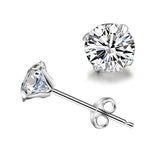
AJLuxe does not sell loupes or any inspection tools, so this guide is not a sales page. Our jewelry is 925 sterling silver with 18K gold plating, 316L stainless steel pieces, and cubic zirconia stones, and each product page says which is which. The CZ stud earrings are a good example of a piece you can look at under a loupe to understand prong-set cubic zirconia. You can browse everything in our earrings and necklaces collections.
Frequently Asked Questions
What is the best magnification for a jeweler's loupe?
10x is the best all-round magnification. It is the standard for inspecting jewelry and hallmarks and for grading diamond clarity, and higher powers shrink the field of view and the depth of field.
What is the best loupe for jewelry?
A 10x triplet loupe is the best choice for most people. Its three lenses are arranged to reduce the distortion and false color flashes that a single lens can add.
What is the difference between a loop and a loupe?
They are the same tool: "loupe" is the correct spelling, and "loop" is a common way of writing how the word sounds.
Is a jeweler's loupe better than a magnifying glass?
Yes for small details, because a loupe generally has higher magnification and is held close to the eye. A magnifying glass is fine for large engravings but is too weak for most hallmarks and stone detail.
How do you use a jewelry loupe?
Hold the loupe steady near your eye, rest your hand on your cheek and slowly move the jewelry toward or away from the lens until it is sharp. Then inspect the piece in a consistent order.
Can a loupe tell you if a diamond or gemstone is real?
Not reliably on its own. A loupe shows surface and inner features, but identifying a stone usually needs training or lab equipment, so use it as one clue and ask a gemologist when it matters.
Can I use a loupe to read the stamp on my ring?
Yes, this is one of the best everyday uses. A 10x loupe makes tiny stamps readable, though a stamp is only a claim about the metal and not a test of it.
Is a more powerful loupe better?
No. Above 10x the depth of field and field of view become too small to be useful, so a 10x triplet is easier to use and shows what matters.
Sources
A general online encyclopedia entry on the loupe (definition, lens types, 10x for jewelry and hallmarks, field of view above 10x, comparison with a magnifying glass) and a diamond retailer's how-to on using a jewelry loupe (10x, triplet versus single lens, steady hold, focus method, workmanship), both read on 2026-10-08. The "what to check" list is our own suggestion, not sourced guidance. Product details come from ajluxe.com product pages.
Written by AJLuxe Team. Last updated: October 2026
All third-party trademarks, brand names and product names are the property of their respective owners. AJLuxe is not affiliated with, endorsed by, sponsored by, or otherwise connected to any third-party brand referenced in this article. Brand names are used solely for accurate comparative reference, and material descriptions reflect each brand's own published product specifications at the time of writing.
You Might Also Like
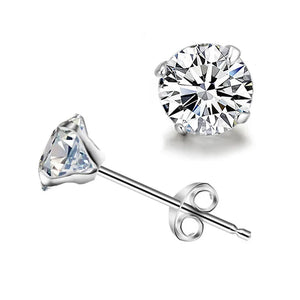
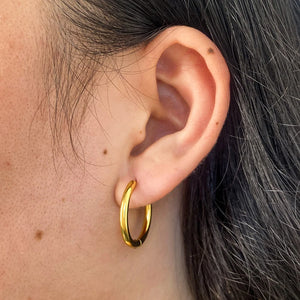
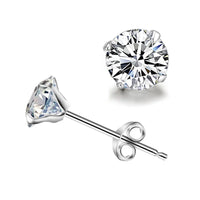
The piece they're describing → CZ Stud Earrings for Women — 925 Sterling Silver, Cubic Zirconia, Hypoallergenic
Personalize Yours


