


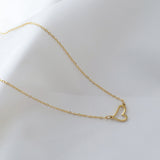
Freshwater vs Saltwater Pearls: Which Should You Buy?

$200–$400: Both are viable. Compare luster directly rather than trusting the type label.
$400+: Akoya justifies its premium — rounder, more consistent, higher luster ceiling.
$500+: South Sea or Tahitian if you want something genuinely statement-level.
The "freshwater is inferior" reputation is 20 years out of date. Modern premium freshwater pearls rival Akoya in luster and roundness — and freshwater nacre is actually thicker than budget Akoya.
Most pearl comparison articles tell you what freshwater and saltwater pearls are — then leave you without an actual buying recommendation. This guide gives you the direct answer: which type wins at each budget level, and why. The comparison is honest, not weighted toward the more expensive option.
Shop pearl jewelry: AJLuxe Pearl Jewelry Collection — curated freshwater pearl pieces in sterling silver settings.
Part of our Complete Pearl Jewelry Guide cluster.
The Key Myth to Dispel First
"Freshwater pearls are inferior to saltwater pearls." This was true in the 1980s–1990s when Chinese freshwater pearl production was dominated by low-quality, rice-shaped, chalky pearls. Chinese freshwater pearl farming has undergone a revolution since then. Modern premium freshwater pearls — particularly "Edison" grade round freshwater pearls — are genuinely beautiful, genuinely lustrous, and genuinely round. The reputation hasn't caught up with the reality.
This matters for buying decisions because many jewelers still charge an Akoya premium for quality that modern freshwater can match. At the same time, it doesn't mean freshwater is always the answer — at the premium tier ($400+), Akoya's roundness consistency and luster ceiling are still marginally higher. The honest picture is nuanced.
The Full Head-to-Head Comparison
| Property | Freshwater | Akoya (Saltwater) | South Sea (Saltwater) | Tahitian (Saltwater) |
|---|---|---|---|---|
| Origin | Freshwater mussels (Hyriopsis cumingii), primarily China | Pinctada fucata martensii oysters, Japan & China | Pinctada maxima oysters, Australia/Philippines/Indonesia | Pinctada margaritifera (black-lipped) oysters, French Polynesia |
| Nucleation | Tissue-only (modern varieties) — no bead nucleus; entirely nacre | Bead-nucleated — small bead core with nacre coating | Bead-nucleated — large bead core with thick nacre | Bead-nucleated — bead core with nacre coating |
| Nacre thickness | Entire pearl (all nacre) — most durable | 0.2–0.5mm (thin to moderate; thin at budget prices) | 2–6mm (exceptionally thick) | 0.8–2mm (moderate to thick) |
| Typical sizes | 4–16mm (Edison up to 16mm) | 2–11mm (most commonly 6–8mm) | 8–20mm | 8–18mm |
| Color range | White, pink, lavender, peach, cream (widest natural range) | White, cream, pink (subtle); very limited color range | White, silver, golden | Dark grey, black, green, peacock (iridescent) |
| Luster ceiling | Good to excellent (Edison/AAAA rivals Akoya) | Very high to exceptional (mirror-like at premium tier) | Exceptional satiny glow (different character from Akoya) | High to exceptional |
| Price range | $30–$300 | $200–$1,000+ | $500–$10,000+ | $300–$3,000+ |
| Best for | Everyday wear, gifts, first pearls, all budgets under $300 | Classic formal/bridal strands, traditional pearl look | Heirloom, investment, maximum statement | Dramatic/exotic looks, contemporary jewelry |
| AJLuxe availability | Available — see pearl collection | Not currently stocked | Not currently stocked | Not currently stocked |
The Nacre Thickness Paradox
Here is the counterintuitive fact that most pearl guides don't explain clearly: freshwater pearls often have thicker effective nacre than budget Akoya pearls.
Akoya pearls are bead-nucleated. A relatively large mother-of-pearl bead is implanted in the oyster, and nacre is deposited around it. At the budget end of the market ($50–$200 for Akoya), the nacre layer is very thin — sometimes only 0.2–0.3mm. That thin nacre layer is what you're looking at when you see luster. If it dulls, chips, or peels, there's nothing underneath — just the bead core.
Modern freshwater pearls, by contrast, have no bead nucleus — the entire pearl, from core to surface, is nacre. A 7mm freshwater pearl is 7mm of solid nacre. This means that even if the surface dulls slightly, there's more nacre underneath. And the luster goes all the way through.
The practical implication: A $80 freshwater pearl necklace with good luster will look better and age more gracefully than a $80 Akoya pearl necklace with thin nacre. Under $200, this is almost always the case.
Above $400, quality Akoya pearls have thicker nacre (0.4mm+) and the roundness/luster characteristics that justify the premium. The comparison changes at higher budgets.
Freshwater vs Akoya: The Direct Matchup by Budget
| Budget | Best Choice | Why |
|---|---|---|
| Under $50 | Freshwater WINNER | Only option with real pearl quality at this price. Akoya at this price is poor quality or likely imitation. |
| $50–$100 | Freshwater WINNER | Good to excellent freshwater quality available. Akoya at this price has very thin nacre — not worth it. |
| $100–$200 | Freshwater WINNER | Premium freshwater (AA+, 7–9mm, near-round to round) is genuinely beautiful. Akoya at this price still has marginal nacre. |
| $200–$400 | Tie COMPARE LUSTER | Entry-level Akoya competes here. Compare luster in photos directly — don't pay for the type label alone. Edison freshwater can match at this price. |
| $400–$800 | Akoya WINS | Fine Akoya (AA–AAA, 7–8mm, 0.4mm+ nacre) justifies its premium here. Rounder, more consistent, higher luster ceiling than freshwater at the same price. |
| $500+, want drama | Tahitian WINS | Dark, exotic, striking. Unique colors not available elsewhere. A genuinely different aesthetic. |
| $1,000+, investment | South Sea WINS | Largest, rarest, highest long-term value. The heirloom tier of pearl jewelry. |
When Saltwater Pearls Are Worth the Premium
Being honest about value cuts both ways. There are clear situations where saltwater pearls — particularly Akoya — are worth significantly more than freshwater:
Classic Bridal Jewelry
If you want the exact look of a traditional pearl strand — perfectly round, uniformly white, with the sharp mirror luster of classic 20th-century pearl jewelry — Akoya is still the purest expression of that aesthetic. Modern freshwater comes close, but the roundness consistency across a full 17-inch strand is still higher with fine Akoya at comparable price points ($400+).
Statement Size
If you want pearls above 11mm, you're in South Sea territory. Freshwater Edison pearls go up to 16mm, but the larger sizes are rarer and more expensive — at 12mm+ they begin to overlap with entry-level South Sea pricing. For maximum size, South Sea pearls are the appropriate choice.
Dramatic Color
If you want naturally dark pearls — black, grey, green, or the coveted "peacock" iridescence — Tahitian pearls are the authentic source. Freshwater pearls dyed black exist, but the color is flat compared to the complex natural overtones of genuine Tahitian.
Long-Term Investment
South Sea and Tahitian pearls hold and potentially appreciate in value. Fine Akoya holds value reasonably well. Freshwater pearls, while excellent jewelry, are not an investment class — their value is in wearability.

The Scenario-Based Buying Guide
For each situation, here is the direct, honest recommendation.
| Scenario | Best Choice | Why |
|---|---|---|
| Budget under $100 | Freshwater | Akoya is bad quality at this price; freshwater (6–8mm, AA grade, sterling silver) is genuinely beautiful |
| Everyday wear, any budget | Freshwater | All-nacre construction = more durable for daily use; practical price = less anxiety about wear |
| Bridal / classic formal look | Akoya ($400+) | Highest roundness consistency, classic white, traditional bridal aesthetic |
| Statement / dramatic jewelry | Tahitian | Dark colors, exotic overtones, nothing else looks like it |
| Investment / heirloom piece | South Sea | Rarest, largest, highest value retention; genuine heirloom quality |
| Gift under $50 | Freshwater | Only option with real pearl quality at this price; a beautiful genuine gift |
| Want pink or lavender color (natural) | Freshwater | Only cultured pearl type with naturally occurring pink, lavender, and peach |
| Bridesmaid gift (multiple sets) | Freshwater | Consistent quality across multiple pieces at accessible prices |
| First pearl purchase | Freshwater | Lower financial commitment; learn your preferences; just as beautiful at this tier |
The Production Difference: Why Saltwater Costs More
Understanding why saltwater pearls cost more removes the mystique and helps you decide if the premium is worth it for your purpose.
- Yield per mollusk: A freshwater mussel can host 20–30 pearl grafts simultaneously. An Akoya oyster produces one pearl at a time. A South Sea or Tahitian oyster also produces one pearl — but after 2–4 years of growth. The economics of one-pearl-at-a-time farming vs. 20-at-a-time is the primary driver of price differences.
- Mortality rate: Ocean oysters are more sensitive to environmental changes, disease, and temperature fluctuations than freshwater mussels. South Sea oyster farms can lose 50–70% of stock to natural causes. The high mortality rate is priced into every pearl that survives.
- Growth time: Akoya pearls take 10–18 months to develop their nacre layer. South Sea pearls take 2–4 years. Premium Edison freshwater pearls also take 2–6 years — which is part of why their pricing is moving toward Akoya territory at the premium end.
- Geography: South Sea and Tahitian pearl farms are in remote locations with high operational costs. Australian South Sea pearl farms are particularly expensive to operate.
A Note on What AJLuxe Carries
We want to be straightforward: AJLuxe carries a curated selection of freshwater pearl jewelry. Our pearl collection is intentionally focused rather than broad — we carry pieces we believe in and can stand behind. If you're looking for premium Akoya, South Sea, or Tahitian pieces, specialist pearl retailers (Japan Pearl, Mikimoto, Assael) are better sources for those.
What we offer alongside our pearl selection: our wider gemstone necklace and crystal jewelry collections include pieces with a similar aesthetic to freshwater pearl jewelry — organic, delicate, and natural-material focused — for those who want to explore beyond pearl.
Frequently Asked Questions
Are freshwater pearls as good as saltwater pearls?
For everyday jewelry under $300, modern freshwater pearls are generally better value than saltwater at the same price. The "freshwater is inferior" reputation dates from the 1990s — modern premium freshwater pearls rival Akoya in luster and roundness. Akoya justifies its premium at $400+ where roundness consistency and luster ceiling are genuinely higher.
What is the main difference between freshwater and saltwater pearls?
Freshwater pearls are all-nacre (no bead nucleus), come in more colors, and cost $30–$300. Saltwater pearls (Akoya, South Sea, Tahitian) are bead-nucleated with a nacre coating over a bead core, tend to be rounder, reach higher luster ceilings, but cost $200–$10,000+.
Are freshwater pearls real pearls?
Yes, 100%. Freshwater pearls are real cultured pearls grown in freshwater mussels through the same nacre-deposition process as saltwater pearls. Modern freshwater pearls consist of solid nacre from core to surface — not imitation in any way.
Which pearls are more durable — freshwater or Akoya?
Freshwater pearls are more durable than budget Akoya. Since freshwater pearls are all-nacre (no bead nucleus), the entire pearl is nacre — there's no thin coating to chip or peel. Budget Akoya has nacre as thin as 0.2mm over a bead core. Premium Akoya (0.4mm+ nacre) is roughly comparable in durability.
Why are saltwater pearls more expensive than freshwater?
Ocean oysters produce one pearl at a time (vs. 20–30 for freshwater mussels), are more susceptible to disease, have higher mortality rates, and require longer growth time. The high per-pearl cost of saltwater farming is the primary price driver.
Which pearl should I buy under $100?
Freshwater, without question. Akoya pearls under $100 have very thin nacre (0.2mm or less) that will dull or peel quickly. Good freshwater pearls at the same price have solid nacre and will last significantly longer. Look for 6–8mm, AA grade, in a sterling silver setting.
Do freshwater pearls have good luster?
Yes — modern premium freshwater pearls can have excellent luster. The "chalky freshwater" reputation dates from 1990s production. Contemporary Edison/AAAA grade freshwater pearls rival mid-tier Akoya in luster. Always check close-up photos showing the actual luster before buying.
What is an Edison pearl?
Edison pearls are a premium grade of large, round, high-luster freshwater pearls (up to 16mm) developed in China. They are nucleated (like Akoya, not tissue-only) which allows rounder shapes and larger sizes. They represent the top tier of freshwater pearl quality, often rivaling mid-tier Akoya at lower prices.
Is Akoya or freshwater better for a wedding?
Both work beautifully for weddings. Akoya (at $400+) offers the traditional round, white, high-luster bridal classic. Premium freshwater (AA+ or AAAA Edison) is increasingly popular for modern brides at lower cost. At equal budget, choose the piece with better luster rather than the pearl type label.
Do freshwater pearls come in the same colors as saltwater?
Freshwater has the widest natural color range: white, cream, pink, lavender, and peach all occur naturally. Akoya is predominantly white/cream. South Sea is white, silver, or golden. Tahitian is dark (grey, black, peacock). For naturally pink or lavender pearls, freshwater is the only accessible cultured option.
Which pearl type holds its value best?
South Sea and Tahitian pearls hold value best as investments. Fine Akoya also holds value reasonably well. Freshwater pearls are excellent wearable jewelry but are not typically investment pieces — their value is in accessibility and daily beauty, not appreciation.
Final Thoughts
The freshwater vs. saltwater question has a genuinely honest answer that most pearl marketing avoids: for most buyers, at most budgets, modern freshwater pearls are the right choice.
Not because saltwater pearls aren't beautiful — they are. But because the premium for Akoya at the budget end of the market buys you a type label, not better quality. The premium at the fine end ($400+) is real and justified. In between, it's murkier than most retailers admit.
Buy freshwater if: you want everyday wearability, your budget is under $300, you want natural color variety (pink, lavender), or you want maximum nacre durability per dollar. Buy Akoya if: you want the traditional classic strand and have a $400+ budget to support genuine quality. Buy South Sea or Tahitian if: you want maximum size, rarity, investment value, or dramatic dark color.
Shop pearl jewelry: AJLuxe Pearl Jewelry Collection — curated freshwater pearl pieces in sterling silver settings. Also explore our gemstone necklaces and crystal jewelry for pearl-adjacent styles.
Return to the Complete Pearl Jewelry Guide | Also see: Types of Pearls — All 8 Explained | Pearl Necklace Buying Guide | How to Care for Pearl Jewelry | Akoya vs Freshwater Pearls
All third-party trademarks, brand names and product names are the property of their respective owners. AJLuxe is not affiliated with, endorsed by, sponsored by, or otherwise connected to any third-party brand referenced in this article. Brand names are used solely for accurate comparative reference, and material descriptions reflect each brand's own published product specifications at the time of writing.
You Might Also Like
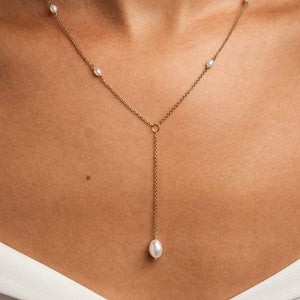

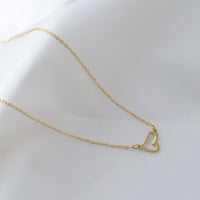
The piece they're describing → Dainty Heart Necklace for Women — 18K Gold Plated, Minimalist Gold Heart Pendant
Personalize Yours


