


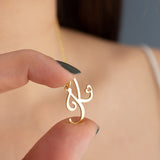
- Purpose: it links a chain, clasp, charm or earring part to another part.
- Open vs closed: open rings have a gap and can be opened with pliers. Soldered rings are joined shut and are stronger.
- To open: twist the ends sideways, one forward and one back. Pulling them apart bends the circle out of shape.
- To close: twist back past the closed position and then relax, so the ends meet flush.
- Weak point: a stretched or snapped jump ring is the most common reason a clasp or chain comes apart. See a jeweler if it keeps happening.
If you have ever looked at the point where a clasp meets a necklace chain, the little ring joining them is a jump ring. It is a simple part, and it matters more than it looks: on many necklaces it is the thinnest piece of metal in the whole design and it takes the strain every time you fasten the clasp. This page covers what a jump ring is, the types, how to open and close one safely and when to hand it to a jeweler. For wider clasp coverage, see types of necklace clasps and the engineering behind every jewelry clasp.
What Is the Purpose of a Jump Ring?
A jump ring is a connector: it joins one piece of jewelry to another, such as a chain to a clasp, a pendant to a bail or a charm to a bracelet. A jewelry-supplier glossary we read describes it as a ring you open by twisting, used to attach chain, thread or other components. Because it can be opened, it also makes repairs and swaps possible, such as replacing a clasp.
Open vs Soldered Jump Rings: What Is the Difference?
An open jump ring has a small gap you can twist open, while a soldered or closed jump ring has been joined shut so there is no gap at all. A supplier listing we read describes a soldered closed ring as made from wire soldered closed to form a complete, solid ring, and notes closed rings are needed where thread could slip through a gap.
| Type | What it is | Best for |
|---|---|---|
| Open jump ring | Ends meet but are not joined | Attaching parts, quick repairs |
| Soldered (closed) jump ring | Joined shut, no gap | Strain points, pieces worn daily |
A soldered ring cannot open by itself, which is why a jeweler will often solder a repaired connection shut. The trade-off is that you cannot add a part to a closed ring without cutting it.
What Size Are Jump Rings?
Jump rings are described by two measurements, the ring's width in millimeters and the thickness of the wire. A supplier listing we read, for example, gives a closed jump ring of approximately 5 mm made from 0.8 mm diameter wire. We did not find a single standard size, so for a repair match the new ring to the old one in width and wire thickness, or ask a jeweler. A ring that is too thin may snap, and one that is too thick will not sit well in the clasp.
How Do You Open and Close a Jump Ring?
Open it by twisting the ends sideways, and close it the same way. A jewelry-supplier how-to guide we read says rings are "opened or closed by twisting and not pulling apart". Here is the method, with two pairs of pliers (flat nose or snipe nose, with smooth jaws) or one pair and a jump ring opener, a small tool that holds the ring for you.
- Hold the ring with the gap at the top, one pair of pliers on each side of it.
- Twist the ends apart sideways, one toward you and one away, only as wide as you need to slip the part on.
- Attach the chain, clasp or charm.
- Twist back so the ends slide together. The supplier guide suggests twisting slightly past the closed position and then back, letting the metal's spring bring the ends flush.
- Check the closure. The ends should meet with no gap and you may feel or hear a slight click. Run a fingernail across the join: it should not catch.
If you pull the ends apart like a letter C instead of twisting, the ring loses its round shape and rarely closes neatly again. Use a new ring instead of re-bending one that has been pulled apart, because bent metal fatigues and can snap later.
Can You Open a Jump Ring Without Pliers?
You can in a pinch, with two sturdy fingernails or a pair of tweezers, but it is harder to control and easier to distort the ring. Pliers with smooth jaws give a cleaner twist. If you wear a delicate or plated piece, the jaws can mark the finish, so wrap the tips in a bit of tape.
Fixing a Broken Chain or Clasp With a Jump Ring
When the jump ring on a clasp has opened or snapped, you can often close it, or replace it, with two pairs of pliers. Our guide to how to fix a broken necklace chain walks through a simple link, ring or kink fix, and what to do when a necklace clasp breaks covers swapping the clasp itself using new jump rings. How thick the chain and its rings are also affects how long they last, which our chain thickness guide explains. For bracelets, see how to put on a bracelet by yourself.
When Should You See a Jeweler?
See a jeweler if the ring keeps opening, if the piece is fine, antique or has gemstones near the join, or if you do not want to risk bending it. A jeweler can solder the ring shut, which is the permanent fix, and check the clasp and neighboring links at the same time. We do not suggest glue on jewelry you wear, since we found no jeweler guidance that recommends it for a join under daily strain.
Chains and Bracelets That Are Easy to Live With
If you are mostly here because a favorite piece needs replacing, browse our chain necklaces and chain bracelets. The Heart Initial Necklace has a 16 inch chain with a 2 inch extender (18K gold plating over 316L stainless steel, personalized, so final sale).
Frequently Asked Questions
What is a jump ring in jewelry?
A jump ring is a small metal ring that connects two parts of a piece of jewelry, such as a chain and a clasp or a charm and a bracelet. It is usually round, and can be open or soldered closed.
What is the purpose of a jump ring?
Its purpose is to link components together while letting the parts move freely. Because an open one can be twisted apart, it also lets you add, swap or repair parts.
Can jump rings be opened?
Yes, open jump rings can be opened by twisting the ends sideways with pliers. Soldered or closed ones have no gap and must be cut and replaced.
How do you properly open and close a jump ring?
Hold it with two pairs of pliers, twist one end toward you and one away to open, then twist back so the ends meet. Never pull the ends apart, because that distorts the circle.
How do you close a jump ring so it stays closed?
Twist it slightly past the closed position and then back, so the ends meet flush with no gap. For pieces under daily strain, a jeweler can solder the ring shut.
Why do my jump rings keep opening?
Usually the ring is too thin for the load, was pulled open instead of twisted, or was not closed flush. Replace it with a sturdier ring or have a jeweler solder it.
What tool can I use to close a jump ring?
Flat nose or snipe nose pliers work, ideally two pairs, or one pair and a jump ring opener, which is a small tool that holds the ring.
What is the 2:1:1 rule for jewelry?
It is a styling rule about mixing metals, not a jump ring term. See our 2:1:1 rule guide.
Sources
A jewelry-supplier how-to guide on opening and closing jump rings and a jewelry-supplier glossary entry for jump ring (definition, twisting, closing and click check), and a supplier product listing for closed jump rings (soldered closed, 5 mm ring from 0.8 mm wire as an example), all read 2026-10-03. The glue, pliers-free and tape suggestions are our own practical advice rather than sourced claims.
Written by AJLuxe Team. Last updated: October 2026
All third-party trademarks, brand names and product names are the property of their respective owners. AJLuxe is not affiliated with, endorsed by, sponsored by, or otherwise connected to any third-party brand referenced in this article. Brand names are used solely for accurate comparative reference, and material descriptions reflect each brand's own published product specifications at the time of writing.
You Might Also Like
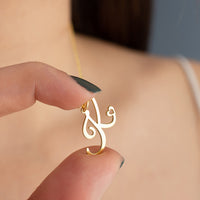
The piece they're describing → Heart Initial Necklace for Women — 18K Gold Plated, Personalized Letter + Heart Pendant
Personalize Yours


