


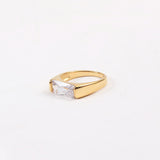
TL;DR: Gold plating is a chemistry and physics process called electroplating, not a coating that's simply brushed or sprayed on. A base-metal piece is cleaned, connected to an electrical circuit, and lowered into a bath containing dissolved gold ions. Electric current pulls those positively charged gold ions to the piece's surface, where they gain electrons and turn into solid metallic gold, bonding directly to the metal underneath. This guide walks through the actual mechanism step by step, in plain language, without repeating the tarnish-and-care ground already covered elsewhere on this site.
Already know how it works and want to know what happens to plating over time instead? See our guide on does gold plated jewelry tarnish.
The Short Answer: Electroplating, Not Painting
Gold plating bonds a real, solid layer of gold onto a base metal using an electric current, in a process chemists call electrodeposition or electroplating.
It is easy to picture "plating" as something closer to painting or dipping, where a coating just sits on top of a surface. That's not what happens. Electroplating is an electrochemical reaction: gold atoms are pulled out of a solution and physically deposited onto the metal underneath, forming an actual metallic bond at the surface. The result is a thin, continuous layer of real gold, not a film of gold-colored pigment.
This is also why plating requires a metal base that conducts electricity. Plastic, wood, or unfinished stone can't be electroplated directly, because the entire process depends on the base carrying current.
The Four Things Every Electroplating Setup Needs
Every electroplating process, whether it's plating a ring or a car bumper, relies on the same four components working together.
- A conductive base metal (the cathode). This is the piece being plated, most often sterling silver, brass, or another base alloy in jewelry. It has to conduct electricity for the process to work at all.
- A gold source (the anode, or a soluble gold salt). This supplies the gold ions that will end up on the piece. In modern jewelry plating, this is usually a gold salt, most commonly gold potassium cyanide or a gold sulfite compound, dissolved into the bath.
- An electrolyte bath. A liquid solution that carries the dissolved gold ions and conducts electricity between the two electrodes. It's formulated to keep the gold ions stable in solution until the current pulls them out.
- A power source. A rectifier supplies direct current (DC) through the circuit, which is what actually drives the reaction. No current, no plating, no matter how long the piece sits in the bath.
How Gold Plating Actually Happens, Step by Step
The electroplating process follows the same core sequence for nearly every piece of plated jewelry, from a mass-produced chain to a hand-finished ring.
- Cleaning and prepping the base metal. The piece is thoroughly cleaned, usually with an ultrasonic cleaner and degreasing solution, to strip oils, dust, and oxidation. Even a fingerprint's worth of oil can cause the plating to bond unevenly or peel later, so this step is done carefully.
- Applying a base or strike layer, if needed. On many base metals, a very thin layer of nickel or a similar metal is plated on first, to create an even, adherent surface and to stop the underlying metal from migrating up through the gold over time. On sterling silver, a barrier layer helps prevent the silver from diffusing into the gold and dulling its color.
- Submerging the piece in the electrolyte bath. The cleaned piece is wired to the negative terminal of the power source (making it the cathode) and lowered into the gold-ion electrolyte solution.
- Running the current. Direct current flows through the circuit. At the anode (or from the dissolved gold salt), gold atoms release electrons and become positively charged ions, entering the solution. Those positive gold ions are electrically attracted to the negatively charged piece.
- Deposition: ions become metal. When a gold ion reaches the surface of the piece, it picks up an electron from the current and reverts to solid, neutral gold metal, bonding to the surface. This happens across the entire submerged surface simultaneously, building the gold layer up gradually and evenly as the process continues.
- Rinsing and finishing. Once the target plating time is reached, the piece is removed, rinsed to stop the reaction, dried, and often given a final polish to bring out its shine.
Why Plating Thickness Varies So Much
Gold plating thickness is controlled almost entirely by how long the piece stays in the bath and how much current runs through it.
Plating thickness is typically measured in microns (millionths of a meter), and fashion jewelry plating commonly falls in a range of roughly 0.5 to 2.5 microns, with heavier "flash" plating on the thin end and more durable plating toward the thicker end of that range. Longer time in the bath and higher current density both build a thicker layer, but the relationship isn't linear: plating too fast or too thick can actually cause the layer to become brittle and prone to flaking, so manufacturers balance speed against durability rather than simply maximizing thickness.
In the US, terms like "gold plated" and "gold electroplate" aren't free-for-all marketing language. The FTC's Jewelry Guides set standards for when a manufacturer is allowed to use those terms, which is part of why reputable jewelry brands are specific about the karat and method used, rather than just saying "gold."
Why the Base Metal Underneath Still Matters
The base metal doesn't just sit passively under the gold, it actively affects how the plated piece looks and performs.
Because the gold layer in plating is thin by definition, whatever is underneath eventually influences the piece, both in appearance and longevity. A 925 sterling silver base gives the gold layer a precious, naturally white-silver metal to bond to, and if the gold layer ever thins with wear, the silver underneath still looks like a metal, not a dull alloy. A brass or base-metal core is cheaper to produce but behaves differently as plating wears, which is covered in more depth in our gold plated tarnish guide.
This is also the mechanical reason gold plating and gold vermeil are different things by definition, not just marketing. Vermeil specifically requires a sterling silver base plated with gold that meets a minimum karat and thickness standard, while "gold plated" alone doesn't guarantee either the base metal or the thickness.
Why Even a Well-Made Plating Job Wears Over Time
Gold plating wears because it's a thin surface layer subject to ordinary physical forces, not because the electroplating process itself is flawed.
Every time a plated piece rubs against skin, fabric, or another piece of jewelry, a microscopic amount of the gold surface is abraded away. Over months and years, that gradual mechanical wear is what eventually exposes the base metal underneath, regardless of how well the piece was originally plated. This is a physical, not a chemical, limitation of any plating process, gold or otherwise, which is why care habits (covered in our tarnish guide linked above) make a real difference to how long a plated piece keeps its finish.
Shopping for Gold Plated Jewelry
Understanding the electroplating process makes it easier to evaluate what you're buying: look for a stated base metal (925 sterling silver is a meaningfully better foundation than unspecified "alloy"), a stated karat for the gold layer, and a brand that's specific about both rather than vague. If you're shopping for 18K gold-plated pieces built on a 925 sterling silver base, see our 18K gold plated stud earrings.
Frequently Asked Questions
How long does gold plating usually last?
Most gold plated jewelry keeps its finish for roughly 1 to 3 years of regular wear when the base metal is quality (like 925 sterling silver) and basic care is followed, though thinner "flash" plating on cheaper base metals can wear noticeably faster.
Does gold plating use actual gold?
Yes. Electroplating deposits real, solid gold atoms onto the surface, not a gold-colored dye or paint. The gold used is typically 14K to 24K and is dissolved into the plating bath as a gold salt before being deposited by the current.
Is it expensive to gold plate something?
Electroplating is far less expensive than solid gold because only a microscopically thin layer of gold is used rather than an entire solid-gold piece, which is exactly why gold plated jewelry can be sold at a fraction of solid-gold prices while still using genuine gold.
Can gold plating be done at home?
Small-scale gold electroplating kits exist and rely on the same electrolyte-bath-and-current principle described above, but getting even, durable results (proper cleaning, a barrier layer, correct current density) is difficult without professional equipment, which is why most gold plated jewelry is plated in a controlled industrial process.
All third-party trademarks, brand names and product names are the property of their respective owners. AJLuxe is not affiliated with, endorsed by, sponsored by, or otherwise connected to any third-party brand referenced in this article. Brand names are used solely for accurate comparative reference, and material descriptions reflect each brand's own published product specifications at the time of writing.
You Might Also Like
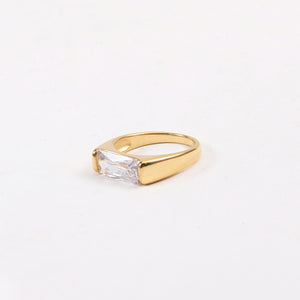

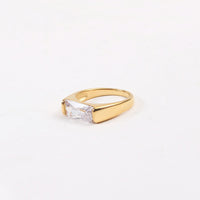
The piece they're describing → 18K Gold Plated Statement Ring — Tarnish-Resistant CZ
Personalize Yours


