


Can Moonstone Go in Water?
Yes, moonstone can go in water for a short rinse: under a minute in cool, clean water, then pat it dry. Water does not dissolve moonstone, but soaking, salt and sudden temperature changes are all things the stone handles badly.
Moonstone is a feldspar (a mix of orthoclase and albite) with a hardness of 6 to 6.5 on the hardness scale. That is softer than the quartz family at 7, and feldspar can split along flat cleavage planes if it is knocked or heated unevenly. The soft, floating glow called adularescence comes from thin alternating layers inside the stone, which is why a chipped or cracked moonstone loses its shimmer along with its shape.
In practice the water itself is rarely the culprit. The damage usually comes from what travels with the water: hot temperatures, salt, soap and chemicals, and knocks while you handle a wet stone. In jewelry, repeated soaking can also loosen the glue or setting around the stone.
Can Moonstone Get Wet?
Yes, moonstone can get wet without harm: a splash, handwashing or light rain is fine as long as you dry it promptly. The thing to avoid is letting it stay wet or wearing it into water every day.
"Getting wet" and "soaking" are different risks. A stray splash is not worth worrying about. What adds up over months is repeated contact with soap, heat and standing water, especially around the setting. Take moonstone rings and bracelets off before washing dishes, showering or swimming, and pat the piece dry with a soft cloth if it does get wet. Store it in a dry pouch rather than a humid bathroom cabinet.
Moonstone is often cut as a smooth dome rather than faceted. Our guide to what a cabochon is explains that cut and why softer stones suit it.
Water Safety Chart for Moonstone
Brief contact with cool, clean water is the only kind that is generally safe; everything else in this chart is either indirect-only or best avoided.
| Water Type | Safe? | Notes |
|---|---|---|
| Tap water (brief rinse) | ⚠️ Brief only | Under a minute, cool water, dry immediately |
| Running water | ⚠️ Brief only | Keep it quick, then pat dry |
| Moon water | ⚠️ Indirect only | Place the stone beside the jar, not inside it |
| Crystal elixirs | ⚠️ Indirect only | Do not put the stone in water you plan to drink; use a sealed vial |
| Salt water | ❌ No | Salt is abrasive on a softer stone and leaves residue in settings |
| Hot or warm water, steam | ❌ No | Sudden temperature change can crack feldspar along its cleavage planes |
| Prolonged soaking | ❌ No | No benefit, and it can loosen settings and glue in jewelry |
| Swimming pool / ocean | ❌ No | Chlorine and salt are both harsh; take jewelry off before swimming |
Why Moonstone Needs More Care Than Quartz
Moonstone needs more care than quartz because it is softer and splits more easily. Rose quartz, amethyst and citrine sit at 7 on the hardness scale, while moonstone is 6 to 6.5.
- Softer surface: Grit, salt and rough cloths scratch it more easily, which dulls the polish.
- Cleavage: Feldspar has directions along which it splits, so a knock or a thermal shock does more harm than it would to quartz.
- The glow depends on structure: Cracks or clouding along the internal layers reduce the adularescence, and that damage is usually permanent.
To put it simply: a brief rinse will not hurt your moonstone, but treat it more carefully than you would an amethyst or quartz crystal.
How to Clean Moonstone Jewelry
To clean moonstone jewelry, wipe it with a soft cloth dampened in lukewarm water and a drop of mild soap, rinse the cloth (not the stone) and dry the piece right away.
- Dampen a soft cloth or cotton swab with lukewarm water and a very small amount of mild soap.
- Wipe the stone and metal gently. Work around the setting rather than pushing liquid underneath it.
- Wipe again with a cloth dampened with plain water, or give a quick rinse of under a minute.
- Pat dry with a soft lint-free cloth and let it finish drying away from heat.
Skip ultrasonic cleaners, steam cleaners and chemical dips. They can fracture the stone or strip the finish on the metal.
Can You Wear Moonstone in the Shower?
It is better not to wear moonstone in the shower. One accidental shower will not ruin it, but hot water, steam and soap residue are the combination moonstone handles worst.
Daily showers add up: soap film dulls the surface, heat swings stress the stone, and moisture works into the setting. If you want to wear moonstone every day, make taking it off before the shower part of the same habit as putting it on.
How to Make Moonstone Moon Water Safely
To make moon water with moonstone safely, keep the stone out of the water: put it beside the jar, not inside it. Soaking it overnight is not recommended for the reasons above.
- Fill a clean glass jar with water.
- Place your moonstone beside the jar on a windowsill, or use a sealed glass vial for the stone.
- Leave both under the moon overnight.
- In the morning, bring them in and dry the stone if it picked up any condensation.
The same indirect method works for crystal elixirs. Whatever you believe about the practice, this version keeps the stone dry and the drinking water free of chips.
Best Alternatives to Water Cleansing for Moonstone
The best alternative to water for cleansing moonstone is moonlight, which is the traditional method for this stone and carries no physical risk.
- Moonlight (best): Leave the stone on a windowsill overnight. A full moon is traditional, but any clear night works.
- Selenite plate: Rest the stone on a selenite plate for several hours or overnight.
- Sound: Use a singing bowl, bell or tuning fork near the stone. There is no physical contact at all.
- Smoke: Pass the stone briefly (10 to 15 seconds) through incense or herb smoke, and let it cool before handling.
- Sunlight: Short morning sun is generally fine. Avoid long exposure, as heat can stress the stone.
- Soft cloth: For physical dirt, a dry or barely damp microfiber cloth is the safest tool.
Can Rainbow Moonstone Go in Water?
Yes, rainbow moonstone can go in water briefly, under the same rules as other moonstone. It is technically a variety of labradorite, also a feldspar, with a hardness of 6 to 6.5.
The same guidance applies: a short rinse is fine, soaking is not, and salt water and hot water are out. If you are curious about the stone itself, our rainbow moonstone meaning guide covers what it symbolizes.
Care Tips for Moonstone Jewelry
The most important care tips for moonstone jewelry are to keep it dry, keep it away from heat, and keep it from rubbing against harder stones. Bracelets take the most knocks of the three styles, which we cover in the moonstone bracelet guide.
- Remove before swimming and showering: chlorine, salt, soap and heat are all harder on moonstone than on quartz.
- Avoid ultrasonic and steam cleaners: both can fracture the stone.
- Store separately: wrap it in a soft cloth or use a padded pouch, since quartz and diamonds can scratch it.
- Clean the setting with a damp cotton swab: work around the stone, then dry right away.
If you like the look of moonstone, our rainbow moonstone tennis bracelet is set with rainbow moonstone cabochons on a stainless steel band. Stones in other AJLuxe pieces vary by listing, so check each product page for the stone type. Looking at amethyst as well? See can amethyst go in water and can fluorite go in water.
Frequently Asked Questions
Can moonstone go in water?
Yes, briefly. A rinse of under a minute in cool, clean water is safe if you dry the stone right away. Avoid soaking, hot water and salt water.
Can moonstone get wet?
Yes. A splash, handwashing or a light rain will not harm it. Pat it dry and take moonstone jewelry off before showers, dishes and swimming.
Can I wear moonstone in the shower?
It is better not to. One accidental shower will not ruin a moonstone, but daily steam, hot water and soap residue are hard on the stone, the setting and any glue under it.
Can moonstone go in salt water?
No. Salt crystals are abrasive on a stone that sits at 6 to 6.5 on the hardness scale, and ocean water also leaves residue in the setting. Rinse off any splash with fresh water and dry it.
Can moonstone go in moon water?
Not by soaking. Put the moonstone next to the jar, or use a sealed glass vial, so the stone stays dry while the water charges under the moon.
Can I put moonstone in my water bottle?
No. Use the indirect method with the stone beside the bottle. Prolonged contact with water is not good for the stone, and loose stones can chip and end up in your drink.
Will moonstone dissolve in water?
No. Moonstone is a feldspar mineral and does not dissolve. The risks are cracking from temperature shock or knocks, surface wear from salt or grit, and damage to settings.
Can rainbow moonstone go in water?
Yes, under the same rules. Rainbow moonstone is a type of labradorite, also a feldspar, so a short rinse is fine and soaking is best avoided.
Can moonstone go in the sun?
Brief morning sun is generally fine, but heat can stress the stone and some treated or dyed stones may fade. Moonlight is the traditional and safest way to recharge it.
How do you cleanse moonstone?
Traditionally with moonlight overnight, a selenite plate or sound. For physical dirt, wipe with a soft damp cloth and dry it. Skip ultrasonic and steam cleaners.
Can raw moonstone go in water?
Keep it even shorter. Raw, unpolished moonstone has a rougher surface that holds water and dirt, so a quick rinse and a thorough dry is the limit.
Shop AJLuxe Crystal Jewelry
Birthstone & gemstone necklaces · 925 sterling silver · from $24.99
Browse Crystal Jewelry →Final Thoughts
Moonstone can handle a quick rinse but not much more. Keep water contact brief, avoid salt water, hot water and steam, and reach for moonlight, a selenite plate or a soft cloth for regular cleaning.
The fact that a stone named for the moon is best cleansed by moonlight rather than water is an easy one to remember. Browse our birthstone necklace collection if you are shopping for a gemstone piece.
Written by the AJLuxe team, specialists in personalized sterling silver and gemstone jewelry. Last updated: October 2026.
Explore more: Crystal Jewelry: Meanings & Guides
All third-party trademarks, brand names and product names are the property of their respective owners. AJLuxe is not affiliated with, endorsed by, sponsored by, or otherwise connected to any third-party brand referenced in this article. Brand names are used solely for accurate comparative reference, and material descriptions reflect each brand's own published product specifications at the time of writing.
You Might Also Like
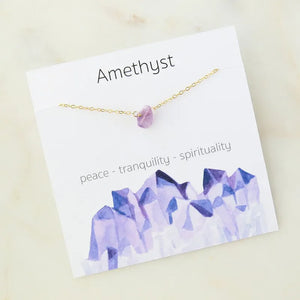
The piece they're describing → Stone Charm Necklace for Women — Raw Natural Gemstone Pendant
Personalize Yours


