


Quick Summary
- 14K gold is 58.3% pure gold and 41.7% alloy metals: harder, more scratch-resistant, better for daily-wear rings and bracelets, and lower in price.
- 18K gold is 75% pure gold: a richer, deeper yellow and a smaller share of alloy metals, but softer and more expensive.
- Daily-wear rings and bracelets: 14K holds up better over time.
- Sensitive skin or statement pieces: 18K has fewer alloy metals, though alloy recipes vary, so confirm any specific piece.
- Gold-plated jewelry gives the color of 18K at a lower price, but it is a layer over another metal, not solid gold.
If you have shopped for gold jewelry and got stuck between 14K vs 18K gold, you are not alone. The right choice depends on how you wear the piece, your skin, your budget and the color you want. This guide covers every difference that matters.
What does karat mean?
Karat measures gold purity out of 24 parts, so 14K is 14 of 24 parts gold and 18K is 18 of 24. Karats are not carats, which measure gemstone weight.
- 14K gold: 14 of 24 parts gold, or 58.3% gold
- 18K gold: 18 of 24 parts gold, or 75% gold
- 24K gold: 100% gold, too soft for most jewelry
Pure gold bends and scratches easily, so makers mix it with other metals. The remainder, 41.7% in 14K and 25% in 18K, is made up of metals such as copper, silver, zinc and sometimes nickel. Those metals affect color, durability and how the piece sits on your skin. For a full breakdown of the 14K stamp, see our guide to what 14K means on jewelry.
14K vs 18K gold: side-by-side comparison
14K wins on hardness and price; 18K wins on color and gold content. The table shows the full picture.
| Property | 14K Gold | 18K Gold |
|---|---|---|
| Gold purity | 58.3% | 75% |
| Alloy content | 41.7% | 25% |
| Durability | Harder, more scratch-resistant | Softer, scratches more easily |
| Color (yellow gold) | Lighter, slightly muted yellow | Richer, deeper yellow |
| Price | Lower | Higher (more gold content) |
| Skin sensitivity | More alloy metals; alloys vary | Fewer alloy metals; alloys vary |
| Best for | Everyday rings, active lifestyles | Fine jewelry, pieces with less friction |
| Stamp | 585 or 14K | 750 or 18K |
Durability and scratch resistance
14K is the clear winner for toughness. It contains more alloy metals, so it is harder and holds up better against the knocks and friction of daily life, especially on rings and bracelets.
18K is softer because it contains more gold, and gold on its own is soft. On pieces that see little contact, such as pendants, necklaces and earrings, you will rarely notice. For an engagement ring or stacking ring worn every day, 14K will look better for longer. Softer does not mean fragile: reputable 18K jewelry wears well with a little more care.
What about gold-plated jewelry?
Gold-plated jewelry is a different category: the base metal provides the structure and a thin gold layer provides the color. Many AJLuxe pieces use 18K gold plating over 925 sterling silver, and some, such as our heart initial necklace, use a 316L stainless steel base with 18K gold plating, so check the base metal on each product page. Plating wears with time, fastest on edges and contact points, and care slows it.
Color and appearance
The two karats look different when you hold them side by side. 18K yellow gold is richer and warmer; 14K is still clearly gold but a slightly paler, cooler yellow.
For white gold, the difference matters less because both are usually rhodium-plated for the bright white finish, and that plating wears and needs refreshing eventually. For rose gold, 14K usually has a deeper rosy-copper tone because it contains more copper, while 18K rose gold is a softer pink. Some people prefer 14K for exactly that stronger color. See our 14K vs 18K rose gold guide for more.
Price difference: how much more does 18K cost?
18K costs more because each gram holds more pure gold. The exact premium depends on the maker, the design and the day's gold price, so compare the same design in both karats rather than relying on a rule of thumb.
For a long-term piece, such as an engagement ring or an heirloom, the extra cost of 18K is often worth it for the richer color and higher gold content. For jewelry you will wear hard and may replace in a few years, 14K usually makes more financial sense. Gold-plated pieces sidestep the comparison by giving the look of gold at a much lower price, with the trade-off that the gold is only a surface layer.
Hypoallergenic properties and sensitive skin
Karat can matter for sensitive skin, but the specific alloy matters more. The most common trigger in gold jewelry is not the gold but the nickel sometimes used in the alloy.
14K has more alloy (41.7%), so there is more room for nickel. 18K has less (25%), and many 18K alloys are made without it. But some 14K alloys are nickel-free and some 18K pieces contain nickel, and no jewelry material is guaranteed for every wearer.
If you have a known nickel allergy, ask the seller whether the exact piece is nickel-free instead of relying on karat alone.
Which should you choose?
There is no universal winner. Choose by how you will wear the piece.
Choose 14K gold if you:
- Want a ring or bracelet for daily wear and need maximum scratch resistance
- Have an active lifestyle (sports, outdoor work, gym)
- Are buying a wedding band or engagement ring that will take years of contact
- Want more gold jewelry for your budget
Choose 18K gold if you:
- Want the richest, warmest yellow gold color
- Are buying a necklace, earrings or pendant that will not see much friction
- Want fine jewelry as a long-term or heirloom piece
- Prefer higher gold purity for its own sake
Consider gold-plated if you:
- Love the look of gold but not the price of solid gold
- Want dainty, minimalist pieces for everyday wear
- Like to refresh your jewelry style every few years
- Are building a jewelry wardrobe across several pieces and styles
Gold-plated vs solid gold: is it worth paying more?
It depends on the piece. Solid gold, in either karat, is real material value: it does not tarnish or change color, and it keeps its worth. Gold plating is a layer of gold bonded over a base metal, so the gold can wear through at high-contact edges over time.
For dainty, everyday jewelry at lower price points, gold plating over a quality base is a practical way to wear a gold look without the cost of solid gold. For pieces with major sentimental value, such as an engagement ring or an heirloom, solid gold makes more sense because it will look the same for decades with little maintenance. For more on the difference, read our guide to gold-plated vs solid gold and what gold vermeil means.
How to care for gold jewelry (both karats)
A few simple habits extend how good any gold piece looks, whether it is 14K, 18K or plated.
- Take it off before swimming. Chlorine and salt water are hard on gold alloys and plating.
- Remove jewelry before lotion, perfume or sunscreen. These build up and dull the surface.
- Store pieces separately. Gold is soft enough that other jewelry can scratch it.
- Clean gently. A soft brush with mild dish soap and warm water is enough for most pieces. Skip ultrasonic cleaners for plated jewelry.
- Dry thoroughly. Trapped water can speed tarnishing on alloy metals.
For plated pieces, avoiding harsh chemicals and abrasive surfaces matters most. If you are comparing karats across several guides, our 10K vs 14K vs 18K gold and 10K vs 14K gold pages cover the lower end of the range.
Frequently asked questions
Is 14K or 18K gold better for an engagement ring?
14K is usually the more practical choice for a ring worn daily, because its higher alloy content makes it harder and more scratch-resistant. Choose 18K if color richness matters most or you want higher gold purity, and accept that it needs a bit more care.
Does 18K gold tarnish?
Pure gold does not tarnish, and 18K, at 75% gold, is highly resistant. The alloy metals in it can react slightly with chemicals and sweat over time, but dullness on 18K is usually product buildup that polishes off.
Can you tell the difference between 14K and 18K gold by looking?
Side by side, yes: 18K yellow gold is a richer, more saturated yellow. On a single piece most people cannot tell. Check the stamp instead, usually 585 or 14K for 14-karat and 750 or 18K for 18-karat.
Is 18K gold more hypoallergenic than 14K?
Often, but not always. 18K has less alloy (25% versus 41.7%), so there is less room for metals like nickel, but alloy recipes vary by maker. If you have a known metal allergy, ask the seller whether a specific piece is nickel-free rather than relying on karat alone.
Why is 18K gold more expensive than 14K?
18K contains more pure gold per gram, 75% versus 58.3%, so the raw material costs more. The size of the premium varies by maker and design.
Which gold karat is best for necklaces?
Either works. Necklaces take less knocking than rings or bracelets, so 18K's softness rarely matters, and many people pick 18K for its richer color near the face. 14K is a good choice if you want more scratch resistance or a lower price.
Is gold-plated jewelry the same as 18K gold?
No. Gold plating is a thin layer of gold over a base metal, so the piece is not solid gold. It can give the look of 18K at a lower price, but plating wears over time, most on edges and contact points, and care slows it.
What does the 585 stamp mean on gold jewelry?
585 is the European stamp for 14K gold, meaning 585 parts per 1,000 are gold (the exact figure for 14 of 24 parts is 58.3%). 750 is the stamp for 18K gold, meaning 750 parts per 1,000, or 75%.
Whether you are gifting, treating yourself or choosing a piece to keep for decades, knowing the difference between 14K and 18K puts you in control. To browse gold-look pieces, see our gold-plated jewelry and rings collections, and check each product page for the base metal.
All third-party trademarks, brand names and product names are the property of their respective owners. AJLuxe is not affiliated with, endorsed by, sponsored by, or otherwise connected to any third-party brand referenced in this article. Brand names are used solely for accurate comparative reference, and material descriptions reflect each brand's own published product specifications at the time of writing.
You Might Also Like

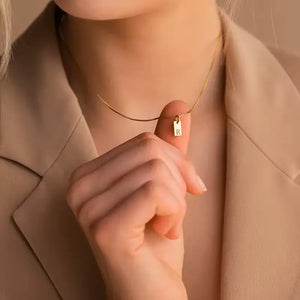
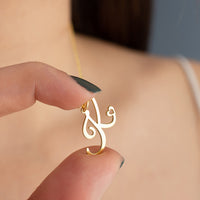
The piece they're describing → Heart Initial Necklace for Women — 18K Gold Plated, Personalized Letter + Heart Pendant
Personalize Yours


