


Fluorite is one of the most visually spectacular minerals in any crystal collection — the rainbow banding, the vivid purples and greens and yellows, the glassy translucent quality. It's also, unfortunately, one of the softer and more structurally fragile stones commonly sold as crystals, and its relationship with water reflects that fragility.
This guide explains exactly why fluorite and water don't mix well, what level of contact is actually safe for polished pieces, and the best water-free methods for cleansing and caring for your fluorite.
Can Fluorite Go in Water? Avoid Prolonged Contact — Here's Why
The short answer is: avoid prolonged water contact with fluorite. Brief incidental exposure — a splash while washing hands, for instance — is unlikely to immediately ruin a polished fluorite piece. But deliberate soaking, water cleansing rituals, and fluorite crystal elixirs are not recommended, and the reasons involve both fluorite's physical structure and, interestingly, its chemistry.
Fluorite's formula is CaF₂ — calcium fluoride. It rates Mohs 4 on the hardness scale. That places it well below the commonly cited Mohs 5 threshold where water damage becomes a meaningful concern, and significantly softer than the quartz-family stones (Mohs 7) that handle water without issue.
But softness alone doesn't fully explain the water risk. Fluorite's other key property — perfect octahedral cleavage in four directions — is equally important. This means fluorite fractures very easily along four distinct planes. Water doesn't just sit on fluorite's surface; it finds these cleavage planes and works along them, causing internal micro-fracturing that can cloud and eventually crack the stone.

The Science: Cleavage, Porosity, and the Fluoride Connection
Several distinct physical and chemical factors combine to make water problematic for fluorite:
- Mohs 4 — genuinely soft: Fluorite is the mineral that defines Mohs 4 on the hardness scale. At this hardness, water molecules and dissolved minerals in tap water can physically abrade the surface over time — the same way water slowly erodes soft stone in nature. This process is gradual but cumulative.
- Perfect octahedral cleavage in four directions: Most minerals have one or two cleavage directions at most. Fluorite has perfect cleavage in four directions simultaneously, forming octahedral shapes when it fractures. Water penetrating any of these four cleavage planes creates internal stress as it expands and contracts with temperature changes. Repeated wet-dry cycles propagate these micro-fractures.
- Porous structure: Fluorite's relatively open crystal structure allows water to be absorbed into the stone, not just sit on the surface. This absorbed water causes internal expansion-contraction stress with temperature cycling — the mechanism behind why water damages many soft minerals over time.
- Color stability: Fluorite's vivid colors are caused by trace impurity ions and radiation-induced color centers (defects in the crystal lattice). Prolonged water soaking can affect the surface expression of these color centers over time, potentially causing subtle color changes in the surface layer of some specimens.
- The fluoride chemistry angle: Here's the fact most crystal care guides miss: the word "fluoride" literally comes from "fluorite." Fluorite is calcium fluoride (CaF₂) — the mineral from which the element fluorine and the fluoride ion take their name. Over very long time periods, fluorite is very slightly water-soluble, particularly in acidic water. This dissolution is not significant for a piece sitting on a shelf, but it becomes relevant for stones subjected to repeated soaking.
- Chemical cleaners are especially dangerous: Many household cleaners are acidic or alkaline, and both types of solutions react with calcium fluoride more aggressively than plain water. Never use household cleaning products on fluorite.
What About a Quick Rinse to Clean Fluorite?
For polished fluorite jewelry and tumbled stones, a very brief rinse with cool, clean water is unlikely to cause immediately visible damage. The polish layer provides meaningful protection against rapid water penetration.
However, there are better options:
- A dry soft microfiber cloth removes surface dust and fingerprints from polished fluorite just as effectively as water, with zero risk
- If a rinse is necessary (to remove grit that could scratch the surface if wiped dry), use cool water only, keep it to a few seconds, and dry immediately and completely with a soft cloth
- Never soak fluorite, even briefly — the four-directional cleavage planes mean prolonged immersion is significantly more damaging than a surface rinse
- Avoid warm or hot water — thermal expansion under heat stresses cleavage planes more than cool water
- Skip ultrasonic cleaners entirely — the vibration exploits cleavage planes and can cause internal fracturing even in polished pieces
- For raw fluorite specimens with exposed crystal faces and natural cleavage surfaces, skip water entirely and use a dry soft-bristled brush for dust removal
Fluorite Safety — What Else to Know
- Fluorite is non-toxic to handle: Unlike malachite (copper) or pyrite (sulfuric acid), fluorite is not chemically hazardous for handling or casual water contact. The concern with water is structural and cosmetic, not chemical. Brief contact with fluorite water is not harmful to touch.
- No fluorite elixirs: Even though fluorite isn't acutely toxic, crystal elixirs made with fluorite are not recommended. Soaking fluorite long enough to "charge" the water would degrade the stone. For those who want gemstone-influenced water, use the indirect method (sealed glass container in the water) at most.
- All colors behave the same: Rainbow fluorite, purple fluorite, green fluorite, yellow fluorite, blue fluorite — all varieties share the same CaF₂ chemistry and the same Mohs 4 cleavage structure. The color variation doesn't change the water safety profile for any variety.
- Remove before water activities: Remove fluorite jewelry before showering, swimming, washing dishes, or any other water exposure. Pool chemicals (chlorine) and salt water are both more aggressive toward fluorite than plain fresh water.
- Handle with moderate care: Fluorite's perfect cleavage means it can chip or fracture more easily than harder stones. Avoid dropping fluorite pieces on hard surfaces, and store separately from harder stones that could scratch it.
- Sunlight caution: Prolonged UV exposure can fade some fluorite specimens — particularly the vivid purple varieties. Limit direct sunlight display and use moonlight for energetic charging.
Safe Ways to Cleanse Fluorite
Fluorite is well-served by several water-free cleansing methods, and the good news is that it's a relatively low-maintenance stone energetically — a monthly cleanse is typically sufficient.
| Method | Safe? | Notes |
|---|---|---|
| Moonlight | ✅ Yes | Place on an indoor windowsill overnight — keeps color safe and avoids outdoor dew |
| Selenite plate | ✅ Yes | Passive overnight charging — one of the most convenient water-free options |
| Smoke cleansing | ✅ Yes | Sage, palo santo, or incense — pass fluorite through the smoke |
| Sound bath | ✅ Yes | Singing bowl or tuning fork — vibration-based, no moisture involved |
| Dry soft cloth | ✅ Yes | For physical dust removal — microfiber is ideal |
| Sunlight | ⚠️ Brief only | Under 20–30 min — purple and vivid varieties can fade with prolonged UV |
| Quick rinse (polished only) | ⚠️ Brief only | A few seconds with cool water — dry immediately. Not recommended for raw specimens. |
| Soaking / fluorite elixir | ❌ Avoid | Penetrates cleavage planes, causes clouding and fracturing over time |
| Chemical cleaners | ❌ No | Acidic and alkaline cleaners both react with calcium fluoride — avoid entirely |
| Salt water | ❌ No | Abrasive and dissolves surface layer — never use on fluorite |
What Crystals Should Never Go in Water?
Fluorite joins a group of crystals that need careful handling around water, for a range of reasons:
- Selenite — Mohs 2, gypsum; literally dissolves in water. See: Can Selenite Go in Water?
- Malachite — copper carbonate; leaches copper ions (toxicity risk). See: Can Malachite Go in Water?
- Pyrite — iron disulfide; produces sulfuric acid and iron sulfate with water
- Fluorite — Mohs 4, perfect octahedral cleavage in four directions; water causes fracturing and cloudiness
- Hematite — iron-based; rusts with water contact
- Kyanite — directional hardness (Mohs 4.5 along crystal length); water penetrates cleavage planes
- Lepidolite — mica family; water causes layers to delaminate
- Calcite — Mohs 3; dissolves slowly in water like selenite
Crystals considered safe for brief water contact include clear quartz, amethyst, rose quartz, citrine, carnelian, obsidian, and tiger's eye — all Mohs 6.5+ with no toxic chemistry and no multi-directional perfect cleavage.
If you love fluorite's focus, clarity, and mental energy in wearable form, our crystal jewelry collection features genuine gemstone pendants crafted for safe everyday wear in sterling silver settings.
Frequently Asked Questions
Can fluorite go in water?
Avoid prolonged water contact with fluorite. Brief incidental contact with polished fluorite jewelry is generally fine, but soaking, water cleansing rituals, and fluorite elixirs are not recommended. Fluorite is Mohs 4 with perfect octahedral cleavage in four directions — water penetrates these cleavage planes and causes micro-fracturing and cloudiness over time.
Is fluorite safe in water?
Fluorite is not chemically toxic in water — it's calcium fluoride, which is not acutely harmful to touch. The concern is structural: water damage causes the stone to cloud, fracture along cleavage planes, and deteriorate physically. Brief contact won't immediately ruin polished fluorite, but repeated or prolonged water exposure causes cumulative damage.
Can you make a fluorite crystal elixir?
Fluorite elixirs are not recommended. While fluorite isn't acutely toxic like malachite or pyrite, prolonged soaking damages the stone. If you want to work with fluorite energetically in water, use the indirect method: place fluorite in a sealed glass container that sits in (but does not contact) the water.
How do you clean fluorite?
Use a dry soft microfiber cloth to remove surface dust and fingerprints from polished fluorite. For raw specimens, a dry soft-bristled brush works well. Avoid water, acidic or alkaline cleaners, and ultrasonic cleaners. If brief water contact is necessary, use cool water only, keep it to a few seconds, and dry immediately.
How do you cleanse fluorite (energetically)?
Safe energetic cleansing methods for fluorite include moonlight on an indoor windowsill overnight, a selenite charging plate, smoke cleansing with sage or palo santo, or a sound bath with a singing bowl. All of these are water-free, color-safe, and effective.
What is fluorite's Mohs hardness?
Fluorite is Mohs 4 — it is literally the mineral used to define the Mohs 4 position on the hardness scale. This places it well below the Mohs 5 threshold where water damage becomes a significant concern, and significantly softer than the quartz-family crystals (Mohs 7) that handle water without issue.
Can fluorite go in salt water?
No. Salt water is more damaging to fluorite than plain water — the sodium chloride is abrasive at Mohs 4 and can also react chemically with the calcium fluoride surface. Never place fluorite in salt water for any reason.
Can fluorite go in the sun?
Brief sunlight under 20–30 minutes is generally fine for fluorite. However, prolonged UV exposure is a real concern — particularly for vivid purple and green fluorite, whose colors can fade with extended direct sunlight. Indoor moonlight is the preferred charging method for preserving fluorite's color long-term.
Does the color of fluorite matter for water safety?
No — all fluorite varieties (purple, green, rainbow, yellow, blue, clear) share the same calcium fluoride chemistry and the same Mohs 4, perfect octahedral cleavage structure. Water safety recommendations are identical across all colors and varieties.
What crystals should not go in water?
Crystals to keep dry include: selenite (dissolves), malachite (copper toxicity), pyrite (produces sulfuric acid), hematite (rusts), fluorite (Mohs 4, perfect cleavage — fractures and clouds), kyanite (directional hardness — structural damage), lepidolite (mica layers delaminate), and calcite (dissolves slowly). As a general guideline, any stone rated below Mohs 5 should avoid prolonged water contact.
Why is fluorite called fluorite?
The word "fluorite" comes from the Latin "fluere," meaning to flow — fluorite was historically used as a flux in metal smelting because it lowers the melting point of metals. The element fluorine and the fluoride ion both take their names from fluorite, since fluorine was first isolated from calcium fluoride. This etymology makes fluorite's slight water solubility a fitting chemical footnote to its name.
Final Thoughts
Fluorite is one of those stones where its beauty and its fragility come from the same source — that perfect, multi-directional crystal structure that creates the glassy translucence and rainbow banding also creates the cleavage planes that water exploits. Understanding this makes the care advice intuitive rather than arbitrary.
The practical rules are simple: no soaking, no elixirs, no chemical cleaners, dry cloth for physical cleaning. Moonlight and a selenite plate handle all the energetic cleansing fluorite needs. With that level of care, fluorite stays vivid, structurally intact, and beautiful for years.
Explore our crystal jewelry collection for genuine gemstone pendants in sterling silver — crafted for safe everyday wear with real stone beauty.
Written by the AJLuxe team — specialists in personalized sterling silver and gemstone jewelry. Last updated: June 2026.
Related reading: Fluorite meaning.
All third-party trademarks, brand names and product names are the property of their respective owners. AJLuxe is not affiliated with, endorsed by, sponsored by, or otherwise connected to any third-party brand referenced in this article. Brand names are used solely for accurate comparative reference, and material descriptions reflect each brand's own published product specifications at the time of writing.
You Might Also Like
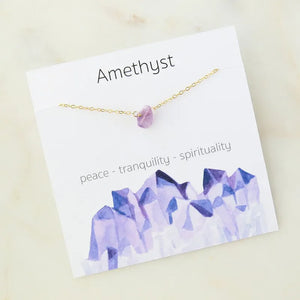

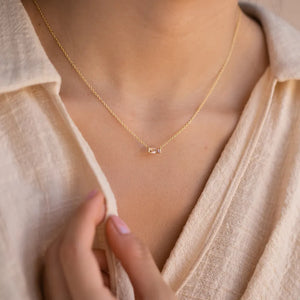
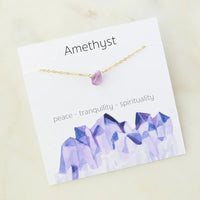
The piece they're describing → Stone Charm Necklace for Women — Raw Natural Gemstone Pendant
Personalize Yours


