


- The right wrist represents Yang energy — outward, active, and giving.
- Wear a bracelet on your right wrist to project confidence, protection, or intentions into the world.
- Rules differ by bracelet type: Pixiu and Kabbalah red string must go on the left wrist, not the right.
- Crystal bracelets on the right wrist work best for protection and release (obsidian, black tourmaline).
- For most fashion and gold bracelets, the right wrist is a stylish, practical choice.
The bracelet on right wrist meaning comes down to one core idea: the right side of the body projects energy outward. Whether you're choosing a crystal bracelet, a red string, a gold chain, or a copper cuff, the wrist you pick carries weight — spiritually, culturally, and practically. This guide breaks down exactly what the right wrist means for every major bracelet type, every cultural tradition, and every intention you might have.
What Does the Right Wrist Symbolize?
Across most spiritual traditions, the body has two sides with opposite energies.
The left side receives. It takes in energy, healing, and abundance from the outside world.
The right side gives. It sends energy outward — projecting your intentions, protecting your environment, and expressing your identity.
This framework comes from multiple independent traditions:
- Ayurveda calls the right energy channel the Pingala Nadi — the solar, masculine, active force.
- Chinese philosophy links the right side to Yang — warmth, expansion, and outward movement.
- Western energy healing describes the right as the "giving hand" and the left as the "receiving hand."
- Chakra systems associate the right side with the solar plexus and action-oriented chakras.
Wearing a bracelet on your right wrist signals that you're in a projecting mode. You want to put something into the world — protection, confidence, manifestation, or simply great style.

Right Wrist vs. Left Wrist: A Quick Comparison
| Factor | Right Wrist | Left Wrist |
|---|---|---|
| Energy direction | Outward / projecting | Inward / receiving |
| Energy type | Yang (solar, active) | Yin (lunar, receptive) |
| Best intention | Protection, manifestation, confidence | Healing, abundance, emotional calm |
| Dominant hand (most people) | Usually dominant — higher wear risk | Usually non-dominant — lower wear risk |
| Watch placement | Watch often on left → right wrist free for bracelets | Watch on left → stacking on same wrist |
| Crystal bracelet use | Release, protection, shield negative energy | Attract healing, love, wealth energy |
Meaning by Bracelet Type: Right Wrist Specifics
This is where most articles fall short. The general rule — right wrist = giving energy — doesn't apply equally to every bracelet. Some traditions have precise, counterintuitive rules. Here's what you need to know for each type.
Gold and Silver Fashion Bracelets
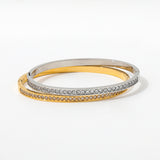
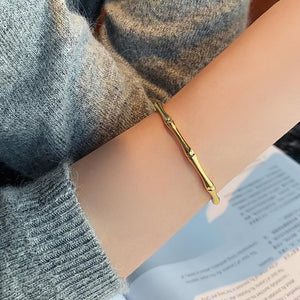
For everyday gold or sterling silver bracelets, the right wrist is a strong choice. It signals confidence and style. Because most people wear their watch on the left wrist, the right wrist stays uncluttered and shows off your bracelet clearly. There's no spiritual conflict here — wear it where it feels best and looks best.
Crystal Bracelets on the Right Wrist
Crystal placement matters more than any other bracelet type. On the right wrist, a crystal bracelet projects its energy outward — protecting your space or releasing what you don't need.
Best crystals for the right wrist:
- Black tourmaline — creates a protective shield against negative energy
- Obsidian — releases toxic patterns and emotional blockages outward
- Citrine — projects confidence and positive energy into your environment
- Tiger's eye — strengthens willpower and broadcasts determination
- Carnelian — projects creative drive and action energy
Crystals like rose quartz and amethyst work better on the left wrist, where they can deliver their healing and calming properties inward.
Red String Bracelet on the Right Wrist
The red string bracelet has strict wrist rules that vary by tradition. This is one of the most common sources of confusion.
- Kabbalah tradition: The red string must go on the left wrist, not the right. It's tied with seven knots by someone who loves you, and worn on the receiving side to pull in protection and repel the evil eye. Wearing it on the right wrist is considered incorrect in Kabbalah practice.
- Hindu Kalava (Mauli thread): The sacred red or yellow thread is tied on the right wrist for men and the left for women, during religious ceremonies. It symbolizes divine blessings and protection from the deity invoked.
- Chinese red string: Worn on the left ankle or wrist for love luck and destiny connection. There's no firm right-wrist rule in Chinese folk practice for red strings.
- Buddhist red cord: Blessed by a monk and typically tied on the left wrist (receiving side) or whichever wrist is offered. No strict right-wrist convention.
Bottom line: if you follow Kabbalah tradition, your red string goes on the left. For Hindu Kalava, right wrist is correct for men.
Pixiu Bracelet on the Right Wrist
This is the most important exception to the "right = giving" rule.
The Pixiu is a Chinese mythical creature that attracts and hoards wealth. In feng shui, the Pixiu bracelet must be worn on the left wrist. The left side receives — and you want it to receive wealth. Wearing a Pixiu on the right wrist symbolizes giving wealth away, which defeats its entire purpose. This rule is firm in traditional feng shui practice.
Copper Bracelet on the Right Wrist
Copper bracelets come from Ayurvedic tradition, where copper is believed to balance the body's three doshas. Some practitioners recommend wearing copper on the right wrist when your goal is to project its energy — for grounding, confidence, and outward strength. Others suggest the dominant wrist (which is the right for most people) absorbs copper's trace minerals more effectively through friction and body heat. The tradition isn't fully uniform here, but right wrist is a common and accepted choice for copper.
Charm Bracelets and Personalized Bracelets
Charm bracelets and personalized initial bracelets carry meaning through their charms and engravings, not through wrist-side energy. Wear them on whichever wrist feels most natural and shows them off best. For right-handed people, the left wrist often protects the bracelet from daily activity — but the right wrist is fine if comfort and visibility matter more to you.
What Different Cultural Traditions Say About the Right Wrist
| Tradition | Right Wrist Meaning | Notable Rule |
|---|---|---|
| Chinese Feng Shui | Projecting / releasing energy outward | Pixiu must be on LEFT wrist |
| Ayurveda | Pingala Nadi — solar, masculine, action energy | Right wrist for outward health and strength intentions |
| Kabbalah | Giving / action side | Red string must go on LEFT wrist only |
| Hindu Tradition | Action, blessing outward | Kalava red thread on right wrist for men |
| Buddhism | No strict right-wrist rule | Blessed cord typically on left (receiving) wrist |
| Western Energy Healing | Giving hand — projects energy, protection, manifestation | Right wrist for crystals that shield or release |

What It Means for Women vs. Men
There's no rule that says one gender must wear bracelets on a specific wrist. The spiritual meanings apply equally. But there are social and practical patterns worth knowing.
For women: Wearing a bracelet on the right wrist often reads as a deliberate style statement. It signals independence and social expressiveness. In many cultures, women traditionally wore bangles on both wrists — the right side representing outward activity and the left representing home and inner life. A right-wrist bracelet today carries that same energy: it's for the world to see.
For men: Most men wear watches on the left wrist, which makes the right wrist the natural home for a bracelet. Wearing a bracelet on the right wrist allows men to stack or layer without competing with a watch. It also projects strength and intentionality — qualities aligned with Yang energy traditions. A gold or sterling silver bracelet on the right wrist is one of the most confident accessories a man can choose.
Dominant Hand and Practical Considerations
Spirituality and practicality don't always agree. Here's how to balance them.
Most people are right-handed. The right wrist takes more impact during daily tasks — typing, carrying, gesturing. Delicate bracelets or beaded crystal bracelets can break faster on the dominant wrist.
If you're right-handed and want to wear a bracelet spiritually, consider this:
- Wear it on the right when your primary intention is protection, confidence, or manifestation — the spiritual meaning outweighs the wear-and-tear risk.
- Wear it on the left when you want to protect a delicate bracelet from physical damage, or when your intention is to attract something inward.
- Left-handed wearers: Your left hand is dominant, so your left is your "giving" hand energetically. Some left-handed practitioners flip the framework entirely, treating the right wrist as the receiver and the left as the projector.
Much like the meaning of wearing an anklet on a specific ankle, the wrist you choose can carry real personal significance — beyond any fixed rule.
Can You Wear Bracelets on Both Wrists?
Yes — and it's a popular choice. Wearing bracelets on both wrists creates a balanced energetic circuit: the left draws in what you want, the right sends out your intentions. There's no cultural or spiritual prohibition against this in any major tradition (with one exception: some feng shui practitioners say a Pixiu bracelet loses power if you wear competing bracelets on the same wrist).
For styling, balance the weight and scale. A thicker cuff or stacked set on one wrist pairs well with a single delicate bracelet on the other.
Looking for a bracelet that carries meaning and looks beautiful? AJLuxe makes 18K gold-plated 925 sterling silver bracelets priced $25-$60. Each piece is hypoallergenic, tarnish-resistant, and built to wear every day — on whichever wrist you choose.
Browse the Bracelet Collection
Related reading: Seashell necklace meaning.
Frequently Asked Questions
Q: What does it mean to wear a bracelet on your right wrist?
Wearing a bracelet on your right wrist symbolizes projecting energy outward. The right side of the body is considered the "giving" or "action" side in most spiritual traditions, including Ayurveda, Chinese feng shui, and Western energy healing. It's the wrist to choose when your intention is confidence, protection, or sending your goals into the world. For everyday fashion bracelets, it's also a practical choice since most people keep their watch on the left wrist.
Q: Should I wear my bracelet on my left or right wrist?
It depends on your intention and the bracelet type. Wear it on the right wrist when you want to project energy — for protection, manifestation, or outward confidence. Wear it on the left wrist when you want to receive — healing, abundance, love, or emotional calm. For crystal bracelets, the stone type matters: obsidian and black tourmaline work best on the right; rose quartz and amethyst work best on the left. Always check the specific rules for your bracelet type before deciding.
Q: What does a red bracelet on the right wrist mean?
It depends on the tradition behind your red bracelet. In Kabbalah practice, the red string must be tied on the left wrist — wearing it on the right is considered incorrect. In Hindu tradition, the Kalava (sacred red thread) is tied on the right wrist for men as a blessing during ceremonies. In Chinese folk tradition, red strings don't have a strict right-wrist rule. Know your bracelet's origin before choosing your wrist.
Q: What does a black bracelet on the right wrist mean?
A black bracelet on the right wrist projects protection and grounding outward. Black is the color most associated with shielding and boundary-setting in crystal and energy traditions — black tourmaline, onyx, and black obsidian are the stones most often used this way. Worn on the right (the "giving" or "projecting" side), a black bracelet is read as actively pushing negative energy away from you rather than absorbing it, which is the role black pieces play when worn on the left instead. Outside of spiritual meaning, a black bracelet on the right wrist is also just a common, versatile style choice with no symbolic requirement attached — the meaning only applies if that's the intention behind wearing it.
Q: What does it mean if a woman wears a bracelet on her right wrist?
A woman wearing a bracelet on her right wrist projects outward energy — confidence, independence, and social expression. Historically in many cultures, the right wrist represented a woman's public, active role in the world, while the left wrist represented the private, inner self. Today, wearing a bracelet on the right wrist is a bold style statement with roots in that same symbolism. There's no rule against it; it simply signals that the wearer is leading with strength.
Q: What does it mean if a man wears a bracelet on his right wrist?
A man wearing a bracelet on his right wrist signals strength, intention, and style. Because most men wear watches on the left wrist, the right wrist is the natural choice for a bracelet that stands alone and gets noticed. Spiritually, the right wrist aligns with Yang energy — active, assertive, and outward-facing. A gold or silver bracelet on the right wrist is one of the most straightforward ways for a man to incorporate jewelry into his look.
Q: What does wearing a crystal bracelet on the right wrist do?
A crystal bracelet on the right wrist projects that crystal's energy outward. It creates a shield around you or releases energy you no longer need. Black tourmaline on the right wrist blocks negative energy from entering your space. Citrine on the right wrist broadcasts positivity and creative power. Obsidian on the right wrist helps release emotional baggage. If your goal is to attract something inward (healing, love, abundance), move the crystal to your left wrist instead.
Q: What is the spiritual meaning of a bracelet on the right wrist?
Spiritually, the right wrist is the projector. Every major tradition — Ayurveda's Pingala Nadi, Chinese Yang energy, Western energy healing's "giving hand" — agrees that the right side sends energy out into the world. A bracelet worn here amplifies whatever intention you set: protection, manifestation, confidence, or releasing what no longer serves you. It's also linked to the solar plexus chakra, which governs personal power and action.
Q: Does it matter which wrist you wear a bracelet on?
It matters if the bracelet has a traditional or spiritual framework attached to it. For everyday fashion bracelets, the choice is largely personal and practical. For crystal, feng shui, red string, or religious bracelets, the wrist can change the intended effect completely — especially for Pixiu bracelets (must be left wrist) and Kabbalah red string (must be left wrist). When in doubt, choose based on intention: left for receiving, right for projecting.
Q: What is the meaning of wearing a copper bracelet on the right hand?
In Ayurvedic tradition, copper bracelets on the right wrist project grounding, strength, and outward vitality. Some practitioners believe copper on the dominant (usually right) wrist delivers more benefit through increased contact and friction with the skin. Copper is traditionally associated with balancing the body's Vata, Pitta, and Kapha doshas. While scientific evidence for copper's health benefits is limited, the cultural and energetic tradition behind right-wrist copper placement is well established in Ayurveda.
Q: What does the right wrist represent spiritually?
Spiritually, the right wrist represents the Yang principle — active, solar, masculine, and outward. It's the gateway for energy leaving the body. In Ayurveda, it connects to the Pingala Nadi, the right energy channel associated with the sun and outward action. In Chinese philosophy, it aligns with Yang: warmth, expansion, and movement. In chakra systems, the right side connects to action-oriented energy centers including the solar plexus. It's the side of doing, giving, and projecting.
Q: Which wrist should I wear my feng shui bracelet on?
Most feng shui bracelets go on the left wrist, because feng shui generally positions the left side as the receiver of positive energy and wealth. The Pixiu bracelet is the clearest example — it must be on the left wrist to attract and hold wealth. However, if your feng shui bracelet is intended for protection or releasing negative energy from your space, the right wrist can be appropriate. Always check the specific purpose of your feng shui piece before deciding.
Q: Can I wear a bracelet on both wrists?
Yes, wearing bracelets on both wrists is perfectly acceptable and spiritually balanced. The left draws in energy and the right sends it out, creating a complete energetic circuit. There's no prohibition against this in any major tradition. For styling, balance the look: a chunky stack on one wrist pairs well with a single slim bracelet on the other. The only note of caution is for Pixiu feng shui bracelets — some practitioners advise against stacking too many competing pieces on the same wrist.
Q: What does wearing a bracelet on your right wrist mean in different cultures?
Cultural meanings vary significantly. In Chinese feng shui, the right wrist projects Yang (outward) energy. In Ayurveda, it activates the Pingala (solar) energy channel. In Hindu tradition, men receive the sacred Kalava thread on the right wrist during religious ceremonies. In Kabbalah, the right wrist is the action side — but red strings still go on the left. Buddhism has no firm right-wrist rule. Western energy healing consistently treats the right as the "giving" wrist for projecting intentions.
Q: Should a right-handed person wear a bracelet on their right wrist?
A right-handed person can wear a bracelet on their right wrist, but should be aware of the practical trade-offs. The dominant wrist takes more impact during daily tasks, which can scratch, tangle, or break delicate bracelets faster. For durable pieces — a gold chain bracelet, a solid cuff, or a simple bangle — the right wrist is fine. For fragile beaded or crystal bracelets, the left wrist offers more protection. Let your intention guide the wrist, and let the bracelet's durability guide the final call.
Q: What does a Pixiu bracelet on the right wrist mean?
Wearing a Pixiu bracelet on the right wrist is considered incorrect in traditional Chinese feng shui. The Pixiu is a wealth-attracting creature — it pulls in prosperity and holds it. The left wrist is the receiving side, so the Pixiu must be worn there to attract and keep wealth. Placing it on the right wrist symbolizes projecting or giving wealth away, which reverses its intended purpose. If you own a Pixiu bracelet, always wear it on the left wrist.
Final Thoughts
The bracelet on right wrist meaning is rooted in one consistent idea across cultures: the right side projects energy outward. It's your action side, your giving side, and your confident side. Whether you're drawn to the spiritual frameworks of Ayurveda and feng shui, or you simply want your bracelet to be visible and unobstructed, the right wrist is a powerful choice. Just remember the key exceptions — Pixiu and Kabbalah red strings belong on the left — and align your bracelet type with your specific intention. Wear what feels right to you, on the wrist that supports your goal.
Every AJLuxe bracelet is crafted from 925 sterling silver with an 18K gold finish — hypoallergenic, tarnish-resistant, and made for everyday wear. Browse styles from $25 and find the one that matches your intention.
Shop All Bracelets
For more on gemstone and jewelry symbolism, visit the GIA Gem Encyclopedia. For jewelry care and metal standards, see the Jewelers of America consumer education center.
- What Does Wearing a Bracelet Mean? Complete Symbolism Guide
- Bracelet on Left Wrist Meaning: Symbolism & Traditions
- Which Wrist to Wear a Bracelet On: Left vs Right Guide
- Friendship Bracelet Meaning: What It Symbolizes
- Charm Bracelet Meaning: What Each Charm Symbolizes
- What Does a Tennis Bracelet Mean? History & Symbolism
Written by the AJLuxe team — specialists in personalized 925 sterling silver jewelry. Last updated: July 2026.
All third-party trademarks, brand names and product names are the property of their respective owners. AJLuxe is not affiliated with, endorsed by, sponsored by, or otherwise connected to any third-party brand referenced in this article. Brand names are used solely for accurate comparative reference, and material descriptions reflect each brand's own published product specifications at the time of writing.
You Might Also Like
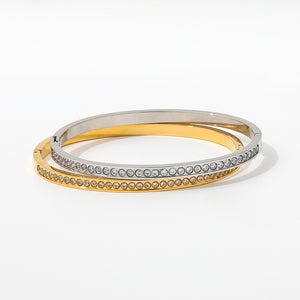

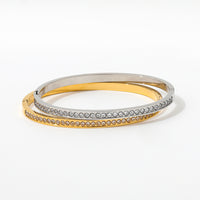
The piece they're describing → CZ Bangle Bracelet for Women, Gold or Silver Plated, CZ Stones
Personalize Yours


