


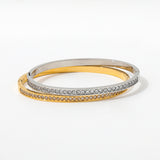
The bracelet on left wrist meaning comes down to one simple idea: the left side of the body receives energy, and the right side projects it. That's why so many spiritual traditions — from ancient Chinese philosophy to Kabbalah — recommend wearing protection, healing, and wealth bracelets on the left wrist. But the full picture is more nuanced. Bracelet type, cultural background, and even your dominant hand can all shift the answer. This guide breaks it all down.
Why the Left Wrist? The Core Principle
In Chinese philosophy, the left side of the body is yin — passive, receptive, and inward-facing. The right side is yang — active, projective, and outward-facing.
When you wear a bracelet on your left wrist, you're positioning it to pull energy into your body. That might mean healing energy from a crystal, protective energy from a red string, or wealth energy from a Feng Shui Pixiu bracelet.
Traditional Chinese Medicine (TCM) reinforces this. The left side connects to the heart meridian, which governs emotions and circulation. The left wrist sits close to the pulse point — historically the site where energy flow was read by TCM practitioners.
Ayurvedic tradition maps the left wrist to lunar, or cooling, energy. It's associated with the feminine principle and inner work: healing, intuition, and spiritual growth.
That's the philosophical foundation. Now let's see how specific traditions apply it.

What Different Spiritual Traditions Say
Feng Shui: Left Wrist for Wealth and Abundance
Feng Shui is the tradition most people associate with left-wrist bracelet rules. In Feng Shui, the left wrist is the "wealth-receiving" side of the body.
Green jade, citrine, and gold bracelets are typically worn on the left to attract prosperity. The idea is that the left side draws fortune in, while the right side sends energy outward.
There's one important exception: protection stones like black obsidian are sometimes recommended for the right wrist in Feng Shui because their purpose is to deflect negative energy away from the body, not absorb it inward.
Pixiu Bracelet: Strict Left-Wrist Rule
The Pixiu is a mythical Chinese creature believed to attract wealth. Pixiu bracelets have one of the clearest left-wrist rules in Feng Shui.
You wear the Pixiu on your left wrist with the head facing outward — away from your body. This position is said to allow the Pixiu to "collect" wealth from the outside world and bring it to you.
Wearing the Pixiu on the right wrist, or facing inward, is considered counterproductive in traditional Feng Shui belief.
Kabbalah: The Red String Goes on the Left
The Kabbalah red string bracelet is one of the most recognized spiritual bracelets in the world. It's worn on the left wrist specifically — no exceptions in traditional practice.
The reasoning connects to the concept of the evil eye. In Kabbalistic belief, negative energy and ill will enter the body through the left side. Tying a red string there acts as a barrier before that energy can reach the heart and spirit.
The tradition links back to Rachel's Tomb in Israel. Red string wound around the tomb is cut, blessed by a rabbi, and tied on the left wrist with a specific seven-knot blessing.
Celebrities like Madonna and Ariana Grande have made this bracelet globally visible, but its roots are deeply religious.
Buddhism: The Left Wrist and Compassion
In Tibetan Buddhist practice, a red cord or prayer bracelet blessed by a Lama is traditionally tied on the left wrist. The left side connects to compassion and wisdom — two of the core virtues in Buddhist teaching.
Mala beads, when worn as a bracelet, are also typically placed on the left wrist during meditation or daily wear. The left hand receives the blessings channeled through the beads during practice.
Buddhist monks in Thailand and Sri Lanka tie blessed cords (called Sai Sin) on the wrists of worshippers — often the left wrist — as a sign of protection and blessing.
Hindu Tradition: The Kalava Reversal
Here's where the "always wear on the left" rule breaks down. Hindu tradition uses a sacred red thread called a Kalava (also called Mauli), and the rules are gendered.
- Married women: left wrist
- Men and unmarried women: right wrist
The Kalava is tied during puja ceremonies and festivals. For men, the right wrist is the action side — it's where blessings are anchored to support deeds in the world. For married women, the left wrist connects the blessing to the heart and the household.
This is one of the clearest examples of how cultural context changes the "correct" wrist entirely.
Bracelet Type vs. Wrist: The Complete Reference Table
Different bracelets have different rules. Here's the breakdown by bracelet type — use this as your go-to reference.
| Bracelet Type | Recommended Wrist | Tradition / Reason |
|---|---|---|
| Red string (Kabbalah) | Left | Blocks evil eye entry point; Rachel's Tomb tradition |
| Pixiu (Feng Shui wealth) | Left, head facing out | Collects incoming wealth energy; strict Feng Shui rule |
| Crystal / gemstone (healing) | Left | Left absorbs healing energy inward into the body |
| Crystal / gemstone (projecting intent) | Right | Right sends your energy outward into the world |
| Black obsidian / protection stone | Right (some traditions) | Deflects negative energy away; not absorbed inward |
| Gold bracelet (wealth/status) | Left | Feng Shui: left attracts prosperity; also dominant non-dominant comfort |
| Evil eye bracelet | Left | Intercepts negative energy before it reaches the heart |
| Buddhist mala / blessed cord | Left | Receives blessing; connects to compassion side of the body |
| Friendship bracelet | Either (your choice) | No fixed tradition; wear where it stays comfortable |
| Charm bracelet | Either (typically left) | Most people wear on non-dominant wrist; no strict rule |
| Hindu Kalava — men & unmarried women | Right | Action/outward side; traditional Hindu puja rule |
| Hindu Kalava — married women | Left | Heart connection; traditional Hindu puja rule |
Does the Meaning Change for Men vs. Women?
In most Western and East Asian traditions, the left-wrist rules apply equally to men and women. Feng Shui, Kabbalah, and Buddhism don't assign gender-specific wrist preferences beyond the Hindu Kalava exception above.
For men specifically, there's a practical layer: most men wear a watch on the left wrist. If you're stacking a bracelet with a watch, the left wrist is still common — and it's where most style guides suggest placing bracelets for men who want a layered look.
For women, the left wrist is associated with the heart chakra in many energy traditions, making it the default for bracelets intended to support emotional well-being, self-love, or romantic connection.
If you're curious about the symbolism that runs below the wrist entirely, the meaning of anklets follows its own set of cultural rules worth exploring.

What About Left-Handed People?
Most spiritual traditions were written by and for right-handed people. The "left = non-dominant = receiving" logic assumes your dominant hand is the right.
If you're left-handed, some practitioners argue the rules flip — your right wrist becomes the non-dominant, receptive side. Others say the symbolic meaning of the left wrist is fixed regardless of handedness.
There's no universal consensus. The most practical approach: if you follow the spiritual framework, wear bracelets on your non-dominant wrist for receiving energy, whatever side that is. If you're simply following tradition without the spiritual layer, left wrist remains the cultural default.
Practical Reasons to Wear Your Bracelet on the Left Wrist
Spirituality aside, there are straightforward practical reasons why the left wrist is so common:
- Most people are right-handed. The left wrist is the non-dominant hand, so bracelets are less likely to catch on things, interfere with writing, or get knocked around during work.
- Watch pairing. If you wear a watch on the left, your bracelet sits right beside it — creating a natural layered stack without effort.
- Pulse proximity. Many people feel a deeper connection with bracelets worn close to the pulse point, where blood flow is more perceptible.
Understanding the full range of bracelet styles and types can also help you decide which bracelet suits your intent — whether that's spiritual meaning, everyday wear, or both.
Can You Wear Bracelets on Both Wrists?
Yes — and many people do. There's no tradition that strictly prohibits wearing bracelets on both wrists simultaneously, with one nuance: in some crystal healing practices, wearing the same stone on both wrists is thought to create a "loop" that recirculates energy rather than directing it.
The more common approach for both-wrist stacking: wear your protective or wealth-attracting bracelet on the left, and a style or decorative bracelet on the right. That way the spiritual intent stays clear and you still get the aesthetic of full-wrist layering.
Looking for a bracelet that carries both meaning and everyday elegance? AJLuxe's bracelet collection is crafted in 18K gold-plated 925 sterling silver — built to last, hypoallergenic, and priced between $25–$60. Whether you're drawn to gold chain styles, birthstone pieces, or minimalist bands, there's an option that suits the left wrist and everything you want it to mean.
Frequently Asked Questions
Q: What does it mean to wear a bracelet on your left wrist?
Wearing a bracelet on the left wrist is believed to attract beneficial energy into the body. The left side is considered the "receiving side" in Chinese philosophy, Ayurveda, and several other traditions. It's associated with protection, healing, emotional well-being, and abundance depending on the bracelet type and the tradition you follow. Most spiritual bracelet rules — including red string, Pixiu, and crystal healing bracelets — default to the left wrist for this reason.
Q: Should women wear bracelets on the left or right wrist?
Most traditions recommend the left wrist for women, particularly for protective, healing, and wealth-attracting bracelets. The left side connects to the heart chakra and lunar energy in several Eastern traditions. The exception is the Hindu Kalava thread, which unmarried women traditionally wear on the right wrist, while married women wear it on the left. For everyday style bracelets with no spiritual intent, either wrist is perfectly fine.
Q: What is the spiritual meaning of wearing a bracelet on the left wrist?
Spiritually, the left wrist is the entry point for external energy into the body. It receives protection, healing, and abundance from the outside world and channels it inward. Kabbalah uses the left wrist to block the evil eye. Feng Shui uses it to attract wealth. Buddhism and Ayurveda both associate the left side with receptivity and inner work. The left wrist is the default choice whenever a bracelet's purpose is to draw something good toward you.
Q: Is it better to wear a bracelet on the left or right hand?
It depends on your intent. Left is for receiving — healing, protection, abundance, and emotional connection. Right is for projecting — sending your energy, intentions, or blessings outward into the world. For most spiritual bracelets, the left wrist is recommended. For bracelets you wear to influence your environment or express your energy outward, the right wrist is the traditional choice. If you have no spiritual intent, choose whichever feels more comfortable.
Q: What does it mean when someone wears a red string bracelet on their left wrist?
A red string bracelet on the left wrist is the signature practice of Kabbalah tradition. It's tied there to ward off the evil eye — negative energy directed at you by others, whether intentional or not. The left side is considered the vulnerable side where such energy enters the body, so the red string acts as a barrier. The string is traditionally tied with seven knots while reciting a specific blessing. It should be tied by someone who loves you, not by yourself.
Q: Why shouldn't you wear a bracelet on your left wrist?
A few traditions do advise against certain bracelets on the left wrist. In some Feng Shui interpretations, strong protection stones like black obsidian should be worn on the right wrist, not the left — because their role is to deflect negative energy outward rather than draw it inward. Wearing them on the left is thought to absorb that deflected energy into the body instead. Additionally, if you're left-handed, the left wrist is your dominant (projecting) side, which some practitioners say reverses the receiving-energy logic.
Q: Which wrist should I wear my crystal bracelet on?
Wear your crystal bracelet on the left wrist if you want to absorb the stone's healing energy into your body. This is the standard recommendation for amethyst (calm), rose quartz (love), citrine (abundance), and most healing stones. Wear it on the right wrist if you want to project or transmit that energy outward — for example, if you're working on radiating confidence or compassion toward others. Black tourmaline and obsidian, used for protection and deflecting negativity, are sometimes recommended for the right wrist specifically.
Q: What does wearing a bracelet on the left wrist mean for men?
For men, the spiritual meaning is the same as for anyone: the left wrist is the receiving side, associated with protection, wealth attraction, and healing. Feng Shui wealth bracelets, Pixiu bracelets, and red string bracelets follow the same left-wrist rule regardless of gender in most traditions. Practically, many men also wear their watch on the left wrist and stack a bracelet alongside it — making the left wrist the natural choice for both aesthetic and spiritual reasons.
Q: Does it matter which wrist you wear your bracelet on?
It depends on whether you follow a spiritual or cultural framework. If you do, the wrist matters — each tradition has a specific rule tied to the bracelet's purpose. If you're wearing a bracelet purely for style, it doesn't matter at all. Comfort is the best guide: most right-handed people naturally favor the left wrist for jewelry since it's less active. The meaning you attach to the bracelet is ultimately more significant than the wrist you choose.
Q: What does it mean when your red bracelet breaks on your left wrist?
In Kabbalah tradition, a red string breaking on the left wrist is interpreted as a positive sign — it means the bracelet has absorbed and deflected a significant amount of negative energy directed at you, and it has now reached its limit. Some practitioners say it means the bracelet completed its protective purpose. The tradition is to replace it with a new blessed red string. It's not considered bad luck; it's treated as evidence the bracelet did its job.
Q: Which hand should I wear a Feng Shui bracelet on?
The left hand is the standard recommendation for most Feng Shui bracelets, including jade, citrine, and gold bracelets intended to attract wealth and abundance. The Pixiu bracelet specifically must be worn on the left wrist with the creature's head facing outward. The left side is the "receiving" side in Feng Shui — it pulls energy inward. The right side is for projecting. Protection stones like black obsidian are the exception: some Feng Shui guides recommend the right wrist so the stone deflects negativity away from the body rather than drawing it in.
Q: What is the meaning of a bracelet on the left wrist in Buddhism?
In Buddhist tradition, wearing a blessed bracelet or mala on the left wrist connects the wearer to compassion and wisdom — two of the core virtues in Buddhist teaching. Tibetan Buddhist monks tie red cords (knotted with prayers) on the left wrist of devotees as a blessing and protection. Thai Buddhist Sai Sin cords are similarly tied on the left wrist during temple ceremonies. The left side is considered the receptive side in Buddhist energy frameworks, making it the appropriate place for incoming blessings.
Q: Should you wear a Pixiu bracelet on your left or right wrist?
Wear the Pixiu bracelet on your left wrist, with the dragon-lion head pointing outward away from your body. This is one of the strictest wrist rules in Feng Shui. The Pixiu is a mythical wealth-attracting creature, and the left wrist is the "collecting" side — it pulls wealth energy in from the outside world. The head faces outward so the Pixiu can "see" and gather wealth. Wearing it on the right wrist, or with the head facing inward, is considered ineffective in traditional Feng Shui practice.
Q: What wrist should you wear a gold bracelet on?
A gold bracelet is typically worn on the left wrist in Feng Shui, where gold's wealth-attracting energy is best received. Gold is considered a strong prosperity metal, and the left wrist draws that energy inward. In everyday Western fashion, the left wrist is also the most common choice simply because most people are right-handed and find the non-dominant wrist more comfortable for jewelry. There's no hard rule against the right wrist for a gold bracelet — but if you want to follow the traditional framework, go left.
Q: Can you wear bracelets on both wrists?
Yes — there's no tradition that forbids wearing bracelets on both wrists at once. The most intentional approach is to assign different purposes to each wrist: left for receiving (healing, protection, abundance) and right for projecting (expressing energy outward, setting intentions). Many people wear a meaningful spiritual bracelet on the left and a decorative style bracelet on the right. In crystal healing, avoid wearing the exact same stone on both wrists simultaneously if you want directional energy flow — stagger the stones instead.
Final Thoughts
The left wrist carries a consistent thread of meaning across cultures: it's where you receive. Whether you're following Kabbalah's red string tradition, Feng Shui's wealth-attracting guidelines, Buddhist blessings, or simply choosing comfort over your non-dominant hand, the left wrist is the default for bracelets meant to protect and attract. The nuances matter — bracelet type, your dominant hand, and the specific tradition you follow can all shift the recommendation — but the core idea is simple and ancient: wear intention on the side that draws it in. Choose a bracelet that resonates with you, put it where it feels right, and let the meaning be yours to define.
- What Does Wearing a Bracelet Mean? Complete Symbolism Guide
- Bracelet on Right Wrist Meaning: What It Symbolizes
- Which Wrist to Wear a Bracelet On: Left vs Right Guide
- Friendship Bracelet Meaning: What It Symbolizes
- Charm Bracelet Meaning: What Each Charm Symbolizes
- What Does a Tennis Bracelet Mean? History & Symbolism
Written by the AJLuxe team — specialists in personalized 925 sterling silver jewelry. Last updated: July 2026.
All third-party trademarks, brand names and product names are the property of their respective owners. AJLuxe is not affiliated with, endorsed by, sponsored by, or otherwise connected to any third-party brand referenced in this article. Brand names are used solely for accurate comparative reference, and material descriptions reflect each brand's own published product specifications at the time of writing.
You Might Also Like
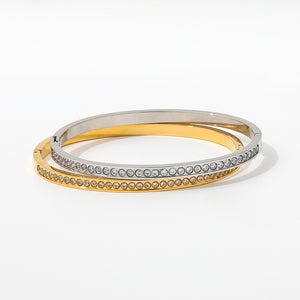
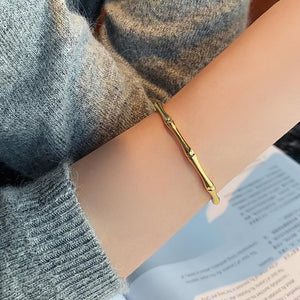
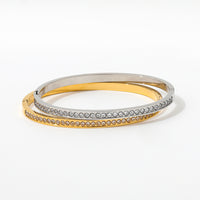
The piece they're describing → CZ Bangle Bracelet for Women, Gold or Silver Plated, CZ Stones
Personalize Yours


