


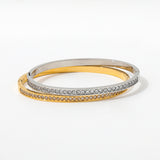
A charm bracelet is a wearable personal story. Each charm represents a memory, milestone, value, or belief. Hearts mean love. Keys mean opportunity. Anchors mean stability. Evil eye charms offer protection. Worn on the left wrist, charms are thought to absorb positive energy. Worn on the right, they project your intentions outward. As gifts, charm bracelets mark life's biggest moments — birthdays, graduations, new beginnings. A charm bracelet also makes a meaningful graduation gift — read our graduation jewelry gifts guide for more personalized picks across every budget. The bracelet grows with you. That's what makes it unlike any other jewelry.
A charm bracelet carries more meaning than most jewelry you'll ever own. Each tiny pendant is a deliberate choice — a symbol of who you are, who you love, or where you've been. The charm bracelet meaning comes from thousands of years of human history, from Egyptian pharaohs to Victorian queens to the woman building her first collection today. This guide covers what charm bracelets symbolize, what each popular charm means, which wrist to wear one on, and what it means to give one as a gift.
What Does a Charm Bracelet Symbolize?
At its core, a charm bracelet symbolizes a life told through objects. Unlike a ring or a pendant, it's never finished. You add charms as you grow. A charm bracelet is sometimes called "living jewelry" for exactly this reason.
The oldest charm bracelets were amulets. Ancient Egyptians, Babylonians, and Mesopotamians wore protective charms to ward off evil spirits and guide them safely into the afterlife. These weren't decorative. They were functional talismans — each symbol chosen with care.
Queen Victoria popularized charm bracelets in the Victorian era as sentimental keepsakes. She wore bracelets hung with lockets, portraits, and miniature trinkets that marked moments in her personal life. Her influence spread across Europe, and charm bracelets became a way for women to carry their stories on their wrists.
During World War II, American soldiers bought handmade charms from local artisans in occupied countries and brought them home for their wives and daughters. These became souvenirs of survival, love across distance, and homecoming.
Today, a charm bracelet still serves the same purpose: it holds the things that matter most to you in a form you can touch.

What Each Charm Symbolizes: A Complete Glossary
The meaning of a charm bracelet depends entirely on the charms you choose. Here are the most common symbols and what they represent.
| Charm | Primary Meaning | Common Occasion |
|---|---|---|
| Heart | Love, affection, emotional connection | Valentine's Day, anniversary, friendship |
| Key | Opportunity, new beginnings, unlocking potential | Graduation, new home, new job |
| Anchor | Stability, groundedness, strength | Recovery, resilience, military tribute |
| Butterfly | Transformation, growth, rebirth | New chapter, recovery, coming-of-age |
| Evil Eye | Protection from negative energy, spiritual shield | Any time; widely worn daily |
| Horseshoe | Good luck, fortune, protection | New ventures, weddings, travel |
| Four-Leaf Clover | Rare fortune; each leaf = faith, hope, love, luck | St. Patrick's Day, luck gift |
| Infinity | Endless connection, eternal love, limitless possibility | Anniversary, best friend gift |
| Star | Guidance, ambition, reaching higher | Graduation, achievement |
| Moon | Intuition, femininity, cycles of change | Spiritual gifts, moon phase connection |
| Cross | Faith, Christian belief, spiritual protection | First Communion, Confirmation, baptism |
| Hamsa / Hand of Fatima | Protection, blessings, warding off the evil eye | Jewish, Islamic, and general spiritual tradition |
| Wishbone | Good luck, wishes granted, hope | New Year, birthday, before an exam |
| Birthstone | Personal identity, birth month, zodiac connection | Birthday, mother's gift |
| Lotus | Rising above adversity, purity, spiritual awakening | Yoga community, recovery journey |
| Feather | Freedom, lightness, spiritual connection | Memorial, remembrance of a loved one |
The Spiritual Meaning of a Charm Bracelet
Charm bracelets have carried spiritual weight since their earliest use. In ancient Egypt, charms were placed in tombs to protect the soul in the afterlife. In Mesopotamia, amulets bearing animal symbols were worn to invoke the strength or cunning of those creatures.
Today, the spiritual meaning of a charm bracelet depends on the symbols you choose. An evil eye charm (known as the Mati in Greek tradition, Nazar in Turkish culture) deflects jealousy and harmful intentions. A Hamsa hand invites blessings and blocks negative energy. A lotus reminds the wearer to rise above difficulty. A cross or Om symbol grounds the wearer in their faith.
Some wearers treat their charm bracelets as a daily intention-setting ritual — choosing which bracelet to wear based on what energy they want to carry into the day. This mirrors the ancient amulet tradition: deliberate, personal, protective.
Which Wrist Should You Wear a Charm Bracelet On?
There's no universal rule, but many people choose based on intention.
The left wrist is called the receiving side. Worn on the left, a charm bracelet is thought to draw in energy, protection, and luck. It's the dominant wrist for protective charms like the evil eye or Hamsa.
The right wrist is the projecting side. Worn on the right, a charm bracelet channels your energy outward — into your work, your relationships, your goals. Intention charms like a star or key often feel at home on the right.
Practically speaking, most people wear bracelets on their non-dominant hand. If you're right-handed, the left wrist is more comfortable and keeps the bracelet away from your writing hand. For more on wrist placement and what it means, see our guide to anklet meaning and symbolism — many of the same directional principles apply.

Charm Bracelets as a Wearable Personal Timeline
One thing no competitor fully explains: a charm bracelet isn't meant to be complete the day you buy it. It's meant to grow.
You add a charm when you graduate. Another when you move to a new city. One for the birth of a child, one for a loss you survived, one for a country you visited. Over decades, a charm bracelet becomes a physical autobiography — a record of who you were and who you became.
This is the deepest charm bracelet meaning: it's not about any single charm. It's about the accumulation. The bracelet in your 50s tells a richer story than the one in your 20s. That's something no other type of jewelry does.
You can explore all bracelet styles — from bangles to link chains to the charm format — in our full guide to types of bracelets.
What Does It Mean to Give Someone a Charm Bracelet?
Giving a charm bracelet is a more intentional act than most gifts. You're not just choosing an object — you're choosing symbols that represent what you see in that person.
A heart says: you are loved. A key says: your future is full of possibility. A butterfly says: I've watched you grow. A birthstone charm says: I see you specifically — not just anyone, you.
Charm bracelets work as gifts for nearly every major milestone: birthdays, Sweet 16s, high school graduation, college send-off, engagement, wedding, new baby, Mother's Day, a recovery milestone, or simply "I wanted you to have something that lasts."
The best approach: start with one or two meaningful charms, and leave room on the bracelet intentionally. You're giving the wearer an open canvas — room for the charms they'll choose themselves as their story unfolds.
Cultural Charm Traditions Around the World
Charm symbolism varies across cultures. What brings luck in one tradition may carry a completely different meaning elsewhere.
Chinese tradition: The Pi Xiu (a mythical winged lion) is a lucky charm believed to attract wealth and ward off bad fortune. Gold and jade charms are especially auspicious.
Italian tradition: The cornetto — a twisted horn-shaped charm — protects against the evil eye (il malocchio). It's one of the oldest Italian amulet forms, dating back to ancient Mediterranean cultures.
Celtic tradition: The Celtic knot symbolizes eternal connection and the unbroken cycle of life. The Claddagh (two hands holding a crowned heart) represents love, loyalty, and friendship.
Turkish and Greek tradition: The Nazar or Mati (the evil eye bead) is one of the most widely worn protective amulets in the world. The blue-and-white eye symbol appears in jewelry across the Mediterranean and Middle East.
Understanding the cultural origin of a charm adds depth to its meaning — especially when choosing a charm for someone from a specific heritage.
Are Charm Bracelets Still Popular?
Yes — and the format has evolved significantly. The modern charm bracelet takes several forms:
- Link/chain style — traditional lobster clasp with dangling charms; the most flexible format for building collections over time
- Bangle charm — a rigid circle with fixed or removable charms; cleaner look, less movement
- Permanent/welded charm bracelet — a recent trend in fine jewelry studios; the bracelet is welded shut on the wrist and worn indefinitely
- Beaded charm bracelet — gemstone or enamel beads combined with symbolic charms on an elastic or wire base
According to data from the Jewelers of America, personalized jewelry — including charm bracelets — has consistently ranked among the top gift purchases for over a decade. (Jewelers of America — Industry Research) Ready to shop the format? See our guide to the best charm bracelets for women for what to check before buying.
AJLuxe bracelets are crafted in 18K gold-plated 925 sterling silver — the same hypoallergenic base metal used in fine jewelry, at a price between $25 and $60. Whether you're starting your first charm bracelet or adding to an existing collection, browse styles designed to hold meaning and last through daily wear.
Browse AJLuxe Bracelets →
Frequently Asked Questions
Q: What does a charm bracelet symbolize?
A charm bracelet symbolizes a personal story worn on the wrist. Each charm is chosen to represent a memory, a value, a relationship, or a milestone. Collectively, the charms on a bracelet form a visual autobiography — a record of the wearer's life. The bracelet itself symbolizes continuity: it grows and changes as the wearer does.
Q: What does it mean when someone gives you a charm bracelet?
When someone gives you a charm bracelet, they're communicating something specific about how they see you. The charms they choose carry deliberate meaning — a key for your potential, a heart for their love, a butterfly for your growth. It's one of the most intentional gift formats in jewelry. A charm bracelet given with room for more charms is also an invitation: the giver is saying, "your story isn't finished yet."
Q: What do different charms on a bracelet mean?
Each charm carries its own symbolism. Hearts represent love. Keys symbolize opportunity and new beginnings. Anchors mean stability and strength. Butterflies represent transformation. Evil eye charms offer spiritual protection. Horseshoes and four-leaf clovers attract luck. Birthstone charms represent personal identity. The full meaning of any charm bracelet comes from the combination of symbols the wearer assembles over time.
Q: Which wrist should you wear a charm bracelet on?
There's no single correct answer, but many people follow the energetic principle that the left wrist is receptive (drawing in luck, protection, and positive energy) while the right wrist is projective (sending out intentions and effort). Practically, most people wear bracelets on their non-dominant hand for comfort. Wear yours on whichever wrist feels right — intention matters more than the specific side.
Q: What is the spiritual meaning of a charm bracelet?
Spiritually, a charm bracelet descends from ancient protective amulets. The earliest versions were worn in Egypt, Babylon, and Mesopotamia to shield the wearer from evil forces and guide the soul after death. Today, spiritual charm bracelets often feature the evil eye (protection against jealousy), the Hamsa hand (blessings and deflection of negative energy), the lotus (rising above suffering), the cross or Om (faith and grounding), and birthstone gems linked to healing properties. Another protective wrist piece rooted in Jewish mysticism is the kabbalah bracelet, traditionally worn as a red string to ward off the evil eye. The spiritual meaning is in the intention behind each charm.
Q: Are charm bracelets good luck?
Many charm bracelets are specifically designed to attract luck. The horseshoe charm (with ends pointing up to "hold" the luck), the four-leaf clover, the wishbone, and the Chinese Pi Xiu are all traditional good-luck symbols with centuries of use behind them. Whether you believe in literal luck or simply in the psychology of positive intention, wearing a lucky charm can serve as a daily reminder to stay optimistic and open to opportunity.
Q: What does a heart charm on a bracelet mean?
A heart charm is the most universal symbol of love and emotional connection. On a charm bracelet, it most often represents a romantic relationship, a close friendship, or love for a family member. A locked heart charm takes this further — it represents a love that's sealed, protected, and exclusive. Two halves of a heart worn by two people (a common "best friend" gift format) symbolize a bond that only makes sense when the two are together.
Q: What is the history of charm bracelets?
Charm bracelets date back at least 75,000 years — archaeologists have found personal adornment shells in African sites that predate recorded civilization. In ancient Egypt, charms were crafted from gold, bone, and semiprecious stones to protect the wearer in life and guide them in death. The modern charm bracelet was popularized by Queen Victoria in the 19th century, when she wore gold link bracelets hung with family lockets and portrait miniatures. After World War II, American soldiers brought home artisan charms from Europe and Asia, cementing the charm bracelet as a mass-market tradition.
Q: What does a key charm on a bracelet mean?
A key charm symbolizes opportunity, access, and new beginnings. The phrase "key to my heart" makes the romantic reading obvious, but a key charm is also popular for graduation (unlocking the future), a first home (literally receiving keys), or a new job. In some traditions, gifting a key-shaped charm to someone means you trust them with something precious — your secrets, your love, or your future plans.
Q: What are the most popular charm bracelet symbols and their meanings?
The most popular charm symbols are the heart (love), key (opportunity), anchor (stability), butterfly (transformation), evil eye (protection), star (guidance), moon (intuition), infinity (endless connection), horseshoe (luck), and birthstone (personal identity). These ten charms appear across virtually every charm bracelet collection worldwide because they map directly to the experiences and values most people want to commemorate: love, growth, protection, ambition, and luck.
Q: Can you wear a charm bracelet every day?
Yes, and most people do. A well-made charm bracelet in sterling silver or gold-plated 925 silver handles daily wear well. Avoid wearing it in chlorine pools, saltwater, or while applying lotion and perfume, as these degrade the metal finish over time. If your bracelet has gemstone charms, remove it before heavy activity to protect the stones. Wipe it clean with a soft cloth weekly to maintain its shine.
Q: How many charms should a charm bracelet have?
There's no rule, but most bracelet wearers start with two to five charms and add over time. A bracelet that's too full loses visual impact — the individual charms compete and none stands out. Aim for enough breathing room that each charm can move freely and catch the light independently. On a standard 7-inch bracelet, seven to twelve charms typically creates a full but not crowded look. Start with what matters most to you right now, and add as life gives you more to mark.
Q: What does an evil eye charm on a bracelet mean?
The evil eye charm is one of the oldest protective symbols in human history, with documented use across Turkey, Greece, Egypt, and the Middle East for over 5,000 years. It deflects the "evil eye" — the harm thought to come from jealousy, envy, or malicious staring. Wearing an evil eye charm is a way of creating an energetic shield. The blue-and-white eye design is most common, but hamsa-hand versions serve the same protective function. Today it's worn across cultures as both a spiritual shield and a fashion symbol.
Q: Are charm bracelets still popular?
Charm bracelets are more popular than ever. The appeal hasn't changed: people want jewelry that tells their story. In a world of mass production, a charm bracelet is inherently personal — no two are alike.
Q: What does a charm bracelet mean as a gift?
As a gift, a charm bracelet carries a clear message: "I put thought into this." The giver has chosen symbols that reflect what they see in the recipient — their personality, their achievements, their future. It's a gift that invites ongoing participation: the recipient adds their own charms over time, making the bracelet truly theirs. For milestone events — graduation, a 16th birthday, an engagement, a new baby — a charm bracelet is a gift that grows with the occasion and beyond it.
Final Thoughts
A charm bracelet's meaning isn't fixed in a single symbol — it lives in the collection. Every charm you add is a decision: this moment mattered, this person mattered, this part of me is worth remembering. From the protective amulets of ancient Egypt to the personalized link bracelets worn today, the core idea hasn't changed in thousands of years. You carry what you love. You mark what you've lived through. You wear your story where people can see it. If you're ready to start that story — or add the next chapter — explore the AJLuxe bracelet collection for pieces built to hold meaning and last through every chapter ahead.
- What Does Wearing a Bracelet Mean? Complete Symbolism Guide
- Bracelet on Left Wrist Meaning: Symbolism & Traditions
- Bracelet on Right Wrist Meaning: What It Symbolizes
- Which Wrist to Wear a Bracelet On: Left vs Right Guide
- Friendship Bracelet Meaning: What It Symbolizes
- What Does a Tennis Bracelet Mean? History & Symbolism
We’re launching engraved sentimental charm bracelets for the people you love — daughter, wife, mom, best friend & more. Join the waitlist for 15% off launch day + early access.
Reserve yours →Written by the AJLuxe team — specialists in personalized 925 sterling silver jewelry. Last updated: June 2026.
All third-party trademarks, brand names and product names are the property of their respective owners. AJLuxe is not affiliated with, endorsed by, sponsored by, or otherwise connected to any third-party brand referenced in this article. Brand names are used solely for accurate comparative reference, and material descriptions reflect each brand's own published product specifications at the time of writing.
You Might Also Like
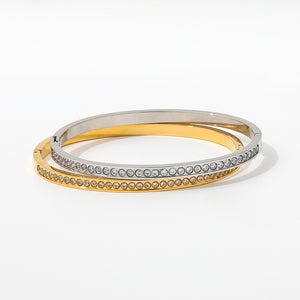
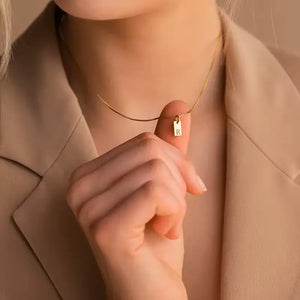
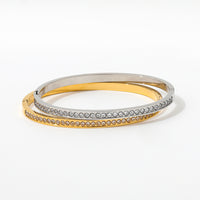
The piece they're describing → CZ Bangle Bracelet for Women, Gold or Silver Plated, CZ Stones
Personalize Yours


