


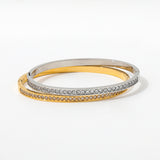
- Right-handed? Default to the left wrist — it's your non-dominant hand, so the bracelet stays protected.
- Left-handed? Default to the right wrist for the same reason.
- Feng shui / crystal bracelet? Wear it on the left — the "receiving" side for energy and luck.
- Protective or cleansing crystal? Wear it on the right — the "projecting" side.
- Wearing a watch? Put the bracelet on the opposite wrist to avoid scratching.
- No rules? Wear it wherever it feels right. There is no universal law.
Deciding which wrist to wear a bracelet on sounds simple — but the answer shifts depending on your dominant hand, your intent, and the type of bracelet you're wearing. A tennis bracelet follows different logic than a crystal healing bracelet. A feng shui Pixiu bracelet has its own specific rule. And if you're left-handed, the usual advice works against you. This guide covers every scenario so you can make the call that fits your life, not a generic default.
The Practical Case: Non-Dominant Wrist First
The most common recommendation is to wear bracelets on your non-dominant wrist. For most people, that's the left wrist.
The reason is straightforward: your dominant hand works harder. It types, lifts, grips, and gestures all day. A bracelet on that wrist takes more impact, catches on things, and wears down faster.
Wearing on the non-dominant wrist protects the piece and keeps it comfortable.
This logic applies most strongly to fine jewelry — gold-plated chains, tennis bracelets, and delicate charm bracelets all benefit from less daily friction.
Left-handed wearers take note: your non-dominant wrist is the right. The standard "left wrist = correct" advice assumes everyone is right-handed. If you're left-handed, the right wrist is your safer, more protective choice.

Left Wrist vs. Right Wrist: What Each Side Means
Beyond practicality, both wrists carry symbolic meaning across multiple traditions. These aren't arbitrary — they reflect centuries of consistent belief across cultures.
| Wrist | Symbolic Meaning | Best For |
|---|---|---|
| Left | Receiving, absorbing, yin, lunar, inner world | Attracting luck, love, healing, wealth energy |
| Right | Projecting, giving, yang, solar, outer world | Releasing negativity, taking action, outward confidence |
The left side is connected to the heart in both Western and Eastern traditions. It's associated with receiving energy from the world around you — abundance, protection, healing.
The right side is about what you put out. It's tied to action, willpower, and external expression. Wearing a bracelet on the right wrist signals outward energy — confidence, decisiveness, strength.
Spiritual and Cultural Traditions by System
Each tradition has its own specific rules. Here's what each one says.
Feng Shui
Feng shui follows a clear doctrine: left hand in, right hand out. You receive energy (wealth, luck, protection) through the left and release stagnant or negative energy through the right.
The Pixiu bracelet — a popular feng shui wealth piece — must be worn on the left wrist. Wearing it on the right is said to release the wealth energy outward rather than drawing it to you. The Pixiu's head should face outward (away from your body) on the left wrist.
Kabbalah Red String
The Kabbalah red string bracelet has one fixed rule: always the left wrist. In Kabbalistic teaching, the left wrist is the receiving side of the body — specifically the receiving channel for blessings and protection. The red string (traditionally from Rachel's tomb in Israel) is tied on the left wrist by someone who loves you, with seven knots. Wearing it on the right wrist breaks the practice's intended purpose.
Ayurveda and Chakra Energy
Ayurvedic medicine maps two energy channels (nadis) to each side of the body. The Ida nadi runs on the left and governs lunar, cooling, and receptive energy. The Pingala nadi runs on the right and governs solar, active, and outward energy.
This mirrors the feng shui left-right logic. Wear healing or calming bracelets on the left to amplify receptive energy. Wear energizing or grounding bracelets on the right to reinforce outward action.
The heart meridian also runs through the left arm in traditional Chinese medicine — another reason the left wrist is favored for emotional healing pieces.
Indian Cultural Tradition
In many parts of India, bangles hold deep cultural significance. Married women often wear bangles on the right wrist, though this varies widely by region and community. Glass bangles are sometimes worn on both wrists for balance. There is no single rule — local customs within India differ significantly by state and religion.
Chinese Jade Tradition
Jade bracelets in Chinese tradition are traditionally worn on the left wrist. The left side is considered the body's receiving channel, and jade is believed to absorb the wearer's energy while providing protection. Wearing jade on the left allows it to "bond" with the wearer over time.
Crystal Bracelet: Which Wrist Depends on the Crystal
Crystal bracelets aren't one-size-fits-all. The direction of the crystal's energy determines the best placement.
| Crystal | Recommended Wrist | Why |
|---|---|---|
| Rose Quartz | Left | Draws love and emotional healing inward |
| Citrine | Left | Attracts abundance and positivity |
| Amethyst | Left | Calming, absorbs stress and anxiety |
| Black Obsidian / Tourmaline | Right | Projects protective energy outward, repels negativity |
| Clear Quartz | Either | Amplifies energy in both directions; wear based on intent |
| Tiger's Eye | Right | Enhances focus, courage, outward action |
The general rule: crystals that absorb or attract energy belong on the left. Crystals that protect, clear, or project belong on the right.

Bracelet Type: Which Wrist Works Best
The type of bracelet you're wearing should also factor into your decision.
Tennis Bracelet
Wear a tennis bracelet on your non-dominant wrist. Tennis bracelets are delicate — continuous stone settings linked by thin metal. They're vulnerable to snags and impacts. Keeping them on the non-dominant wrist reduces the chance of damage. Learn more about the different types of bracelets and how each one is constructed.
Charm Bracelet
Charm bracelets are personal, so either wrist works. Most people wear them on the non-dominant wrist for comfort and to keep the charms from catching on things. The left wrist is common if the bracelet carries sentimental or protective meaning.
Copper and Magnetic Therapy Bracelets
Copper bracelets marketed for joint and circulation benefits are traditionally worn on the left wrist. Proponents claim the left wrist allows the copper's properties to enter the body's circulatory system more directly (following the left = receiving principle). Note: clinical evidence for copper bracelet health claims is limited.
Beaded Bracelet
Beaded bracelets with spiritual significance (like a Pixiu or mala bracelet) follow the spiritual system they belong to — usually the left wrist. Decorative beaded bracelets can go on either wrist based on comfort and style.
Gold or Silver Chain Bracelet
Fine metal bracelets like 18K gold-plated or sterling silver designs are best on the non-dominant wrist for protection. If you're stacking them with other pieces, place the most delicate bracelet on the wrist that moves less throughout your day.
Bracelet and Watch: How to Combine Them
The most common style question after "which wrist" is what to do when you already wear a watch.
The default answer: put the bracelet on the opposite wrist from your watch. This avoids metal-on-metal scratching and gives each piece visual space to be seen.
That said, watch-and-bracelet stacking on the same wrist is a legitimate style choice. If you go this route:
- Place the watch on the wrist first, then slide the bracelet above or below it.
- Use softer materials (beads, fabric, leather) next to a metal watch case to avoid scratching.
- Limit the stack to one or two bracelets alongside a watch — more than that crowds the wrist and looks cluttered.
- Match or intentionally contrast metals (gold watch + gold bracelet for cohesion; silver watch + gold bracelet for contrast).
Wearing Bracelets on Both Wrists
There's no rule against wearing bracelets on both wrists. It's a strong style choice when done intentionally.
A few guidelines that work in practice:
- Keep both wrists visually balanced — similar weight, not necessarily identical pieces.
- Odd numbers stack better than even. Three bracelets on one wrist looks more natural than two or four.
- If you wear a statement cuff or tennis bracelet on one wrist, balance the other with a single delicate chain or beaded piece.
- From a spiritual standpoint, you can intentionally assign one wrist to attraction (left) and the other to projection (right) and choose pieces accordingly.
The same logic applies to anklets if you also layer jewelry lower on the body — see our guide to anklet meaning and symbolism for how placement carries meaning there too.
Quick Decision Guide: Which Wrist to Choose
| Your Situation | Recommended Wrist |
|---|---|
| Right-handed, no other considerations | Left (non-dominant) |
| Left-handed, no other considerations | Right (non-dominant) |
| Feng shui wealth bracelet (Pixiu) | Left |
| Kabbalah red string | Left (fixed rule) |
| Crystal for attracting love/healing | Left |
| Crystal for protection/grounding | Right |
| Already wearing a watch | Opposite wrist from watch |
| Tennis or delicate fine jewelry | Non-dominant wrist |
| Good luck bracelet | Left (to attract luck) |
| No preference, just looks good | Either — go with comfort |
Looking for a bracelet worth wearing on any wrist? AJLuxe makes 18K gold-plated 925 sterling silver bracelets that are built to last — hypoallergenic, tarnish-resistant, and priced between $25 and $60. Whether you're stacking, gifting, or buying your first fine jewelry piece, browse the full bracelet collection and find the one that fits.
Choosing a closure? See types of bracelet clasps.
Frequently Asked Questions
Q: Which wrist should a woman wear a bracelet on?
There's no single rule for women. The most practical choice is the non-dominant wrist — for right-handed women, that's the left wrist — because it protects the jewelry from daily wear. Spiritually, the left wrist is the traditional choice for attracting love, luck, and positive energy. That said, either wrist is completely valid based on comfort and personal preference.
Q: Which wrist should a man wear a bracelet on?
Men follow the same basic logic: the non-dominant wrist is the practical default. For most right-handed men, that means the left wrist. Symbolically, the left wrist is also associated with strength and receiving energy in many traditions. There's no social rule that restricts men to one wrist — wear it wherever it looks and feels right.
Q: Is there a correct wrist to wear a bracelet on?
No universal correct wrist exists. The non-dominant wrist is the most practical choice because it protects the piece from heavy use. Specific spiritual systems — feng shui, Kabbalah, crystal healing — each have their own preferred wrist based on the bracelet's purpose. Outside of those systems, personal comfort is the only rule that matters.
Q: What does wearing a bracelet on the left wrist mean?
The left wrist is traditionally associated with receiving energy — luck, love, healing, and abundance. In feng shui, the left is the "in" channel for positive energy. In Kabbalah, it's where protective red strings are tied. In Ayurveda, the left side governs the body's lunar, receptive energy channel. Many people also wear bracelets on the left simply because it's their non-dominant hand and more comfortable.
Q: What does wearing a bracelet on the right wrist mean?
The right wrist represents projecting energy outward — confidence, action, protection of others, and outward expression. In feng shui, the right is the "out" channel, used to release negativity or share energy with the world. Protective crystals like black obsidian are often worn on the right to push away harmful energy. Culturally, some Indian traditions also associate the right wrist with auspiciousness.
Q: Should I wear my bracelet on the same wrist as my watch?
You can, but wearing the bracelet on the opposite wrist from your watch is easier and safer. Opposite wrists prevent metal-on-metal contact that scratches both pieces. If you prefer to stack a bracelet with your watch, use softer materials (beads, leather, or fabric) next to the watch case, and limit the stack to one or two pieces to avoid a cluttered look.
Q: Which hand should you wear a bracelet on for good luck?
Wear a good luck bracelet on the left wrist. In feng shui and most spiritual traditions, the left wrist is the body's receiving side — the channel through which you draw in luck, wealth, and positive energy. This applies to Pixiu feng shui bracelets, jade bracelets, and most crystal pieces intended to attract positive outcomes.
Q: Which wrist do you wear a crystal bracelet on?
It depends on the crystal's purpose. Crystals meant to attract or absorb energy (rose quartz, amethyst, citrine) belong on the left wrist — the receiving side. Crystals meant to project protection or clear negativity (black obsidian, black tourmaline, tiger's eye) belong on the right wrist — the projecting side. If you're unsure, start with the left wrist as your default.
Q: Which hand do you wear a feng shui bracelet on?
Feng shui bracelets, especially Pixiu wealth bracelets, are worn on the left wrist. Feng shui doctrine holds that the left hand is the "in" hand — it draws energy, wealth, and luck toward you. Wearing a feng shui bracelet on the right would project that energy outward, away from you. The Pixiu's head should face away from your body (toward your fingertips) on the left wrist.
Q: Can you wear bracelets on both wrists?
Yes — wearing bracelets on both wrists is a legitimate and stylish choice. Keep the visual weight balanced between both sides. Odd-number stacks (three bracelets on one wrist) tend to look more natural than even numbers. You can also use the left-right energy logic intentionally: wear attracting pieces on the left and protective pieces on the right.
Q: Which hand should I wear a charm bracelet on?
A charm bracelet can go on either wrist. Most people choose the non-dominant wrist so the charms don't catch on things during daily tasks. If your charm bracelet carries personal or sentimental meaning, the left wrist is also a meaningful choice — symbolically, the left side is associated with heart-centered energy and memory.
Q: Which wrist should a left-handed person wear a bracelet on?
A left-handed person's non-dominant wrist is the right wrist. For practical protection of the jewelry, the right wrist is the better choice for left-handed wearers. The standard advice to "wear it on the left" assumes right-handedness and doesn't apply here. If you follow a spiritual system, apply the same left-receiving / right-projecting logic regardless of your dominant hand.
Q: Does it matter which hand you wear a bracelet on?
For everyday style purposes, it doesn't matter — wear it where it's comfortable and looks good to you. For jewelry protection, the non-dominant hand matters because it takes less impact. For spiritual or cultural purposes, the specific system you follow dictates which wrist to use. Outside of those contexts, there's no wrong answer.
Q: Which wrist do you wear a tennis bracelet on?
Wear a tennis bracelet on your non-dominant wrist. Tennis bracelets use a continuous line of stones set in a thin metal chain, making them more vulnerable to snags and impacts than solid cuffs. The non-dominant wrist moves less aggressively throughout the day, which reduces the risk of breaking the setting or losing a stone.
Q: Which hand to wear a bracelet on if you wear a watch?
If you wear a watch, put the bracelet on the opposite wrist. This is the simplest way to prevent scratching and lets both pieces stand out visually. Most watch-wearers use the left wrist for the watch (since most watches are designed for left-wrist wear) and add bracelets to the right. If you prefer stacking both on the same wrist, use softer bracelet materials and limit the stack to two pieces maximum.
Shopping for a wife rather than for yourself? Our bracelet for wife guide covers the style decision, wrist sizing, and our overall gift pick.
Final Thoughts
There's no single correct wrist for every bracelet and every person. The right answer depends on your dominant hand, your intentions, and the bracelet itself. Start with the practical default — non-dominant wrist for fine jewelry — and layer in any spiritual or cultural logic that applies to the specific piece you're wearing. Whether you wear one delicate chain on your left wrist or stack both wrists with intention, the bracelet means more when you put thought into where it lives.
- What Does Wearing a Bracelet Mean? Complete Symbolism Guide
- Bracelet on Left Wrist Meaning: Symbolism & Traditions
- Bracelet on Right Wrist Meaning: What It Symbolizes
- Friendship Bracelet Meaning: What It Symbolizes
- Charm Bracelet Meaning: What Each Charm Symbolizes
- What Does a Tennis Bracelet Mean? History & Symbolism
Written by the AJLuxe team — specialists in personalized 925 sterling silver jewelry. Last updated: July 2026.
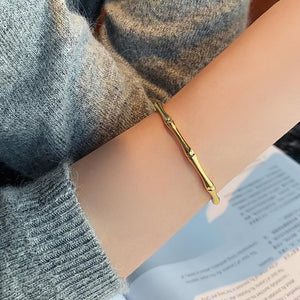
Shopping for a bamboo-textured bangle?
See our full bamboo bracelet buying guide -- real bamboo wood vs. the gold bangle style, honest price ranges, and how to keep the plating from wearing thin.
All third-party trademarks, brand names and product names are the property of their respective owners. AJLuxe is not affiliated with, endorsed by, sponsored by, or otherwise connected to any third-party brand referenced in this article. Brand names are used solely for accurate comparative reference, and material descriptions reflect each brand's own published product specifications at the time of writing.
You Might Also Like
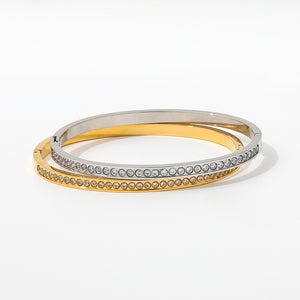
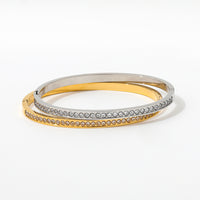
The piece they're describing → CZ Bangle Bracelet for Women, Gold or Silver Plated, CZ Stones
Personalize Yours


