


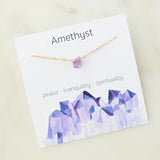
• Stone type: Banded chalcedony (microcrystalline quartz), SiO₂
• Mohs hardness: 6.5–7 — durable enough for daily jewelry wear
• Primary meaning: Protection, strength, mental discipline, grounding
• Chakra: Root (primary) · Solar Plexus (secondary) · Third Eye (tertiary)
• Zodiac: Leo · Capricorn
• Key fact: Most "black onyx" sold today is dyed chalcedony — this is ancient practice, not fraud
• Best for: Anxiety, decision-making, focus, shielding from negativity
Walk into any crystal shop and you'll find black onyx everywhere. It's one of the most universally worn protection stones on the planet — and for good reason. Cultures from ancient Egypt to Rome to the medieval Islamic world all turned to onyx in moments when they needed courage, clarity, and an invisible shield against the world. This guide covers everything: the real science, the 5,000-year history, the honest truth about dyeing, and how to use onyx in jewelry and practice today.
What Is Onyx? Science, Structure, and Where It Comes From
Onyx is a variety of chalcedony — a microcrystalline form of silica (SiO₂) made up of interwoven quartz and moganite crystals. What makes onyx distinct from regular agate is its banding: onyx bands are parallel and flat, while agate bands curve and swirl. This parallel layering is what makes onyx ideal for cameos — carvers can cut through the layers to reveal different colors in precise relief.
Here are the key physical specifications:
| Property | Value |
|---|---|
| Chemical formula | SiO₂ (silicon dioxide) |
| Crystal system | Trigonal (quartz) / Monoclinic (moganite) |
| Mohs hardness | 6.5–7 |
| Specific gravity | 2.55–2.70 |
| Refractive index | 1.530–1.543 |
| Luster | Vitreous to silky |
| Streak | White |
| Fracture | Conchoidal (smooth, shell-like) |
| Water safe? | Yes — not water soluble; brief contact is fine |
Onyx is found across the globe: Mexico, Brazil, Uruguay, Argentina, Pakistan, India, Yemen, Madagascar, Australia, and several U.S. states all produce it. The largest black onyx specimen on record weighs approximately 130 pounds and is held at the National Museum of Brazil in Rio de Janeiro.
Where does the name "onyx" come from?
The name comes from the ancient Greek word ὄνυξ (onux), meaning claw or fingernail. The connection to fingernails wasn't arbitrary. One Roman legend holds that Cupid cut the divine fingernails of Venus while she slept on the banks of the Indus River. The clippings fell into the water and, because nothing divine can ever truly die, the Fates transformed them into stone — onyx. The semi-translucent, slightly flesh-toned layers in some onyx specimens do resemble a fingernail's layers.
The Dyeing Truth: Is Black Onyx Real?
Here's something most onyx articles skip: almost all black onyx sold today is artificially colored chalcedony. This sounds alarming, but it isn't. The dyeing of onyx is one of the oldest documented gemstone treatments in history — and it doesn't make the stone fake.
The process works because chalcedony is naturally porous. Gemstone treaters soak the stone in a sugar solution, then treat it with sulfuric or hydrochloric acid, which carbonizes the sugar trapped inside the pores. The result is a deep, permanent, coal-black color locked into the stone's structure. This technique was documented by Pliny the Elder in 77 AD in his Naturalis Historia and has been used continuously for over 2,000 years.
Natural black onyx — stone that formed jet-black without any treatment — does exist, but it's genuinely rare. The vast majority of specimens found in nature are grey, white, or banded. The black stones filling every jewelry counter and crystal shop are treated chalcedony, and that's industry-standard, fully accepted, and completely normal. What matters is that a reputable seller discloses the treatment — and most don't bother, because it's considered standard practice in the trade.
The practical takeaway: Treated black onyx is just as durable and beautiful as untreated. Avoid harsh chemicals and prolonged heat, which can affect the dye over time.
Onyx Meaning and Symbolism
Black onyx has accumulated meaning across thousands of years and dozens of cultures. Its core themes are remarkably consistent: protection from external forces, inner strength under pressure, and the mental clarity to make hard decisions without fear.
| Meaning | What it represents |
|---|---|
| Protection | Shields against negative energy, psychic attack, and draining relationships |
| Inner strength | Builds resilience, willpower, and the stamina to endure difficult periods |
| Grounding | Connects you to the present moment; anchors scattered energy |
| Mental discipline | Supports focused thinking, decision-making, and breaking bad habits |
| Courage | Historically worn by warriors before battle; builds fearlessness |
| Self-mastery | Encourages control over emotions and impulses; reduces reactive behavior |
If amethyst is the stone of calm and rose quartz the stone of love, onyx is the stone of resolve. It doesn't soften or soothe — it hardens what needs to be hard. People drawn to onyx tend to be going through transitions that require backbone: ending a relationship, changing a career, setting boundaries they've avoided for years.
Onyx Through History: 5,000 Years of Use
Few gemstones have a documented history as long as onyx. Here are the milestones that shaped its meaning:
Ancient Egypt (c. 2890–2500 BCE)
The earliest confirmed use of onyx dates to Egypt's Second Dynasty, around 2890 BCE — making it one of the oldest ornamental gemstones on record. Egyptians carved it into bowls, amulets, and inlay work. Its deep black color connected it to Anubis, the god of the dead and protector of souls in transit.
Ancient Rome: Cameos and the Battlefield
Roman craftsmen elevated onyx to an art form. The stone's parallel bands — typically alternating black and white — made it perfect for cameo carving, where artists would cut through layers to leave a pale portrait raised against a dark background. The most spectacular example surviving today is the Gemma Augustea, a two-layered onyx cameo measuring 19 × 23 cm, carved between 9 and 12 AD to commemorate Emperor Augustus. It now sits in the Kunsthistorisches Museum in Vienna.
Roman soldiers wore onyx amulets engraved with Mars — god of war — believing the stone channeled the god's courage directly into the wearer. Pliny the Elder noted its use both as a decorative material and as a protective talisman in his encyclopaedic Naturalis Historia.
Biblical References
Onyx appears multiple times in the Hebrew Bible. In Genesis 2:12, it's listed as one of the precious materials found in the land of Havilah near the Garden of Eden. In Exodus 28:9–12, God instructs Moses to engrave the names of the twelve tribes of Israel on two onyx stones and set them in the shoulder pieces of the High Priest's ephod (ritual garment). In 1 Chronicles 29:2, King David lists onyx among the precious materials he personally contributed to prepare for the Temple of Solomon.
Renaissance Europe and the Islamic World
Medieval and Renaissance scholars believed onyx bestowed eloquence on speakers — worn around the neck, it was thought to sharpen the tongue in debate and negotiation. In Islamic tradition, the Prophet Muhammad reportedly wore a carnelian (sometimes described as onyx) ring and recommended gemstone rings to his companions.
Art Deco (1920s–1930s)
The Art Deco movement fell hard for black onyx. Its geometric precision and deep black surface paired perfectly with platinum, diamonds, and the period's love of bold contrast. Onyx appeared in brooches, watch faces, and architectural elements. In 1930, the legendary architect Mies van der Rohe installed slabs of Atlas Mountains onyx in the Villa Tugendhat in Brno (now a UNESCO World Heritage Site) — using the stone's natural translucency to create a shimmering, semi-glowing interior wall under artificial light.
Black Onyx Healing Properties
Crystal healing is not a medical practice, and onyx should never replace professional care. That said, people have worked with onyx for specific purposes for millennia — and the consistent themes across cultures are worth noting.
Emotional healing
Onyx is frequently used in shadow work — the practice of confronting emotions, memories, and patterns you'd rather avoid. It's said to help you sit with discomfort without running from it, which is why therapists and counselors who incorporate crystals often keep onyx nearby. It's also used to cut ties with draining people or situations — a stone of clean endings as much as new beginnings.
Mental benefits
People drawn to onyx for mental purposes tend to struggle with scattered attention, indecision, or anxiety. The stone's grounding energy is used to anchor the mind in the present moment. Students, writers, and professionals who need to sustain deep focus for long periods often wear onyx or keep it on their desk for this reason.
Physical associations
Traditional crystal practice associates onyx with the bones, teeth, and blood — all structural systems of the body. It's also connected to the feet and legs, which mirrors its root chakra energy: literally keeping you standing. These are folk associations, not medical claims.
Onyx and the Chakras
Onyx works primarily with three chakras, with the root chakra as its home base:
Root Chakra (Muladhara) — Primary. Located at the base of the spine, the root chakra governs your sense of safety, stability, and belonging. A blocked root chakra shows up as anxiety, financial fear, instability, and feeling unmoored. Onyx directly addresses this — its dense, dark energy anchors you to the earth and rebuilds the felt sense of being safe in your own body.
Solar Plexus Chakra (Manipura) — Secondary. The solar plexus governs personal power and self-discipline. This is where onyx's connection to willpower and decision-making lives. When the solar plexus is balanced with onyx's support, you stop second-guessing and start acting.
Third Eye Chakra (Ajna) — Tertiary. Onyx's connection to mental clarity and focused perception extends up to the third eye. Some practitioners use it specifically in meditation to cut through mental noise and achieve sharper inner vision — less distraction, more signal.

Onyx vs Obsidian: The Complete Difference
These two black stones get confused constantly — understandably, because they look nearly identical at a glance. But they're fundamentally different materials with different origins, properties, and uses.
| Feature | Black Onyx | Obsidian |
|---|---|---|
| What it is | Microcrystalline quartz (chalcedony) | Volcanic glass — no crystal structure |
| Formation | Sedimentary / hydrothermal — forms slowly in rock cavities | Igneous — lava that cooled too fast to crystallise |
| Mohs hardness | 6.5–7 | 5–5.5 |
| Banding | Parallel flat bands (defines the variety) | No banding — uniform throughout |
| Translucency | Opaque to slightly translucent at edges | Translucent to transparent in thin sections |
| Fracture | Conchoidal — smooth curves | Conchoidal — creates razor-sharp edges |
| Surface feel | Silky, slightly waxy when polished | Glassy, mirror-like when polished |
| Durability for jewelry | More durable — higher Mohs, less brittle | More brittle — chips and cracks more easily |
| Primary energy | Protection, strength, discipline | Truth-revealing, emotional cleansing, psychic protection |
| Quick test | Waxy sheen; opaque; no glassy reflection | Mirror-like gloss; slightly translucent edges |
The simple rule: if it looks like a piece of black glass, it's obsidian. If it has a waxy, matte-ish sheen and is completely opaque, it's likely onyx (or dyed chalcedony). For jewelry, onyx is the better choice — harder, tougher, and more resistant to chipping in daily wear.
Onyx Varieties: Sardonyx, Green Onyx, and White Onyx
Onyx isn't only black. The term technically describes any parallel-banded chalcedony — and that includes several distinct varieties worth knowing.
Sardonyx
Sardonyx alternates bands of reddish-brown to orange sard with black or white onyx layers. It was the most prized variety in antiquity — Roman generals favored sardonyx seals, and Augustus Caesar reportedly never removed his sardonyx ring because it brought him good fortune. Sardonyx carries the combined energies of both stones: onyx's protection and sard's courage and integrity. Search volume for "sardonyx meaning" is 480/mo — it's a specific niche, but a real one.
Green Onyx
Not technically onyx in the strict geological sense — green onyx is dyed green agate or chalcedony marketed under the onyx name. It's associated with the heart chakra, emotional balance, and new growth. Used frequently in Ayurvedic jewelry traditions.
White Onyx (Alabaster Onyx)
White or cream-colored onyx with subtle banding is sometimes called alabaster onyx (though true alabaster is a different mineral). Its energy is gentler than black onyx — associated with purity, clarity, and new beginnings. Popular in architecture and home decor for its luminous quality when backlit.
Onyx Zodiac and Birthstone Connections
Onyx is the traditional birthstone for Leo (July 23 – August 22). The connection makes intuitive sense: Leo is ruled by the sun but governed by a fixed-sign stubbornness that can tip into ego. Onyx grounds Leo's fire, adds discipline to their natural leadership, and helps them channel their intensity rather than burning out. It's also the traditional August birthstone in some historical lists, though peridot and spinel are more commonly cited in modern charts.
Capricorn (December 22 – January 19) has a secondary association with onyx. Both share Saturn's rulership — the planet of discipline, time, and hard-won achievement. Onyx reinforces everything Capricorn already values: patience, persistence, and methodical progress.
Onyx is not a traditional zodiac stone for Gemini, though some sources list it. The historical and astrological evidence is strongest for Leo and Capricorn.
How to Use Onyx
Wear it as jewelry. This is the most practical method. A black onyx bracelet, ring, or pendant keeps the stone's energy in your field throughout the day without requiring any ritual. People dealing with anxiety, toxic workplaces, or high-stress environments often wear onyx specifically to feel shielded while they're out in the world.
Place it at your workspace. Set a polished onyx sphere or tumbled stone next to your computer or on your desk. It's used to maintain focus during long work sessions and reduce the mental fatigue that comes from constant decision-making.
Meditate with it at the root chakra. Lie down and place onyx at the base of your spine or hold it in your non-dominant hand. Focus on a slow breath, visualising dark roots extending from your body into the earth. Five minutes is enough to feel the shift in groundedness for most people.
Use it for protection work. Placing onyx at the four corners of a room or near the front door is a traditional protective practice. The intention is to create a boundary — a space the stone marks as safe.
How to Cleanse Onyx
Because onyx is used primarily for protection and absorbing heavy energy, regular cleansing matters more for this stone than for many others.
Running water. Hold onyx under cool running water for 30–60 seconds, visualising the absorbed energy washing away. Its Mohs hardness of 6.5–7 means water won't damage the stone — but avoid prolonged soaking if your onyx is set in silver, as extended water exposure can affect the metal setting.
Sound. Place onyx near a singing bowl or tuning fork and let the vibrations move through it for several minutes. Sound cleansing is safe for all stones and doesn't require handling.
Selenite or clear quartz. Place onyx on a selenite charging plate overnight. Selenite is self-cleansing and will draw out any built-up energy from the onyx without you needing to do anything.
Moonlight. Leave onyx on a windowsill or outside during a full moon. One night is sufficient. Avoid prolonged direct sunlight — UV exposure can gradually fade treated stones over time.
Avoid smoke if you have treated onyx. Smudging with sage is commonly recommended, but repeated heat and smoke exposure can affect the dye treatment in chalcedony-based onyx over time. Use other methods if you want to keep the color looking its best.

Onyx in Jewelry: What to Know Before You Buy
At AJLuxe, we work with black onyx set in 925 sterling silver with 18K gold plating — a combination that balances the stone's bold, dark energy with warm gold tones that soften the contrast. At a Mohs hardness of 6.5–7, onyx is durable enough for everyday jewelry wear — rings, bracelets, necklaces, and earrings all hold up well.
A few things to watch for when buying onyx jewelry:
- Dyed vs natural: Both are fine. Ask if it's treated — a reputable seller will tell you. Most black onyx in jewelry is treated chalcedony, which is industry-standard.
- Setting quality: Onyx is somewhat brittle despite its hardness. A bezel setting (metal wrapped around the full edge) protects it better than a prong setting in high-wear pieces like rings.
- Care: Avoid ultrasonic cleaners — the vibration can crack onyx, especially in the presence of existing internal fractures. Clean with warm water and mild soap on a soft cloth.
Shop This Guide
AJLuxe Jewelry — 925 Sterling Silver · 18K Gold Plated · Hypoallergenic
- Necklaces — dainty pendants and layering chains
- Bracelets — stacking and charm styles
- Rings — stackable and statement rings
- Earrings — studs, hoops, and drops
Free US shipping · 30-day returns · Gift-ready box included
Black Onyx Crystal Combinations and Pairings
Black onyx is a protective, grounding stone — and its combinations work best when paired with crystals that either amplify its protective qualities or balance its intensity with gentler energy.
Onyx + Clear Quartz (The Clarity Pairing): Clear quartz amplifies black onyx's protective properties while adding mental clarity to the mix. This pairing is ideal for work environments where you need both focus and boundaries — the quartz sharpens thinking, the onyx filters out distraction and negativity. Keep both on your desk or in a pocket when you need sustained concentration.
Onyx + Selenite (The Cleansing Pairing): Selenite is one of the few crystals that doesn't absorb negative energy — it transmutes it. Pairing selenite with onyx addresses one of onyx's practical drawbacks: it absorbs a lot of energy and needs regular cleansing. A selenite plate or wand placed beside your onyx pieces cleanses them passively, keeping their protective energy fresh without water cleansing (which onyx tolerates but doesn't require).
Onyx + Tiger's Eye (The Grounding-Action Pairing): Both are associated with the Root and Solar Plexus chakras, and both support mental fortitude under pressure. Tiger's eye adds the practical discernment that black onyx's broad protection sometimes lacks — it helps you not just resist negativity, but identify which negative patterns are yours to address. This pairing is widely used for periods of transition, challenge, or when facing difficult decisions.
Onyx + Rose Quartz (The Protection-and-Heart Pairing): This is an intentional counterbalance. Onyx's protective qualities can sometimes reinforce emotional walls that aren't serving you. Rose quartz softens that energy, encouraging protection with open-heartedness rather than closure. Wear both together when navigating situations that require both boundary-setting and genuine connection.
Stones to use with caution near onyx: Onyx and carnelian placed together can create overly intense, restless energy for some people — carnelian's high-action drive combined with onyx's intensity can amplify rather than ground. This doesn't mean they're incompatible, but use this combination with intention, not by default.
Related reading: Chrysocolla meaning.
Frequently Asked Questions About Onyx
What does onyx mean spiritually?
Onyx means protection, inner strength, and grounding in virtually every spiritual tradition that has worked with it. It's used to shield against negative energy and psychic drain, to build mental discipline, and to keep the wearer anchored during chaotic or emotionally demanding periods. Its root chakra connection makes it especially useful when you feel unmoored, anxious, or overwhelmed.
What does onyx mean in the Bible?
Onyx appears multiple times in the Hebrew Bible. In Genesis 2:12, it's listed as one of the precious materials found in the land near Eden. In Exodus 28:9–12, the names of Israel's twelve tribes were engraved on two onyx stones and set into the High Priest's ephod. In 1 Chronicles 29:2, King David personally contributed onyx among the materials prepared for the Temple of Solomon. Its recurring presence in sacred contexts reflects its status as one of the most valued gemstones in the ancient Near East.
Is black onyx the same as obsidian?
No — they're completely different materials that happen to look similar. Black onyx is microcrystalline quartz (chalcedony), a sedimentary/hydrothermal mineral. Obsidian is volcanic glass — lava that cooled too rapidly to form a crystal structure. Onyx is harder (Mohs 6.5–7 vs 5–5.5 for obsidian), more durable for jewelry, and has a waxy rather than glassy surface finish. The quick test: obsidian looks like black glass and can be slightly translucent at the edges; onyx is fully opaque with a silky, waxy sheen.
Is black onyx dyed? Is it still real?
Most black onyx sold today is naturally grey or banded chalcedony that has been dyed jet-black using a sugar-and-acid treatment that dates back over 2,000 years — documented by Pliny the Elder in 77 AD. This doesn't make it fake. It's an industry-standard, universally accepted treatment disclosed by reputable sellers. The stone is still real chalcedony; the color has simply been enhanced. Natural jet-black onyx exists but is genuinely rare and expensive.
Who should wear black onyx?
Onyx is particularly well-suited to people going through high-stress transitions: ending relationships, changing careers, setting new boundaries, or recovering from burnout. It's also recommended for empaths and people who tend to absorb other people's emotional energy — onyx acts as a buffer. In traditional astrology, it's specifically recommended for Leo and Capricorn, though any sign can work with it.
What are the benefits of black onyx?
The main benefits people report are: stronger sense of personal boundaries, reduced anxiety in social situations, improved focus and decision-making, and a general feeling of being more grounded and less reactive. These are experiential reports, not clinical outcomes. Onyx has been used for these purposes across at least a dozen distinct cultures over 5,000 years — which reflects its consistent energetic reputation even if the mechanism isn't scientifically understood.
What chakra is onyx?
Onyx's primary chakra is the Root (Muladhara), at the base of the spine, which governs safety, stability, and survival. It also activates the Solar Plexus (Manipura) — personal power and self-discipline — and the Third Eye (Ajna) for mental clarity. Root chakra work with onyx is most common, especially for anxiety, instability, and feeling disconnected from the present moment.
What zodiac sign is onyx for?
Onyx is the traditional birthstone and zodiac stone for Leo (July 23 – August 22). It has a secondary association with Capricorn (December 22 – January 19), both signs sharing Saturn's rulership in traditional astrology. Onyx is also historically listed as an August birthstone, though modern August birthstones are typically peridot and spinel.
Can onyx go in water?
Yes — onyx is water-safe. Silicon dioxide doesn't dissolve in water, and brief rinsing or cleansing under running water won't damage the stone. Avoid prolonged soaking, especially if set in sterling silver, as extended water exposure can affect the metal. Also note that repeated exposure to hot water or steam can gradually affect the dye treatment in colored onyx over time. Brief contact is fine; immersion for hours is not ideal.
What is sardonyx?
Sardonyx is a variety of onyx that alternates bands of reddish-brown to orange sard with black or white onyx layers. It was the most prized variety in ancient Rome — Roman generals wore sardonyx seals, and Augustus Caesar reportedly wore his sardonyx ring constantly. Energetically, sardonyx combines onyx's protective grounding with sard's association with courage and integrity. It's the traditional birthstone for August in some historical lists.
How do you clean onyx jewelry?
Clean onyx jewelry with warm water, a drop of mild soap, and a soft cloth or very soft toothbrush. Rinse thoroughly and dry with a clean cloth. Don't use ultrasonic cleaners — the vibration can crack onyx, especially if there are existing internal fractures. Avoid harsh chemical cleaners, which can affect the dye in treated stones. Store separately from harder stones like diamonds or sapphires (Mohs 9–10), which can scratch onyx's surface.
Final Thoughts
Onyx is one of the few gemstones that has meant essentially the same thing across every culture that worked with it: a shield, a source of strength, a stone you carry when you need to be harder than you feel. From Egyptian bowls in 2890 BCE to Mies van der Rohe's architectural walls in 1930 to the crystal shops of today — the stone's reputation for protection and inner fortitude has never wavered.
Whether you're drawn to it for its deep black beauty, its history, or its grounding energy, onyx in 925 sterling silver with 18K gold plating is a pairing that works on every level. The warmth of gold against the cool depth of black onyx has been a winning combination since the Romans figured it out. It still is.
Written by Vaishakhi Ajmera — founder and jewelry specialist at AJLuxe. Last updated: May 2026.
Sources:
• GIA Gem Encyclopedia — gemological standards for chalcedony and quartz varieties
• Wikipedia: Onyx — mineralogical classification, historical uses, chemical properties
• Pliny the Elder, Naturalis Historia (77 AD) — historical documentation of onyx dyeing practices
• UNESCO: Villa Tugendhat — Mies van der Rohe's use of onyx in architecture
All third-party trademarks, brand names and product names are the property of their respective owners. AJLuxe is not affiliated with, endorsed by, sponsored by, or otherwise connected to any third-party brand referenced in this article. Brand names are used solely for accurate comparative reference, and material descriptions reflect each brand's own published product specifications at the time of writing.
You Might Also Like

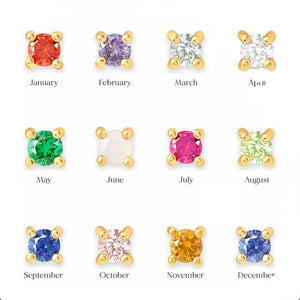
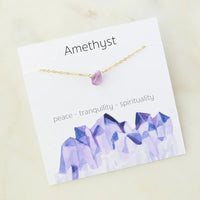
The piece they're describing → Stone Charm Necklace for Women — Raw Natural Gemstone Pendant
Personalize Yours


