


- A hand chain links a wrist bracelet to a finger ring with a draping chain across the back of the hand.
- It's also called a hand harness, slave bracelet (an older, now largely retired term), finger bracelet, or ring bracelet.
- The style has deep roots in South Asian bridal jewelry, where it's known as a haath phool ("flower of the hand").
- Most hand chains adjust via an extender or slide clasp; "permanent" welded hand chains (no clasp at all) are a newer trend.
- AJLuxe doesn't currently stock a true hand-chain style — this guide is for anyone researching the category, with an honest closest-alternative below.
Searches for "hand chain" jewelry have climbed alongside the broader hand-jewelry trend — stacked rings, curated nail looks, and now a piece that ties it all together across the back of the hand. If you've seen the style on a bridal registry, a festival outfit, or a "permanent jewelry" bar and wondered what it's actually called or how it's supposed to fit, this guide covers the real answer: what a hand chain is, where the style comes from, how it's typically sized and worn, and what to know about the newer welded "permanent" version.
What Is a Hand Chain, Exactly?
A hand chain is a two-part piece of jewelry: a bracelet section that sits around the wrist, and one or more fine chains that run across the back of the hand to a ring worn on a finger — usually the middle or ring finger. Some styles use a single center chain, others fan out into two or three chains connecting to two or three fingers, and bridal-style pieces often add a decorative medallion or floral centerpiece on the back of the hand where the chains meet. Materials follow the rest of fine and fashion jewelry: gold, gold-plated brass, sterling silver, and beaded or pearl-accented versions all show up across the category.
What Is a Hand Chain Called? (Other Names for the Style)
The most common names for this style are hand chain and hand harness, though you'll also see it listed as a slave bracelet — an older term that's largely fallen out of use given its history, so most jewelers today use hand chain or hand harness instead. Other names include finger bracelet and ring bracelet, both used more or less interchangeably for the same wrist-to-finger construction. In South Asian bridal jewelry, the equivalent piece has its own name and history, covered below.
The History Behind the Hand Chain: Haath Phool
The wrist-to-finger chain has a much longer history than its current fashion-trend moment suggests. In South Asian bridal jewelry, the style is called a haath phool — literally "flower of the hand" in Hindi — and it's one of the traditional solah shringar, the sixteen bridal adornments a Hindu bride traditionally wears on her wedding day. According to jewelry historians, the haath phool's design is generally traced to Persia and entered South Asia during the Mughal era, later becoming closely associated with Rajput bridal jewelry across North India and Rajasthan, where regional versions go by names like panja, vanki panja, or hathpanja. The classic construction — a wrist bracelet connected by chains to a back-of-hand medallion, which then connects to a ring on one or more fingers — is essentially the same structure sold today as a "hand chain" or "hand harness," just without the bridal centerpiece in most everyday versions.

How to Wear a Hand Chain
How a hand chain gets styled depends mostly on the occasion. For bridal and festival wear, it's typically worn as a statement piece on its own — layered with other traditional jewelry like bangles and rings, with the hand deliberately positioned to show off the chains draping across it. For everyday or going-out styling, the modern take leans simpler: a single fine chain in gold or silver, worn with a light ring stack rather than heavy stacked bangles, and often treated the same way a delicate layered necklace is treated — as one more detail in a "your hands are an accessory too" look. Because the chain sits across the back of the hand, it works best with an otherwise uncluttered hand — one or two rings, not a full stack, so the chain itself stays the visible detail.
How Are Hand Chains Sized and Fastened?
Most standard hand chains adjust the same way a bracelet does: a lobster clasp or slide extender on the wrist portion lets you loosen or tighten the fit, and the finger-ring end is either a fixed loop sized to a standard ring size or, more often, an adjustable open band that can flex slightly to fit different finger widths. Because the chain length between the wrist and the finger has to work across a real range of hand sizes, well-made hand chains build in some adjustability at one or both ends rather than shipping as a single fixed length. If you're shopping for one, checking whether both the bracelet clasp and the ring end are adjustable — not just the bracelet — is worth confirming before buying, since a hand that's slightly too small or large changes how the chain drapes.
Permanent Hand Chains: What They Cost and How They're Different
A newer version of the style skips the clasp entirely: a "permanent" hand chain is measured to your hand and then welded closed at both the wrist and finger ends using a small pulse-arc welder, so there's no clasp to fasten or lose — the piece simply stays on until it's cut off or re-welded. Pricing for this service generally scales with metal: sterling silver permanent hand chains typically run in the roughly $60–$120 range, gold-filled chains around $80–$175, and solid gold options $150 and up depending on karat and chain style, with the price usually including the fitting, measuring, and welding as part of the service. It's a jewelry-bar service rather than something sold as a finished, ready-to-wear product, so it's a different purchase decision than buying an adjustable hand chain online.
Hand Chain vs. Slave Bracelet vs. Finger Bracelet
These three terms mostly describe the same wrist-to-finger construction, and the differences are more about naming history than the jewelry itself. "Slave bracelet" is the oldest of the three terms and the one most jewelers have moved away from given its origin; "hand chain" and "hand harness" are the names most commonly used today, generally interchangeably. "Finger bracelet" and "ring bracelet" tend to show up as alternate listings for the exact same style rather than a meaningfully different piece — if you see all four terms while shopping, they're very likely describing the same category of jewelry.
AJLuxe doesn't currently carry a true hand-chain style — we're being upfront about that rather than stretching a different product to fit. If you like the fine-chain, draped look of a hand chain, our Cable Chain Cuff Bracelet ($36.99) gives you that same delicate chain texture on the wrist in 18K gold plating — it's an adjustable open cuff, not a hand chain, so it stops at the wrist rather than connecting to a finger, but it's the closest match in our current bracelet edit for anyone drawn to this look. You can also browse our full bracelet collection for other chain-style options.
Frequently Asked Questions
What is a hand chain called?
The most common names are hand chain and hand harness. You may also see it listed as a slave bracelet (an older term that's largely fallen out of use), finger bracelet, or ring bracelet — all describing the same wrist-to-finger chain construction. In South Asian bridal jewelry, the equivalent piece is called a haath phool, panja, or hathpanja.
How much is a permanent hand chain?
Permanent hand chains typically cost $60–$120 in sterling silver, $80–$175 in gold-filled chain, and $150 and up in solid gold, depending on karat and chain style. The price usually covers the fitting, measuring, and welding together as part of the service, since it's applied in person rather than sold as a ready-made piece.
What does a hand chain mean?
In South Asian bridal tradition, the haath phool ("flower of the hand") is one of the sixteen traditional solah shringar bridal adornments and symbolizes beauty, prosperity, and celebration. In modern Western fashion, a hand chain doesn't carry the same symbolic weight — it's worn primarily as a style statement, part of the broader trend toward treating hands and rings as a deliberate accessory area.
What culture has hand chains?
The style is most closely associated with South Asian bridal jewelry, where it's called a haath phool. Jewelry historians generally trace its design roots to Persia, with the piece entering South Asia during the Mughal era and later becoming strongly associated with Rajput bridal jewelry across North India and Rajasthan, where it's also known as panja or hathpanja.
Are hand chains still in style?
Yes — the style has seen a real resurgence, driven partly by the "permanent jewelry" welded-chain trend and partly by a broader hand-jewelry movement that treats ring stacks, manicures, and now hand chains as one coordinated accessory area rather than an afterthought.
How do you make a hand chain?
A simple DIY version attaches a fine chain to a bracelet's clasp on one end and to a ring — either an existing ring or a small loop — on the other, sized so the chain drapes across the back of the hand without pulling tight when the wrist and fingers move naturally. Getting the length right typically takes some trial and error, since hand size and finger spacing vary more than wrist size alone.
What are the different types of hand chain bracelets?
Common variations include a single chain-and-ring style (one chain connecting the bracelet to one finger ring), multi-chain harness styles that fan out to two or three fingers, beaded or pearl-accented chains, bridal styles with a decorative medallion where the chains meet on the back of the hand, and permanent welded hand chains that skip the clasp entirely.
Hand Chain vs. Body Chain vs. Ring Bracelet: How They're Actually Different
A hand chain, a body chain, and a ring bracelet are three distinct jewelry styles that shoppers frequently mix up because all three use the word "chain" loosely and all three sit outside the standard bracelet/necklace/ring categories. A hand chain always has two anchor points — a wrist bracelet and a finger ring — connected by chain draping across the back of the hand. A body chain has no finger attachment at all; it loops over the shoulders, chest, or waist and is worn over or under clothing as a layering piece. A ring bracelet (also sold as a "slave bracelet" under the older terminology) is the simplified cousin of a hand chain: usually a single fine chain running from a wrist loop to one finger ring, without the wrist-encircling bracelet band or the multi-chain fan-out that defines a full hand chain.
| Style | Anchor points | Best for |
|---|---|---|
| Hand chain / hand harness | Wrist bracelet + 1–3 finger rings | Bridal, festival, statement looks |
| Ring bracelet | Wrist loop + 1 finger ring | Everyday, minimalist stacking |
| Body chain | Shoulders/torso, no fingers | Layering over or under clothing |
Because a hand chain touches skin at two separate points — the wrist and the finger — rather than one, metal quality matters more than it does for a single bracelet. Any plating wear or nickel content shows up twice as fast, and irritation risk doubles with the extra contact point. If you're comparing options, prioritize hypoallergenic base metals (925 sterling silver rather than unmarked brass or alloy) and a genuine gold-plating thickness, since the finger-ring end in particular gets more friction and washing exposure than a standard bracelet clasp.
All third-party trademarks, brand names and product names are the property of their respective owners. AJLuxe is not affiliated with, endorsed by, sponsored by, or otherwise connected to any third-party brand referenced in this article. Brand names are used solely for accurate comparative reference, and material descriptions reflect each brand's own published product specifications at the time of writing.
You Might Also Like
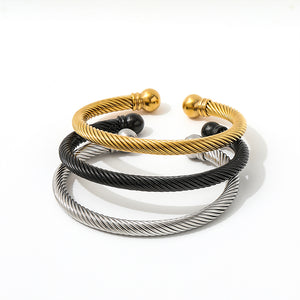
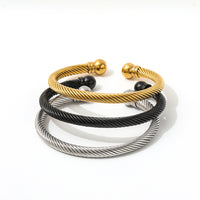
The piece they're describing → Cable Chain Cuff Bracelet — 18K Gold Plated, Open Cuff, Adjustable
Personalize Yours


