


TL;DR
- Ruby means passion, courage, and protection — worn by kings and warriors for centuries.
- It activates both the root chakra and heart chakra, grounding energy and opening love.
- Aries, Leo, Cancer, and Scorpio benefit most from wearing ruby stone.
- Pigeon blood red from Burma is the finest quality grade, rated Mohs 9 hardness.
Ruby is one of the most powerful gemstones on Earth. Called ratnaraj — Sanskrit for "King of Precious Stones" — it carries centuries of meaning tied to love, strength, and royalty. If you're drawn to ruby's deep red fire, this guide tells you everything: what ruby symbolizes, how it affects your body and spirit, which zodiac signs it suits best, and how to tell a quality stone from a low-grade one.
What Is Ruby? The Stone of Passion and Nobility
Ruby is a variety of corundum, the aluminium oxide mineral that also forms sapphire. What makes ruby red is chromium — trace amounts of this element replace aluminium in the crystal structure and absorb green and yellow light, throwing back that vivid red glow.
The name comes from the Latin ruber, meaning red. Ruby scores 9 on the Mohs hardness scale, making it the second hardest natural gemstone after diamond. That durability is part of why ruby has been prized for thousands of years as both jewelry and talisman.
One remarkable physical trait: ruby fluoresces under UV light. Chromium causes the stone to glow bright red, almost as if lit from inside. Fine rubies from Burma (now Myanmar) show the strongest fluorescence — another reason GIA recognizes Burmese rubies as the world's most prized.
Ruby Meaning and Symbolism Through the Ages
Ruby's meaning has stayed remarkably consistent across cultures and centuries. Nearly every civilization that encountered this stone attached the same themes: fire, blood, life force, and royal power.
In ancient India, Vedic astrology — Jyotisha — classifies ruby as the stone of the Sun. Wearing ruby is believed to strengthen the solar energy in your birth chart, bringing clarity, confidence, and leadership. Sanskrit texts describe ruby as a stone so sacred that offering it to the god Krishna would earn rebirth as an emperor.
Medieval European kings embedded rubies in crowns and sword hilts. They believed the stone warned its owner of danger by darkening in color. Warriors carried rubies into battle to make themselves invincible.
In Burma, soldiers inserted rubies under their skin before combat, believing the stone made flesh impenetrable. That belief speaks to ruby's core symbolism: courage that comes from the inside out.
Today ruby still symbolizes:
- Passionate love — it's the classic romantic gift, surpassing even red roses in some traditions
- Courage and strength — the warrior stone, worn when facing hard decisions
- Prosperity and power — associated with wealth, success, and status
- Protection — thought to guard against negative energy and psychic attack
- Vitality — linked to the life force itself, to blood and the beating heart
Ruby is the July birthstone and the traditional gift for 15th and 40th wedding anniversaries. It's one of four precious gemstones — alongside diamond, sapphire, and emerald.
Ruby Healing Properties
Crystal healers and gemstone practitioners attribute a wide range of benefits to ruby. While these claims aren't medical facts, they reflect centuries of lived experience with this stone across dozens of cultures.
Physical healing properties:
- Thought to support healthy blood and circulation — ruby's red color links it symbolically to the cardiovascular system
- Associated with increased physical energy, stamina, and vitality
- Believed to support the adrenal glands and help the body recover from exhaustion
- Some practitioners use it for menstrual health, connecting ruby to the body's monthly cycle
- Historically linked to fever reduction and detoxification
Emotional and mental healing properties:
- Builds confidence and dissolves self-doubt — ruby encourages you to speak your truth
- Combats lethargy and depression by stimulating motivation and drive
- Helps you process grief and move forward after loss
- Strengthens your sense of personal identity and self-worth
- Encourages passion — for people, projects, and life itself
Spiritual healing properties:
- Amplifies life force energy (called prana in Sanskrit traditions)
- Protects the aura from psychic drain and negative attachments
- Strengthens connection to your higher purpose and spiritual path
- In Vedic astrology, ruby enhances the influence of the Sun in your natal chart
Ruby and the Chakras: Root and Heart
Ruby is associated with two chakras — and understanding both helps you use it more intentionally.
Root Chakra (Muladhara): The root chakra sits at the base of the spine. It governs your sense of safety, stability, and physical grounding. When it's blocked, you feel anxious, scattered, and ungrounded. Ruby's deep red color resonates directly with this energy center. Placing ruby at the base of the spine during meditation or wearing it close to the lower body is thought to activate and balance Muladhara, helping you feel secure and rooted in the present moment.
Heart Chakra (Anahata): The heart chakra sits at the center of the chest and governs love, compassion, and emotional connection. Ruby's connection to passion makes it a natural heart-opener. Unlike rose quartz — which works on gentle, unconditional love — ruby activates a more fiery, courageous love. It's the stone you reach for when you want to love boldly, pursue a relationship fearlessly, or reignite passion that's grown cold.
Using ruby on both chakras in sequence — root first, then heart — is said to create an energetic flow from survival instincts up through loving expression. Many practitioners call this the "fire path."
Ruby Zodiac Sign — Which Signs Benefit Most?
Ruby isn't for every sign equally. In both Western and Vedic astrology, certain signs have a natural resonance with this stone.
Aries (March 21 – April 19): Aries is ruled by Mars, the planet of action and courage. Ruby amplifies Aries' natural boldness and helps channel impulsive energy into purposeful drive. This is one of the strongest ruby pairings.
Leo (July 23 – August 22): Leo is ruled by the Sun — exactly the planet ruby governs in Vedic astrology. For Leos, ruby enhances natural leadership, creativity, and the desire to shine. It supports the Leo need to express themselves fully and generously.
Cancer (June 21 – July 22): Ruby is the July birthstone, making it a natural match for Cancer. It helps Cancers — who tend toward emotional guardedness — open their hearts and express their deep feelings with more confidence.
Scorpio (October 23 – November 21): Scorpio's intensity and passion align with ruby's energy. The stone amplifies Scorpio's magnetic power and helps transform the sign's occasional jealousy into healthy devotion.
Capricorn (December 22 – January 19): In Vedic astrology, ruby can support Capricorns by igniting ambition and clearing the path to career success — though this pairing works best when Sun is strong in the natal chart.
Signs that may want to use ruby more cautiously: Taurus and Aquarius. In Jyotisha, ruby is generally not recommended for these signs without consulting a practitioner, as it can amplify conflicting energies.
Ruby vs Garnet — How to Tell the Difference
Ruby and garnet look similar at first glance. Both are deep red, both are used in jewelry, and both carry strong energy. But they're different stones with different meanings and properties. Here's a complete breakdown — and for a deeper dive, read our guide on ruby vs garnet.
| Feature | Ruby | Garnet |
|---|---|---|
| Mineral family | Corundum (aluminium oxide) | Silicate mineral group |
| Mohs hardness | 9 — extremely durable | 6.5–7.5 — softer, scratches more easily |
| Color range | Pink-red to deep blood red | Red, orange, green, purple, colorless |
| UV fluorescence | Strong red glow under UV light | No fluorescence (stays dark) |
| Refractive index | 1.76–1.78 | 1.72–1.94 (varies by type) |
| Primary symbolism | Passion, royalty, courage, protection | Love, friendship, trust, regeneration |
| Price (per carat, fine quality) | $1,000–$15,000+ (Burmese, untreated) | $50–$500 (most varieties) |
The easiest home test: hold your stone under a UV blacklight. Ruby glows red. Garnet does not. That single test catches most confusions.
How to Use Ruby in Everyday Life
You don't need to be a crystal healer to benefit from ruby. The simplest way is to wear it. Keeping ruby against your skin — especially near the heart — allows consistent energetic contact throughout the day.
For confidence and courage: Wear ruby on days you have important meetings, presentations, or difficult conversations. Its energy is activating, not calming — use it when you need to step up, not wind down.
For love and relationships: Give ruby jewelry to a romantic partner as a declaration of passionate intention. In many traditions, ruby is a more meaningful gift than a diamond because it speaks to the heat of feeling, not just commitment.
For meditation: Hold ruby in your left hand (receiving side) and focus on the root or heart chakra. Visualize red light filling whichever energy center you want to activate.
For your workspace: Place a raw ruby on your desk to stimulate ambition and focus. It's particularly useful for creative work, leadership roles, and any task requiring sustained motivation.
In Vedic practice: Jyotisha practitioners often recommend wearing ruby in a gold ring on the ring finger of the right hand, ideally on a Sunday morning during a waxing moon. Always consult a qualified astrologer before using ruby therapeutically in this tradition.
How to Cleanse and Charge Your Ruby
Ruby is a durable stone. At Mohs 9, it's hard enough to withstand most cleansing methods without damage. Here are the best options:
Running water: Hold your ruby under cool running water for 30–60 seconds while setting a clear intention. This is one of the simplest and most effective cleansing methods for ruby.
Sunlight: Ruby responds strongly to solar energy — fitting for a stone governed by the Sun in Vedic astrology. Place it in direct morning sunlight for 1–2 hours. Avoid extended exposure to prevent any color shift in treated stones.
Moonlight: Full moon charging is gentler and works beautifully for ruby. Leave it on a windowsill or outside overnight during a full moon.
Salt: Dry sea salt is safe for ruby given its hardness. Bury the stone in salt for a few hours, then brush clean. Don't use salt water on ruby set in silver jewelry — salt corrodes metal settings over time.
Sound: Singing bowls and tuning forks cleanse ruby without any physical contact. This is the safest method for ruby jewelry pieces where you want to protect the setting.
Selenite: Place ruby on a selenite slab overnight. Selenite is a self-cleansing crystal that clears and charges other stones without any effort on your part.
Cleanse your ruby monthly if you wear it daily, or after any emotionally intense period.
Ruby Quality Guide — What Makes a Fine Ruby?
Not all rubies are equal. Quality varies enormously, and price follows quality. Before you buy ruby jewelry, know what separates an exceptional stone from an average one. The Gem Society's ruby guide is an excellent reference for grading detail.
| Factor | What to Look For | Premium Grade |
|---|---|---|
| Color | Pure red with strong saturation; avoid brownish or pinkish tones | Pigeon blood red — vivid, pure red with a hint of blue undertone |
| Clarity | Eye-clean with minimal visible inclusions; some silk (rutile needles) is acceptable and natural | Transparent with few inclusions; silk that enhances fluorescence is a positive sign |
| Cut | Brilliant or mixed cut that maximizes color and minimizes window effect | Well-proportioned oval or cushion cut; no windowing or extinction zones |
| Origin | Burma (Myanmar), Mozambique, Sri Lanka are top origins; Thailand and India produce lower grades | Mogok Valley, Burma — "Burmese ruby" commands the highest premium worldwide |
About pigeon blood: "Pigeon blood" is the most coveted descriptor in the ruby world. It describes a vivid, pure red with a slight blue undertone — the color of the first two drops of blood from a freshly killed pigeon, according to the Burmese traders who coined the term. Only a small fraction of rubies ever achieve this grade.
About treatments: Most rubies on the market are heat-treated to improve color and clarity. This is standard and accepted in the trade. What matters is disclosure. Ask whether your stone is untreated (rare and more valuable) or heat-treated (common and still beautiful). Fracture-filled rubies are lower quality — avoid these for fine jewelry. If you're curious about lab-created rubies, they offer the same optical properties at a fraction of the cost.
Shop Ruby Jewelry at AJLuxe
Our ruby water drop pendant necklace in 925 sterling silver brings this stone's passion and protection close to your heart. Each piece ships with a jewelry card explaining ruby's meaning.
Ready to shop? Browse all ruby necklaces and birthstone jewelry in 925 sterling silver — every piece hypoallergenic, gift-ready, and backed by our 30-day returns.
Related reading: Unakite meaning.
Related reading: Prehnite meaning.
Related reading: Seraphinite meaning.
Related reading: Larimar meaning.
Shop the AJLuxe July Birthstone Necklace
A ruby-red infinity pendant in 925 sterling silver with rhodium plating — cubic zirconia, disclosed as simulated, nickel-free, $59.99.
Shop the July Birthstone Necklace →Frequently Asked Questions
What is the meaning of a ruby stone?
Ruby means passion, courage, protection, and vitality. It's been called the "King of Precious Stones" in Sanskrit texts and was worn by royalty and warriors for millennia. The stone's deep red color connects it to blood, life force, and the fire of strong emotion. At its core, ruby is the stone of people who feel deeply and live boldly.
What are the healing properties of ruby crystal?
Ruby is said to support blood and circulation, boost physical energy, and aid recovery from exhaustion. Emotionally, it builds confidence, combats depression, and stokes motivation. Spiritually, it amplifies life force energy and protects the aura from negative influences. These are traditional crystal healing beliefs, not medical claims.
What is the spiritual meaning of ruby?
Spiritually, ruby represents the fire of the soul. In Vedic astrology (Jyotisha), it governs the Sun and is worn to strengthen solar energy in the birth chart — bringing clarity, purpose, and the courage to pursue your true path. Many traditions see ruby as a stone that connects you to your highest self while keeping you grounded in the physical world.
Which zodiac sign is best for wearing a ruby stone?
Leo and Aries benefit most from ruby. Leo is ruled by the Sun — the planetary ruler of ruby in Vedic astrology — so this pairing is especially powerful for leadership and self-expression. Aries, ruled by Mars, gets a boost in courage and decisive action. Cancer (July birthstone) and Scorpio also have strong natural resonance with ruby's passionate energy.
Which chakra does the ruby stone stimulate?
Ruby works on two chakras: the root chakra (Muladhara) and the heart chakra (Anahata). It grounds you through the root chakra at the base of the spine, creating security and stability. Simultaneously, it opens the heart chakra to passionate, courageous love. Many practitioners use ruby to create an energetic flow between these two centers.
How do I use a ruby crystal for healing?
Wear ruby against your skin for consistent energetic contact. During meditation, hold it in your left hand and focus on your root or heart chakra. Place raw ruby on your desk to fuel ambition, or keep it under your pillow to encourage vivid, inspiring dreams. In Vedic practice, ruby is often worn as a ring on the ring finger of the right hand on Sunday mornings.
What are the benefits of wearing a ruby stone?
Wearing ruby is said to boost confidence, ignite passion, increase physical vitality, and offer protection from negative energy. It can help you speak your truth, pursue goals with greater determination, and open yourself to deeper romantic connection. As the Sun stone in Vedic astrology, ruby is also associated with improved career prospects and recognition.
Is ruby a good stone for July-born people?
Yes — ruby is the official July birthstone, making it an especially natural fit for people born in this month. July is ruled by Cancer, a deeply feeling water sign, and ruby's heart-opening and confidence-building properties complement Cancer's emotional nature well. Wearing your birthstone is also considered auspicious in multiple astrological traditions.
Can ruby stone improve my love life and relationships?
Ruby is one of the most powerful stones for romantic love. It activates the heart chakra and channels the kind of bold, passionate devotion that sustains long-term relationships. If your love life has grown stagnant, ruby's fiery energy is said to reignite the spark. It's also a traditional symbol of commitment — ruby jewelry has been exchanged as a love token for thousands of years.
Does ruby stone protect against negative energy?
Yes — protection is one of ruby's oldest attributed properties. Burmese soldiers once embedded ruby under their skin believing it made them invincible. Modern crystal practitioners use ruby to strengthen the aura, deflect psychic drain, and ward off environments or people that sap your energy. Its intense red color and high vibration are thought to act as an energetic shield.
How do I activate or cleanse a ruby gemstone?
Cleanse ruby under cool running water, in morning sunlight, or overnight under a full moon. Salt and selenite also work well. To activate it, hold the stone in both hands, set a clear intention, and visualize red light filling the stone. In Vedic tradition, ruby is activated through mantra — specifically the Sun mantra "Om Suryaya Namah" repeated 108 times.
Can ruby stone help with blood and circulatory problems?
In crystal healing traditions, ruby is closely associated with the blood and cardiovascular system — its red color creating a symbolic resonance with circulation. Practitioners recommend it for supporting heart health and blood flow energetically. This is not a medical treatment, and ruby should never replace professional medical care for circulatory conditions.
Does ruby stone enhance vitality and physical energy?
Ruby is consistently associated with physical vitality across healing traditions. It's said to stimulate the adrenal glands, boost stamina, and help the body recover from chronic fatigue. The root chakra activation ruby provides also helps you feel more physically present and capable throughout the day.
Final Thoughts
Ruby earns its status as the King of Precious Stones. Few gemstones match its combination of physical beauty, historical depth, and energetic power. Whether you're drawn to its ancient symbolism of passion and royalty, its chakra work on the root and heart, or simply its extraordinary red fire, ruby is a stone that rewards attention. It asks you to feel fully, act boldly, and love without reservation.
At AJLuxe, we set our rubies in 925 sterling silver to let the stone's color speak for itself. If you're ready to bring ruby's meaning into your daily life, our ruby water drop pendant necklace is the perfect starting point — elegant enough for everyday wear, meaningful enough to give as a gift for any occasion that matters.
Ready to explore deeper? Start with the ruby healing properties guide for physical, emotional, and spiritual benefits — or read the ruby zodiac sign guide to find out which signs benefit most. If you're buying, our ruby buying guide covers color grades, treatments, origins, and pricing.
All third-party trademarks, brand names and product names are the property of their respective owners. AJLuxe is not affiliated with, endorsed by, sponsored by, or otherwise connected to any third-party brand referenced in this article. Brand names are used solely for accurate comparative reference, and material descriptions reflect each brand's own published product specifications at the time of writing.
You Might Also Like
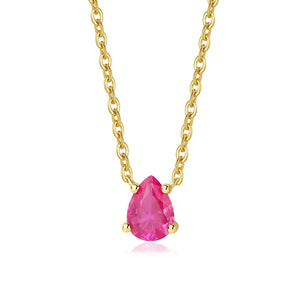

The piece they're describing → Ruby Pendant Necklace for Women — Red Ruby Teardrop, 925 Sterling Silver
Personalize Yours


