


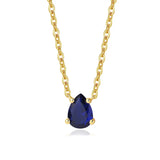
TL;DR — Pink Sapphire vs Pink Diamond
- Pink sapphire: corundum, Mohs 9, $200–$3,000/ct — vivid color, everyday durability, practical choice for jewelry
- Pink diamond: carbon, Mohs 10, $10,000–$100,000+/ct — exponentially rarer, investment-grade asset, especially post-Argyle closure (2020)
- For most budgets, pink sapphire wins: almost identical hardness, a fraction of the cost, stronger color saturation
- Lab-grown pink diamonds now available at $500–$2,000/ct — a middle-ground option worth knowing about
When you're drawn to pink stones, you'll eventually face this question: pink sapphire or pink diamond? Both are rare, both are undeniably beautiful — but they sit in completely different price brackets and serve different purposes. This guide cuts through the confusion with real numbers, a side-by-side table, and a clear recommendation for every budget.
What Are Pink Sapphires?
Pink sapphires are the gem variety of corundum (aluminum oxide) that derives its color from trace amounts of chromium — the same element that makes rubies red. The line between a pink sapphire and a ruby is officially defined by color saturation: stones below a certain redness threshold are classified as pink sapphires by GIA standards.
Key facts about pink sapphires:
- Mineral: Corundum (Al₂O₃)
- Color source: Chromium (and sometimes iron for secondary hues)
- Mohs hardness: 9 — second only to diamond
- Major sources: Madagascar, Sri Lanka, Burma (Myanmar), Tanzania
- Heat treatment: ~90% of commercial pink sapphires are heat-treated to improve color and clarity — this is standard practice and accepted by GIA
- Price range: $200–$3,000+ per carat depending on color intensity, clarity, and origin
Fine untreated pink sapphires from Burma or Sri Lanka command a significant premium. Madagascar is currently the dominant commercial source, producing consistent mid-range pinks at accessible prices.
What Are Pink Diamonds?
Pink diamonds are pure carbon crystals — the same composition as all natural diamonds — but with a twist in their atomic lattice structure that causes light to absorb differently and produce a pink hue. Unlike colored stones that get their color from trace elements, pink diamonds' color comes from a phenomenon called plastic deformation: intense geological pressure during formation distorts the crystal lattice and shifts how it interacts with light.
Key facts about pink diamonds:
- Mineral: Carbon (crystalline)
- Color source: Lattice defects from plastic deformation (not trace elements)
- Mohs hardness: 10 — the hardest natural substance
- Major source: Argyle Mine, Western Australia — now closed (October 2020)
- Rarity: Fewer than 0.1% of all diamonds mined qualify as "fancy pink"
- Price range: $10,000–$100,000+ per carat for natural stones; certain Argyle-certified stones exceed $1M/ct
The GIA grades pink diamonds on an intensity scale: Faint, Very Light, Light, Fancy Light, Fancy, Fancy Intense, Fancy Vivid, Fancy Deep, and Fancy Dark. Each step up dramatically increases price.
Pink Sapphire vs Pink Diamond: Full Comparison Table
| Factor | Pink Sapphire | Pink Diamond |
|---|---|---|
| Mineral | Corundum (Al₂O₃) | Carbon |
| Color source | Chromium trace elements | Crystal lattice defects |
| Mohs hardness | 9 | 10 |
| Typical color | Vivid hot pink to soft blush | Pale blush to rose — rarely vivid |
| Sparkle / brilliance | High — vitreous luster | Exceptional — adamantine luster |
| Price per carat | $200–$3,000+ | $10,000–$100,000+ |
| Rarity | Rare (fine quality) | Extremely rare (<0.1% of all diamonds) |
| Investment value | Modest appreciation | Strong (especially Argyle-certified) |
| Lab-grown available? | Yes (very affordable) | Yes ($500–$2,000/ct) |
| Best for | Everyday jewelry, engagement rings on a budget, gifting | Investment, heirloom pieces, collectors |

Color: Which Stone Is Actually Pinker?
Here's something that surprises most buyers: pink sapphires are usually more vividly pink than pink diamonds.
Pink diamonds sit mostly in the pale-to-medium range. Only a tiny fraction reach "Fancy Vivid" — and those cost hundreds of thousands per carat. The vast majority of pink diamonds available for jewelry are Fancy Light or Fancy, which means a soft blush or rose tone rather than a bold pink.
Pink sapphires, on the other hand, are available in everything from pale baby pink to intense magenta. If you want a statement-making pink stone that reads as unmistakably pink at arm's length, a fine pink sapphire will outperform most pink diamonds at 1/50th of the price.
Pink diamonds do have one visual edge: their fire and brilliance. Diamond's refractive index of 2.42 (vs sapphire's 1.76–1.77) creates that distinctive sparkle and light dispersion. If you love the play of light more than pure color saturation, diamond's optical properties are genuinely superior.
Durability for Everyday Wear
Both gems are excellent for jewelry. A Mohs 9 vs Mohs 10 difference is real but practically minor for rings and pendants:
- Pink sapphire (Mohs 9): Can only be scratched by diamond or by other sapphires. Resists household dust (Mohs 7), quartz, and most everyday abrasives. Ideal for engagement rings, pendants, and daily wear.
- Pink diamond (Mohs 10): The hardest natural material. Nothing scratches it except another diamond. Marginally better scratch resistance, though the practical difference in daily jewelry wear is minimal.
One thing to watch with both stones: cleavage and fracture. Diamonds can cleave along crystal planes if struck at the right angle. Sapphires have no cleavage planes — they're tougher in this regard even if slightly softer. For a bezel-set pendant or everyday necklace, sapphire's toughness profile is excellent.
Price: The Real Difference
This is where the two stones part ways dramatically.
Pink sapphires:
- Commercial quality (pale pink, heat-treated): $200–$600/ct
- Fine quality (medium-vivid pink, eye-clean): $600–$2,000/ct
- Top quality (unheated, intense pink, certified): $2,000–$5,000+/ct
- Burma or Kashmir origin adds another 20–50% premium
Natural pink diamonds:
- Fancy Light Pink (1 ct): $10,000–$30,000
- Fancy Pink (1 ct): $30,000–$80,000
- Fancy Intense or Vivid (1 ct): $80,000–$500,000+
- Argyle-certified stones (pre-2020 inventory): premiums of 30–100% above market
Lab-grown pink diamonds: This is the market disruption nobody talks about. Lab-created pink diamonds (Type IIa with hydrogen treatment or HPHT color enhancement) now retail for $500–$2,000/ct — making them a genuine middle ground between sapphire and natural pink diamond pricing.
The Argyle Effect: Why Pink Diamonds Got So Expensive
The Argyle Mine in Western Australia produced over 90% of the world's supply of pink diamonds for decades. When it closed in October 2020, the industry lost its primary source. The result: natural pink diamond prices have surged 500%+ since 2000, with post-closure appreciation accelerating further.
Argyle-certified pink diamonds — those with the mine operator's authentication paperwork — now command a premium even beyond their color grade alone. Collectors and investors treat them as finite assets because no new Argyle stones will enter the market. If you're buying a natural pink diamond as an investment, Argyle provenance matters enormously.
Pink sapphires have no equivalent supply shock. They come from multiple active mining regions (Madagascar, Sri Lanka, Tanzania, Burma) with a reliable, renewable supply chain.
Pink Sapphire vs Pink Diamond for Engagement Rings
The practical question most buyers actually ask: Should I get a pink sapphire engagement ring instead of a pink diamond?
For the vast majority of budgets — yes. Here's why:
- A 1-carat fine pink sapphire in a gold setting costs $1,500–$5,000 total. A 1-carat natural Fancy Light Pink diamond ring starts at $15,000 and goes to $50,000+.
- Pink sapphire's Mohs 9 hardness is more than sufficient for daily ring wear
- The color saturation of a good pink sapphire is often more visually striking than an entry-level pink diamond
- More budget left for a beautiful setting, which dramatically affects the overall look
Choose a pink diamond engagement ring if: you're investing in a legacy piece, budget is not the constraint, or you want the prestige and uniqueness of a certified fancy color diamond.
Pink Sapphire vs Pink Diamond: Investment Potential
Let's be honest about investment:
- Natural pink diamonds are genuine alternative assets. High-quality certified stones (especially Fancy Vivid and Argyle-certified) have shown consistent long-term appreciation. They're tradeable at major auction houses.
- Pink sapphires hold value but are not investment-grade in the same way. Fine unheated Burmese pinks with AGL/GIA certification do appreciate, but liquidity is lower and gains are modest compared to pink diamonds.
- Lab-grown pink diamonds are not investment-grade at all — supply is unlimited and prices are falling.
If your primary goal is jewelry you'll wear and enjoy, this investment distinction doesn't matter much. If you're thinking in 20-year horizons and asset allocation, the difference is real.
Which Pink Stone Should You Choose?
Choose pink sapphire if:
- Your budget is under $10,000 (or even under $50,000)
- You want vivid, saturated pink color
- You're buying for everyday wear or an engagement ring
- Sustainability and ethical sourcing matter to you (lab-created sapphires have a near-zero footprint)
Choose pink diamond if:
- Budget is not the primary factor
- You want exceptional fire and brilliance alongside the pink hue
- You're buying as a long-term investment or heirloom
- Argyle provenance and rarity are meaningful to you
If you love the pink diamond aesthetic but want something wearable and budget-friendly, a lab-grown pink diamond at $500–$2,000/ct gives you identical optical and chemical properties to a natural stone — at a fraction of the cost.
Shop Pink Gemstone Necklaces at AJLuxe
At AJLuxe, we work with pink gemstone jewelry designed for real, everyday wear. Our birthstone necklaces are crafted in 925 sterling silver with 18K gold plating — hypoallergenic, durable, and built to last. Browse our necklace collection and find the pink piece that fits your style and budget.
Related Comparisons
Frequently Asked Questions
Is pink sapphire as good as pink diamond?
For most jewelry purposes — yes. Pink sapphire has a Mohs hardness of 9 (vs diamond's 10), so it's nearly as durable for everyday wear. It often has stronger color saturation and costs 90–95% less. The main area where pink diamond wins is investment value and optical brilliance.
Can you tell the difference between pink sapphire and pink diamond?
An untrained eye often can't tell at a glance. The key visual differences: pink sapphires tend to show stronger, more vivid color; pink diamonds show more intense sparkle and fire (light dispersion). Under a loupe, their internal characteristics are completely different. A gemologist can distinguish them immediately.
How much does a pink diamond cost compared to a pink sapphire?
Natural pink diamonds run $10,000–$100,000+ per carat depending on color intensity. Fine pink sapphires run $200–$3,000+ per carat. Lab-grown pink diamonds have disrupted the market at $500–$2,000/ct. You can buy a high-quality pink sapphire for 1–5% of the cost of a comparable natural pink diamond.
Why are pink diamonds so expensive?
Fewer than 0.1% of all mined diamonds qualify as "fancy pink." The Argyle Mine in Australia — which produced over 90% of the world's supply — permanently closed in October 2020, cutting off the primary source. Prices have increased 500%+ since 2000, with post-closure appreciation accelerating. Demand from investors and collectors continues to outpace the finite remaining supply.
Are pink sapphires rare?
Yes — fine-quality pink sapphires with intense color, good clarity, and no heat treatment are genuinely rare. Commercial-quality pink sapphires are more available than pink diamonds, but top-tier unheated pink sapphires from Burma or Sri Lanka command significant premiums and are considered rare gemstones.
Do pink sapphires hold their value?
Pink sapphires hold value better than most colored gemstones but aren't investment-grade assets in the way pink diamonds are. Fine unheated stones with GIA or AGL certification appreciate over time. Heat-treated stones retain value but don't appreciate as strongly. They're best thought of as jewelry with some intrinsic value rather than financial investments.
Is a lab-grown pink diamond worth buying?
If you want the optical properties of a pink diamond without the investment-asset premium, lab-grown pink diamonds at $500–$2,000/ct are worth considering. They're chemically and physically identical to natural stones. The tradeoff: they have no investment value (supply is unlimited, prices are declining) and don't carry the rarity story of a natural Argyle-era stone.
Can pink sapphire scratch easily?
No. With a Mohs hardness of 9, pink sapphire can only be scratched by diamond or another corundum stone. It resists household dust (Mohs 7), metal tools, and everyday abrasives. It's one of the most durable gemstones available and is fully suitable for rings, pendants, and daily wear jewelry.
Which is better for an engagement ring — pink sapphire or pink diamond?
Pink sapphire is the better practical choice for most engagement ring budgets. It's nearly as hard, often more vividly pink, and costs a fraction of a natural pink diamond. A 1-carat fine pink sapphire ring can be created for $1,500–$5,000; a comparable natural pink diamond ring starts at $15,000 and goes much higher. Both are romantic and beautiful — the choice depends on whether rarity and diamond sparkle are worth the dramatic price difference to you.
What's the difference between pink sapphire and ruby?
Both are corundum colored by chromium — the difference is degree of color saturation. GIA defines rubies as stones where red is the dominant hue; pink sapphires are stones where the pink modifier is dominant over red. The line is not always obvious, which is why some stones sold as "pink sapphires" in Thailand or Burma would be graded as rubies by GIA — and vice versa. Rubies generally command higher prices than pink sapphires in equivalent quality.
For the full healing properties and symbolism of pink sapphire, see our pink sapphire meaning guide.
Written by the AJLuxe team — specialists in personalized sterling silver and gemstone jewelry. Last updated: June 2026.
All third-party trademarks, brand names and product names are the property of their respective owners. AJLuxe is not affiliated with, endorsed by, sponsored by, or otherwise connected to any third-party brand referenced in this article. Brand names are used solely for accurate comparative reference, and material descriptions reflect each brand's own published product specifications at the time of writing.
You Might Also Like
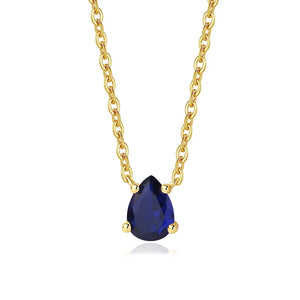
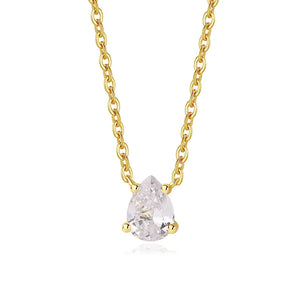

The piece they're describing → Sapphire Pendant Necklace for Women — Blue Sapphire Teardrop, 925 Sterling Silver
Personalize Yours


