


Mood Ring Color Chart: What Every Color Means
This chart lists all the usual colors from coldest to warmest, with the meaning most charts give each one. Exact temperatures differ from ring to ring because makers tune the liquid crystal differently, so the last column shows the order on the scale rather than a fixed number. Printed charts usually stretch from the low 80s to the upper 90s degrees Fahrenheit across the whole range. One reliable anchor: many rings are set so the neutral color sits near average skin temperature, about 93°F (34°C).
| Color | What it usually means | Where it sits on the scale (cold to warm) |
|---|---|---|
| Black | Stressed, tense, or simply cold. Also what a worn-out or water-damaged stone often shows | Coolest end of the scale |
| Gray | Nervous, anxious or low energy | Just above black |
| Brown or amber | Restless, unsettled, a bit worried | Cool |
| Yellow | Distracted, imaginative, a little unsure | Cool to middle |
| Orange | Daring, restless energy (many rings skip this shade) | Cool to middle |
| Green | Normal, calm, neutral: the everyday baseline | Middle of the scale |
| Teal or blue-green | Relaxed and comfortable | Middle to warm |
| Blue | Happy, calm, at ease | Near average skin temperature on many rings |
| Dark blue | Deeply relaxed, affectionate, absorbed in something | Warm |
| Pink | Curious, affectionate, excited (placement differs a lot by ring) | Warm |
| Light purple or lavender | Rising excitement, a gentle romantic feeling | Warm to very warm |
| Purple or violet | Romantic, passionate, very warm. The hardest color to hit | Warmest end |
| Red | Rarely a true red; usually amber, pink or magenta. Often external heat | Unreliable |
| White or clear | Not a mood: the liquid crystal is worn out or damaged | Not a temperature reading |
Treat these as popular folk meanings. A ring cannot read feelings, only the temperature of the skin under the stone, and the same color can mean different things on two people. If you only need one shade, jump to its guide: purple, blue, green, black, pink, yellow, orange, red or white.
How Do Mood Rings Actually Work?
A mood ring works because the stone contains thermochromic liquid crystals that change the color of light they reflect as their temperature changes. The crystals are sealed in tiny capsules under a clear cover. As the temperature shifts, the molecules twist into a slightly different arrangement, and a different wavelength of light bounces back to your eye. Cool crystals reflect toward the dark end of the range, warm crystals toward blue and violet.
The stone is reacting to heat, not to your mind. Blood flow to the fingers does change with stress and relaxation, which is why a ring sometimes seems to match a mood, but a warm room, a hot drink or a brisk walk will move the color just as much. The deeper science is in how mood rings work.
The craze began in the 1970s and faded within a few years, then came back in waves. If you enjoy that era, our 70s jewelry style guide covers the look.
What Does Each Mood Ring Color Mean?
What does black mean on a mood ring?
Black means the stone is at the cool end of its range, which can be stress, cold hands or a stone that is not working. If it is black on a warm day and stays black, the troubleshooting section below will help. More in what black means.
What does gray or brown mean on a mood ring?
Gray and brown sit just above black and usually mean nervous, restless or mildly worried. They are also what cool fingers show in an air conditioned room, so check the temperature before you read anything into them.
What does yellow or orange mean on a mood ring?
Yellow and orange mean distracted, imaginative or restless, a step cooler than the green baseline. Many rings jump from amber straight to green and never show true orange. See yellow and orange.
What does green mean on a mood ring?
Green means normal and calm, the baseline most people see most of the day. It is not a bad sign, it just means nothing dramatic is happening. More in what green means.
What does teal mean on a mood ring?
Teal, or blue-green, means relaxed and comfortable, a step warmer than plain green. It is the shade between the calm baseline and the happier blues.
What does blue mean on a mood ring?
Blue means happy, calm and at ease. On many rings it sits close to normal skin temperature, so a good walk or a good conversation can push a green ring to blue. See what blue means.
What does dark blue mean on a mood ring?
Dark blue means deeply relaxed, affectionate or absorbed in something you enjoy. It is one step warmer than standard blue and is one of the most popular shades people search for.
What does pink mean on a mood ring?
Pink means curious, affectionate or excited. Not every ring shows it, and where it appears on the scale differs by maker. More in what pink means.
What does purple mean on a mood ring?
Purple or violet means romantic, passionate or very warm. It is the warmest shade, so most people only see it briefly, and light purple or lavender means the same feeling at lower intensity. Dark purple usually reads as the fullest version of it. See what purple means.
What does it mean if my ring shows two colors, like purple and green?
Two colors at once means the stone is warmer in one spot than another, often because only part of the stone touches your skin. The ring is passing through a transition, so the average of the two colors is closer to your real reading.
What does white or clear mean on a mood ring?
White or clear means the crystal layer no longer responds, usually after water, heat or age. It is not a mood, and it means the stone needs replacing. See what white means.
Which Mood Ring Color Matches Which Feeling?
Use this reverse lookup if you start from a feeling. It follows the usual folk chart, so it is a rough guide only.
| If you feel... | Your ring may show... |
|---|---|
| Stressed, tense or just cold | Black or gray |
| Nervous or restless | Brown, amber or gray |
| Distracted or unsure | Yellow or amber |
| Calm and average | Green |
| Relaxed | Teal or blue |
| Happy and at ease | Blue |
| Deeply calm or absorbed | Dark blue |
| Curious or affectionate | Pink or dark blue |
| Romantic or very warm | Purple, violet or lavender |
| Sad or low | Gray or black, though no color maps cleanly to sadness |
What Does a Day With a Mood Ring Look Like?
A mood ring follows your surroundings through the day, so most of its changes have nothing to do with feelings. Here is a realistic example of one ordinary day, which shows why the same person can see black, green and blue without any real change in mood.
| Moment | Likely color | What it really tells you |
|---|---|---|
| Putting the ring on first thing, cold hands | Black or gray | The stone is still at room temperature, so wait a few minutes before reading it |
| Walking to work on a cool morning | Brown or gray | Your fingers are cooling in the air, not necessarily that you are tense |
| Sitting at a desk in a warm office | Green | Your skin is at its resting baseline, which is the normal reading |
| Laughing with a friend over lunch | Green moving to teal or blue | Warmer, relaxed hands, often alongside a good mood |
| A hot drink held in both hands | Blue, dark blue or even purple | The cup warmed your fingers, so the color is heat, not romance |
| Running late and stressed on the train | Gray, brown or yellow | Fingers can cool under stress, but a cold carriage does the same |
| Cold evening outdoors | Black | Environment again, so ignore it as a mood |
The pattern to notice is that the ring tracks warmth. A color is most informative when the room, activity and your hands are about the same each time you check it.
How Do You Read a Mood Ring More Accurately?
You get a more accurate reading by controlling the temperature variables before you look at the color. Follow these steps:
- Wear the ring for five minutes in a comfortable room so the stone reaches skin temperature.
- Keep your hand still and away from hot mugs, sunlight, cold glasses and car vents.
- Check the color at the same sort of moment each day, for example mid morning at a desk.
- Write down the color and what you were doing for about a week.
- Compare against your own pattern, not a printed chart. Your usual color is your baseline, and a shift from it is the useful signal.
A simple log helps. Copy this layout into your notes:
| Day | Time and place | Color | What I was doing or feeling |
|---|---|---|---|
| Monday | Mid morning, desk | Green | Normal day, calm |
| Tuesday | Mid morning, desk | Blue | Good news, relaxed |
| Wednesday | Mid morning, desk | Gray | Cold office, nervous about a meeting |
After a week you will probably see that green or blue is your resting color, and that gray, brown or black mostly follow cold rooms. That is your personal chart.
What Can a Mood Ring Not Tell You?
A mood ring cannot tell you what you feel, only how warm the skin under the stone is. It cannot diagnose stress or any health condition, and it should never replace talking to a doctor or someone you trust if you are worried about how you feel. Common mistakes include reading black as a sign of danger when your hands are just cold, treating purple as proof of love after a hot drink, and expecting the same color from two different rings. A better frame is a small, fun feedback loop that makes you notice your body for a moment.
Which Finger Should You Wear a Mood Ring On?
Wear a mood ring on whichever finger fits snugly, since a close fit matters more than which finger you choose. Mood rings have no etiquette rules like wedding or promise rings, though a ring that is a little loose can spin and let air cool the stone. If you are curious about what ring placement means more generally, see what a ring on each finger means.
How Can You Tell a Good Mood Ring From a Poor One?
A good mood ring has a well sealed stone, a snug band and a clear cover over the crystal layer. Use this short checklist when you shop:
- Sealing: look for a stone with no gaps or cloudy edges, since water getting in is the most common reason for failure.
- Color range: ask how many colors the stone shows. Basic stones may show only black, green and blue, while better ones show a fuller range.
- Fit: the band should sit snug without pinching, because heat transfer depends on contact.
- Metal: if you have sensitive skin, check what the band is made from before you buy, as the base metal is what touches your finger.
- Care notes: a seller that tells you how to keep the stone dry usually knows the product.
When you want a fixed-color ring that never needs a dry-hands rule, a plain metal piece is simpler, and our guide to wearing rings shows how to style one.
Do Mood Ring Colors Change With the Season?
Yes, mood ring colors shift with the season because the air around your hands changes the baseline temperature of the stone. In winter your resting color may move one or two steps cooler on the chart, and in summer it may move one or two steps warmer. Neither is a mood change.
| Situation | Expect your usual color to move... | Why |
|---|---|---|
| Cold winter day outdoors | Cooler (toward gray, brown or black) | Cold air pulls heat from your fingers |
| Warm summer day | Warmer (toward blue or even purple) | Warm air and warm skin raise the stone temperature |
| Air conditioned room | Cooler | Cold air blowing over the hand |
| After exercise | Warmer | More blood flow to the hands |
| After washing hands in cold water | Cooler, briefly | The stone and skin are both chilled |
| Holding a hot drink | Warmer, briefly | Direct heat on the ring |
If you wear the ring year round, expect your personal baseline to wander a little with the weather. Comparing today with a similar day, rather than with a printed chart, keeps the reading meaningful.
Do Mood Ring Color Meanings Differ for Adults and Kids?
No, the colors work the same at any age, because they respond to skin temperature and not to age. The folk meanings are the same for adults and children, although children's fingers are smaller and a smaller ring may fit snugly more easily. The main difference is what you do with the information: adults often use a ring as a gentle prompt to check in with themselves during a busy day, and children usually enjoy it as a game.
Are Mood Rings Real or Just a Gimmick?
Mood rings are real in the sense that the color change is genuine physics: the liquid crystals really do respond to temperature. They are a gimmick only if you expect them to read your emotions exactly. A fair summary is that a mood ring is a small thermometer in a decorative setting, with a folk chart attached. Enjoy the color changes, use the chart as a conversation starter, and keep in mind that a fun signal is not a measurement of mood.
Why Do Mood Ring Colors Differ Between People and Rings?
Colors differ because the ring reads temperature, and temperature depends on much more than mood. The biggest factors are:
- The room: a ring worn in a cool room reads colder than the same ring in a warm one.
- Your baseline: people with naturally warm hands tend to show blues and purples, and people with naturally cold hands tend to show black or gray.
- Circulation: poor circulation in the fingers can keep a ring dark even when you are calm. If that worries you, it is general information, so ask a doctor.
- Fit: a loose band lets air in and cools the stone, while a snug fit passes heat across more reliably.
- The ring itself: each maker uses its own liquid crystal blend, so one brand can show more colors, or different temperatures for the same color, than another. Budget rings may show only black, green and blue.
To find your own pattern, wear the ring for a week and note what color shows in situations you know well. That personal baseline is far more useful than any printed chart.
Why Does My Mood Ring Stay Black or Stuck on One Color?
A ring that stays black or one color is usually cold, new, or damaged. Work through the likely causes in this order:
- You just put it on: give it a few minutes to reach skin temperature.
- Cold hands: warm your hands and look again.
- Water damage: water that gets under the cover can ruin the crystal layer and leave it black or frozen.
- Heat damage: a hot car, direct sun or a heater can permanently damage the crystals.
- Age: the crystal layer wears out with time and use.
- A faulty stone: a poorly sealed stone can arrive already damaged.
Quick test: hold the ring between your warm palms for about a minute. If it still shows no change, water, heat or age is the likely cause and the stone probably needs replacing.
How Do You Look After a Mood Ring?
Keep a mood ring dry, cool and out of strong sun to protect the crystal layer. Take it off before showers, swimming and washing up, avoid leaving it in a hot car, and wipe it with a dry soft cloth. Even a well cared for stone wears out eventually, and many makers can replace just the stone. For general metal care, see how to care for birthstone jewelry.
- Do: store it in a cool drawer or box, away from windows and radiators.
- Do: let it dry fully if it gets splashed, and dry the band as well as the stone.
- Do not: wear it in the shower, in a pool or hot tub, or while cleaning with chemicals.
- Do not: use ultrasonic cleaners, steam or jewelry dips, which can crack the seal or cook the crystals.
- Do not: leave it on a car dashboard, where it can get hot enough to damage the crystal layer for good.
Is a Mood Necklace the Same as a Mood Ring?
Yes, a mood necklace uses the same liquid crystals and the same cold to warm color order. The difference is where it sits: fingers swing in temperature more than skin near your chest, so a ring changes faster and more dramatically. The shades for pendants are covered in mood necklace colors and meanings.
Picking Jewelry That Matches Your Color Mood
If a mood ring has you thinking about what suits your mood, our rings and necklaces are fixed-color metal pieces. A steady blue or green wearer might like a birthstone necklace for its meaning, and a romantic purple or pink mood suits a delicate pendant from our necklace collection. For everyday wear, the Open Band Stacking Ring ($42.99, 925 sterling silver with an 18K gold plated and silver dual finish) pairs with other rings, and adjustable rings are easy when sizing is uncertain. If a stone catches your eye, amethyst echoes purple, and black tourmaline is the grounding choice for black days.
Frequently Asked Questions
What is the mood ring color chart?
A mood ring color chart maps each color a mood ring can show to the feeling it is said to signal, from black at the cold end through green in the middle to purple at the warm end. The colors come from thermochromic liquid crystals reacting to skin temperature, so the chart is a guide to temperature as much as mood.
What do the colors on a mood ring mean?
Black means cold or stressed, gray and brown mean nervous, yellow means unsettled, green means normal and calm, teal means relaxed, blue means happy, dark blue means deeply calm, pink means affectionate, purple means romantic, and white means the stone is worn out. See the chart above for the full list.
What temperature does a mood ring change color?
Most rings respond across roughly the range of normal finger skin temperature, from the low 80s to the upper 90s degrees Fahrenheit, but the exact temperature for each color depends on the ring's liquid crystal blend. Many are tuned so the neutral color sits near average skin temperature, about 93°F (34°C).
What color is normal on a mood ring?
Green is the usual baseline on most rings, and on some rings a blue-green or light blue is the neutral color instead. If your ring is mostly green or blue through the day, it is working normally.
What color is sad on a mood ring?
Gray or black is the closest match to a low mood, but no color maps cleanly to sadness. Cold hands give the same result, so check the temperature first.
Are mood rings accurate at reading emotions?
No, mood rings are accurate at reading temperature, and emotion is only one of many things that change it. Room temperature, exercise, food and drink all change the color, so use it for fun, not as a measure of how you feel.
Why does my mood ring stay one color?
A ring that stays one color is usually too cold, too loose, new, or damaged by water, heat or age. Try the palm warming test above, and replace the stone if it never changes.
What is the rarest mood ring color?
Purple or violet is the hardest to reach because it sits at the warmest end of the scale. Red is also rare because most rings do not have a true red, and what looks red is usually amber, pink or magenta.
Do mood ring color charts differ by brand?
Yes, the order of colors is the same everywhere, but the number of colors and the temperature for each color vary by maker. Warm end shades like pink, lavender and violet differ the most.
All third-party trademarks, brand names and product names are the property of their respective owners. AJLuxe is not affiliated with, endorsed by, sponsored by, or otherwise connected to any third-party brand referenced in this article. Brand names are used solely for accurate comparative reference, and material descriptions reflect each brand's own published product specifications at the time of writing.
You Might Also Like
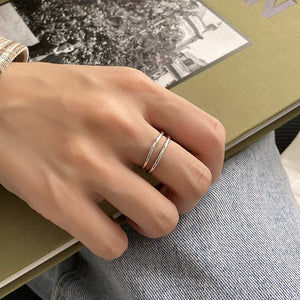
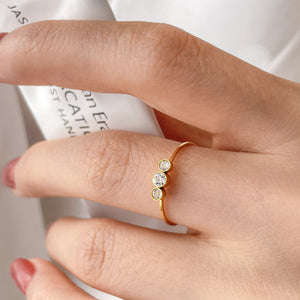

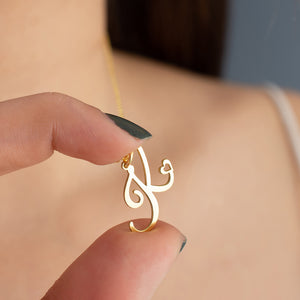

The piece they're describing → Open Band Stacking Ring for Women — 925 Sterling Silver, 18K Gold + Silver Dual Finish
Personalize Yours


