


Mood rings contain thermochromic liquid crystals that change color when your body temperature changes. Temperature — not emotions directly — drives the color shift. But since body temperature changes with emotional arousal, the ring does track emotional states indirectly.
Mood rings were invented in 1975 and have been satisfying human curiosity ever since — but most people misunderstand how they actually work.
Shop it: the AJLuxe Color-Changing Mood Ring — a real thermochromic stone in an ornate, antiqued silver-tone band. Join the waitlist.
See the full Mood Ring Color Chart for every color and temperature range in one place.
The science is real. Thermochromic liquid crystals change their molecular structure with temperature, which changes which wavelength of light they reflect. The emotional connection is real too — stress, excitement, attraction, and calm all change your peripheral body temperature. So while the ring isn't reading your mind, it is tracking something measurable.
Here's the complete breakdown of the physics, the biology, and the honest limits of what a mood ring can tell you.
What Is Inside a Mood Ring?
The stone in a mood ring is not a gemstone. It is a hollow glass or quartz shell filled with thermochromic liquid crystals (TLCs).
TLCs are a special phase of matter that behaves like both a liquid and a crystal simultaneously. They are highly sensitive to temperature and rearrange their molecular structure when temperature shifts — and that rearrangement is what causes the color change.
The mood ring was invented in 1975 by Marvin Wernick (some historical accounts also credit Josh Reynolds). The TLC material fills the inside of the ring stone and sits directly against your skin, allowing it to read your surface body temperature in real time.
Key point: the ring is not sensing your emotions, your aura, or your energy field. It is measuring the temperature of your finger — nothing more, nothing less. What makes mood rings interesting is that finger temperature turns out to be a surprisingly good proxy for emotional state.
The Science of Thermochromic Liquid Crystals
Thermochromic liquid crystals have a specific temperature range — typically 25–37°C (77–98.6°F) — where they reflect different wavelengths of visible light depending on the exact temperature.
- Below their active range: the crystals collapse into a disordered state and appear black or dark brown — no structured light reflection.
- Inside their active range: the crystals shift through the visible spectrum as temperature rises — violet and purple at the cooler end, moving through blue, teal, green, yellow, amber, and red at the warmer end.
- Above their active range: the crystals become overstimulated and appear black again.
The physics in plain terms:
- Your skin transmits heat into the ring.
- The heat changes the molecular spacing of the liquid crystals.
- Different molecular spacings reflect different wavelengths of light — shorter wavelengths (violet/blue) at cooler temps, longer wavelengths (red/orange) at warmer temps.
- You see that reflected wavelength as the ring's color.
This is the same principle used in fever-detecting forehead strips, liquid crystal thermometers, and temperature-sensitive food packaging. Mood rings were simply the first consumer product to make this science fashionable.
Mood Ring Temperature and Color Chart
| Temperature | Color | Typical Interpretation |
|---|---|---|
| Below 25°C (77°F) | Black / Dark Brown | Cold, stressed, anxious |
| 25–28°C (77–82°F) | Amber / Yellow | Unsettled, nervous |
| 28–31°C (82–88°F) | Green | Normal, average |
| 31–33°C (88–91°F) | Teal / Blue-Green | Calm, relaxed |
| 33–35°C (91–95°F) | Blue / Purple | Happy, calm, romantic |
| 35–37°C (95–99°F) | Violet / Dark Purple | Passionate, intense |
| Above 37°C (99°F) | Black (from heat) | Very hot |
For a deeper guide to every color and meaning, see our complete mood ring color guide.
Do Mood Rings Actually Track Emotions?
The honest answer: indirectly, yes.
What they directly measure: skin surface temperature on your finger. What controls finger temperature: blood flow to peripheral blood vessels, which is regulated by the autonomic nervous system — the same system that responds to emotional arousal.
Here is how the emotional-to-temperature connection works:
- Stress or anxiety: the sympathetic nervous system triggers vasoconstriction — blood vessels narrow, less blood flows to your extremities, your fingers cool down, and the ring darkens toward amber or black.
- Calm or relaxed: vasodilation — blood vessels open up, more blood flows to your hands and fingers, skin warms, and the ring shifts toward blue or teal.
- Romantic arousal: mild vasodilation combined with general warmth causes the ring to show purple or violet — which is why those colors are associated with passion in mood ring lore.
- Physical exercise: direct body heat warms the skin. The ring will show "happy" colors even if you're exhausted. This is one of the reasons mood rings are unreliable — environmental and physical heat overwhelms the emotional signal.
So a mood ring is not reading your thoughts. But it is reading a physiological response that genuinely correlates with your emotional state. That is more than pure coincidence — and more than most people give it credit for.
Why Mood Rings Aren't Perfectly Accurate
Several factors interfere with the emotional signal:
- Ambient temperature — if the room is cold, your fingers will be cold regardless of your mood. The ring will show black or amber even if you feel fine.
- Physical activity — exercise raises body temperature directly. A post-workout ring reading tells you nothing about emotional state.
- Circulation differences — people with naturally poor circulation, Raynaud's phenomenon, or blood pressure conditions will run cooler at the extremities, biasing ring readings toward darker colors.
- Ring fit — a loose ring loses contact with skin and cannot read temperature accurately. The ring needs consistent skin contact to work.
- Individual variation — some people naturally run warmer or cooler than others. A reading of "calm blue" on one person might require a slightly different temperature range on another.
These limitations don't make mood rings useless — they just mean you should interpret readings as a rough signal, not a precise diagnostic. Think of it like checking a barometer: useful directional information, not a promise.
How Long Do Mood Rings Last?
The thermochromic liquid crystal material inside a mood ring does not last forever. Most quality mood rings remain functional for 2–5 years with normal wear.
They degrade faster when exposed to:
- Water — moisture penetrates the ring's seal and damages the TLC material. This is the number one cause of early failure. Remove your mood ring before washing hands, swimming, or showering.
- Very high heat — sustained heat above 50°C (122°F), such as from leaving the ring in a hot car or direct sunlight, permanently disrupts the crystal structure.
- Physical damage — drops or impacts can crack the glass or quartz shell, exposing the TLC material to air and moisture.
Signs the TLC has degraded: the ring stays black regardless of temperature, or stops showing any color variation at all. At that point, the material has been permanently damaged and the ring cannot be repaired — only replaced.
To maximize lifespan: store the ring at room temperature, keep it dry, and avoid prolonged sun exposure.
Related reading: What Does Green Mean on a Mood Ring?.
Frequently Asked Questions About How Mood Rings Work
How do mood rings work?
Mood rings work by using thermochromic liquid crystals (TLCs) inside the ring stone. These crystals change their molecular structure — and the color of light they reflect — in response to temperature. The ring sits against your skin and reads your surface body temperature, which correlates with your emotional state because emotions affect blood flow to the extremities.
Do mood rings really work?
Yes, but indirectly. Mood rings accurately measure skin surface temperature. Since emotional states like stress, calm, and arousal genuinely affect peripheral body temperature through the autonomic nervous system, mood rings do correlate with emotional states — just not perfectly or precisely. Ambient temperature, physical activity, and individual differences can all affect readings.
What makes a mood ring change color?
Temperature change makes a mood ring change color. The thermochromic liquid crystals inside the ring stone shift their molecular spacing when temperature rises or falls. Different molecular spacings reflect different wavelengths of visible light — producing the range of colors from black (cold) through green (normal) to violet/purple (warm and relaxed).
Are mood rings based on science?
Yes. The color-changing mechanism is based on thermochromism — a well-established physical phenomenon used in thermometers, temperature-sensitive packaging, and medical devices. The emotional correlation is based on physiology: the autonomic nervous system regulates blood flow to the extremities in response to emotional states, which changes skin temperature.
What does it mean when a mood ring turns black?
A black mood ring means the ring stone temperature has dropped below the active range of the thermochromic liquid crystals — typically below 25°C (77°F). This can indicate stress, anxiety, or cold ambient temperature. If the ring stays permanently black regardless of body warmth, the TLC material may have degraded and the ring may need to be replaced.
Why won't my mood ring change color?
If your mood ring won't change color, the most likely causes are: the ring is too loose and not making proper skin contact, the room or your hands are very cold, or the thermochromic liquid crystal material has been damaged by water exposure or heat. Try warming the stone between your palms — if it still doesn't respond, the TLC material may be permanently degraded.
How accurate are mood rings?
Mood rings are reasonably accurate at measuring skin temperature, but only moderately accurate as emotional indicators. They are most reliable in stable ambient temperatures when you are at rest. Exercise, cold weather, circulatory conditions, or a loose-fitting ring can all produce readings that don't reflect your actual emotional state. Treat readings as directional, not diagnostic.
How long do mood rings last?
Most quality mood rings last 2–5 years with normal wear. The biggest threats to longevity are water exposure (which penetrates the seal and damages the liquid crystals), sustained high heat, and physical damage. To extend the life of your mood ring, remove it before washing hands or swimming, store it at room temperature, and avoid direct sunlight.
The Bottom Line
Mood rings are genuinely clever pieces of technology. They use real physics — thermochromic liquid crystal science — to measure something real (your skin temperature), which correlates with something meaningful (your emotional state through autonomic nervous system responses). They're not precise mood detectors, and they're not magic. But they're not fake either.
The next time your ring turns purple, it's telling you something true: your finger is warm, your blood vessels are dilated, and your body is in a calm or aroused state. That's more information than most jewelry gives you.
Curious about what your mood ring is showing? See our complete Mood Ring Colors and Meanings Guide to decode every color — or learn specifically what purple means on a mood ring and what triggers it.
Looking for a beautiful mood ring or color-changing jewelry? Explore our birthstone necklace collection — thoughtfully crafted jewelry for every mood.
Written by Vaishakhi Ajmera, founder of AJLuxe. Vaishakhi specializes in fine and fashion jewelry, gemstone science, and helping customers find pieces that carry personal meaning. Last updated June 2026.
Ready to buy? See our best mood ring guide for exactly what to look for in quality, materials, and accuracy — or our best mood ring brands guide for specific brand-by-brand picks.
See also: red · yellow · orange · pink · white
All third-party trademarks, brand names and product names are the property of their respective owners. AJLuxe is not affiliated with, endorsed by, sponsored by, or otherwise connected to any third-party brand referenced in this article. Brand names are used solely for accurate comparative reference, and material descriptions reflect each brand's own published product specifications at the time of writing.
You Might Also Like

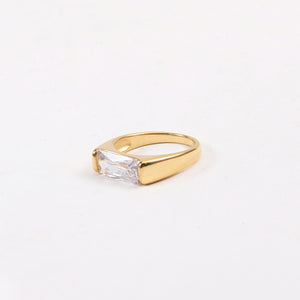
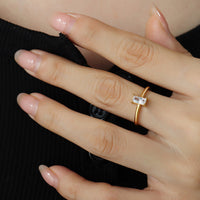
The piece they're describing → Square CZ Wedding Ring for Women — 18K Gold Plated, Princess Cut Cubic Zirconia
Personalize Yours


