


Last updated: July 2026
Amethyst meaning runs deep — this purple crystal has been worn by royalty, used in religious ceremonies, and carried as a protective talisman for over 2,000 years. Whether you're drawn to its color, its reputation for calming anxious thoughts, or its association with wisdom and intuition, understanding amethyst meaning helps you use this stone more intentionally. This guide covers the full picture: its spiritual symbolism, healing properties, history, chakra connections, zodiac links, and how to pick the right piece for you.

Amethyst meaning refers to the spiritual, emotional, and symbolic significance of the purple quartz crystal. Traditionally, amethyst symbolizes clarity of mind, emotional balance, spiritual protection, and intuition. It's connected to the crown and third eye chakras, associated with calm and wisdom, and used in meditation, healing practices, and jewelry across many cultures and centuries.
History and Lore of Amethyst
Amethyst gets its name from the Ancient Greek word amethystos, meaning "not drunk." One popular Greek myth credits the god Dionysus (called Bacchus by the Romans) with the stone's origin: angered by a mortal slight, Dionysus swore to unleash tigers on the next person he met, and a nymph named Amethystos, praying for protection, was turned to clear quartz by the goddess Artemis. Dionysus, remorseful, poured wine over the stone as an offering, staining it purple. Greeks and Romans carved amethyst into drinking vessels and wore it as amulets, believing the stone prevented intoxication and kept the mind clear. That belief reflects a broader theme that runs through amethyst's history: this is a stone associated with sobriety, mental clarity, and protection against excess.
In medieval Europe, amethyst was considered a stone of royalty. Its purple color — expensive to produce with dye — became linked to monarchy and the church. Bishops wore amethyst rings as symbols of piety and wisdom. Crusaders carried it into battle as a protective talisman. Catherine the Great of Russia had a particular obsession with the stone and collected hundreds of amethyst pieces throughout her reign.
The crystal also appears in the Bible as one of the twelve stones in the breastplate of Aaron, and it's listed as one of the foundation stones of the New Jerusalem in Revelation. Across Egyptian, Chinese, and Native American traditions, amethyst appears as a stone of healing, protection, and spiritual access.
Until the 19th century, amethyst was as valuable as ruby and emerald. The discovery of massive amethyst deposits in Brazil changed that, making it widely accessible. Today, amethyst is the most popular purple gemstone in the world — but its rich symbolism hasn't faded.
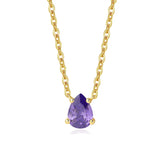
Shop Amethyst Crystal Charm Necklaces — Shop Our Amethyst Pendant Necklace → →
Ready to shop? Browse all amethyst necklaces and birthstone jewelry in 925 sterling silver — every piece hypoallergenic, gift-ready, and backed by our 30-day returns.
Shop the February Birthstone Necklace
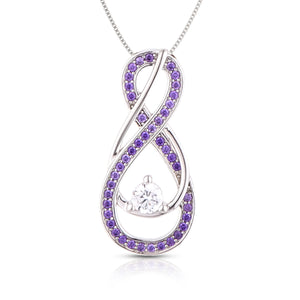
925 sterling silver infinity pendant, rhodium plated, with purple cubic zirconia pave in February’s amethyst color — nickel-free, 16.5" + 2" extender.
Shop the February Birthstone Necklace →Amethyst Color Range: Pale Lilac to Deep Purple
Not all amethyst looks the same. The color comes from iron impurities and natural irradiation within quartz crystal. Depending on those factors, amethyst can range from the palest lilac — almost translucent pink-purple — to a rich, saturated deep violet.
The most prized shade is a deep reddish-purple sometimes called "Siberian" amethyst, which commands premium prices. "Rose de France" amethyst describes the lighter lavender variety, popular in vintage and antique jewelry. Brazilian amethyst tends toward medium purple, while Uruguayan amethyst is often darker and more saturated.
Color also affects meaning for many crystal practitioners. Lighter amethyst is often associated with gentle calming and emotional sensitivity, while darker shades are linked to deeper spiritual work and stronger protective energy. For jewelry purposes, personal preference matters most — both ends of the spectrum are genuine amethyst with the same mineral composition.
Amethyst also occurs in shades outside the purple family. Green amethyst — more accurately called prasiolite — forms when natural or lab-controlled heat treatment shifts amethyst's iron content toward a soft mint-green. Most prasiolite on the market today is heat-treated Brazilian amethyst, since natural, untreated green amethyst is rare. Pink amethyst, mined mainly in Patagonia, gets its blush tone from a different trace mineral (hematite) rather than the iron responsible for purple amethyst — some gemologists classify it as a related but distinct quartz variety rather than true amethyst.
According to the Gemological Institute of America (GIA), the best amethyst shows strong saturation with no visible color zoning and a red-to-purple hue range. Heat-treated amethyst is common and can shift color toward yellow (becoming citrine) or lose saturation — always ask sellers about treatment when buying fine stones.
Amethyst Meaning: Spiritual and Emotional Significance
At its core, amethyst meaning centers on three themes: calm, clarity, and connection. Spiritually, amethyst is seen as a bridge between the physical and the divine. Many traditions use it to deepen meditation, open intuition, and invite higher awareness. It's considered a stone of protection — creating an energetic shield against negative influences and emotional overwhelm.
Emotionally, amethyst is thought to quiet mental chatter and soothe anxiety. People often turn to amethyst during stressful periods, grief, or major life transitions. Crystal practitioners describe it as grounding without being heavy — it brings you back to yourself without pulling you down.
On a practical level, amethyst is associated with better sleep. Many people place amethyst on their nightstand or under their pillow to encourage restful, dream-filled sleep. It's also linked to creativity, making it popular with artists and writers who want a mental clarity boost without stimulation.
The spiritual meaning also includes support for addiction recovery. This connects back to the Greek tradition of protection against intoxication. Some recovery communities use amethyst as a sobriety token, honoring both the ancient symbolism and the stone's association with clear-headed decision-making.
Chakra Connections
Amethyst is most strongly linked to two chakras: the third eye (Ajna) and the crown (Sahasrara).
The third eye chakra, located between the eyebrows, governs intuition, inner knowing, and the ability to see beyond surface appearances. When this chakra is open and balanced, you trust your gut, think clearly, and can access deeper insight. Amethyst's energy is said to support this process — helping you cut through confusion and tune into what you actually know.
The crown chakra, at the top of the head, connects to spiritual awareness, universal consciousness, and a sense of meaning or purpose. Working with amethyst at the crown chakra is thought to open channels for spiritual insight and foster a sense of peace that comes from feeling connected to something larger than everyday life.
In practice, people use amethyst during meditation by placing it on the forehead during rest, holding it in the hands, or simply wearing it as jewelry throughout the day. The idea is that proximity to the stone provides a subtle energetic reminder of the qualities you're cultivating.
Healing Properties Overview
Crystal healing is a complementary practice — it works best alongside, not instead of, medical care. That said, amethyst is one of the most widely used healing crystals, and its reputation spans centuries. Here's what it's traditionally associated with:
- Stress and anxiety relief: Amethyst is probably best known for this. Its calming purple energy is used to lower emotional tension and quiet overthinking.
- Sleep support: Placed near the bed, amethyst is thought to encourage deeper, more restful sleep and reduce nightmares.
- Mental clarity: Used during work or study, amethyst is associated with focus, clear thinking, and improved memory.
- Emotional balance: It's said to help process grief, anger, and loss without becoming overwhelmed by those emotions.
- Spiritual protection: Many people wear amethyst as a shield against negative energy in their environment or from other people.
- Headache and tension relief: In folk traditions, amethyst was placed on the temples to ease headaches. Some practitioners still use it this way.
A 2020 survey by the Crystal Council found that amethyst ranked as the number one crystal used for anxiety and stress management among 3,200 crystal practitioners surveyed globally. While this reflects cultural use rather than clinical evidence, it speaks to amethyst's enduring reputation as a go-to stone for emotional support.
Zodiac Connections
Amethyst is February's birthstone, which ties it directly to Aquarius (January 20–February 18) and Pisces (February 19–March 20). But its connections extend further across the zodiac.
Aquarius: Amethyst aligns well with Aquarius's intellectual curiosity, humanitarian values, and unconventional thinking. The stone supports the Aquarian need for mental clarity and helps balance their tendency to detach emotionally.
Pisces: As natural empaths and dreamers, Pisces are especially drawn to amethyst's calming and protective energy. The stone helps Pisces set boundaries without losing their sensitivity.
Virgo: Amethyst is sometimes listed as a secondary stone for Virgo, helping to quiet the perfectionist mind and ease the anxiety that comes from overthinking.
Capricorn and Sagittarius: Both signs can benefit from amethyst's grounding spiritual energy — Capricorn to open up to intuition, Sagittarius to slow down and reflect.
For more on how amethyst interacts with all twelve signs, read our guide on amethyst and zodiac signs. You can also explore crystals for your zodiac sign to see how amethyst stacks up against other stones for your birth chart.
Amethyst in Jewelry
Amethyst has been set in jewelry for millennia, and it remains one of the most popular colored gemstones in modern pieces. Its hardness of 7 on the Mohs scale makes it durable enough for everyday wear in rings, necklaces, earrings, and bracelets — though it should be protected from sharp impacts. Our own raw amethyst charm necklace uses that uncut-crystal-pendant format directly — a single amethyst chip, wire-wrapped rather than faceted.
In contemporary jewelry, amethyst appears in everything from raw crystal pendants (where an uncut chunk of crystal hangs from a chain) to precisely faceted oval or round cuts in fine silver or gold settings. The GIA notes that amethyst pairs especially well with sterling silver, which complements the purple tones without competing with them.
Crystal charm necklaces have grown in popularity because they let wearers combine multiple stones based on intention — amethyst alongside citrine for clarity and energy, or paired with rose quartz for emotional healing. Wearing amethyst close to the body throughout the day is one of the most accessible ways to work with the stone's energy.
When amethyst is used in jewelry for its meaning rather than just its appearance, the setting matters. Many practitioners prefer raw or minimally polished amethyst, believing it retains more of its natural energy. Others prefer faceted cuts that catch and scatter light, creating a visual reminder of clarity and focus throughout the day.
How to Cleanse and Care for Amethyst
Amethyst is sensitive to prolonged sunlight — UV exposure can fade the color over time, shifting it toward a paler lilac or even yellow. Keep amethyst away from direct sun for more than a few minutes at a time.
For energetic cleansing — resetting the stone's energy after use — common methods include:
- Moonlight: Place amethyst on a windowsill or outside during a full moon overnight. This is the most widely recommended method.
- Sound: A singing bowl, tuning fork, or even music played near the stone is thought to clear stagnant energy without risking any physical damage.
- Selenite: Resting amethyst on a selenite plate is a popular no-effort cleansing method that works continuously.
- Running water: Brief rinsing under cool water works, but avoid soaking — prolonged water exposure can affect some crystal settings and may eventually impact polished surfaces.
For physical cleaning, warm soapy water and a soft brush work well. Avoid ultrasonic cleaners if your amethyst has fractures or inclusions. Store amethyst separately from harder gemstones (diamonds, sapphires) to prevent scratching. For a full step-by-step approach, see our guide on how to cleanse amethyst.
Buying Guide Basics
Amethyst is widely available at a range of price points, making it accessible for nearly any budget. Here's what to know before you buy:
Natural vs. synthetic: Lab-created amethyst exists and is chemically identical to natural amethyst. It's less expensive and flawless in appearance. If origin matters to you for spiritual or collector reasons, ask specifically for natural amethyst and look for slight inclusions or color variations that confirm it wasn't made in a lab.
Color: Deeper, more saturated purple with a reddish hue commands higher prices. For jewelry rather than collection, medium-to-deep purple is a practical sweet spot — saturated enough to show well but less expensive than top-grade stones.
Clarity: Unlike diamonds, amethyst doesn't need to be flawless. Minor inclusions are natural and don't significantly affect beauty or durability. Avoid stones with large fractures near the surface.
Treatment: Heat treatment is very common and generally accepted. It stabilizes color and is difficult to detect. Ask sellers to disclose any treatments beyond standard heat treatment.
Source: Major sources include Brazil (most common), Uruguay (darker stones), Zambia, and Madagascar. Uruguayan and Zambian amethyst tends to be more saturated and commands slightly higher prices. For a deeper dive, read our amethyst buying guide.
Explore Amethyst Topics
Amethyst has more to offer than any single article can cover. Explore these focused guides to go deeper:
- Amethyst Healing Properties: What the Research and Tradition Say
- Amethyst and the Zodiac: Which Signs Benefit Most
- How to Cleanse Amethyst: 6 Methods That Work
- Amethyst Buying Guide: How to Choose the Right Stone
- February Birthstone: Everything About Amethyst
- Crystals for Your Zodiac Sign: A Complete Guide
Related reading: What does purple mean on a mood ring.
Related reading: Amethyst vs purple sapphire.
Related reading: Garnet or amethyst.
Related reading: Prasiolite meaning.
Frequently Asked Questions
What is the main meaning of amethyst?
Amethyst's main meaning centers on calm, clarity, and spiritual protection. The stone has been associated with clear thinking and emotional balance since ancient Greek times, when people wore it to stay sober and clear-headed. Today, it's most commonly used as a tool for managing stress, deepening meditation, and supporting intuition. Its purple color also links it to wisdom, royalty, and spiritual awareness across many cultural traditions.
What does amethyst do spiritually?
Spiritually, amethyst is believed to open and activate the third eye and crown chakras, supporting intuition and connection to higher awareness. Many people use it during meditation to quiet mental noise and access deeper insight. It's also considered a protective stone, thought to shield the wearer from negative energy and emotional overwhelm. Some traditions associate it with spiritual sobriety — keeping the mind clear and grounded in what matters.
Who should wear amethyst?
Amethyst suits almost anyone, but it's particularly recommended for people dealing with anxiety, sleep problems, or a busy, overthinking mind. Aquarius and Pisces are the zodiac signs most traditionally linked to amethyst, but crystal practitioners recommend it across the zodiac for its broadly calming effects. Anyone drawn to the stone's energy or simply to its purple color will find it a beneficial addition to their life. Intention matters more than birth sign when choosing crystals.
Is amethyst the same as purple quartz?
Yes — amethyst is a variety of quartz (silicon dioxide) that gets its purple color from iron impurities and natural irradiation within the crystal structure. It's chemically identical to clear quartz, rose quartz, and citrine, differing only in the trace elements that produce its distinctive color. All genuine amethyst is purple quartz, though the shade ranges from pale lavender to deep violet depending on where and how it formed.
What chakra is amethyst connected to?
Amethyst is primarily connected to the third eye chakra (Ajna), located between the eyebrows, and the crown chakra (Sahasrara), at the top of the head. The third eye connection supports intuition, inner vision, and clarity of thought. The crown chakra connection relates to spiritual awareness, universal consciousness, and a sense of purpose. Some practitioners also use amethyst with the heart chakra to ease grief or emotional pain, though this is a secondary association.
How can I tell if my amethyst is real?
Real amethyst will feel cool to the touch initially and warm up slowly in your hand — glass fakes warm up faster. Genuine amethyst has natural color variations and may show slight inclusions or color zoning when you look closely; perfect, uniform color in an inexpensive stone is a red flag. A reputable seller will provide information about the stone's origin and any treatments. If you're spending significant money, ask for certification from a recognized gemological lab like GIA.
Can amethyst go in water?
Amethyst can handle brief contact with water — a quick rinse for physical cleaning is fine. However, prolonged soaking isn't recommended, especially for polished jewelry settings where water can loosen adhesives or damage metal over time. Amethyst should never be placed in saltwater, as salt can be abrasive to crystal surfaces. For energetic cleansing, moonlight or selenite are safer alternatives that carry no risk of surface damage or color fading.
Does amethyst fade in sunlight?
Yes, amethyst is sensitive to prolonged UV exposure and can fade over time if left in direct sunlight. The iron that gives amethyst its purple color can be altered by UV radiation, shifting the stone toward a lighter lavender or even a yellowish hue. Brief exposure during normal outdoor activities isn't a concern, but avoid leaving amethyst in a sunny window or outdoors for extended periods. Store it in a drawer or fabric pouch when not in use to preserve its color.
What's the difference between amethyst and lavender amethyst?
Lavender amethyst — sometimes called "Rose de France" amethyst — refers to the lighter, paler end of the amethyst color spectrum. It has the same mineral composition as deeper purple amethyst but contains less iron or has experienced different irradiation conditions during formation. Both are genuine amethyst with the same properties and meaning. Darker amethyst is generally considered more valuable in gemological terms, but lavender amethyst has its own following for its soft, romantic appearance in jewelry.
What stones pair well with amethyst?
Amethyst pairs well with clear quartz (which amplifies its energy), rose quartz (for a combination of clarity and emotional warmth), and citrine (which adds motivation and optimism to amethyst's calming influence). It also works well with black tourmaline for protective combinations, or moonstone for enhanced intuition. In jewelry, amethyst complements sterling silver, white gold, and rose gold settings. For spiritual work, combining amethyst with grounding stones like obsidian or hematite balances its more ethereal crown chakra energy.
Final Thoughts
Amethyst meaning isn't just one thing — it's a layered story built from thousands of years of human experience with this remarkable purple crystal. Whether you're drawn to amethyst for its calming energy, its connection to intuition and spiritual clarity, its beauty as a gemstone, or simply its rich history, there's something here that resonates. Wearing amethyst in jewelry keeps that energy close throughout your day. If you're ready to bring this stone into your life, explore our amethyst crystal charm necklaces and find the piece that feels right for you. Shop Amethyst Crystal Charm Necklaces at AJLuxe →
All third-party trademarks, brand names and product names are the property of their respective owners. AJLuxe is not affiliated with, endorsed by, sponsored by, or otherwise connected to any third-party brand referenced in this article. Brand names are used solely for accurate comparative reference, and material descriptions reflect each brand's own published product specifications at the time of writing.
You Might Also Like
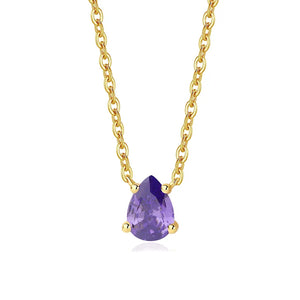
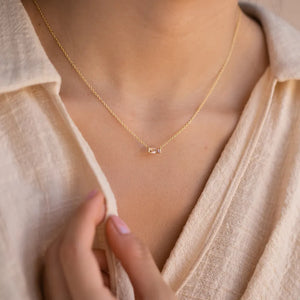

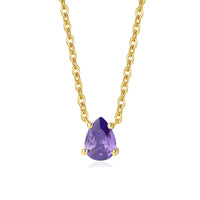
The piece they're describing → Amethyst Pendant Necklace for Women — Teardrop Amethyst Stone, 925 Sterling Silver
Personalize Yours


