


Last updated: September 2026
How Is Jewelry Actually Made?
Jewelry looks finished and seamless by the time it reaches a store shelf, which makes it easy to forget that every ring, chain, and pendant went through an actual manufacturing process first. There are really only a handful of ways metal becomes jewelry, and once you know what they are, you can look at almost any piece and have a decent guess at how it was made.
Lost Wax Casting: The 6,000 Year Old Method Still Used Today
Lost wax casting works by carving or 3D printing a wax model of the exact piece, encasing that wax model in a plaster like material called investment, then heating the whole mold until the wax burns out and melts away, leaving a precise empty cavity in its exact shape. Molten metal is then poured into that cavity, filling the space the wax used to occupy, and once it cools and the investment is broken away, the raw casting comes out in the piece's final form, ready for cleanup, stone setting, and finishing.
The technique gets its name from the fact that the original wax model is "lost," destroyed in the process of making the mold, which is part of why it has stayed relevant for so long: it can reproduce extremely fine, complex detail, including filigree and intricate settings, that would be difficult to achieve by hand fabrication alone. It is one of the oldest known metalworking techniques, with documented use going back roughly 6,000 years, and it remains the standard method behind most cast rings, pendants, and detailed pieces produced today, whether the original wax model was hand carved or generated from a CAD file and 3D printed.
Stamping and Die Striking: How Jewelry Gets Made Fast and Identical
Stamping, also called die striking, works by pressing a sheet of metal between a die and a punch under high pressure, which forces the metal to take on the exact shape carved into the die in a single strike. Because the die itself carries all the detail, every piece stamped from it comes out essentially identical, which is what makes stamping the method behind most simple, high volume jewelry: flat charms, basic band rings, stackable pieces, and any design without deep three dimensional detail.
Stamping is faster and cheaper per piece than casting once a die exists, since there is no mold to build and break for every single item, but the upfront cost of cutting a precision die is real, which is why stamped designs tend to be simpler, flatter shapes rather than the deep, undercut detail casting can produce. A lot of everyday, affordable jewelry, including simple pendants and charms, is stamped rather than cast for exactly this reason: consistent shape, low per unit cost, at the expense of intricate three dimensional detail.
Hand Fabrication: Jewelry Built Piece by Piece
Hand fabrication works by cutting, bending, soldering, and shaping wire and sheet metal directly into a finished piece, without casting it from a mold or stamping it from a die. A fabricated ring, for example, might start as a strip of sheet metal that gets cut to length, bent into a circle, and soldered closed at the seam, rather than poured as a single cast piece. Chain making, wire wrapping, and a lot of fine handmade jewelry use fabrication because it allows a maker to build a piece incrementally and make adjustments along the way, rather than committing to a single mold or die upfront.
Fabrication tends to be the slowest and most labor intensive of the three main methods, which is part of why fully hand fabricated pieces usually cost more than a comparable cast or stamped item: more of the price reflects the maker's direct time rather than the metal and equipment alone. Many finished pieces of jewelry are actually a combination of methods: a cast center setting soldered onto a fabricated band, for instance, rather than purely one technique or the other.
Where Plating Fits In: A Finishing Step, Not a Forming Method
Plating is not a way of shaping jewelry at all; it is a finishing step applied after a piece has already been cast, stamped, or fabricated into its final form. In electroplating, the finished piece is submerged in a solution containing dissolved metal ions (commonly gold), and an electric current is used to bond a thin layer of that metal onto the piece's surface. That is true whether the base piece underneath is sterling silver, stainless steel, or brass: plating changes the color and surface finish, not the structure or shape, which is why a cast ring and a stamped ring can both end up gold plated using the same finishing process. For the full mechanism behind how that bond actually forms, see how gold plating actually works.
Casting vs. Stamping vs. Fabrication: The Honest Comparison
| Method | Best for | Detail level | Typical cost driver |
|---|---|---|---|
| Lost wax casting | Rings, pendants, and pieces with fine or complex detail | High, including undercuts and filigree | Mold and metal cost per casting run |
| Stamping / die striking | Simple, high volume, identical pieces | Lower, mostly flat or shallow designs | Upfront die cost, then low cost per piece |
| Hand fabrication | Custom, one of a kind, or fine handmade pieces | Depends entirely on the maker's skill | Labor time, since each piece is built individually |
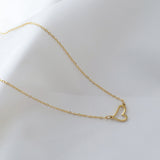
Shop Gold Plated Jewelry at AJLuxe: Dainty Gold Plated Heart Necklace →
Curious what happens to a stone once the metal part of a piece is formed? See how cubic zirconia is actually made for how the stones that get set into a cast or fabricated piece are manufactured. And for the small mechanical part that gets soldered or attached to almost every finished piece, see the engineering behind every jewelry clasp.
Frequently Asked Questions
How is most jewelry actually made?
Most jewelry is made using one of three core methods: lost wax casting, which pours molten metal into a mold shaped by a wax model; stamping or die striking, which presses a design into sheet metal using a die; or hand fabrication, which builds a piece by cutting, bending, and soldering wire and sheet directly. Many finished pieces actually combine more than one method.
What is lost wax casting?
Lost wax casting is a metalworking technique where a wax model of a piece is encased in a plaster like mold, then heated until the wax melts and burns away, leaving an empty cavity in the wax's exact shape. Molten metal is poured into that cavity to form the final piece. It is one of the oldest known jewelry making methods, with documented use going back roughly 6,000 years.
What is the difference between stamped and cast jewelry?
Stamped jewelry is pressed into shape from a flat sheet of metal using a die, in a single strike, which makes it fast and consistent but generally limits it to simpler, flatter designs. Cast jewelry is poured as molten metal into a mold, which allows for far more complex, three dimensional detail, including filigree and undercuts, but takes more time and material per piece.
Does plating change how a piece of jewelry is made?
No. Plating is applied after a piece is already fully cast, stamped, or fabricated into its final shape. It is a finishing step, most commonly electroplating, that bonds a thin layer of another metal, like gold, onto the surface of the already formed piece. It changes the color and finish, not the underlying construction method.
Final Thoughts
Once you know the three basic ways jewelry gets built, casting, stamping, and hand fabrication, it becomes a lot easier to understand why two pieces that look similar can be priced so differently, or why a stamped charm feels different in the hand than a cast ring. None of the three methods is inherently "better": each one is suited to a different kind of design, and plenty of great jewelry, including a lot of what AJLuxe carries, uses casting or stamping as its base construction before a gold plating finish is applied on top.
Written by the AJLuxe team. Last updated: September 2026.
Sources: Formlabs: Lost Wax Casting, Technique and Process, The Crucible: Lost Wax Casting Guide, The Plumb Club: Jewelry Making Methods.
Shop Gold Plated Jewelry at AJLuxe: Dainty Gold Plated Heart Necklace →
All third-party trademarks, brand names and product names are the property of their respective owners. AJLuxe is not affiliated with, endorsed by, sponsored by, or otherwise connected to any third-party brand referenced in this article. Brand names are used solely for accurate comparative reference, and material descriptions reflect each brand's own published product specifications at the time of writing.
You Might Also Like


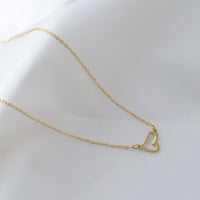
The piece they're describing → Dainty Heart Necklace for Women — 18K Gold Plated, Minimalist Gold Heart Pendant
Personalize Yours


