


Cubic zirconia is made by melting zirconium oxide powder at extremely high temperatures and letting it cool into large, clear synthetic crystals, in a process called the skull-melt (or skull crucible) method. The powder is melted using radio-frequency induction heating inside its own unmelted shell, called the "skull," which keeps the molten material from ever touching and contaminating a crucible wall, and the resulting crystal boules are then cut and faceted into gemstones.
What Is Cubic Zirconia, Chemically?
Cubic zirconia is the crystallized cubic form of zirconium dioxide (zirconia), a compound that doesn't naturally form large, stable crystals at room temperature on its own. To keep the cubic crystal structure stable once the material cools, manufacturers add a stabilizer, most commonly yttrium oxide, mixed into the zirconium oxide powder before melting. Without that stabilizer, the crystal structure would revert to a different, unusable phase as it cooled.
The Skull-Melt Process, Step by Step
1. Zirconium Oxide Powder Is Loaded and Stabilized
Fine zirconium oxide powder, mixed with a stabilizing oxide like yttrium oxide, is loaded into a water-cooled metal container called a crucible or "skull." The stabilizer is what allows the finished crystal to hold its cubic structure permanently once it's cooled back to room temperature.
2. Radio-Frequency Induction Heats the Powder
A radio-frequency induction coil surrounds the crucible and heats the zirconium oxide powder to well over 2,500 degrees Celsius, hot enough to melt the material's core, without ever bringing a flame or heating element into direct contact with it.
3. The "Skull" Shell Protects the Melt From Contamination
Because the crucible is water-cooled, only the interior of the powder mass actually melts; a thin outer layer stays solid and unmelted, forming a shell (the "skull") made of the same zirconium oxide material. That unmelted shell is what gives the process its name, and it's the reason the method works at all: the molten zirconia never touches a foreign crucible wall, so nothing leaches into the melt and the resulting crystal stays chemically pure.
4. Controlled Cooling Grows the Crystal
Once fully molten at the core, the heat is gradually reduced in a controlled way, allowing the melt to crystallize slowly from the outside in. This slow, controlled cooling is what allows large, optically clear crystal masses, called boules, to form rather than a cloudy or fractured mix of tiny crystals.
5. Boules Are Cut and Faceted
The cooled boules are removed from the skull, inspected for clarity, and cut into rough gemstone shapes before being faceted, polished, and finished the same way a natural gemstone would be, using the same cutting principles jewelers apply to diamonds and other gems to maximize brilliance and fire.
Why This Process Makes CZ So Clear and Consistent
Cubic zirconia's exceptional clarity comes directly from how it's manufactured: because it's grown in a controlled lab process from pure, stabilized raw material rather than formed under the unpredictable pressure and impurities of natural geological conditions, cubic zirconia is far less likely to contain the inclusions and flaws common in natural gemstones. That's also why cubic zirconia is consistently affordable: the skull-melt process can produce large, clear crystal boules relatively efficiently compared to the rarity and extraction cost of mined gemstones.
How Is This Different From How Diamonds Form?
Natural diamonds form from pure carbon under intense heat and pressure deep within the earth over enormous spans of time, then have to be mined, whereas cubic zirconia is a completely different compound (zirconium oxide, not carbon) grown in a controlled industrial process in a matter of hours. They share no chemical relationship; cubic zirconia is a diamond simulant, meaning it visually resembles a diamond, not a lab-grown version of the same material the way a lab-grown diamond is chemically identical carbon grown industrially.
| Property | Cubic Zirconia | Natural Diamond |
|---|---|---|
| Chemical composition | Zirconium oxide (stabilized with yttrium oxide) | Pure carbon |
| Origin | Lab-grown via the skull-melt process | Formed naturally underground, then mined |
| Mohs hardness | Around 8 to 8.5 | 10, the hardest known natural material |
| Typical clarity | Very high, few natural inclusions due to controlled growth | Varies widely by stone |
Why Is Cubic Zirconia So Common in Affordable Jewelry?
Cubic zirconia shows up across so much affordable jewelry because the skull-melt process reliably produces large, clear, brilliant crystal at a fraction of the cost of mining and cutting a natural gemstone of comparable clarity. That combination of visual brilliance, consistency, and manufacturing efficiency is what makes it possible to set genuinely sparkly, well-cut stones into jewelry priced for everyday wear rather than a single occasion.
Frequently Asked Questions
How is cubic zirconia made?
Cubic zirconia is made by melting zirconium oxide powder, stabilized with an oxide like yttrium oxide, using radio-frequency induction heating in a process called the skull-melt method. The molten material is contained within its own unmelted shell to avoid contamination, then cooled in a controlled way to grow large, clear crystal boules that are cut and faceted into gemstones.
Is cubic zirconia a real crystal?
Yes. Cubic zirconia is a genuine, lab-grown crystal made of zirconium oxide, not glass or plastic. It's produced through a real industrial crystal-growth process, the skull-melt method, and is cut and faceted the same way natural gemstones are.
What is cubic zirconia made of?
Cubic zirconia is made of zirconium dioxide (zirconia) stabilized with a small amount of another oxide, most commonly yttrium oxide, which keeps the crystal in its cubic form once it cools. It contains no carbon and is chemically unrelated to diamond.
Is cubic zirconia the same as a lab-grown diamond?
No. Cubic zirconia is zirconium oxide, while a lab-grown diamond is pure carbon grown in a lab to be chemically identical to a natural diamond. Cubic zirconia is a diamond simulant, meaning it looks similar, while a lab-grown diamond is an actual diamond by composition, just not mined.
Why is cubic zirconia so affordable?
Cubic zirconia is affordable because it's manufactured through a relatively efficient industrial process, the skull-melt method, that can reliably produce large, clear crystal boules, rather than relying on the far more costly extraction and sorting involved in mining natural gemstones.
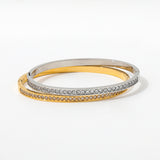
If you like the clarity and brilliance of cubic zirconia grown this way, see our CZ bangle bracelet, set with cubic zirconia stones on a 925 sterling silver base.
Wondering how this manufacturing process affects value? Read is cubic zirconia real for the honest answer on what "real" means for a lab-made stone.
Curious how the finished stone compares to a diamond? See our cubic zirconia vs diamond comparison for the side-by-side breakdown.
All third-party trademarks, brand names and product names are the property of their respective owners. AJLuxe is not affiliated with, endorsed by, sponsored by, or otherwise connected to any third-party brand referenced in this article. Brand names are used solely for accurate comparative reference, and material descriptions reflect each brand's own published product specifications at the time of writing.
You Might Also Like
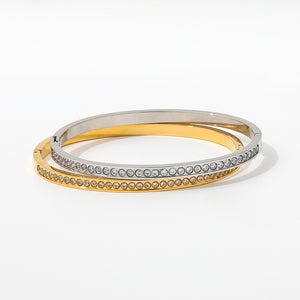
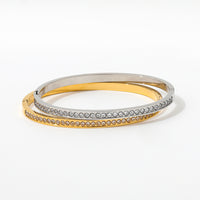
The piece they're describing → CZ Bangle Bracelet for Women, Gold or Silver Plated, CZ Stones
Personalize Yours


