


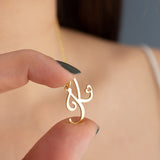
Last updated: September 2026
Why Is Jewelry So Expensive?
"Why is this so expensive, it's just metal and a stone" is a fair question, and most jewelry brands never actually answer it. The honest answer has two separate parts that get blurred together: what the raw materials cost right now, and what gets added on top of that before a piece reaches a store shelf or a product page.
Part One: The Real Cost of the Metal Has Gone Up A Lot
Gold's price has risen dramatically in a short period of time, and that alone explains a real chunk of why solid gold jewelry costs more than it used to. Gold closed out 2024 trading around $2,500 an ounce, then climbed to an all time intraday record above $5,600 an ounce on January 28, 2026, according to market data reported by outlets including CBS News and Yahoo Finance, more than doubling in just over a year. Reporting attributes the run up to a mix of factors: central bank gold buying, a weaker U.S. dollar, and broader geopolitical and economic uncertainty pushing investors toward gold as a safe haven asset.
That matters directly for jewelry pricing because solid gold pieces are priced largely on the market value of the gold they contain. When the underlying commodity roughly doubles in price, a solid gold ring that used a fixed amount of gold gets meaningfully more expensive to produce, independent of anything the retailer decides to do with margin. This is real, verifiable commodity price movement, not a story brands invented to justify a higher price tag.
Part Two: Retail Markup Is Layered on Top of the Material Cost
Retail markup on jewelry has traditionally followed "keystone" pricing, meaning a store roughly doubles its cost to set the price a customer sees, and while that margin has narrowed somewhat over the last two decades, it has not disappeared. The Jewelers of America Cost of Doing Business Survey, an annual industry benchmarking report, has tracked this decline directly: gross margins that used to sit comfortably above 50 percent industry wide have settled into roughly the low to mid 40 percent range in more recent survey years, per coverage of the report in National Jeweler and IDEX Online.
That margin has to cover more than pure profit. Retail rent, staff, insurance, inventory that sits unsold for months, marketing, and payment processing all get absorbed into that gap between wholesale cost and retail price, which is part of why a jewelry store's margin looks large as a percentage but doesn't translate one to one into pure profit. Direct to consumer ecommerce brands, without physical stores to staff and light, generally run on a different cost structure than mall jewelers, which is a real structural reason online-first, affordable brands can price lower without necessarily using cheaper materials.
Branded Markup vs. Material Markup: Not the Same Thing
A brand name on a box can add its own separate markup layer that has nothing to do with either metal cost or standard retail margin. Once a design carries a recognizable brand, pricing on comparable premium and branded pieces can run to several times the raw material and manufacturing cost, reflecting design, marketing, and brand positioning rather than anything physically different about the metal or stones. That is a legitimate business model, brands are allowed to charge for their name, but it is a genuinely separate cost from the two described above, and it is the layer that is easiest to strip out entirely by choosing an unbranded or newer direct to consumer piece instead.
How Affordable Brands Charge Less Without Faking the Metal
Affordable jewelry brands generally charge less by controlling one or more of the three cost layers above, not by lying about what a piece is made of. The most direct lever is material choice: a gold plated piece over sterling silver or stainless steel uses a small fraction of a gram of actual gold compared to several grams in a solid gold item, which means it is barely exposed to the gold price swings described above, and its price mostly reflects design, base metal, and manufacturing rather than commodity gold cost. The second lever is cutting out the brand-name markup layer described above by not charging a premium for a recognizable logo. The combination is how a genuinely well made, gold plated piece can be sold honestly for a fraction of what a solid gold or heavily branded piece costs, without pretending the metal underneath is something it isn't.
Where the Price Actually Comes From: The Honest Breakdown
| Cost layer | What drives it | Solid gold jewelry | Gold plated jewelry |
|---|---|---|---|
| Metal cost | Commodity gold price, near record highs in 2026 | High exposure, since several grams of gold are priced directly into the piece | Low exposure, since plating uses a small fraction of a gram of gold |
| Retail markup | Store overhead, staffing, and margin, historically near keystone pricing | Applies fully | Applies fully |
| Brand name markup | Design recognition and marketing, separate from materials | Can apply heavily on branded pieces | Depends on the brand; avoidable by choosing unbranded or newer direct to consumer pieces |
Shop Affordable Jewelry at AJLuxe: Heart Initial Necklace →
For a deeper look at what you're actually paying for on a gold plated piece specifically, see is 18K gold plated jewelry worth it. And if you're wondering how little of that record gold price actually touches a plated item, how gold is actually mined breaks down the gold content gap between solid and plated pieces in detail.
Frequently Asked Questions
Why has jewelry gotten more expensive recently?
Mainly because gold's price has risen sharply. Gold closed 2024 around $2,500 an ounce and hit an all time intraday high above $5,600 an ounce on January 28, 2026, more than doubling in just over a year, according to widely reported market data. Since solid gold jewelry is priced largely on its gold content, that price surge shows up directly in solid gold jewelry prices.
How much do jewelry stores actually mark up their prices?
Historically, jewelry retail has followed "keystone" pricing, roughly doubling wholesale cost to set the retail price. That margin has narrowed over the last two decades; the Jewelers of America Cost of Doing Business Survey has reported typical jewelry store gross margins settling into roughly the low to mid 40 percent range in more recent years, down from margins that used to sit above 50 percent.
Is branded jewelry more expensive just because of the brand name?
Often, yes, at least in part. Once a design carries a recognizable brand name, pricing can run well above the cost of materials and manufacturing alone, reflecting design, marketing, and brand positioning rather than anything different about the physical piece. That markup layer is separate from material cost and standard retail margin.
Why is gold plated jewelry cheaper than solid gold?
Gold plated jewelry uses a thin surface layer of gold, typically a small fraction of a gram, over a base metal like sterling silver, compared to several grams of pure gold in a solid gold piece of similar size. That means gold plated jewelry is barely affected by swings in the gold commodity price, so its cost mostly reflects design and manufacturing rather than the price of gold itself.
Final Thoughts
Jewelry prices reflect two genuinely different things stacked together: what the metal itself costs right now, which has moved dramatically with gold's 2026 price surge, and what a retailer adds on top of that cost to stay in business, or in some cases, to sell a name. Understanding which layer you're actually paying for is what lets you make an informed choice, whether that means paying for solid gold because you want the material itself, or choosing a well made gold plated piece that sidesteps most of the commodity price swing entirely.
AJLuxe prices its pieces as 925 sterling silver with genuine 18K gold plating, not solid gold, and we're upfront about that distinction in every product description so the price reflects what you're actually buying.
Written by the AJLuxe team. Last updated: September 2026.
Sources: Yahoo Finance: Gold Prices Hit Record High as 2026 Starts With a Rally, CBS News: Highest Gold Price in History, National Jeweler: JA Releases Cost of Doing Business Report.
Shop Affordable Jewelry at AJLuxe: Heart Initial Necklace →
All third-party trademarks, brand names and product names are the property of their respective owners. AJLuxe is not affiliated with, endorsed by, sponsored by, or otherwise connected to any third-party brand referenced in this article. Brand names are used solely for accurate comparative reference, and material descriptions reflect each brand's own published product specifications at the time of writing.
You Might Also Like
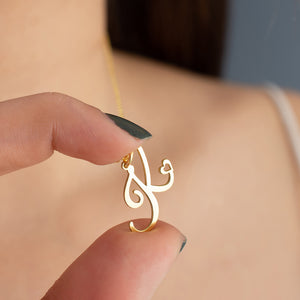
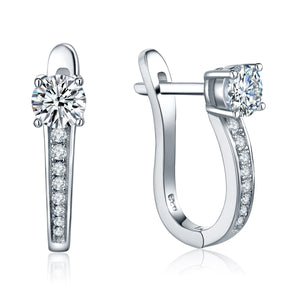
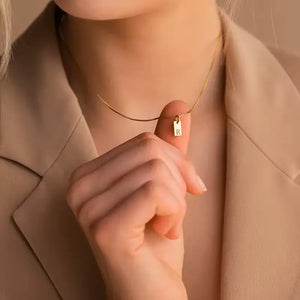
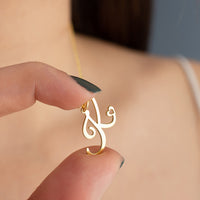
The piece they're describing → Heart Initial Necklace for Women — 18K Gold Plated, Personalized Letter + Heart Pendant
Personalize Yours


