


Last updated: September 2026
What Does "Recycled Gold" Actually Mean?
"Recycled gold" shows up on a lot of jewelry websites, but it is one of the least explained terms in the industry. It sounds self evidently better than "regular" gold, but almost nobody selling it explains what actually happens to a piece of scrap jewelry between being dropped off at a refiner and coming back out as the gold in a new ring. Here is the honest version: what recycled gold is, how it is actually processed, how much of the world's gold supply it really represents, and what a brand should be able to show you before you take a "recycled" claim at face value.
How Much of the World's Gold Supply Is Actually Recycled?
Recycled gold makes up roughly 30 percent of total annual global gold supply, with newly mined gold accounting for the rest, per World Gold Council supply data. That share moves around from year to year, since recycling responds quickly to the gold price: when gold prices rise, more people sell old jewelry and scrap for cash, which pushes the recycled share of supply up. With gold trading at record highs through early 2026, that dynamic has been especially visible: rising prices historically pull more old jewelry back into the refining pipeline.
Of the gold that does get recycled, old jewelry is by far the largest source. World Gold Council estimates put jewelry at more than 90 percent of recycled gold volume, with gold recovered from electronics and other industrial scrap making up the remainder. That matters for a simple reason: when a brand says its gold is "recycled," it is very likely describing gold that used to be someone else's ring, chain, or earrings, not a circuit board.
How Gold Actually Gets Recycled Into New Jewelry
Gold recycling works by melting down old gold items, dissolving out the impurities and base metals mixed in with them, and refining what remains back to a standard purity before it is remade into new jewelry. Old jewelry, dental gold, and industrial scrap are first sorted and assayed to estimate their gold content, since most scrap gold is an alloy mixed with silver, copper, or other metals rather than pure gold. The material is then melted down and run through a refining process (commonly acid-based refining or electrolytic refining for larger volumes) that separates the gold from everything else it is alloyed with.
The output of that process is gold bullion refined to a specific purity, typically expressed in karats or fineness, that is chemically indistinguishable from bullion refined from newly mined ore. A refinery does not "remember" where the gold came from once it has been purified: 24K refined gold from recycled scrap and 24K refined gold from a mine are the same material. That is what refiners mean when they say recycled gold is not a lower-quality substitute; once it clears refining, purity is purity.
How to Tell If a "Recycled Gold" Claim Actually Means Something
The honest answer is that you usually cannot verify a recycled-gold claim just by looking at a finished piece of jewelry, since refined gold carries no physical marker of where it came from. What you can do is look at whether a brand is specific about its sourcing rather than vague. A brand that names its refiner, references a real certification standard such as Responsible Jewellery Council Chain-of-Custody certification, or states a clear percentage of recycled content is making a claim that can, at least in principle, be checked. A brand that simply prints "recycled gold" on a product page with no sourcing detail is making a claim the FTC's own Green Guides caution against: an unqualified environmental benefit claim that is hard for a shopper to independently confirm.
This is also why "recycled gold" and "sustainable gold" are not interchangeable, even though marketing often treats them that way. Recycling reduces the need for newly mined ore for that specific batch of metal, which is a real and meaningful difference from mining virgin gold. It does not undo the environmental cost of the mining that already happened when that gold was first extracted, sometimes decades ago, and it says nothing about labor practices, energy use in refining, or the rest of a brand's supply chain. Recycled content is one honest data point, not a complete sustainability story.
Recycled Gold vs. Newly Mined Gold: The Honest Comparison
| Factor | Newly mined gold | Properly refined recycled gold |
|---|---|---|
| Purity once refined | Standard bullion purity for its stated karat | Identical purity for the same stated karat; refining erases the distinction |
| New environmental impact | Requires new ore extraction: land disturbance, waste rock, chemical processing | No new mining required for that specific gold, since it already exists above ground |
| Share of global supply | Roughly 70 percent of annual supply | Roughly 30 percent of annual supply, per World Gold Council data |
| How to verify the claim | Traceable through mine-of-origin documentation where brands provide it | Traceable through refiner disclosure or certification such as RJC Chain-of-Custody; an unqualified label alone is not proof |
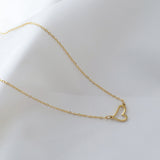
Shop Gold Plated Jewelry at AJLuxe: Dainty Gold Plated Heart Necklace →
Recycled or newly mined, the amount of gold that actually ends up on a gold-plated piece is small to begin with. See how much real gold is in gold-plated jewelry for the exact numbers, and how gold is actually mined for the full extraction process this recycling loop is an alternative to.
Frequently Asked Questions
What does recycled gold actually mean?
Recycled gold is gold that has already been mined, used once (most often as old jewelry, dental gold, or electronics), and then melted down and refined back to pure gold for reuse, instead of being newly mined from ore. Once refined, it is chemically identical to gold refined from a mine.
Is recycled gold lower quality than mined gold?
No. Refining removes the alloy metals and impurities from scrap gold and brings it back to a standard purity, the same process used for newly mined ore. Once refined, gold from a recycled source and gold from a mine are the same material at the same stated karat; there is no physical difference in quality.
How much of the world's gold supply is recycled?
Roughly 30 percent of annual global gold supply comes from recycling, according to World Gold Council data, with newly mined gold making up the rest. More than 90 percent of that recycled gold comes from old jewelry rather than electronics or other scrap.
Can any jewelry brand just say its gold is "recycled"?
A brand can print the word, but under the FTC's Green Guides and its Jewelry, Precious Metals, and Pewter Industries guidance, an environmental or recycled-content claim is supposed to be substantiated, not just asserted. Look for specifics, like a named refiner, a stated recycled-content percentage, or a real certification such as RJC Chain-of-Custody, rather than the word alone.
Is recycled gold the same as sustainable gold?
Not exactly. Recycling avoids the need for new mining for that particular batch of gold, which is a genuine and meaningful difference, but it does not erase the environmental impact of the mining that already happened when the gold was first extracted, and it does not by itself say anything about labor practices or a brand's wider supply chain. It is one honest, specific claim, not a complete sustainability certification.
Final Thoughts
Recycled gold is a real, useful, and honestly quite simple idea once you strip away the marketing language around it: old gold gets melted down, refined back to standard purity, and reused instead of pulling new ore out of the ground. Once refined, it is not a lesser version of mined gold, it is the same material. What is worth staying skeptical of is a brand that uses the word "recycled" as a finished sustainability story rather than one specific, checkable fact about where the metal came from.
AJLuxe's pieces are 925 sterling silver with a genuine 18K gold plating layer, and we do not currently market our gold as recycled content, since we have not verified that claim through our own supply chain. We would rather state that plainly than make a claim we could not stand behind if asked.
Written by the AJLuxe team. Last updated: September 2026.
Sources: World Gold Council: Gold Demand Trends, Supply, FTC: Guides for the Jewelry, Precious Metals, and Pewter Industries (16 CFR Part 23), FTC Green Guides.
Shop Gold Plated Jewelry at AJLuxe: Dainty Gold Plated Heart Necklace →
All third-party trademarks, brand names and product names are the property of their respective owners. AJLuxe is not affiliated with, endorsed by, sponsored by, or otherwise connected to any third-party brand referenced in this article. Brand names are used solely for accurate comparative reference, and material descriptions reflect each brand's own published product specifications at the time of writing.
You Might Also Like

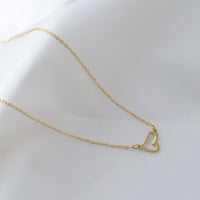
The piece they're describing → Dainty Heart Necklace for Women — 18K Gold Plated, Minimalist Gold Heart Pendant
Personalize Yours


