


Your ears aren't unusually sensitive. They're reacting to the metal touching them — and in most cases, that metal is nickel. Understanding why makes it straightforward to find earrings you can wear without a reaction.
Shop it: the AJLuxe Sterling Silver Ear Cuff — no piercing needed, nickel-free 925 sterling silver. Join the waitlist.
This guide covers what metals are safe, which to avoid, and the key detail that most earring guides skip: why two earrings can both be labeled "gold plated" and one will cause a reaction while the other won't.
Why ears react to earrings
When your skin reacts to an earring — redness, itching, swelling, crusting — that's contact dermatitis. The American Academy of Dermatology identifies nickel as the most common cause of allergic contact dermatitis in the US, affecting an estimated 10–17% of women and 1–3% of men.
Nickel is added to cheap jewelry as a hardening agent and cost-reducer. It leaches out of the metal over time, especially when it contacts sweat, skin oils, or cleaning products. That's what triggers the immune response.
Once you develop a nickel sensitivity, it doesn't go away. The reaction typically gets more pronounced over time with continued exposure, not less. The only reliable solution is to stop wearing jewelry that contains nickel.
 earring style for sensitive ears" style="width:100%;max-width:720px;border-radius:8px;display:inline-block;" loading="lazy">
Best earring styles for sensitive ears
The style of earring affects how much metal contacts your skin — and for how long.
huggie earringss are one of the best styles for sensitive ears. They sit close to the earlobe with a smooth, continuous surface — no sharp edges, minimal post exposure. The post is short and the clasp closes flush. Less contact point = lower reaction risk. Our huggie earrings are made with an 18K gold plated 925 sterling silver base, making them hypoallergenic by material and design.
Small hoop earrings are also a good choice — lightweight, minimal, and the smooth circular wire reduces friction at the piercing point. Gold hoop earrings in sterling silver are a reliable everyday option.
Stud earrings depend heavily on the back. Butterfly or push-back closures can trap moisture against the earlobe — a setup for irritation. Flat disc backs or screw backs are better for sensitive ears.
Heavy dangle earrings are the hardest style for sensitive ears — more weight means more movement at the piercing, more friction, and more opportunity for the post to work against irritated tissue. If you want to wear dangles, keep them lightweight and limit wear time.
Safe earring materials: the complete comparison
This is the table no earring guide gives you. Every metal ranked by how safe it is for sensitive ears, what to look for on the label, and what to expect from it.
A popular and safe combination for sensitive ears: sterling silver (925) earrings with cubic zirconia stones. The 92.5% pure silver base minimizes allergic reactions while the CZ stones add sparkle without nickel risk — making them one of the best options for everyday wear.
| Metal | Safe for sensitive ears? | Nickel content | What to look for on the label | Notes |
|---|---|---|---|---|
| 18K gold over 925 sterling silver | ✅ Yes | None | "925 sterling silver base" or "18K gold vermeil" | Best everyday option. Gold look, hypoallergenic base, accessible price. |
| 925 sterling silver | ✅ Yes | None | "925," "S925," or "sterling silver" stamp | Can tarnish but won't react. Most affordable truly safe option. |
| Implant-grade titanium (ASTM F136) | ✅ Yes | Zero | "implant grade," "ASTM F136," or "Grade 23 Ti" | Best option for fresh piercings or severe sensitivity. Lightweight and durable. |
| Solid 14K–18K gold | ✅ Yes | <1% (trace) | "14K," "18K," or "750" hallmark | Most durable. Rarely causes reactions even in severe nickel sensitivity. Higher price. |
| 316L surgical steel | ⚠️ Usually OK | 10–14% | "316L" or "surgical steel" | Fine for mild sensitivity. Avoid if your reactions are strong or frequent. |
| 18K gold over brass or zinc alloy | ❌ No | Present in base | Often unlabeled — "gold plated" with no base specified | Plating wears off in weeks to months, exposing nickel base. Most common cause of reactions. |
| Nickel silver / white metal / alloy | ❌ No | High (20–30%) | No hallmark, or "alloy," "metal" | Despite the name, contains no silver. High nickel — avoid completely. |
The rule: If a listing doesn't specify the base metal, assume it contains nickel. Reputable brands always disclose the base. If they don't, that tells you something.
How to know if you have a nickel allergy
You don't need a formal allergy test to recognize nickel sensitivity — the pattern is fairly clear:
- Your ears react to cheap earrings but not to gold or sterling silver
- You react to metal watch buckles, belt buckles, jean rivets, or phone cases
- The reaction appears 12–48 hours after contact (not immediately)
- The reaction is localized exactly where the metal touched — redness, itching, small blisters
A patch test from a dermatologist can confirm a formal diagnosis, but if the pattern above describes your experience, nickel allergy is almost certainly the cause. The AAD recommends patch testing if you want to confirm which metals specifically trigger your reaction.
Tips for wearing earrings with sensitive ears
- Check the base metal, not just the finish. "Gold" or "silver" finish tells you nothing about what's underneath. Look for "925 sterling silver base," "titanium," or "solid 14K gold."
- Clean earrings before wearing. A quick wipe with rubbing alcohol removes surface oxidation and residue that can accelerate reactions.
- Take earrings out at night. Skin irritation builds with prolonged contact. Giving your ears 8 hours off reduces cumulative exposure.
- Avoid wearing earrings while swimming or showering. Chlorine and salt water accelerate plating wear, exposing the base metal faster.
- Apply clear nail varnish to backs of reactive earrings. A thin coat on the post and back creates a barrier. This is a temporary fix — it wears off and needs reapplication. Better to replace the earrings with safe-metal options.
- Don't touch irritated piercings with dirty hands. Secondary bacterial infection can complicate what started as a metal reaction.
Earring backs matter — most guides ignore this
Most earring guides focus entirely on the post and pendant. But if the back is made from a different metal than the post — and it often is — you can react to the back even when the earring itself is safe.
Butterfly (push-back) closures are the most common back style and the most problematic for sensitive ears. They trap moisture between the back and your earlobe. They're also often made from a cheaper alloy than the post itself. If you're getting reactions from earrings you know are sterling silver, the butterfly back may be the cause.
Screw backs thread onto the post and sit flush against the ear. They don't trap moisture the same way and are typically made from the same metal as the post.
Silicone or plastic disc backs are the most skin-safe closure option. No metal contact behind the ear at all. They're sold separately and fit most standard post sizes — worth switching to if you're still reacting to earrings despite switching metals.
Flat disc backs (also called comfort backs or locking backs) distribute weight better and use a larger surface area, which reduces friction at the piercing point. Good for heavier earrings.
When buying earrings for sensitive ears, check that the listing specifies the back material as well as the post. If it doesn't, ask. Or buy a pack of silicone backs and swap them — they cost a few dollars and eliminate one variable.
Every AJLuxe earring is 925 sterling silver with 18K gold plating — nickel-free and made for sensitive ears. Free USA shipping and 30-day returns.
For specific product picks, see our roundup of the best huggie earrings for sensitive ears — hypoallergenic options at every price point.
For a full breakdown of sterling silver and skin sensitivity — including what the 925 stamp guarantees and why the alloy composition matters — see our guide on whether sterling silver is hypoallergenic.
Also: Is Gold Plated Jewelry Hypoallergenic? The Real Answer — which types are safe and which to avoid.
New from AJLuxe: we now offer true flat back stud earrings in nickel-free 925 sterling silver — the sleep-safe, sensitive-ear design this guide recommends. Join the waitlist »
Frequently asked questions
Are gold plated earrings good for sensitive ears?
It depends on the base. 18K gold plated earrings over a 925 sterling silver base are safe for most sensitive ears — the base metal is nickel-free. Gold plated earrings over brass or zinc alloy are not safe because the base contains nickel and the plating eventually wears through. Always check the base metal, not just the plating.
Are sterling silver earrings hypoallergenic?
Yes. 925 sterling silver contains 92.5% pure silver and 7.5% copper — no nickel. It's one of the most reliably hypoallergenic metals available in everyday jewelry. Sterling silver can tarnish but won't cause nickel reactions.
Why do my ears only react to some earrings?
Different earrings use different base metals. Cheap earrings typically use brass or zinc alloy containing nickel. Earrings labeled sterling silver, titanium, or solid gold use nickel-free metals. If you react to cheap earrings but not sterling silver, you almost certainly have nickel sensitivity.
Can I build a tolerance to nickel?
No. Nickel sensitivity is an immune response — once sensitized, repeated exposure tends to intensify the reaction rather than reduce it. Desensitization isn't a practical option. Switching to nickel-free metals is the only reliable solution.
Is surgical steel safe for sensitive ears?
Surgical steel (316L) contains 10–14% nickel by composition. Most people with mild sensitivity can wear it, but if you have strong reactions, it's not safe. Titanium or sterling silver are more reliably hypoallergenic choices.
How long do gold plated earrings last on sensitive ears?
If the base is sterling silver, the plating lasts 1–3 years with regular wear and care. Keep them away from water, perfume, and lotions to extend the plating life. Even when the plating wears thin, the sterling silver underneath remains safe for sensitive ears.
What's the best earring material for a fresh piercing?
ASTM F136 implant-grade titanium is the gold standard for fresh piercings. It's the most biocompatible option available and reduces healing time. Once healed (typically 6–12 weeks for lobes), you can transition to sterling silver or solid gold earrings.
Are huggie earrings good for sensitive ears?
Yes — if they're made with a safe base metal. Huggie earrings have a short post and a flush-closing clasp, which minimizes metal contact with the piercing. Their lightweight, close-fitting design also means less movement and friction than larger styles. Look for huggie earrings with a 925 sterling silver or titanium base.
Can I wear earrings every day with sensitive ears?
Yes, with the right metal. Sterling silver, titanium, and solid 14K+ gold are all suitable for daily wear in people with nickel sensitivity. The key is consistent, daily wear with metal you know is safe — alternating with reactive metal causes repeated sensitization.
How do I know if an earring base is sterling silver?
Look for "925," "S925," or "sterling silver" stamped on the jewelry or listed in the product description. Reputable brands specify the base metal, not just the finish. If the listing only says "gold plated" without naming the base, assume it's brass until confirmed otherwise.
Do earring backs cause reactions too?
Yes — and this is one of the most overlooked causes of earring reactions. Butterfly push-backs are often made from a cheaper alloy than the post. They also trap moisture against the earlobe. If you're reacting to earrings you believe are safe metal, the back may be the issue. Switch to silicone disc backs, which have zero metal contact.
What's the difference between hypoallergenic and nickel-free?
"Hypoallergenic" isn't a regulated term — any brand can use it. "Nickel-free" is more specific and more useful. For sensitive ears, look for nickel-free over a named safe base metal: 925 sterling silver, titanium, or solid 14K+ gold. "Hypoallergenic" alone doesn't guarantee anything.
Why are my ears suddenly rejecting earrings they were fine with before?
Nickel sensitivity can develop at any point through repeated exposure — you can wear the same earrings for years without a reaction, then become sensitized. Once your immune system flags nickel as a threat, even small amounts trigger a reaction. Pregnancy, illness, and hormonal changes can also lower your skin's tolerance threshold. The solution is the same regardless of when the sensitivity appeared: switch to sterling silver, titanium, or solid gold and stop wearing the earrings that now cause reactions.
What metal is 100% nickel-free?
Implant-grade titanium (ASTM F136) and pure niobium are the only common jewelry metals with zero nickel. 925 sterling silver is also nickel-free — just 92.5% silver and 7.5% copper. Pure 24K gold is nickel-free too, though it's rarely used in earrings because it's too soft for everyday wear. 14K and 18K gold contain trace amounts under 1% and are safe for most people with nickel sensitivity. Platinum is nickel-free but uncommon in everyday jewelry.
For a complete guide covering all jewelry types — necklaces, rings, and bracelets — plus the full metal safety ranking, see our hypoallergenic jewelry guide.
For the complete earring reference — types, sizing, curated ear, face shape guide, and sensitive skin — read The Complete Earring Guide.
Shop this guide
Sensitive ears need the right metal and the right fit
Start with low-irritation metals, smooth closures, and lightweight styles designed for daily comfort.
Is stainless steel or silver better for sensitive ears?
It depends on your sensitivity. Surgical-grade 316L stainless steel is durable and locks its nickel tightly in the alloy, so it rarely leaches — safe for most people. Sterling silver (925) is nickel-free in quality pieces but is softer, and cheaper "silver" blends sometimes add nickel. If you have a confirmed nickel allergy, implant-grade titanium or solid gold beats both. For everyday wear, 316L stainless is the safest steel option and genuine 925 silver from a trusted maker is the safest silver option.
The short version
Sensitive ears aren't a permanent problem — they're a metal problem. Nickel is the cause in the vast majority of cases, and nickel is avoidable.
The most practical choice for everyday earrings is 18K gold plated over 925 sterling silver. It gives you the look of gold at an accessible price, with a hypoallergenic sterling silver base that won't cause reactions. That's why all AJLuxe earrings are built on a 925 sterling silver base — huggie earrings and gold hoop earrings both come in sterling silver, both arrive in a gift-ready box with free US shipping.
If sterling silver causes any reaction (rare), step up to titanium. But for most people, sterling silver is the sweet spot between safety, price, and style.
Written by Vaishakhi Ajmera — founder and jewelry specialist at AJLuxe. Last updated: May 2026.
See also: Types of Earring Backs — which back style is most secure and best for sensitive ears.
If you're ready to add new piercings to your lineup, our types of ear piercings guide covers all 15 piercings with pain ratings, healing times, and jewelry recommendations.
You Might Also Like
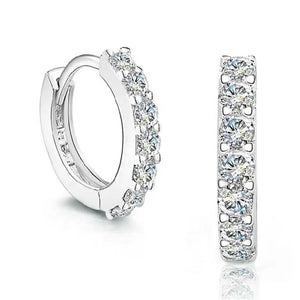
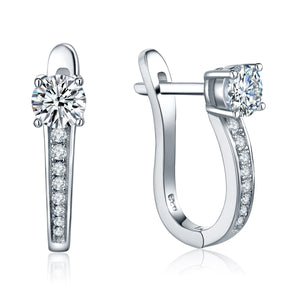
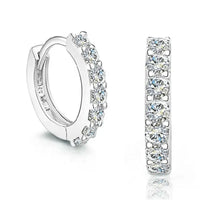
The piece they're describing → CZ Micro Pave Huggie Earrings for Women — 925 Sterling Silver, Hypoallergenic
Personalize Yours

