


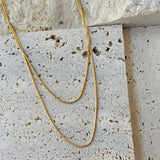
Walk into any jewelry store and you'll see dozens of cross variations. Not all crosses are the same — they carry different historical, religious, and cultural meanings. Here's every major type of cross necklace, what it means, and who wears it.
For a Cuban-link take on the style, AJLuxe's men's cross necklace pairs a cross pendant with an adjustable Cuban link chain in 316L stainless steel.
Latin Cross
The standard Christian cross — a vertical bar that is longer than the horizontal bar, with the horizontal bar intersecting above center. This is the form of cross used in most Western Christian traditions (Catholic, Protestant, Anglican). It's also the most common cross in fashion jewelry worldwide because its form is immediately recognizable without being specifically tied to any one denomination.
Who wears it: Christians across all denominations; anyone wearing a cross for fashion or personal symbolism regardless of faith.
Crucifix
A Latin cross with the corpus — the figure of Jesus Christ — attached to the front. The crucifix specifically represents Christ's crucifixion and death. In Catholic tradition, the crucifix is the standard devotional cross; in many Protestant traditions, the plain cross is preferred (symbolizing the resurrection rather than the death). Crucifixes are often detailed and realistic in their depiction.
Who wears it: Catholics; some other Christian traditions; people who want specifically religious jewelry rather than a fashion cross.
Celtic Cross
A Latin cross with a circle (nimbus or ring) at the intersection of the bars. Originated in early medieval Ireland and Scotland — the circle may derive from the pagan sun symbol, from a Celtic ring-fort shape, or from practical structural reasons (supporting the stone cross arms). Most Celtic crosses feature knotwork, interlace patterns, or animal motifs on the cross body. The Celtic cross is common as an Irish and Scottish heritage symbol.
Who wears it: People with Irish or Scottish heritage; Celtic Christians; people who appreciate the aesthetic of the intricate knotwork design.
Eastern Orthodox Cross (Russian Cross)
The Russian Orthodox or Eastern Orthodox cross has three horizontal bars. From top to bottom: a small bar representing the titulus (inscription plate that read "INRI" on the actual cross), the standard crossbar, and a diagonal lower bar representing the footrest (the lower-left end pointing up toward the "good thief," the lower-right pointing down). Specific to Eastern Orthodox Christian traditions — Russian, Greek, Serbian, Bulgarian, Romanian Orthodox churches.
Who wears it: Eastern Orthodox Christians; people with Eastern European heritage.
Ankh
An Egyptian symbol of life — a cross with a teardrop or oval loop at the top in place of the upper vertical bar. Originally an ancient Egyptian hieroglyph representing life, immortality, and the gods. Adopted by Coptic Christianity (Egyptian Christian church) as a symbol. Widely worn in modern jewelry and fashion outside religious contexts as a symbol of eternal life or spiritual protection. The loop distinguishes an ankh instantly from a standard Latin cross.
Who wears it: Coptic Christians; people interested in Egyptian mythology or spirituality; fashion wearers who appreciate the distinctive shape.
Jerusalem Cross
A central Latin cross surrounded by four smaller crosses in each of the four quadrants — five crosses total. Associated with Godfrey of Bouillon, the first ruler of the Latin Kingdom of Jerusalem after the First Crusade (1099). The five crosses are said to represent either Christ's five wounds or the spread of Christianity to the four corners of the earth. Used as a heraldic symbol and worn by some Christian orders.
Who wears it: Devout Catholics; people with connections to the Holy Land; collectors of Christian heraldic symbols.
Tau Cross (Saint Anthony's Cross)
A T-shaped cross — no upper vertical bar above the horizontal. Named for the Greek letter tau (T). Also called St. Anthony's cross after the Egyptian saint. In biblical and Jewish tradition, tau was used as a mark of protection. Used specifically by Franciscan friars. St. Francis of Assisi adopted the tau as his personal symbol.
Who wears it: Franciscan Catholics; people with a specific devotion to St. Anthony or St. Francis.
Cross Type Comparison
| Cross Type | Key Feature | Religious Association | Fashion Versatility |
|---|---|---|---|
| Latin cross | Simple 2-bar cross | Universal Christian | ⭐⭐⭐⭐⭐ Highest |
| Crucifix | Cross + Christ figure | Catholic | ⭐⭐ Specifically religious |
| Celtic cross | Cross + ring, knotwork | Celtic Christianity | ⭐⭐⭐⭐ High |
| Orthodox cross | 3 horizontal bars | Eastern Orthodox | ⭐⭐ Denomination-specific |
| Ankh | Loop at top | Coptic / Egyptian | ⭐⭐⭐⭐ High |
| Jerusalem cross | 5 crosses total | Catholic / Crusade | ⭐⭐ Heraldic/specific |
| Tau cross | T-shaped, no top bar | Franciscan | ⭐⭐ Very specific |
Related Cross Necklace Guides
- Cross necklace guide — how to choose the right style
- Types of cross necklaces — Latin, Celtic, Orthodox, and more
- Cross necklace meaning — what it represents across faiths
- Cross necklaces for men — styles, sizing, and how to wear them
- How to style a cross necklace — outfit pairings and layering
Which Cross Necklace Types Work Best for Men?
The cross necklace types that work best for men are the boldest, simplest silhouettes — a plain Latin cross, tau cross, or unadorned Celtic cross — worn on a thicker chain (2–4mm curb, box, or Cuban link) at a longer 20–24 inch length, in a brushed or oxidized silver finish rather than a high-polish one. Ornate crucifixes, fine ring-style crosses, and thin cable chains tend to read as delicate or overtly devotional rather than as everyday men's jewelry — style and chain choice matter as much as which cross type you pick. For the buying decision rather than the shapes, see best men's cross necklaces.
Matching the cross type to a men's style profile:
| Style Profile | Best Cross Type | Chain | Finish |
|---|---|---|---|
| Minimalist / everyday | Plain Latin cross | Curb, 20–22 in | Polished or brushed silver |
| Statement / streetwear | Oversized Latin cross or ankh | Cuban or box, 22–24 in | Oxidized, or two-tone with 18K gold-plated accents |
| Heritage / meaningful | Celtic cross | Rope or curb, 20–22 in | Brushed silver |
| Classic / religious | Tau cross or small crucifix | Cable, 18–20 in | Polished silver |
For a look that reads as "unique" rather than a default pendant, two adjustments do more than switching cross type: layering the cross on a slightly shorter chain under a longer plain chain, and mixing metals — a sterling silver cross on a chain with 18K gold-plated links, or vice versa. Because AJLuxe pieces are 925 sterling silver with 18K gold plating (never solid gold, so we always say plated) rather than base metal, oxidized and two-tone finishes hold up to daily wear without flaking or irritating skin — all our cross necklaces are hypoallergenic and gift-ready in the $24.99–$79.99 range.
Related reading: christian jewelry.
For a smaller, everyday-wearable version of the same symbol, cross rings for women cover sterling silver and CZ construction to check before buying.
More holiday gift jewelry guides
Frequently Asked Questions
- What are the different types of cross necklaces?
- Latin cross, crucifix (with Christ figure), Celtic cross (with circle/knotwork), Orthodox cross (3 bars), ankh (loop top), Jerusalem cross (5 crosses), tau cross (T-shape). Each has distinct religious and cultural origins.
- What's the difference between a cross and a crucifix?
- A cross is a plain symbol. A crucifix has the figure of Jesus Christ attached. Crucifix = Catholic tradition. Plain cross = universal across all Christian denominations and fashion.
- What is a Celtic cross?
- A Latin cross with a circle (nimbus) at the intersection, usually with interlace knotwork. Originated in early medieval Ireland and Scotland. Irish/Scottish heritage symbol and popular fashion design.
- Which cross necklace is best for a gift?
- A plain Latin cross in 925 sterling silver is safest — universally appropriate across all traditions and for non-religious wear. Add a birthstone for personalization.
Choosing Your Cross Type
If you're wearing for faith: let your tradition guide you — Orthodox, Catholic, and Celtic Christians each have specific cross forms. If you're wearing for fashion or personal expression: a plain Latin cross or Celtic cross offers the most versatility. If you're gifting: the plain Latin cross in sterling silver is the most universally appropriate choice.
Written by the AJLuxe team — specialists in 925 sterling silver and 18K gold-plated jewelry. Last updated: June 2026.
Choosing a Metal: Sterling Silver, Gold Plated, or Stainless Steel
The type of cross matters for meaning, but the metal is what determines how it wears day to day — skin sensitivity, upkeep, and how it holds up against a chain worn constantly. Here's how the three most common options for a cross necklace compare:
925 sterling silver is the most versatile base: bright white finish, naturally hypoallergenic for most wearers, and a good match for any cross style from a plain Latin cross to a detailed Celtic knotwork design. It's also the easiest to care for — a polishing cloth restores shine if it tarnishes from air exposure.
18K gold-plated sterling silver gives the same base metal a warmer tone, which tends to suit crucifixes and Jerusalem crosses especially well since the detailing (the corpus, the smaller corner crosses) reads more clearly against gold. Plating is a thin layer over silver, so it's not meant for swimming, showering, or heavy daily friction — remove it for workouts and it will hold its finish for years.
316L stainless steel is the newer option for men's cross necklaces and it wears differently than the two above: it's more scratch-resistant and doesn't require the careful handling that plated pieces do, which suits a cross meant to be worn every day without much thought. It's hypoallergenic and nickel-safe for most sensitive skin — worth noting it isn't nickel-free the way pure sterling silver is, so anyone with a diagnosed nickel allergy should stick with silver or solid gold rather than stainless.
As a rule of thumb: pick sterling silver or gold plating for a cross that's dressier or worn occasionally, and stainless steel for one that's going on and staying on.
All third-party trademarks, brand names and product names are the property of their respective owners. AJLuxe is not affiliated with, endorsed by, sponsored by, or otherwise connected to any third-party brand referenced in this article. Brand names are used solely for accurate comparative reference, and material descriptions reflect each brand's own published product specifications at the time of writing.
You Might Also Like

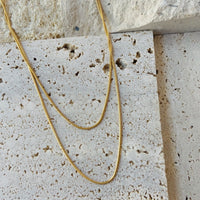
The piece they're describing → Double Chain Necklace for Women — 18K Gold Plated Snake Chain, Layered Look
Personalize Yours


